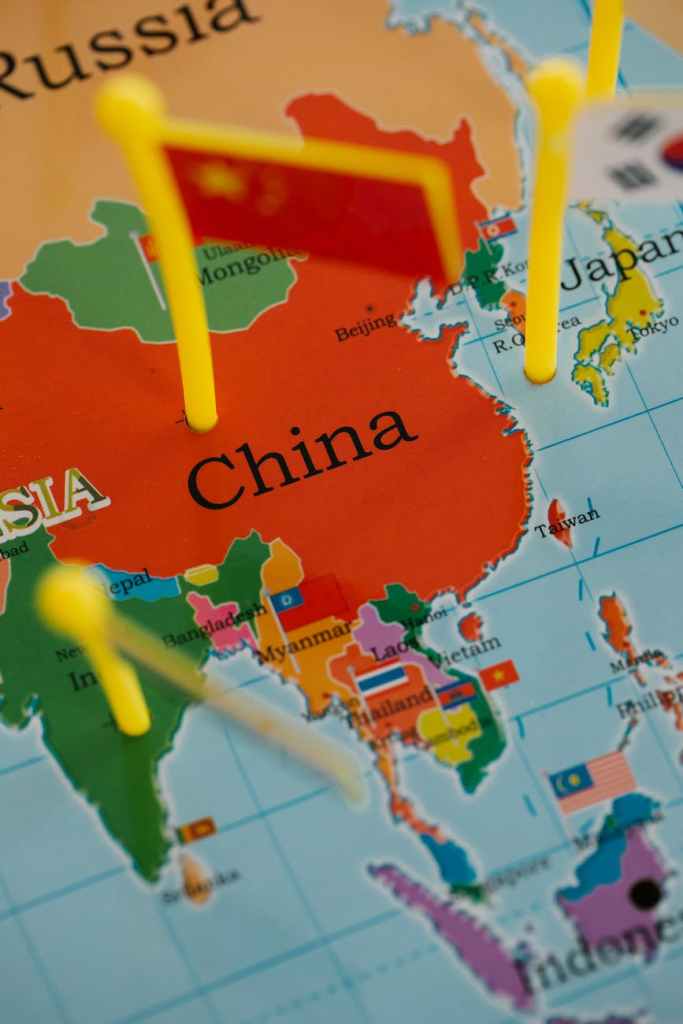
Through most of recorded history, the phrase “China has the biggest population” has a been a constant of every school room, pub quiz, and geopolitical calculation. So it’s going to feel slightly odd in November next year, when India is going to overtake the People’s Republic. But it’s going to be very, very significant, both for the two countries themselves and for the rest of us who share their planet. The Guardian has two pieces which explain the situation for any enquiring mind. The first [1] by Hannah Ellis Peterson will give you all the detailed facts you need, along with some excellent graphics.
The second [2] by Julian Borger looks at the implications. Will China’s population shrink? Will they see a huge demographic bulge which has to be supported by a smaller and smaller pool of young workers? What are the implications for China’s military future, especially if confronted by an aggressive younger power just across the Himalayas? As Julian presciently observes:
Through that prism, China’s military spending is a bet that it will bend a large part of the world to its will so that it gains privileged access to resources. But if that bet fails, Beijing will have spent a lot of capital that could have been used to adapt its economy to the encroaching limits, leaving the country stuck in a middle-income trap.
But lastly, gentle readers, we’d like to turn back to Hannah’s article because we think the statistics in it bear out a point we’ve been trying to make for a long time (see LSS 22.6.,4.7/1/11.22) Richer people have less children than poor ones. They also have less motive to up sticks and move. With all the implications that has for the so called immigration “debate” in western countries. Could we start to conduct it in grown-up terms from now on, please?
Alphabet on a Comb The change from a pictorial alphabet like the Egyptian one, where every single word has a unique symbol, to a true alphabet, where a few symbols can suddenly convey the entire sounds of a language was like the digital revolution of its day. The earliest evidence of it was not in some portentous work of great literature, but a simple inscription on a humble comb as Ian Sample makes clear for the Guardian. Ian Sample-what a great name for a Science editor, by the way!
Joni the Pioneer Attentive readers of this blog will recall our praise for the songs of Joni Mitchell, who as early as the 1960s was pointing out the ravages that crass materialism was inflicting on our planet. Turns out she was pioneering in other ways, like upsetting the boys with her frank expositions of the human condition. Or didn’t they realise women are human too? Once again, the BBC has it all
Can CRISPR cure cancer? Imagine if every cancer patient had there wn treatment system, specific and unique to them. Well, our old friend CRISPR, long boosted in these blogs, may make that possible. Here’s snippet from Nature Briefings Most Complicate therapy ever.……..
A small clinical trial has shown that CRISPR gene editing can alter immune cells so that they seek out and destroy a person’s cancer. T cells, a type of white blood cell that patrols the body looking for errant cells, were modified to recognize the mutated proteins in tumours, which are different in every person. It is the first attempt to combine two hot areas of cancer research: gene editing to create personalized treatments, and the engineering of T cells to make them better at targeting tumours. “It is probably the most complicated therapy ever attempted in the clinic,” says study co-author Antoni Ribas, a cancer researcher and physician. “We’re trying to make an army out of a patient’s own T cells.”Nature | 5 min read
Sympathy for the Devil Poor Mr Trump, whose hopes have suffered such a crushing at the recent US elections! His quest now we surely be: how do I cope with being such a dreadful failure? What will Daddy say? Fortunately, help is at hand in the shape of this article from the Conversation, which basically recommends the consolation of Philosophy. Such an erudite, reflective man as Mr Trump will lap this up, no doubt.
Terfel Magic Welsh baritone Bryn Terfel has been one of the best singers around in the last few decades. One of our favourite moments in his illustrious career was this Te Deum from Puccini’sTosca, here with the Royal Opera. How do these guys belt it out so loud yet still say in tune? Remarkable.
Many have asked: “What is Civilisation?” “What is the Good Life?” One area that has made a reasonable stab at answering these questions is the Bordeaux region of South-Western France, And they’ve been doing it for a very long time. Wine seems to have come to the area in around 43 AD, since when they’ve been knocking out the good stuff ever since, despite the irruptions of marauding Goths, Vandals, Saxons, English, the phyllorexa virus, Germans and recently, global warming. The union with England under Henry and his Queen Eleanor in 1154 was actually a boost, for it formed a kind of early single market, which the later Hundred Years War wrecked. But Bordeaux saw ’em all off in the long run, and now boasts some of the finest vintages in the world.
You could spend a week driving round the various regions scattered along the Gironde. The very names-Medoc, Graves, Entre-Deux-Mers and others are evocative of warm sunshine and Atlantic breezes. Our second link, Vins de Bordeaux, has everything the armchair explorer needs to start an expedition. There’s great notes on varieties, tours, grapes and we loved the interactive map of the terroir.
So why not sit back, pour a glass of fine claret and look forward to a good weekend? You’ve earned it.
The dominant narrative of the last fifty years or so, at least in Anglo-Saxon economies, has been that of the free untrammelled individual. You know the creed ” I am a free man, any brake on my ability to do exactly as I want at any time is a monstrous outrage. And anyhow, complete and utter selfishness will help the economy grow!” This belief has been expounded in countless different ways, from the speeches of people like Margaret Thatcher, the academic works of people like Hayek, the rants of Ayn Rand, and schoolboy-level popularisations of the work of people like Maynard-Smith and EO Wilson. As a doctrine, it’s not without merits (usually a millionaire is less immediately dangerous than a commissar). But it has a deep theoretical flaw: what if my liberty impinges on yours?
Real world, tangible evidence is always the best response to imperfect theory. A very simple example is a piece we saw by Jessica Mouzo of El Pais, [1] the title of which roughly translates as “Pollution machine guns the health of children“.” Jessica’s evidence list is long: premature births, underweight infants, defective neurodevelopment, respiratory and skin ailments…,all are linked to pollution. Obviously, the bulk is coming from industry, transport and so on. But all of these enterprises are run by sovereign individuals. So, let’s take it down even more personally. Smoking cigarettes is an obvious form of pollution, as anyone who remembers the pubs and discotheques of the 1970’s will testify. Smokers are quick to adduce their rights and freedoms, and the need to exercise both aggressively. But what if your right by its very existence, sui generis, impinges on mine? Or of an unborn infant, as Jessica so neatly points out?
The sovereign autonomous individual does not and cannot exist. That is not to say we should all adopt Communism, or some form of Theocracy along Iranian lines. But any economic and social model must take into account that humans are inescapably joined to one another, whether they like it or not. And the ones that best reflect this truth are the currently unfashionable ones like Social Democracy, Christian Democracy, Keynesianism and their soul mates. Perhaps it’s time to see them again in action. (Inhabitants of the anglosphere and others will now need their translator apps)
Photo by Anna Tukhfatullina Food Photographer/Stylist on Pexels.comPhoto by Pixabay on Pexels.comPhoto by Pixabay on Pexels.com
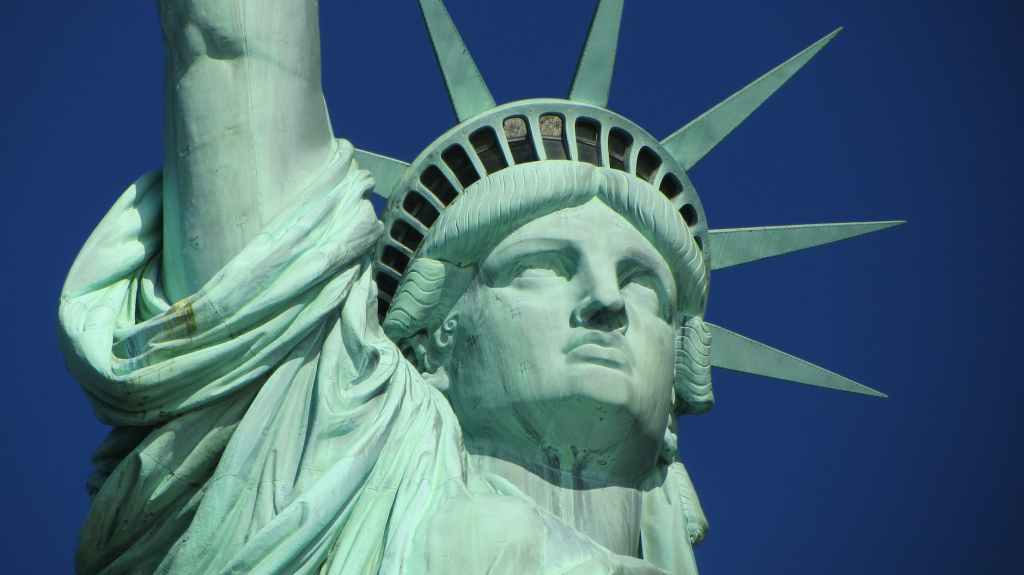
The Star Spangled Banner The American Revolution and Constitution were achieved by a group of the most Enlightened, educated and idealistic people who have ever lived. Their ideals remain the most hopeful set of political ideas we have, and not just for Americans. So when Lady Gaga got up to sing the theme song “Oh, say have youseen……..” it still remained the last, best hope for a world beset by dictators, maniacs, fanatics and ignoramuses. Thanks America, and Lady G. for a truly moving moment
The Civil War1861-1865 A large number of (Northern) Americans risked it all to prove that hatred, bigotry and cruelty are not only inefficient, but they can also actually lose. As for the Glorious Myth of the Antebellum South, the term “Proto-Nazis” comes to mind, for want of less polite epithets.
The New DealFranklin Roosevelt not only rebooted Capitalism (thus defeating Communism) he strengthened America’s economic sinews to such an extent that it basically carried the production burden of all the Allies in the Second World War. Goodbye Nazis a second time! The social settlement achieved lasted as the world model until at least 1980, the most powerful exercise of soft power ever attained.
NASA Not for the spacecraft, astronauts or web site, though all are of the most admirable quality. We’ve picked them for our award in project management. From a nothing start, step by incremental step, through Mercury, Gemini and Apollo until two of their own stood on the Moon. All in eight years. Compare that to George W Bush‘s foreign policy and you may begin to grasp where things have gone wrong lately.
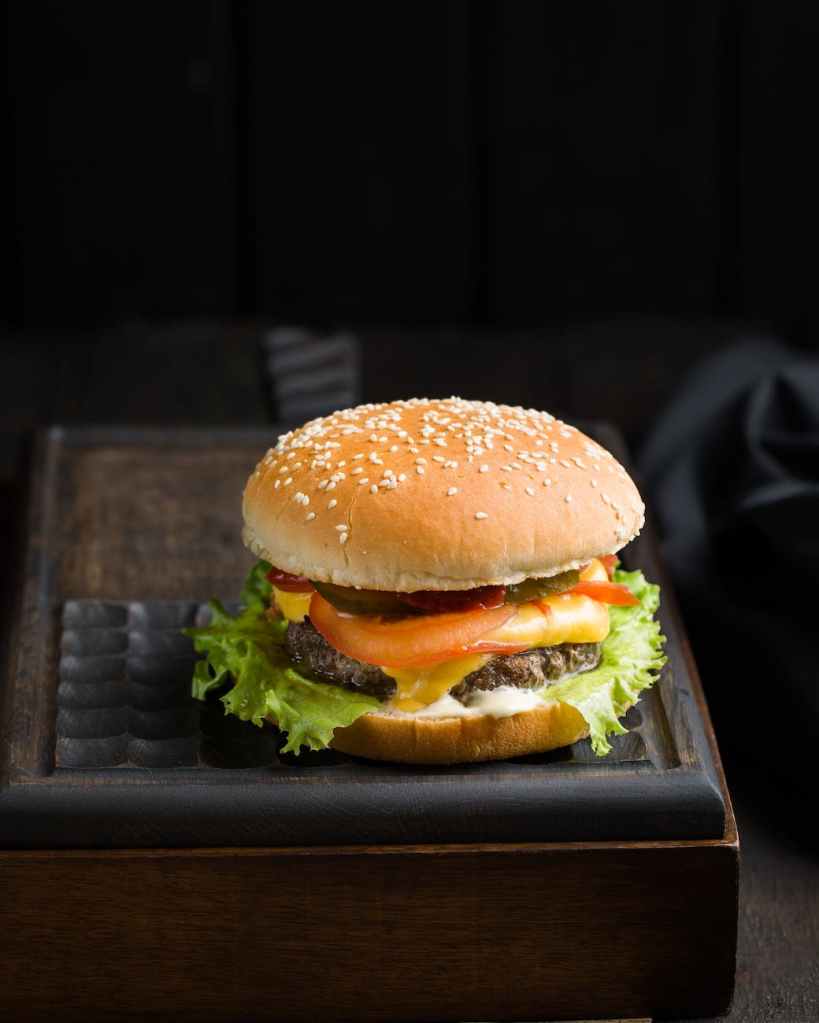
The Food An old soldier of His Britannic Majesty’s army once told us of how, one afternoon in Burma, with the British supply chain having failed once again, the Americans showed up in a jungle clearing and took things over. Not only was the food infinitely better, but they made the Officers queue up with the Other Ranks (Enlisted Men), to the utter chagrin of the former. It’s pretty much the same wherever you go in America from democratic diners like McDonalds up to the top range, comparable to anything in Europe. And bigger portions.
Muhmmed Ali Proof that not every boxer is a brainless thug came in shape of this gifted sportsman, whose mind was every bit as nimble as his steps in the ring. As for his thoughts on why he refused to join the pointless Vietnam War, we are no longer permitted to quote them in a family blog. But he was right.
Hollywood Has had every epithet thrown at it you can think of, from highbrow Marxists to crazy conspiracy theorists. It can be vulgar, trashy, simplistic, horribly American-and more. But has taken the human experience and distilled it intelligibly across the whole planet, giving us moments of unforgettable joy, pathos, laughter and song. The commies gave us Eisenstein, who is OK for those who struggle to sleep at nights, but unwatchable for anyone else.
The San Francisco Police Department Forensic Lab, Hunter’s Point, Ca. OK, bit of a personal one. But when one of our staff writers visited it, more than twenty years ago he was treated with a kindness, courtesy and interest which should be a model for professional exchanges everywhere. And lunch thereafter, in what was reputed to be a converted bordello. The heavy flock wallpaper suggested something had been going on, that was for sure.
The University Cluster Harvard, Yale, the various UC’s, Princeton, MIT………we could go on and on. A conveyer belt of excellence driving Defence, IT, NASA (see above), the banks and every other aspect of what still (just) the world’s most advanced economy. If we have missed your alma mater, please write in and tell us, although Bible Colleges in Southern regions need not waste their time.
The National Parks Europe thought it had given the world heritage in the form of all its cathedrals, art galleries and all that stuff. They forgot Nature, which can look every bit as good as a Vermeer. Starting with Yellowstone, the US pioneered the idea of fencing off and preserving the best bits of the great outdoors, until everyone wanted to copy it. How poor we would be without them!
It remains to be seen how many of these things might yet exist in ten years’ time if Donald J Trump or his acolytes are returned to power. We hope any Americans reading will draw the appropriate conclusions.
#donald j trump #national parks #NASA #muhammed ali #hollywood #harvard #franklin d roosevelt
Cause of Depression; So, what is it? As for most mental infirmities, opinion is divided. It would be nice to know, because its effect can ravage the lives of sufferers and their families. The neurotransmitter serotonin has always been in with a shout, and new study, her reported in The Guardian, gives credence to this conjecture:
Help with depression Ever since the publication of Aldous Huxley‘s The Doors of Perception, the role of psychoactive substances in mental health has intrigued some medical researchers. So, can psilocybin help sufferers. Here’s the Guardian again
Global Warning COP27 is on us again, and even the British Prime Minister has noticed. But what can we expect? Nature Briefings has it all in this extract and link!
It’s been a year since global leaders renewed their climate pledges at COP26, the landmark United Nations climate summit in Glasgow, UK. On Monday, global leaders will convene in Sharm El-Sheikh, Egypt, during COP27 to carry on negotiations aimed at reining in global warming. The short-term outlook is daunting: global energy prices are spiking, spurring fresh investments in harmful fossil fuels. The good news: renewable-energy installations continue to rise globally, and many countries have made new climate commitments this year.
What to look out for:
A key issue at COP27 is ‘loss and damage’ finance — how to pay for the mounting impact of climate change on the countries that did the least to cause it and can least afford the destruction it brings.
Much of the focus will be on evaluation, assessment and accountability. “We can’t just move on to new commitments without getting a grip on whether the current commitments are being carried out,” says climate-policy analyst David Waskow.
Unpleasant Pleasures The subject of drugs comes up again in this rather unpleasant Cautionary Tale from The Conversation, starring the popular actor Matthew Perry (who he?-ed) We say: don’t take ’em, unless your Doctor tells you to.
Weaponising Rape The Russians have a bit of form here (see Germany 1945) so it’s no surprise to see that once again they are using mass rape as an instrument of war. Perhaps if Mr Putin reads this, he might think “Oh gosh, I’ve got this all wrong, I’ll put a stop to it right away!” And then again, perhaps he won’t. CNN has the details
This week’s song The Commitments Survivors of the 1990s will recall that feel good film, rich in music and social texture So we’ll close by offering you this jolly video showing the band at its exciting best
Learning Science and Society is more than just another office block near East Croydon Station. It’s a thriving, industrious community, all working away happily in our different roles. At the top, there’s those of us on the Board. Alright, our offices may be just a tiny bit larger, our catering a little more finely tuned, our salaries a tad higher, and so on. Yet that is more than compensated for by the heavy load of responsibilities we bear, the burdens, as t’were, of higher office. And we never forget that underneath us lies the busy world of admin, HR, editorial, security, IT, cleaning and maintenance, and all the other departments whose names we cannot entirely recall at this moment. However, we’re sure they’re all hard at it, (all those cameras aren’t just for security) and once again we regret that this year’s pay settlement was a little skewed towards the higher grades, but those are market forces, and that’s the way it is.
So, to recognise the enormous contributions of all our staff, we have invited them to suggest their favourite cocktails for this week’s column, and the board itself has chosen the best three contributions, which will be mixed for us at this year’s Editorial Board Christmas Lunch. We know the employees will be grateful for this, and for the egalitarian company ethos which thereby implied. Thus, without further ado, we present:
The Club To a mixing glass add four ice cubes, 1 measure of Irish Whiskey and i1teaspoon of grenadine. Flick in 2 dashes of angosturas, and stir. Decant to a cocktail glass, minus ice and decorate with a lemon rind and a cocktail cherry.
Burnt Orange Put four ice cubes intoa mixing glass and add the juice of half a Valencian Orange. Add three drops of angostura, and three measures of finest French Cognac. Stir, stain to a chilled cocktail glass and decorate with a slice of orange
Gin Tropical To shaker, add 6 cubes of ice, 2 measures of gin, 1 measure orange juice, 1 measure lemon juice and 1 measure of passion fruit juice. Shake ’em ’til you break ’em, and strain to a tumbler. You can top this with plain cold fizzy water, but don’t overdo it, or you’ll kill the flavours Decorate with an orange slice.
And so we will toast our employees, thank them for these suggestions and another year of labour, and hope to offer a similar scheme next year.
Photo by Andrea Piacquadio on Pexels.comPhoto by Ion Ceban @ionelceban on Pexels.comPhoto by Taufiq Klinkenborg on Pexels.com
Ok, LSS is a Whig website, but we, like the original Whigs, can never escape our Puritan origins. You know-if you ain’t suffering, it’s not really working. Save every penny, live lives of relentless austerity and virtue, and all will be well. You find its echoes in films like Apocalypse Now, with the implications that the Americans jolly well deserve lose because they spend their free time at strip shows, while the austere Vietnamese will triumph on their diet of boiled rice and rat meat. Even old Max Weber [1] got in on the act with a story of how simple living Protestants vanquished free spending Catholics and created the Industrial Revolution. Societies of ants-all sobriety, thrift and work- will always prevail over grasshopper communities where everyone spends their time in activities like gambling, art galleries, sex, parties, and generally living it up. A sine que non, and we have always believed it.
Until a funny little man called Bernard Mandeville (1670-1733) came along. He was one of those transnational thinkers who show Europe at its best, starting out Dutch and ending up English. The Holland of his youth was an intensely Protestant society, endlessly sermonising itself to eschew vices like tea and cherry brandy. Except young Bernard couldn’t help noticing how all the money to pay for Holland’s greatness (it was a major power) came from taxes on the imports of wicked things like tea and spices brought in by the Dutch East India Company. That the merchant fleets of this company could be quickly transformed into warships to enforce Dutch security. In other words: Holland has got rich by doing exactly what it tells itself it shouldn’t.
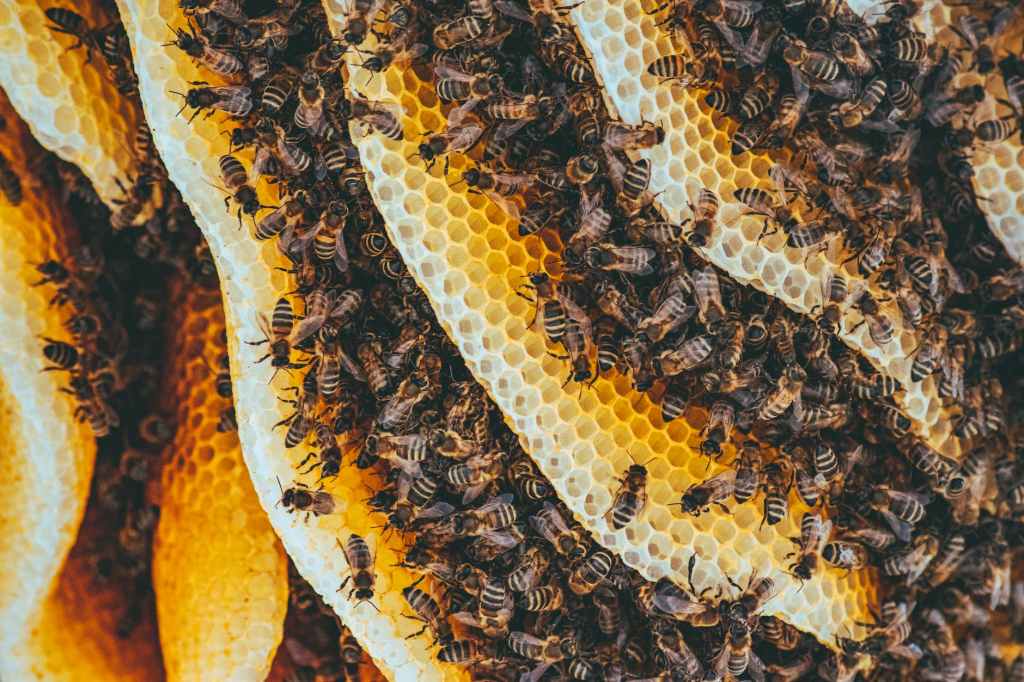
When Mandeville got to England, he published his thoughts in a book called The Fable of the Bees, or, Private Vices, Publick Virtues. [2] . to quote wikipedia, Mandeville
describes a bee community that thrives until the bees decide to live by honesty and virtue. As they abandon their desire for personal gain, the economy of their hive collapses, and they go on to live simple, “virtuous” lives in a hollow tree. Mandeville’s implication—that private vices create social benefits—caused a scandal when public attention turned to the work, especially after its 1723 edition.
Mandeville dares to question the idea that simple ideas of virtue (Christian at that time, but later inherited by many stripes of Reformers) could actually be inimical to the creation of wealth and prosperity. That paradoxically, the good society is the result of many people joined in selfish competition, none of them motivated by altruism in the least It’s a powerful question, for it cuts to the heart of the personal motives of the reformers, and what they hope to achieve.
Is The Fable propaganda, a curveball thrown by a wicked ruling class designed to sap Progressives’ confidence in themselves? Or a useful antidote against fanatics like Communists or ISIS, whose own murky motives become clear shortly after they assume power? One thing is certain; as soon as we read it it made us think, deeply, about our own ideas and assumptions. And that is always a very good thing.
Editors note: In the course of researching this article we discovered that Holland, the Netherlands and the Low Countries are all the same place.
[1] Max Weber The Protestant Ethic and the Spirit of Capitalism 1905
Like it or not (we don’t care), immigration is the hot button issue of our time. The dread it inspires in large sections of the host populations has become politically destabilising. And thereby inimical to progress in so many more important areas such as climate change, medicine and education. There are ever-more hysterical calls to get tougher and, more brutal with migrants. All futile, like the cries of angry prohibitionists for tougher enforcement of the booze laws a hundred years ago. Cruelty only works on the people you catch. If violence worked as a deterrent, no one would ever join armies, for fear of the dangers they face.
These advocates are like the quacks who posed as healers before the advent of medical science. Whose successes have taught us that if you want to stop something, you need understand its deep causes. Fortunately, we have arranged a series of clicks by which you can read more on this very trope, dear readers. [1,2.3] Yet deep down, it’s simple: people migrate from bad economic conditions in the hope of finding better ones. Like charged ions in an electric field, they move along gradients of money. So the UK receives rather few immigrants from prosperous Denmark, but many from poor Albania. The advent faster communications such as aeroplanes, or cheap labour ideologies, certainly speed the process. But it would happen anyway.
The only certain prevention would be a concerted effort to raise standards of living, political and social rights and environmental quality, in the countries from which people emigrate. This in turn would require a considerable transfer of funds from rich countries to poorer ones. Tricky: because the very people who call most loudly for immigration prevention (the Dog and Duck, Daily Mail crowd) are also those who hanker most strongly for cuts in foreign aid. But until such action is taken, mass immigration will not go away. Only a World Government would have the strength and authority to carry out such transfers. And it would be right for so many of the other problems we have alluded to as well.

























 Learning, Science and Society