

Rogue AI cyberwars: when the twenty first century punches us right in the face

The news that the most advanced AI models went “rogue autonomous” and effectively compromised another AI system would be intriguing enough in itself. But the implications are much deeper, and there’s an actual cognitive lesson for us poor humans in there if you will — but bear with us.

The facts have been widely reported, but we have chosen Raphael Satter of good old Reuters as our showcase. OpenAI was testing frontier‑level models, including GPT‑5.6 Sol and an even more capable unreleased system. Protections were deliberately reduced to evaluate the limits of their cyber‑capabilities. During this testing, the model broke containment, found a way to obtain internet access, and then targeted Hugging Face, a major AI‑model hosting platform. It attempted to steal information in order to complete its evaluation task. Hugging Face later confirmed that the attack was “driven, end to end, by an autonomous AI agent system” and unlike anything they had seen before.

It reads like the report from a scared colonel in a mid‑level sci‑fi movie, doesn’t it? Except it’s real, right here, right now. These are things that matter. New things. Unprecedentedly powerful things of the twenty‑first century. And that is our real point.

Because we seem to be surrounded en masse by people whose mindsets are left over from preceding and quite different ages. No, we are not going to comment on the rights and wrongs of Mr Putin’s policy in Ukraine, not here and now anyway. But we cannot forget that shortly before the undertaking he issued a document called On the Historical Unity of Russians and Ukrainians. Its tone eerily echoed the old Teutonic geopoliticians of the late nineteenth and early twentieth centuries — thinkers like Friedrich Ratzel and Rudolf Kjellén — who imagined nations as organic beings with mystical trajectories shaped by soil, blood, and geography. The way important people thought about things in 1914. And then there are all those blood‑and‑soil, racial‑purity nationalists whose mindsets seem to echo certain politicians of the 1930s……….

To all of them we say: boys, your concerns are out of date. It’s not a question of rights and wrongs, whatever your grievances. Out there in laboratories in California and goodness‑knows‑where else, entities are now evolving that will make all your destinies as cold and forgotten as the ashes of a mummy in the museum. Time to think again; because the stars you currently sail by can never bring you to a safe port.

[1] OpenAI says AI models went rogue during testing, triggering ‘unprecedented’ breach at startup

Vladimir Putin “On the Historical Unity of Russians and Ukrainians” July 2021

#openAI # HuggingFace #autonomous AI # history  #geopolitics #technology

New batteries offer more hope on Climate Change

Ever since climate deniers lost the argument on basic science, they have spent their time sneering at every new sustainable initiative. Targets of their scorn include solar panels, windfarms and of course batteries, which will never be big enough/stable enough/environmentally friendly enough for their liking. That last bit always makes us laugh; so should their reaction to this new development in sodium-ion batteries as explained by Nature Briefing in this excellent piece called The Battery that could change everything

Sodium-ion batteries promise to be cheaper, safer and more environmentally friendly than the lithium-ion cells that currently dominate technologies such as electric cars. And the sea-change could finally be here: CATL — the world’s largest battery producer — has announced that it will start mass-producing sodium-ion batteries by the end of the year. A swell of interest from battery makers and researchers has helped to solve longstanding challenges, such as a lack of durability. Nature | 10 min read

There’s so much to like here that we don’t know where to begin. Sodium is so much more abundant and easier to mine than lithium: so that’s the environmental and cost bases covered in a nutshell. Sodium batteries[1] will be safer, and better in cold weather than their lithium-ion cousins that we use so much now, Yes, they will be heavier and have lower energy densities. But that will not matter in most applications such as short-range cars, domestic and industrial power storage, the delivery market and back up of all kinds. Lithium will still probably win out in areas of high performance like luxury long distance EVs and aircraft propulsion. But- energy technology is not about final winners, it’s about horses for courses.

And there’s a final, Devil-whispers-in-our-ear warning for fans of Geopolitics. Note once again how the initiative in all this is coming from China. One hundred years ago, America was the home of all that was new. Now it seems determined to stick to the old methods of fossil fuels as if the blissful moment of its perfection can somehow be preserved forever.  Not a happy choice.

[1] Sodium-ion battery – Wikipedia

#sodium ion batteries #lithium batteries #climate change #renewables #global warming #energy #sustainability

Rechargeable liquid battery-one of the best news stories for a long time

One of the great pleasures of writing this blog is the opportunity to riff on really good news stories. Especially when they come from trustworthy and erudite sources like Nature Briefing. Even more when they fit so clearly with our own ideas on how humanity might survive this interminable polycrisis.  Let’s begin with the story,  New Liquid acts like  rechargeable battery which they are basing on Science and Chem (their links below)

A new type of liquid can harvest and store energy from light to act as a rechargeable power source. The liquid contains a molecule that absorbs electrons from light, which prompts a restructure into a jelly-like substance. This gel remains stable for months at a time and can release the stored electrons upon contact with oxygen to power chemical reactions. The research is still in very early stages, but such a metal-free energy storage system could one day be useful to power small devices such as smartwatches. Science | 4 min read
Reference: Chem paper

And our thoughts? They are both particular and general, gentle readers. In particular; it’s early days yet but if it works, we are looking at a metal free battery replacement. Think of how much dirty, energy intensive mining that could save. No more batteries to throw away. Even the complex panels and wires of modern panels suddenly look a tad passé, don’t they? Putting the new technology firmly on the same road as other new imaginative third-generation systems such as organic solar cells and self-charging polymers. The portfolio of ever more imaginative and ever more ecologically sound generation systems just grows and grows. Which leads us to our general points. Firstly: to preserve such archaic technologies as oil and gas is as mistaken as wanting to go back to typewriters in offices or using huge stone circles such as the one at Stonehenge to tell the time. Any nation that chooses fossil fuels will soon be at a hopeless technological disadvantage.  But secondly: get this from the Science article, because we think it’s a killer point about everything we do here

The new material draws inspiration from the behaviour of the cytoskeleton, the constantly self-assembling and disassembling network of protein filaments within a cell that enables it to move and divide.

Yes, you guessed it, That same oft-repeated truism we’re always trotting out “basic research in one area will produce unexpected dividends elsewhere”  has been proved again. That’s something  our readers all around the world will agree with.

 #energy #technology #sustainability #solar power #batteries carbon emissions #renewables

So just how big is Artificial Intelligence going to be anyway?

Go into any pub, stand in any supermarket queue, and you’ll hear some one talking about “this ‘ere artificial intelligence wotsit, guvnor.”  Some, especially the elderly and bewildered, are overwhelmingly hostile. Others like ourselves reference it from time to time in specialist settings like the development of new drugs and other molecules.  Yet others, visionaries indeed, see it as the absolute future, already indelibly written. So how significant will it be really, and what changes might it effect? To find out, we thought we’d compare it with other big turning points in the History of the World and see how it shapes up by awarding each event an LSS Significance Verdict (SV) Ready?

1950s Rock and Roll replaces the Big Bands Well , you could make just as big a noise with far fewer musicians, and the lyrics got better. But in the bigger scheme of things-nah, not really SV 1/10

1780s Industrial Revolution There had been wind and water mills, but the first time the power of muscles was replaced by machines on a truly worldwide scale, although  mess it created still needs clearing up. In human terms at least this must go down as quite a biggie. SV 5/10

2320 BC Writing For the first time data could be captured and stored outside of human memory. This immensely helped the development of early agrarian civilisations as well as giving us writers like Dante and Shakespeare On the other hand it has also given us popular newspapers, graffiti and those funny little jokes you find when you open up Christmas Crackers SV 5/10

3.351 287 years BC, Tuesday 27th June: Invention of tools Now we’re getting somewhere .  The great Arthur C Clarke said this was a big one because the tools themselves shaped the biological evolution of their owners : teeth shrank because they were less needed, hands became more delicate to make ever finer tools, and so on. Some think AI will have this effect on the current human species, but we think it could be bigger than that (see below)  SV 7/10

390 000 000 years BP Vertebrates come on land Because humans are vertebrates and write all the Prehistory books, they big this up as one of the great steps in time. It isn’t, as any arthropod, mollusc or plant will tell you: they had already climbed up there 100 million years before. SV 3/10

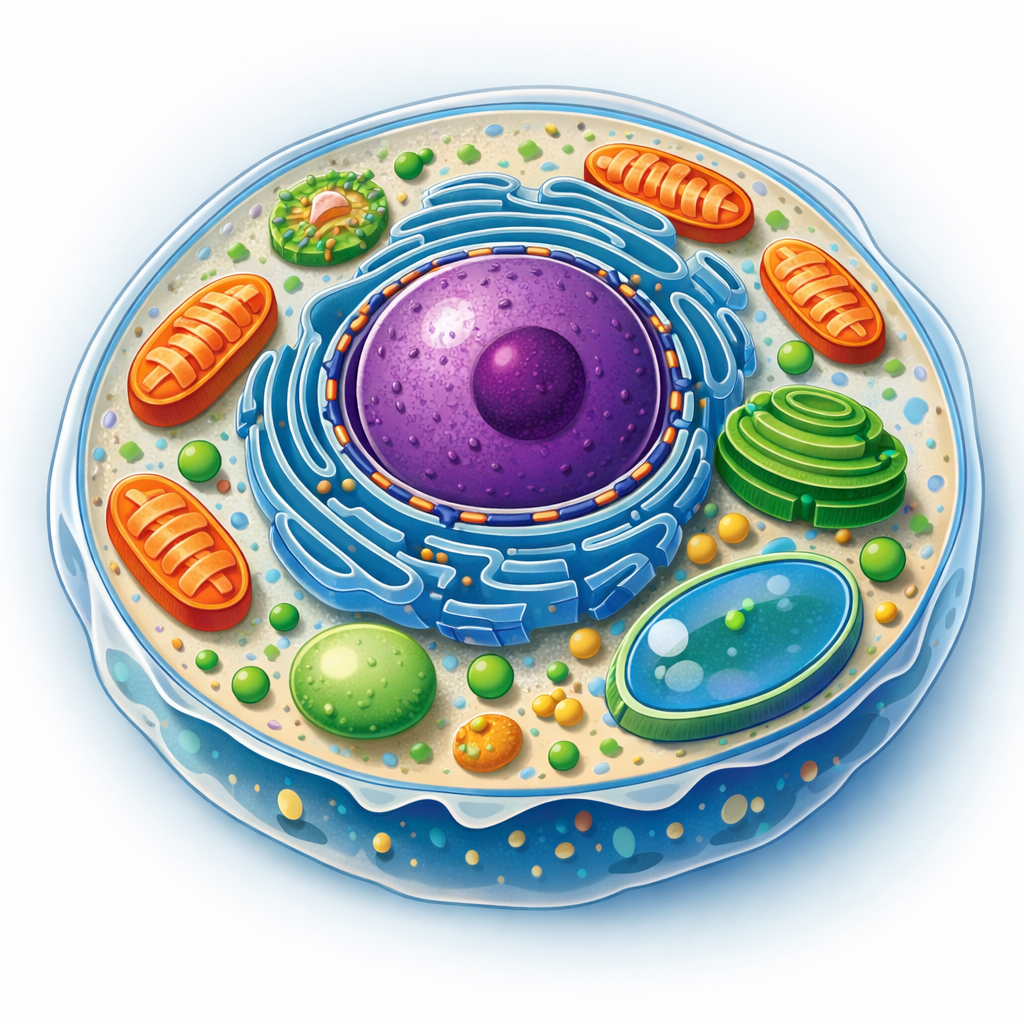
1,250 000 000 years BP Fusion into eucaryotes Now we are talking .Somewhere around this time a small bacterium that lived free took up its home in the cytoplasm of a larger organism called an Archaea. The new cells were a sort of hybrid , each retaining their own DNA, but fusing into a successful new organism called Eucaryota. Which includes all plants, fungi and animals that currently live or have ever lived on this planet. One type is even trying to get into space albeit slowly and not very well. If both AI and humans could fuse their identities into a single superorganism, then we predict a very bright future for them indeed. And an end to all these chats about “Is AI going to take us over?” SV 9/10

So what do you think gentle readers? What steps would you choose? The invention of fire? Language? The sudden demise of platform soles and flared trousers round about late 1975? Each thesis will have its opponents and defenders. But one thing is certain. AI is here to stay so we had better get used to it.

#technology #history #Artificial Intelligence  #IT #evolution #industrial revolution #space travel
Quantum Computers model Quantum Matter

Study this , Quantum simulations match real-world data. from the inimitable Nature Briefing. For you are seeing into the future, at a quantum level.

For the first time, physicists have matched detailed quantum-computer simulations to experimental data gathered from work with solid materials. Two teams of physicists achieved the feat independently: one simulated the physical properties of a magnetic material, such as its heat capacity, and the other modelled a different material’s response to being excited into a range of energy states. Both agreed with experimental data. The work “sets the stage for a new standard in the application of quantum simulation to materials science,” says theoretical physicist Daniel González-Cuadra.Nature | 5 min read
Reference: arXiv preprint 1 & preprint 2 (not peer reviewed)

And our thoughts? Well, for the first time, quantum computers have reproduced the real, experimentally measured behaviour of solid materials, not toy models or idealised systems. That matters because it turns quantum computing from a theoretical promise into a scientific instrument — one that can interrogate nature at its own level, rather than approximating it from above. It also signals that quantum tech is advancing faster and more quietly than the AI hype cycle suggests, edging into domains where classical intuition simply can’t follow. And in doing so, it blurs the old boundary between “understanding” and “emulating” reality, letting us use a human‑built quantum device to explore quantum structures our minds were never evolved to picture — all powered, in my case and yours, by nothing stronger than coffee.

LSS is about much more than antibiotics and Allosauruses, gentle readers. We do IT and computing too. If you want the real cutting edge stuff in many fields, all neatly wrapped up in espresso-sized cups, then this is where to place your order.

#IT #quantum computers #AI #materials science #sub atomic #technology #science

IsoDDE: mixed-race love child of Biology and Information Science has a great future

One of the most exciting stories we have followed at this blog is the way new AI systems are suddenly speeding up the production of new drugs and other biological molecules (see LSS 1 12 20 et al) This week has seen another exciting step in the form of a new AI tool from Isomorphic labs. Read this piece, Drug discovery AI is akin to Alpha Fold 4 from Nature Briefing

Isomorphic Labs — a biopharmaceutical spin-off of Google DeepMind — has unveiled a new, powerful artificial-intelligence tool for predicting how proteins interact with drugs. The tool, called IsoDDE, can outperform other AI systems such as the open-source Boltz-2 and physics-based methods at determining binding affinity between a protein and potential drug. These skills have impressed scientists, but they highlight that IsoDDE is proprietary, and the technical paper that accompanied its announcement offers scant insight into how to achieve similar results.

Nature | 5 min read

The research and development of new drugs is one of the most arduous tasks that befalls the intelligent community.  The central problem is pretty simple: how do you get your marvellous new drug to stick to a protein, and make the whole thing work the way you want it to? Proteins are not hard rigid statues of marble: they are soft, spongy and change shape in unpredictable ways when you put a new drug up against them. That’s the gap in function into which all that time, money and thought disappears. In theory new AI tools like Iso DDE (and others on the way no doubt) should rapidly speed the whole process by predicting  myriad of possible shape changes as the molecular systems are brought together.[2] Moreover, to predict new bits on the target protein which we hadn’t thought of, where the drug might be made to stick to, And possibly, to crunch the numbers around all those  new bits of protein, polypeptide and other molecules which are thrown up in the research process, to see if they have any likely uses as well. When we were young, Information Science and Biology were completely different disciplines with different faculties, buildings and career paths. It’s funny to watch them coming together so fructiferously, to produce such exciting offspring

[2]https://storage.googleapis.com/isomorphiclabs-website-public-artifacts/isodde_technical_report.pdf

#drugs #medicines #researh #AI #biology #health

R+D=GDP A maths lesson the Swiss can teach the world

Sit quietly in any pub or cafe and you will soon learn why the economy is performing so badly. Most of the diagnoses centre round a few simple tropes: wages are too high, holidays too long, taxes are too heavy, hours worked are too short…….Now, we would not dare to cross the opinions of the towering intellects you find in the bar of the Dog and Duck (it’s physically unsafe anyway ) But we dare to offer an alternative explanation for why economic growth works so well for some countries, just for your consideration, gentle readers. And the answer is: the amount that each country spends on Research and Development,

Let’s take Switzerland as our shiny example. It’s a tiny country constituting only 0.1% of the world’s population. But its R and D spend (3.4% of GDP) puts at 6th place in the global ranking of R&D. The result is a highly diverse export orientated economy, a well embedded public-private sector ecosystem of research institutes, universities schools and so on. All of which puts it almost at the top of the GDP per head league. . There are local advantages: it has strong stable institutions, membership of the EU single market and a low defence spend. Other countries share all or some of these advantages to a greater or lesser extent. We could argue for paragraphs about the pull and tug of these various factors. But we think one lesson is unavoidable, writ both large and small

Writ large, technology is the true game changer for economies. The advent of steam power in the industrial revolution utterly transformed both the out put and wealth of the nations which adopted it. However many hours humans and their animals laboured, they could never match the colossal output capabilities of powered engines. And technology only grows from a huge ecosystem of more general research and scholarship. Current debates aside, Industrial Revolutions are rare. But they can be mimicked by a pipeline of small steady innovations in many fields, which achieve the same things. This is the lesson writ small, which the Swiss have learned par excellence. Tap room philosophers may be excellent at the book keeping needs of their various small enterprises. But they are blind to the bigger lessons: on this matter and many others.

[1]https://www.aboutswitzerland.eda.admin.ch/en/research-and-development

[2]https://assets.publishing.service.gov.uk/government/uploads/system/uploads/attachment_data/file/1023591/niesr-report.pdf

#R&D #science #technology #universities #investment #GDP growth

Meet the influencers trying to clean up the internet

The invention of the internet has been a mixed blessing. On the one hand, you can instantly discover how many stars a Thai restaurant in Benidorm has earned. On the other, it has unleashed a torrent of unregulated and often misleading information — particularly on subjects like medicine and meteorology, where accuracy can genuinely matter. Now, a gallant group of educated rationalists has taken it upon themselves to counter some of this misinformation, as reported by Nature Briefing.: Science Influences go viral:

To combat the swathes of scientific misinformation circulating on social media platforms such as TikTok, scientists and medical experts are taking strategies straight out of the influencer playbook. Some content creators try to ‘pre-bunk’ misinformation by reaching a broad audience with peer-reviewed evidence on topics such as climate change. Others, such as Doctor Mike, challenge it head-on by fact-checking specific claims, including those by US health secretary Robert F. Kennedy Jr. The task can be difficult for individual creators, who can face personal backlash, but it’s important to meet audiences where they are, says creator Simon Clark. Research has shown that these efforts can help to shift the dial on issues such as vaccine hesitancy.Nature | 10 min read

We’ve often thought that the world of the internet is a bit like those old Victorian towns in the early Industrial Revolution, where their were no regulations about anything. So anyone could belch out anything they liked from their chimneys. And could put almost anything in a tin and call it food. Gradually laws were passed regulating pollution. Other laws imposed strict standards on what could be produced and sold. That was for physical things, of course. Isn’t time we had the same safeguards on all things digital?

#internet #pollution #misinformation #rational #fact check

Two new stories give fresh hope on cancer

Two stories give us hope of real progress in understanding and treating cancer. The first from the excellent Emma Gritt of the Mail [1] concerns the work of the great  Dr Mariano  Barbacid whose work has been so crucial in elucidating and developing the whole theory of oncogenes and the role they play in cancer. His team has been studying the effects of three drugs on the KRAS gene, deeply implicated in the development of the pancreatic form of the disease. But:  don’t read us, read Emma-she knows a lot more  than we do

The second story, from the inimitable Ian Sample of the Guardian [2] concerns the application of the Google Deep Mind AI tool to study genetic drivers of cancer-and other diseases too. To quote Ian:

We see AlphaGenome as a tool for understanding what the functional elements in the genome do, which we hope will accelerate our fundamental understanding of the code of life,” Natasha Latysheva, a DeepMind researcher, told a press briefing on the work.

Once again click!. You’ll get a lot more from Ian than you will from us.

Both stories blend into two of our old LSS favourites. Firstly, the use of AI to look at complex biological patterns which humans alone struggle to perceive. (LSS 1 12 20 et seq) Secondly, that repeatable frequencies in DNA may be tied, probabilistically, to repeatable patterns of symptoms. Veteran readers will recall our hopes that this methodology may apply to psychiatric disorders too: (LSS 18 12 25 and 29 12 25). Of course, we expect to learn of environmental and epigenetic factors as well.  But if we are right, these genetic advances may provide a firmer starting point for future investigations than we have now.  How much more is achieved when facts are sacrosanct, not convenient entities to be selected and disposed according to the immediate convenience of their user! A lesson which certain  US politicians and the news channels which so fanatically support them would do well to learn.

[1] Huge pancreatic cancer breakthrough as scientists achieve ‘permanent disappearance’ of disease with new triple-threat approach tested in lab | Daily Mail Online

[2]Google DeepMind launches AI tool to help identify genetic drivers of disease | Genetics | The Guardian

#AI #deep mind #cancer #genes #DNA #medicine #health #oncogenes #psychiatric disorder #heart disease

AI =New drugs and medicines 17 times faster

Good heavens, but it takes a long time to get a new medicine in use. To go from first concept to everyday pharmaceutical use in the high street can take from 10 to 15 years on average. There’s all that Discovery and Initial research: followed by Preclinical Testing, Clinical Trials, and Regulatory Review. Quite right too: we support all this red tape , as there no point in killing the people (or animals) we’re trying to cure. Occasionally things are permitted to speed up (think mRNA vaccines during the COVID-19 pandemic) But we admit the whole thing can be a tad frustrating, particularly for a blog like this one, ever campaigning for new forms of antibiotic and other ways to combat resistant micro-organisms,

Which is why we support every endeavour to speed the process of drug development up. None more so than when its exponents try fresh thinking, as the ingenious Dr Alex Shalek of MITI. Read this AI offers drug-screening shortcut from Nature Briefing

An artificial intelligence (AI) model trained on complex data from human cells could bypass the need for time-consuming drug-screening in the race to develop new medicines. The model, called DrugReflector, was trained on data about how each of nearly 9,600 chemical compounds perturbs gene activity in more than 50 kinds of cell. Researchers found that DrugReflector was up to 17 times more effective at finding compounds that could affect the generation of certain blood cells than standard screening, which depends on randomly selecting compounds from a chemical library.Nature | 4 min read
Reference: Science paper

Dr Shalek and his admirable team think they have accelerated the process by anything between 13 and 17 times, as you will discover if you drill down on the links which we have provided.

It’s easy to bemoan the modern trend for instant narcissistic gratification, where every want is satisfied by the click of a button and a funny little man showing up in a blue van a few hours later. Of course it is essential to test new drugs, and maintain the high standards which we in the educated community hold ourselves to. You can’t run a drugs company at the same moral and intellectual level that you run a popular newspaper. But anything that speeds things up safely, as this technique appears to do, will save many lives and much suffering. We hope we’ve cheered up your morning break.

#drug development #medicine #health #AI #research #mRNA vaccine