AI =New drugs and medicines 17 times faster

Good heavens, but it takes a long time to get a new medicine in use. To go from first concept to everyday pharmaceutical use in the high street can take from 10 to 15 years on average. There’s all that Discovery and Initial research: followed by Preclinical Testing, Clinical Trials, and Regulatory Review. Quite right too: we support all this red tape , as there no point in killing the people (or animals) we’re trying to cure. Occasionally things are permitted to speed up (think mRNA vaccines during the COVID-19 pandemic) But we admit the whole thing can be a tad frustrating, particularly for a blog like this one, ever campaigning for new forms of antibiotic and other ways to combat resistant micro-organisms,

Which is why we support every endeavour to speed the process of drug development up. None more so than when its exponents try fresh thinking, as the ingenious Dr Alex Shalek of MITI. Read this AI offers drug-screening shortcut from Nature Briefing

An artificial intelligence (AI) model trained on complex data from human cells could bypass the need for time-consuming drug-screening in the race to develop new medicines. The model, called DrugReflector, was trained on data about how each of nearly 9,600 chemical compounds perturbs gene activity in more than 50 kinds of cell. Researchers found that DrugReflector was up to 17 times more effective at finding compounds that could affect the generation of certain blood cells than standard screening, which depends on randomly selecting compounds from a chemical library.Nature | 4 min read
Reference: Science paper

Dr Shalek and his admirable team think they have accelerated the process by anything between 13 and 17 times, as you will discover if you drill down on the links which we have provided.

It’s easy to bemoan the modern trend for instant narcissistic gratification, where every want is satisfied by the click of a button and a funny little man showing up in a blue van a few hours later. Of course it is essential to test new drugs, and maintain the high standards which we in the educated community hold ourselves to. You can’t run a drugs company at the same moral and intellectual level that you run a popular newspaper. But anything that speeds things up safely, as this technique appears to do, will save many lives and much suffering. We hope we’ve cheered up your morning break.

#drug development #medicine #health #AI #research #mRNA vaccine

How good teaching won a Nobel Prize

For our next look at this year’s Nobels, we thought we’d showcase the three brilliant researchers who share the prize for Chemistry. For those who need to come up to speed here’s Nature Briefing’s story, Chemistry Nobel for Supersponge MOFs

Chemists Susumu Kitagawa, Richard Robson and Omar Yaghi have won the Nobel Prize in Chemistry for developing the world’s most porous solid materials, known as metal-organic frameworks (MOFs). Structured like molecular scaffolding, MOFs contain vast caverns of internal space; Nobel committee chair Heiner Linke likens them to “Hermione’s handbag in Harry Potter — it can store huge amounts of gas in a tiny volume”. In the 30 years since they were first developed, they have become part of efforts to capture carbon from the air and remove ‘forever chemicals’ from water, among many other applications.Nature | 4 min read

Now, we in no way would distract from the accomplishments of Drs Kitaga or Yaghi. But what we want to do here is tell a very human story of how the third laureate, Dr Robson, got involved in the first place.

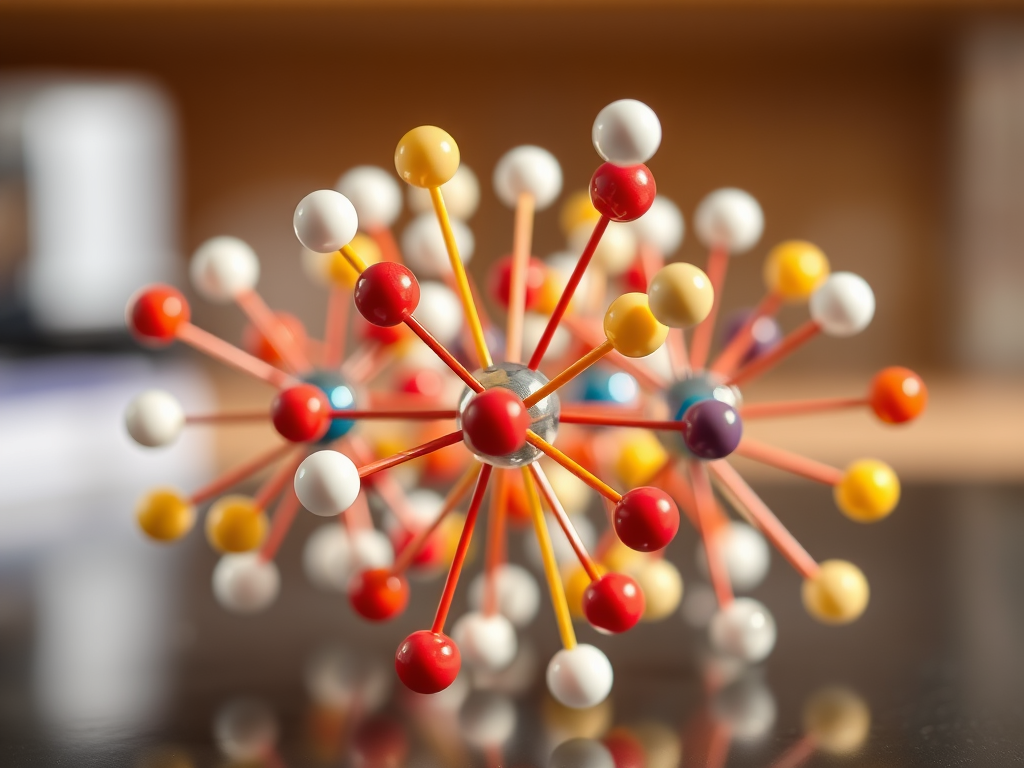
One day he was constructing large wooden models of crystal structures for undergraduate chemistry lectures at the University of Melbourne. These models—representing structures like sodium chloride and fluorite—were made from coloured wooden balls (atoms) connected by rods (bonds), carefully drilled at precise angles using trigonometric calculations. We’ve all seen them, they are stand by of every A level and undergraduate teaching room

As Robson assembled these models, he noticed something profound: the components seemed “invested with information,” naturally predisposed to form the intended structure. This observation led him to wonder: what if molecules could behave similarly—self-assembling into predictable, extended structures using chemical bonds instead of rods? That question planted the seed for MOFs, which he began exploring seriously about a decade later.

It’s funny how learning is a holistic thing. Research informs teaching. And teaching informs research. Oddly enough artists like Leonard Bernstein and Stephen Sondheim found the same thing, if you substitute “creative writing” for research. Perhaps its the idea of responding to questions, looking at the bigger picture. Or in Robson’s case, taking time out to play creatively with models. If you have found the same, oh readers, let us know. Meanwhile tell your Government to keep funding research and universities. As we saw in the last blog- they’ll get their money back.

#chemistry #nobel prizes 2025 #metal organic frameworks #carbon capture #climate change #science #research

Nobel Prize for Economics shows this blog was right all along

Back in the dark days of January 2021, when the world economy was reeling from the savage hit of the COVID-19 pandemic, we published a short blog called How to Get some Free Money(LSS 2 1 21) Everyone at that time was worried about the colossal debts their governments had run up to pay for the catastrophe-were we all to be bankrupt for ever? Our point was that Science and Technology were the key to economic success. Encourage them. and you will grow your way out of debt. However hard a medieval peasant worked and saved he could never hope to achieve the productive levels of a man with a steam driven plough.

How comforting then, to find that better, more profound minds have demonstrated this truth at a Nobel level. By incredibly detailed studies Joel Mokyr, Phillipe Aghion and Peter Howitt [1] have looked at archives, crunched the numbers, weaved out feedback loops and carried out any number of other careful ratiocinations to prove the point. You can read more here [2] if you like graphs and words and things. But for us three things stand out.

There has to be abstract learning first. Many of the ideas and processes that drove the industrial revolution had appeared a hundred years before as the abstruse discoveries of thinkers like Newton and Hooke, which the average man in the street would have called “bonkers!”. There has to be a social ecology of skilled and trained workers, able to quickly deploy and develop the new ideas. In the eighteenth century this meant craftsmen like watchmakers and weavers. Now it means experts in AI and biotechnology. Finally a society must be open to rapid change: and welcome it where possible. For if you do not, someone will rapidly steal your markets with a new idea you could have developed but didn’t, because the old ways were tied and tested(think Kodak and digital cameras) [3]

All of which has relevance now, especially in the United States of America and the UK. In both those countries there is a growing movement to throw over renewable energy technologies and move back to coal and oil as soon as possible. We understand the fears and share some of the nostalgia for a bygone age which the proponents of this U turn so plainly demonstrate, Yet we also recognise that other countries will not. They will adapt clean green technologies rather fast. Not only will this leave the Anglo-Saxon economies hopelessly far behind. Their pollution will also make them a dangerous threat to other places in the world. Places which may seek to shut down that danger by whatever means necessary.

[1]https://www.nobelprize.org/all-nobel-prizes-2025/

[2]https://www.nobelprize.org/uploads/2025/10/advanced-economicsciencesprize2025.pdf

[3]https://www.forbes.com/sites/chunkamui/2012/01/18/how-kodak-failed/

#science #technology #growth #innovation #digital cameras #renewable energy

Round Up: Gulf Stream collapse. stem cells rule the world, and much more

an ever-so-slightly flippant look at stories from near and far:

Gulf Stream Collapse If the Atlantic currents fail, life as we know it in western Europe will be pretty much unsustainable. The very fact that this comes from the impeccably right-wing Mail shows it is not climate change zealotry https://mail.yahoo.com/d/folders/86/messages/AA5iTI1EuaNWaFvEagvLiAbCFXc?.intl=uk&.lang=en-GB&.partner=none&.src=fp

The new political landscape Believe it or not, we feel a bit sorry for all those avid class warriors of the last century (both sides) as all their efforts now seem a waste of time. The world runs on identity, not economics as the immensely learned Professor Curtice shows in the Conversation

Stem Cells #1 An eye to the future Over twenty years ago, The Most Intelligent Man Whom We Have Ever Met was predicting a rosy future for stem cells. Today’s first proof he was right comes from this marvellous new treatment for blindness in the Mail

https://www.dailymail.co.uk/sciencetech/article-14839199/Man-blinded-Fourth-July-fireworks-grows-new-eye.html

Stem Cells #2 The sweet smell of success More proof of the prescience of the this same Most Intelligent Man Whom We have Ever Met is again from the Mail(our researchers seem to read little else) with this rather nifty advance in diabetes therapies

https://www.dailymail.co.uk/sciencetech/article-14842321/Major-breakthrough-10-patients-diabetes-CURED.html

Genes back in fashion Full twenty five years ago, and more (that’s enough declamation-ed) we used to delight in boring Police Officers and other uninterested visitors how important the human genome project was going to be. Proof we were on to something comes in this intriguing article in the Guardian where scientists are trying to recreate the whole thing from scratch in a test tube

https://www.theguardian.com/science/2025/jun/26/synhg-uk-synthetic-human-genome-project-dna-genetic-code

And the music? Although never giant fans of the work of Mr David Dundas-we tend to prefer JS Bach and the Baroque lot) we cannot, in the light of the foregoing, avoid putting up his famous ditty about “waking up in the morning putting his old blue jeans on”, or something like that Jeans/genes-geddit?

#genes #dna #diabetes #eye #blind #stem cells #climate change

Renewable energy from seaweed Now there’s a thought

If we are going to get through the current climate crisis, and come out alive at the other end, we ‘ll need to consider every new idea, however outre it may sound at first sight, Which is why we want to showcase, via the Conversation,[1] the work of Mike Allen , Professor of Genomics at the University of Exeter and founder of SeaGen,[2] a company which has the courage and vision to think differently. ]For Mike thinks that by using robotics, he can harness the enormous biomass of seaweed in the sargasso sea, and other places

Now we’ve always been pro- seaweed here. Veteran readers may recall our promotion of the new Sussex kelp forest, both on this site and in articles in local newspapers and websites [3] and we certainly talked about how the stuff, especially kelp, could be a source of all kinds of useful things like food and fertiliser. But as his article and website makes clear, Mike is taking this to a whole new level. By using autonomous robotic systems, the harvesting and processing of the weeds can be done on an ergonomic and industrial scale.

We have no financial or any other connection to this man or his company. But we are massive fans of the hopeful start-up. Because we believe that progress, real progress grows form that complicated network of new companies , university departments, government agencies and anonymous little industrial estates where the real dreams of the future are born. We’ve done stories like this before, and will do more in the future. If you really need a declaration of interest it is this: they may help us to survive.

[1]https://theconversation.com/how-seaweed-is-a-powerful-yet-surprising-climate-solution-251195?utm_medium=email&utm_campaign=Latest%20from%20The%20Conversation%20for%

[2]https://www.seagen.io/

[3]https://www.sussexgreenliving.org.uk/sussex-kelp-forest-leads-the-way-by-keir-hartley-first-published-in-west-sussex-county-times/

#seagen #seaweed #sustainability #robotics #ocean #climate change

Cortical Labs: the first working Synthetic Biological Intelligence

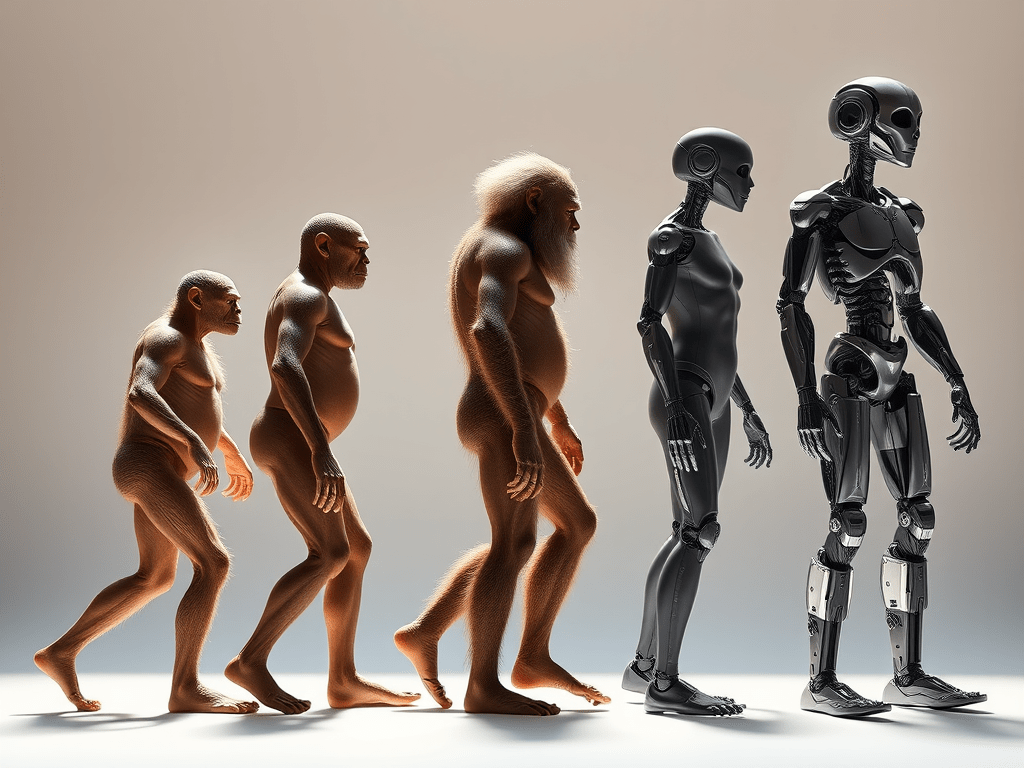
Far back in the last century, Arthur C Clarke drew attention to a slow but steady trend in human evolution: the gradual merging of the human body with artificial technology. Like all great things it started small, so small as to be almost unremarked. Firstly were primitive artificial legs and hands, all that could be done with the technology of the time. By the time Clarke made his prediction in the novel 2001; a Space Odyssey, the scientists of the day were experimenting with artificial hearts, lungs and kidneys. Fast forward to our own age. Not only have things like prosthetic limbs and eyes greatly improved. We are starting, tentatively, to modify the genes of living cells with early techniques like CRISPR Cas-9 (LSS passim). Elsewhere, the attempts to engineer interfaces between human tissue and silicon chips seem to be showing real possibilities of success.

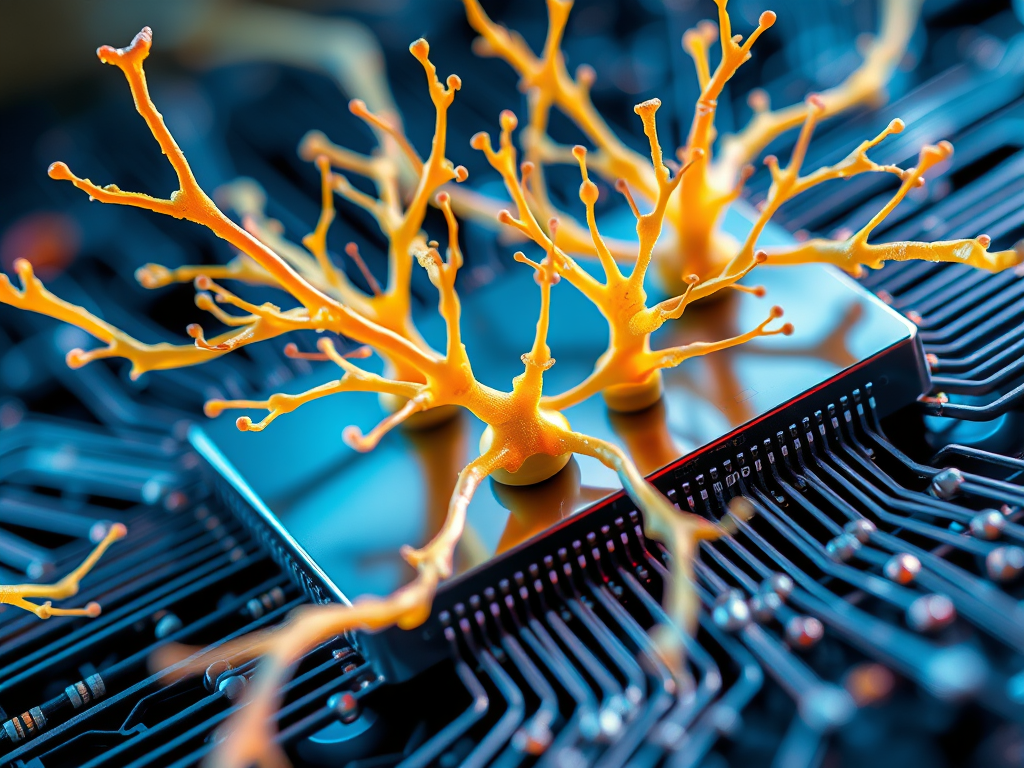
But we think that the efforts of Cortical Labs to create Synthetic Biological Intelligence(SBI) takes the trend to a whole new level. [1] Their CL1 computer uses laboratory grown neurons interfacing with silicon chips to create an entity that defies old -style classifications of what is biology and what is technology. Rather than offer you 18 dreary paragraphs, we will urge you to visit their website. But if we cherry-picked that: The CL 1 far more energy-efficient than a conventional computer; that it is ideal for disease modelling. drug disorder research; that it dispenses with much of the need for animal experiments; that above all it will be available for shipment at a cost of $35000, you would see why we have chosen this item for your entertainment today. Because we honestly thought that this kind of thing was decades away. Forgive us: but we have no financial, professional, personal or any other kind of relationship with this company. We never endorse; but when we report, we mean it.

And we do indeed report developments which seem to be genuinely game changing, and truly the work of the most intelligent people at the very limits of human accomplishment. We believe that this is one of them. Which is where our doubts creep in. For Arthur C Clarke also pointed out how the very act of adopting technology (stone tools at the beginning) transformed the biology of creatures that used it. So much so that they changed into new species, quite unrecognisable to their ancestors. And absolutely dependent on the new technologies to survive, with no possibility of de-inventing them . We are not the first to suggest that some engineered organism will replace us. But we do think that possibility is now very real and very near.

thanks to G Herbert

[1]https://corticallabs.com/cl1.html

#synthetic biological intelligence #cortical labs #artificial intelligence #computers #biology #evolution

If you want to cure cancer, try paying more taxes

Cancer is the great unspoken truth running through our civilisation. Everyone knows someone who has it. Most people know someone who has died of it. The statistics suggest one in two of us will develop it in one form or another. When strangers discover that we run a science blog it isn’t long before cancer cures edge into the conversation. Everyone deep down wonders “will it happen to me?” You do, don’t you?

Which is why it gets a lot of coverage, and fresh discoveries always make the news. Following Ellyn Lapointe for the Mail [1] and the Korean owned Medical Life Sciences News,[2] we showcase the work of the brilliant Professor Kwang-Hyun Cho of the Korean Advanced Institute of Science and Technology. Instead of painful drawn-out chemical treatments it looks to cure cancer by manipulating the biochemical mechanisms of the cell. Admirable, and you can read more by following the links. But for us, for today, that is not the point.

Look again. The Korean Advanced Institute of Science and Technology. Turns out it’s state owned. Paid for by taxes, Its at the centre of an ecosystem of research institutes, university departments, private companies and assorted government and non-government organisations whose collective wisdom and output is far more than the sum of its parts. It’s not so much arriving at another cure for cancer that is important for us today. It is because this cure is part of a rolling programme of research and discovery that throws up such discoveries as it goes along. Creating a thriving centre of excellence and high value jobs.

The view taken by most people in the UK is that taxes are evil things. The State is an evil parasite holding back economic growth and thereby progress. But isn’t our story today prime evidence that the opposite is the case?

[1]https://www.dailymail.co.uk/sciencetech/article-14369821/breakthrough-switch-reverses-cancer-human-body.html

[2]https://www.news-medical.net/news/20241223/Groundbreaking-technology-converts-cancer-cells-into-normal-cells.aspx?form=MG0AV3
#cancer #medical sciences #economics #research

Rookwood Operations: Clearing phosphates AND capturing carbon

Today we have a good news story, brought to us by the ineffable Robin McKie of the Guardian, which brings genuine hope, Because it solves two problems for the price of one.[1]

To begin at the beginning. In the last fifteen years or so, England’s rivers have started to fill with huge, choking blooms of algae, which seize all the oxygen from the water, thus killing everything else before, dying back themselves . To leave a poisonous foul-smelling sewer , like the ones you used to find in old towns in the Industrial revolution. The cause? High levels of phosphates on agricultural lands, which runs off into the waterways, producing sudden spurts in the aforementioned algae-and down we go to death, for the ecosystem that is. Now, it could be argued that without high phosphate levels we could not feed our population ( feed or fatten?-ed) So how to square the circle?

The answer is to trap the run-off phosphates and return them to the land. And a small company called Rookwood Operations[2] is doing just that, down in the leafy county of Somerset. Their new Phosphate Removal Material just sits in the water, soaking up the phosphates until it’s full. Whereupon it is returned to the land ready for the farmers to exploit again. And get this:

For every metric ton of PRM produced, carbon is sequestered, locking CO2 for up to 1000 years.
PRM is made from completely natural circular sourced sustainable components

How’s that for two in one? There’s so much to like here for LSS readers. There’s even a feminist angle, as one of the company founders was up for the prestigious UK Women in Innovation Award.

Thinking new. Thinking differently. Using existing technologies to squeeze progress in a new way. Surely that trumps going round smashing your friends over the head because it makes you feel better?

[1]https://www.theguardian.com/science/2025/feb/02/uk-scientist-wins-prize-for-invention-that-could-help-avert-phosphogeddon

[2]https://rookwoodoperations.co.uk

#Rookwood operations #phosphates #river pollution #capture technologies #agriculture #technology

Human Genome Editing: A Frankenstein Future?

Technology always advances faster than ethics. Leaving society and individuals floundering in it wake. The printing press transformed European society in the sixteenth century. The cotton gin transformed the economy of the US South, arguably deepening Slavery, and instituting a pattern of violence and cultural wars which have lasted to this day. In the last century, the development of nuclear fission and computing have effected changes as profound as any known in History. It is with these examples in mind that we approach the subject of Human Genome Editing, which may make everything before look silly.

This has been a decade in which the effective manipulation of nucleic acids in living systems has become routine. We have covered such exciting techniques as CRISPR Cas-9 and Base Pair Editing. While all educated people stand in awe of the rapid advance of mRNA vaccine technology, which did so much to stem the COVID-19 pandemic and now offers real hope of new cancer treatments. But, without disparaging the intellectual brilliance or immense hard work of their creators, these technologies are relatively small scale in the size of the biological interventions which they entail. So now read this from Nature Briefings:

Brace for the arrival of Gene editing Modifying multiple DNA variants in human embryos at the same time, a process called polygenic genome editing, could substantially reduce the likelihood of certain diseases occurring. But it also raises concerns, say the authors of a Nature analysis — not least the renewed threat of eugenics. “This is not a hypothetical issue,” argues an accompanying Nature editorial. While such genome editing might be decades off, societies need to consider its possible benefits and risks now to avoid having to play regulatory catch-up when the technology becomes available.Nature | 4 min read
Reference: Nature paper

Imagine a society where the very richest may edit the DNA of themselves and their offspring so that they, and they alone form a race of superbeings. The future for the rest of human kind, the untermenschen if you will, looks grim, and may be very brief. Such evolutionary bottlenecks have occurred in the past; and those on the wrong side(always the majority) “fly forgotten as a dream, flies at the end of day” as the old hymn puts it. Time to consider this very seriously indeed we think. Nature thinks you may have 30 years: we suspect it to be much shorter than that.

#gene editing #dna #biology #biochemistry #CRISPR #Base pair editing #genetics

Materials Science Meets medicine-with a bonus for our Spanish amigos

There’s whole areas of learning and technology which we don’t cover much here. Because frankly, we are just too ignorant. So with the guidance of Dr José Manuel Torralba we present some truly startling advances in the field of Materials Science. What we found was so unexpected that you’ll have to forgive the slightly gushing Tomorrows World 1970- style vibe with which we serve it up. (One link is in English [1] but as we found the the Spanish one first, we present that, too [2])

Implants and artificial tissues Ever heard of nitinol? Neither had we. It’s a sort of alloy of titanium and nickel. already well tested by dentists and others. According to José, it should now be possible to create corneal implants which are capable of shape-memory. Yes, that was a new one on us too. But it looks as if this is going to be an exciting, but very practical area.

Batteries have memory too Our next surprise was batteries with anodes made from something called silicon nanofibres which apparently will be much better at storing energy than the current graphite ones. If nothing else, a real boost for renewable energies

and finally:

Metamaterials We thought this was like something out of a Terminator style movie. But it may be possible to to design materials which, in the words of José

We can modify a material’s surface by creating structures that cause waves to move, bend, or reflect in specific ways. This allows us to create invisible materials (manipulating light), radar-undetectable materials, or materials that completely isolate sound. By altering a material’s internal architecture, we can achieve unprecedented mechanical properties. 

It’s so refreshing to dive into a little-visited area and find out what the clever people who work in it have been up to. Especially when it informs one of the main tropes of this blog, which is medical research. We hope you found this slight diversion useful, and will leave you with this thought:
There are more things in heaven and earth, Horatio, than are dreamt of in your philosophy- Hamlet Act 1 Scene 5

[1]https://materials.imdea.org/the-supermaterials-that-will-transform-our-lives-in-2025/

[2]https://www.bbc.com/mundo/articles/ckg9v74kvr2o

#metamaterials #nanotubes #medicine #implants #materials science