Availability bias: it’s one of the great errors of the human mind, from selection of romantic partners to the decisions of statesmen on whether to enter major geopolitical wars. We get cross because a Minister says this, or a football manager makes that decision. So it’s refreshing to come across an article that puts the stories flickering across our screens into a broader context. And this(uncredited) opinion piece from the Guardian does exactly that. Weaving threads of tariffs, Supreme Courts, President Trump, China, and economics it finds a historical parallel for all that’s going on-and why it matters.[1]
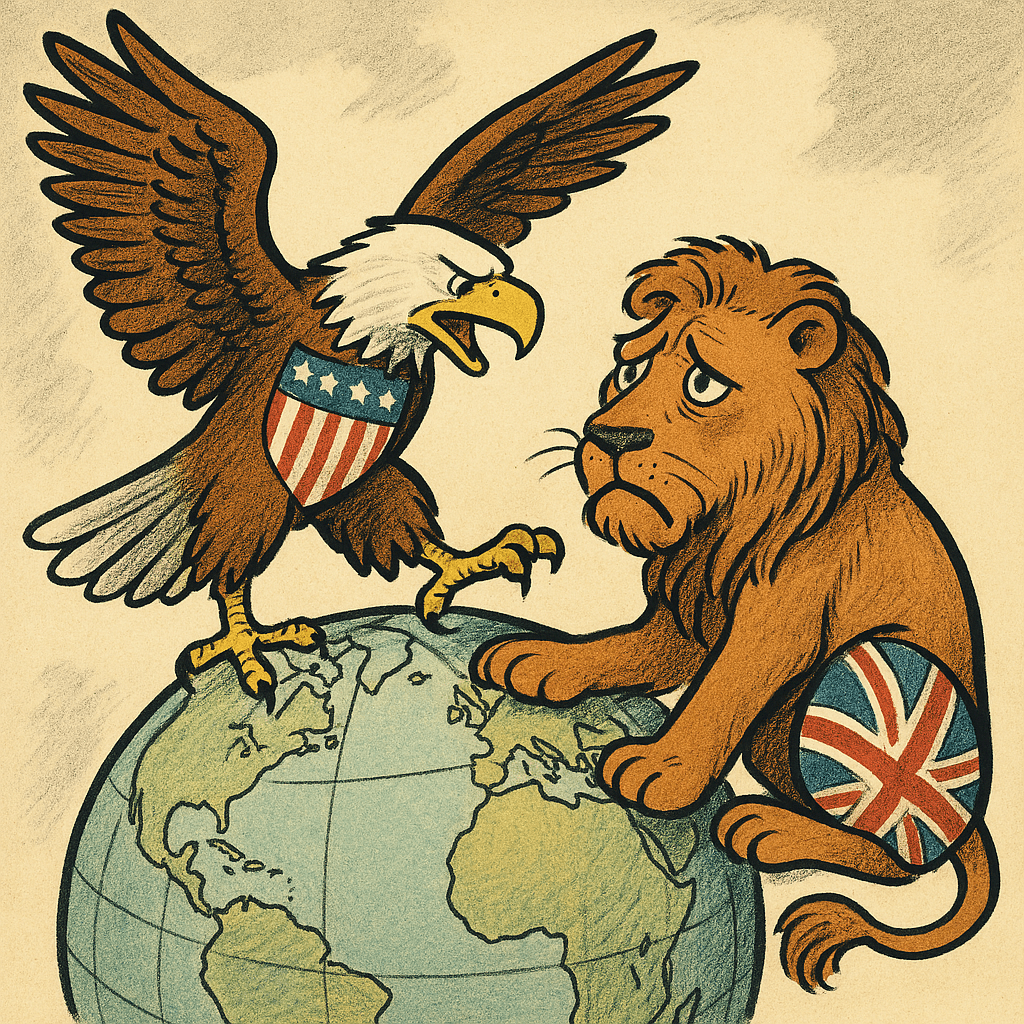
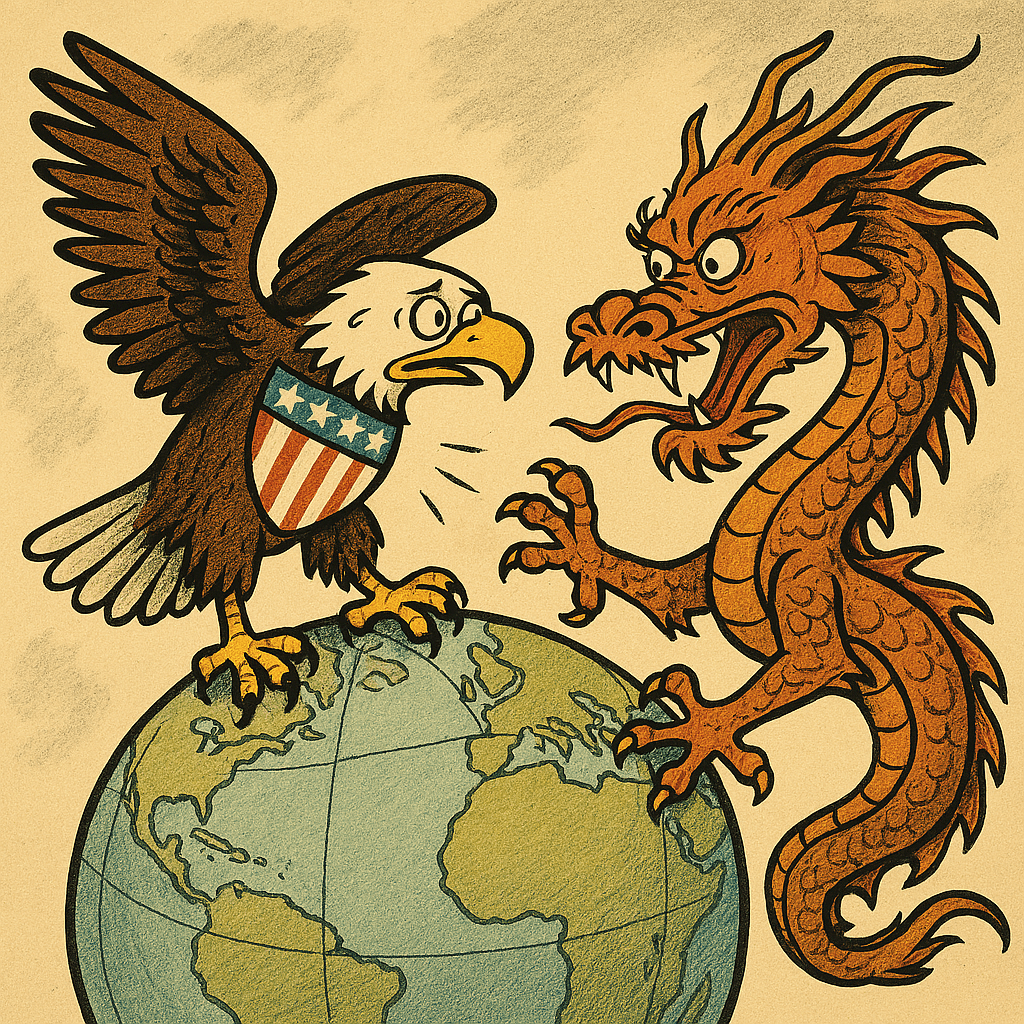
The writer asseverates that Mr Trump is trying to restore a lost America of the 1970s when its manufacturing and technological capacities were unchallenged. Now China, which has concentrated on manufacturing, has obtained an edge which increasingly threatens the US global position. And once that happens, the consequences for powers that go down are not nice. The historical parallel is clear: Britain neglected its manufacturing base from the 1870s onwards, relying on financial services and the strength of sterling to maintain its dominance. In the end it was displaced by the manufacturing strength of the USA, and the inevitable loss of reserve currency status was the final nail in the coffin of British Power.[2]
Unlike many, we do not question Mr Trump’s intelligence, nor patriotism by his own lights at least. But these qualities may not ensure optimal decisions. Nostalgia is a dangerous force. For often the golden ages it longs for were exactly the times when the fatal decisions were made. America chose the path of financialisaton over manufacturing in the 1980s : so to want to go back there is to want to repeat that mistake. Mr Trump has come too late to arrest America’s decline, whatever he decides about tariffs, immigrants or anything else. The basic problem of the United States is a hopelessly skewed balance of money and information between rich and poor, Until that is fixed, the trajectory will continue one way.
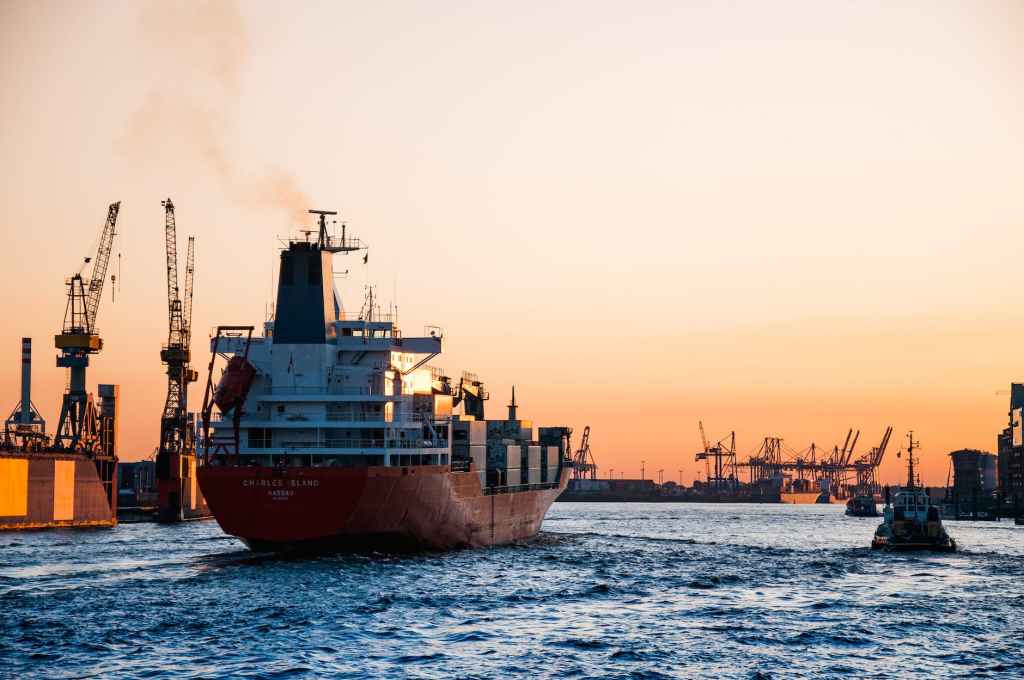
Photo by Aleksandr Neplokhov on Pexels.comPhoto by Martin Damboldt on Pexels.com
Despite everything you read, America still counts. So when it makes a move on something as big as tariff reform, as President Trump did almost a year ago, the rest of the world is affected, Big time: and responds accordingly. Veteran readers will recall our coverage of this trope (LSS 19 5 20) and subsequent riffs on the same theme. Our misgivings were pretty clear. But, how is the world really coping with all these tariffs, counter-tariffs and all the other red tape which has appeared in the last year or so?
At first sight: it’s coping: just. In an excellent article for the Conversation Umair Choksy cites reports from both the IMF and the WTO that world trade actually increased last year. But let’s not get carried away, he warns. In the short term companies can adapt, briefly, by dipping into reserve stock or changing supplier(always to a more expensive one) But both for companies and nations, this can only last so long:
But if costs and availability remain in doubt, these temporary fixes stop working. Stock runs out. Emergency suppliers cost more. And when margins are squeezed for long enough, businesses respond by raising prices, freezing hiring, cutting hours, delaying pay rises or shedding jobs altogether.
The long term consequences are admirably summarised by this report from the Word 360 {2] In a nutshell, they are reduced trade volumes, higher inflation and reduced business confidence, which really does chime with the message of our earlier blogs. It’s quite simple really: if tariffs are such a good idea would Scotland do better by imposing them upon England? Or Kansas upon Arkansas? It was David Ricardo who summarised the benefits of free trade when he wrote:
Under a system of perfectly free commerce, each country naturally devotes its capital and labour to such employments as are most beneficial to each. This pursuit of individual advantage is admirably connected with the universal good of the whole.” [3]
We have written before on the possible advantages of a World Government. One would be the immediate abolition of all trade tariffs for they would be no longer necessary. The world would function as a single unit, with all the same internal tariff-free advantages currently enjoyed by the nations mentioned above. Time for serious consideration?
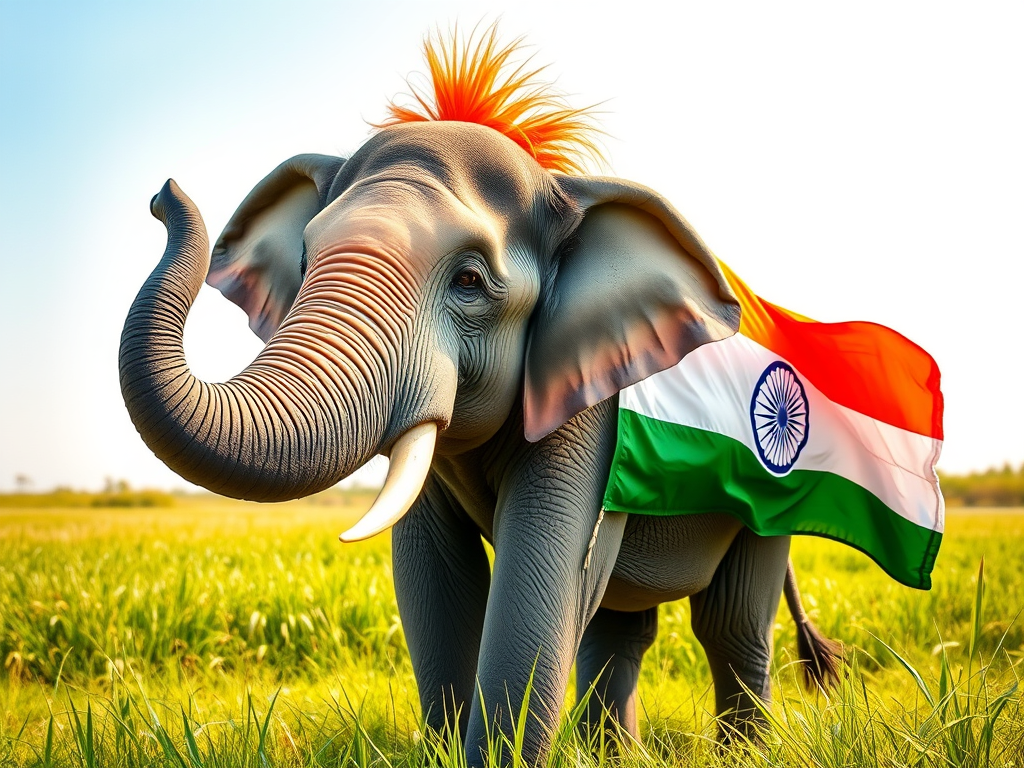
Today, or yesterday (it’s all a bit muddled what with time zones, deadlines and so on) world history changed forever. Because the two biggest powers on the planet have started to come together. Making Asia potentially one huge zone of economic co operation. the true centre of economic and political power in the world. Yes, Mr Xi and Mr Modhi have started to talk about the joint efforts of 1.416 billion Chinese and 1.464 billion Indians. all increasingly prosperous and tech hungry. All of which trumps the 347 million Americans who so recently seemed to have the world game so utterly in their hands(anyone remember George W Bush?)
Ah, critics might say- but look at the GDP figures. America at $30.51 trillion is still comfortably ahead of both its enemies combined($23.4 trillion) But a Briton in 1900 could have pointed to similar figures which showed how rich they still were, ignoring the growth potential of rivals like the USA and Germany. And ominously, the current USA is in a bad position here, with 1.9% against China’s 4.0 % and India’s 6.9% The conclusion is obvious; the USA is fast on the way to becoming a regional, local power. It’s days of strutting the world like a colossus are over, or very nearly so.
And how has this come about? There have been long term trends of course. Growing inequality. political polarisation and corruption of its legal system have been in evidence since 2000 at least. The Iraq war of 2003 was an epic blunder and the crash of 2008 fatally undermined the rationale of the American order. But until recently America still represented an open democratic country Rational independent institutions. inalienable Rights , Something worth fighting for, both for its own people and for its allies. But now those allies are humiliated . [2] Others, not allies but still potential partners, alienated by irrational and erratically applied tariffs, rush to form their own blocs and trading systems. It was easy to believe that Mr Trump and his policies made sense at least from the point of view of their own country. Now the damage is not only deep, it is permanent. Welcome to a new world order.
A few months ago we published a little blog(LSS 7 4 25) in which we wryly suggested that the policies of Donald Trump. especially on trade tariffs, more resembled those of socialists like Tony Benn than those of classic right wingers like Ronald Reagan. Our aim was less with ideology and more with practical matters: will the tariffs work? We even pointed out that, with advances in automated techniques like AI, it was pretty unlikely that huge numbers of jobs would be created in manufacturing, even if the tariffs really did change the pattern of trade in the way Mr Trump desires.
It’s view shared by professional economists of some standing, as this article by Steven Greenhouse for the Guardian points out. For example Ann Harrison of UC Berkeley, not only shares our thoughts on the automation thing. She also points out that to be successful, tariffs need steady application over decades. Trump’s wildly erratic “they’re on. they’re off” approach seriously impedes investment planning. And how long has he got anyway? Would a successor-perhaps JD Vance or a younger member of the Trump dynasty-have the same approach? While Michael Strain of the impeccably right wing American Enterprise Institute worries that all these tariffs will simply raise costs for most US manufacturers – a serious own goal if ever there was one. The various experts raise other questions too. Will the so called pledges of investment from other nations really materialise? Will the tariffs create an archaic automobile industry based on petrol, hopelessly unable to sell a single unit to a world which has long since moved on to electric? Frankly, are tariffs high enough to achieve their stated purpose(yes, that surprised us too) But all of these are laid out in Steven’s excellent article.
Tariffs are like many things. Sometimes they’re good and sometimes they’re not. If they were all good, then every nation would set them at 100%. If they were all bad, they would have been abolished long ago. The real mistake is to implement a good idea with insufficient care and attention. Now that really does resemble many socialist regimes of the past.
This week Wall Street and its famous financial markets seem to be the centre of the world, don’t they? Just like in 1929 and 2008, for example. So where is Wall Street? We looked on the interweb and found it was in a place called Manhattan, which is in America, which is famous for having leaders of genius. So we thought we would celebrate this fact by bringing you a reprise of that famous drink, The Manhattan. Despite the connotations, how American is it really? Let’s assemble one and find out.
The real beauty of making a Manhattan is its simplicity : a child could do it, just like calculating tariffs. But as no responsible adult would ever let a child do either, we’ll accept you are making this yourself. And if you do, you will find it is divided into two parts. A good patriotic all-American part. And a bad part, which requires Foreigners.
Ice Generally speaking, 100% Made in America. Not only does this attract no tariffs, but its production supply and distribution are all by American workers, thus creating any number of well-paid posts of employment. No nasty foreigner can ever threaten American Ice. If all the stuff in the Rocky Mountains melts due to global warming, they can just invade Greenland to get some more. 4 or 5 cubes for the average Manhattan, by the way,
Bourbon As far as we know this too is made in America. Originally it was called whisky, which was made in somewhere evil and foreign called Scotland (although some of the golf courses are OK) And therefore quite rightly attracts a tariff . But if it is made in America there is no tariff at all, and the more Americans drink of it the more colossal will be the numbers of high paying jobs for American workers created thereby. Oh yeah, 3-4 measures will do.
Vermouth Now we come to the Bad Part. Because Vermouth (often branded with funny sounding names like Martini or Cinzano) come from Italy! Not only has nothing good, like science, art, literature, cooking or architecture ever come from that country: behind the smiling mask of friendship, they are ready to have their way with American trade, American pizza, who knows, maybe even American ladies, the lotharios! No wonder it now attracts huge tariffs! But since vermouth has been floating around Manhattans ever since that island became the financial capital of the world, you’ll just have to put up with it. One measure of the red stuff should not put too much pressure on US Treasuries,
Mixing Get an American Worker to put each of the above components one by one into an American cocktail glass, made from American glass, as they will taste better. Make the American Worker stir them. He/she/they may now add a tariff-free American Cocktail cherry, on a stick made from good American Sequoia trees, creating even more well paid secure American jobs. That done, you may drink your Manhattan. Only one, of course. And think of all the American jobs you have created thereby , which should compensate for those lost by the current slight adjustments in the Stock markets just over the road.
God knows, we don’t like to blow our own trumpet here. The pictures of the Conceited Ape and the Man Blowing His Own Trumpet (both generated with AI) are entirely coincidental. But attentive readers may have noticed how we have been pushing the dangers of the Smoot-Hawley Tariff of 1930 and its parallels to the policies of Mr Donald Trump (at the time of writing his title is still Mr) .
Now the admirable Larry Elliott of the Guardian has got in on the act [1] We’ve often repeated his thoughts on these pages. And this time he goes further, suggesting it is a sign of American weakness, not strength. Well worth a read over your morning latte, we think As for us, we hope that is the last we see of Messrs Smoot and Hawley and their execrable tariff.
But before we go here are a few final thoughts
1 You read it here first
2 Most historians and economists think Smoot Hawley was a major step in the road to World War 2
3 Despite what nostalgists tell you, wars aren’t all chirpy cockneys singing jolly songs in Underground Stations. Ask them in Ukraine if you don’t believe us.
4 A nation may claim the right to act entirely in its own interest, without regard to others. Fair enough. But by the same logic does an individual have the right to sell Class A drugs such as heroin, if he can make money thereby?
Tariffs: here we go again. We understand that Mr Donald Trump may have his own reasons for imposing them. As the ruler of a proud and independent nation he has the right to do so. But, for the moment, we still have the right to comment on his action. Which we did in two blogs (LSS 19 5 20, 12 11 24) Being of a historical turn of mind we drew parallels with the famous Smoot-Hawley Tariff of 1930. Which in the view of most economists and historians not only deepened the gathering recession, but also lead more or less directly to World War Two.
In such circumstances it is questionable whether it is “nice” to find that minds far better educated and profound than ours agree with our insights. For today The Conversation publishes an article by Thomas Giffe and Micheal Pouffle which agrees with us in almost every detail [1] In fact it does the whole job rather better; and you must read it, gentle reader.
Because the article brings out the key psychological reasons for the decisions. And psychological they are, not economic. Here are three killer quotes from Trumps most earnest supporters
Congresswoman Claudia Tenney of New York told Fox News that she’s glad the US is “projecting strength for once on the world stage”. Senator Eric Schmitt of Missouri insisted that tariffs were “not a surprise,” emphasising that Trump had relentlessly campaigned on “improving our standing in the world.”
former adviser and populist nationalist Steve Bannon warned that America would no longer be “abused” by “unbalanced trade deals.” “Yes, tariffs are coming,” he said. “You will have to pay to have access to the US market. ………… the free market is over.”
Now these are proud and intelligent people. But their priorities lie in fields other than economics. They may be right. They may not. But we do remember a passage from our Gibbon about the declining years of the Empire. Wherein a particularly tyrannous but insecure Emperor, having arranged the murder of his best general. asked an ordinary Roman Citizen for his opinion of the deed:
“I am ignorant, sir, of your motives and intentions” replied the honest man “I only know you have acted like a man who cuts off his right arm with his left”
Today we revived a post about the Roman Scholar Cassiodorus, or part of it. We did so because we thought his life might be relevant to the folly of our own times. While we shuffled through the process of writing, posting and so on, we noticed that a reader had picked up on another four year old post about the infamous Smoot Hawley Tariff. And so, without further ado, we reproduce below The Smoot Hawley Tariff:Another fine Mess…… Because we think it’s more relevant than ever. Thank you, that reader
It is the year 1930, and Republican Herbert Hoover is in his second year as President of the United States. Outside the White House, popular tunes on the radio include Embraceable You, by George and Ira Gershwin, and Ten cents a dance by Lorenz Hart and Richard Rogers. In cinemas Laurel and Hardy have made their transition to talking pictures with shorts like Hog Wild and Another Fine Mess. These would have supported new feature films such as Hells Angels and The Dawn Patrol, both evoking strong memories of the recent World War.
In May 1930 Hoover was a very worried man. In the previous autumn, the Wall Street Crash had sent shares into meltdown, triggering an avalanche of company closures and layoffs. By March 1930, US unemployment was already at 1.5 million. Now there was even worse news. On his desk lay a Bill called the Smoot-Hawley Tariff-and he, as President, was expected to sign it.
The Bill had been introduced into both Houses by Senator Reed Smoot (Rep, Utah) and Representative Willis C Hawley (Rep, Oregon). It was a response to cry from Republican heartlands to protect American jobs for American workers-and especially American Farmers. To this end, it introduced high tariffs on a vast range of imported manufactured and agricultural goods. Now it had passed both Houses of Congress, and so only needed the President’s signature to become law.
The trouble was that the whole rest of the world depended on trade with a thriving American economy. America was the only healthy economy left of any size after the Great War. A rise in US Tariffs would mean a collapse in trade for everyone else; and even the possibility that they might retaliate. 1,028 leading economists signed a petition asking the President to use his veto. The head of JP Morgan begged the President to reject this “asinine” legislation. Henry Ford spent an evening with the President in a last- ditch attempt to persuade him to use his veto. It didn’t work: Hoover knew that he needed the support of his Republican Party to govern at all. Not to have signed would have sparked a civil war inside the party. And so on 7 June 1930, the Smoot Hawley Tariff became Law.
The economic consequences unfolded at once. Over the next three years US imports decreased by 66%, and exports by 61%. An economy estimated at $103.1 billion in 1929 had fallen to $55.6 billion by 1933. The collapse in farm and other commodity prices brought starvation to the farming communities who had so strongly pressed for the Bill. In December 1931 US unemployment reached 9 million. By December 1932 it was 13 million.
The international consequences were disturbing. Led by Canada, all the major trading countries began putting up their own protectionist tariffs. Any hope of the world trading its way out of depression vanished. Unemployment rose to vertiginous heights, especially in Germany. There were consequences. In 1928 the Nazi Party had 12 seats and 2.6% of the vote. By 1932 they commanded 230 seats and 37.3%. Most worrying of all was Japan, which in despair abandoned the world community. Instead they looked for resources and markets by seizing Manchuria from China, initiating the eastern half of a war that would last until 1945.
What can we learn from all this, ninety years on? Never underestimate the power of ignorance and stupidity in human affairs. That nations have a right to defend their interests, but need to be very, very thoughtful about how they do it. And that the Talkies were here to stay.
By 1934 the new President, Democrat Franklin Roosevelt, was already starting to lower tariffs again. But the damage had already been done. Japan was by now so committed to China that only military defeat would get them out. In Germany, Hitler was consolidating his power by becoming Fuhrer. Some years of peace lay ahead, but the lines that led to war were already laid down.
Perhaps we should leave the last words to WH Auden, who wrote these memorable lines on 1st September 1939, as Germany marched into Poland, and the most terrible conflict in history got under way
Accurate scholarship can/Unearth the whole Offence/from Luther until now/That has driven a culture mad……………………….I and the public know/What all schoolchildren learn/That those to whom evil is done/Do evil in return
we apologise for being unable to find a royalty-free image of Messrs Smoot and Hawley
Hugh Brogan The Pelican History of the United States of America penguin 1985











 Learning, Science and Society