Are Co operatives making a come back?

History: it’s a funny, cantankerous old thing. Any action seems to produce its opposite. It may be happening again. Starting in the South east London Borough of Lewisham.

As every schoolchild knows, the Industrial Revolution produced an atomised, nihilistic society where the overwhelming majority lived in slums, and worked every hour for pitiful wages. The new metropolises like Manchester drew waves of strangers into disease ridden slums. The results were far indeed from the hopes of the philosophers of the Enlightenment whose heady thoughts on free markets had kick-started the whole sorry mess. Yet somehow, in those desperate places, people began to come together. New community organisations began to thrive. Methodist Churches were one example. Trade Unions another. There were things like Working Mens clubs and libraries. Building Societies. And of course the Co operative movement, where poor people could club together to make their purchases at their own shops.(overseas readers might like to know it still exists today, but is barely differentiable from any other hight street grocer) Each in turn contributed to the foundation of the Labour Party. Fast forward one hundred years, what with the collective experience of wars and depressions and most people assumed that collective actions were the optimal solutions to most of our problems.

Following the world crisis of 1973-74,everything changed. Free marketeers saw their chance to exalt the individual above all else. Writers like Hayek and Friedman paved the way for politicians like Thatcher and Reagan. Even popular books like The Selfish Gene could be read in such a way as to exalt the cult of the sovereign individual . Down with the state! Taxes were an imposition on human liberty! Although the adherents of such doctrines could never explain how the National Health Service was Communist, but the Army was not, the individualistic tendency bit deep into our lives and culture. With the results we see today. Once again, atomised communities. Poverty. Capital in the hands of a very few, who invest with a grudging reluctance that would make Mr Gradgrind envious indeed. Pollution, rack rented slums, and growing poverty, especially among children.

Once again there seems to be a reaction setting in. Starting at the bottom, people are beginning to come together in groups to save what is important to them, from the all -dissolving solution of unrestricted free markets. As Kemi Alemoru explains in this article for The Standard [1], it seems to begin around the need to preserve collective things like music venues and pubs. Her piece treats the Southeast London area of Lewisham as a sort of living field experiment. But the thought strikes us. If it works for things like those, why not for bigger ones? Like housing. Controlling air pollution. Making roads safe. Even, whisper it, schools and collective education.

To borrow from another area of learning “every action produces an equal and opposite reaction. Maybe this is the start of one.

[1]https://www.standard.co.uk/homesandproperty/property-news/the-battle-for-lewisham-how-coops-are-reinvigorating-communities-b1157728.html

#free markets #collectives #cooperatives #hayek #keynes #methodist #coperative society #friendly society #trade union

Five Problems in the in-Box of a World Government

It’s election time in some of the world’s biggest democracies. This year India, the USA and UK all go the polls, and the EU has just done so (we don’t count the recent sham in Russia) All of these places face immense problems. And we don’t think they can solve them, because the root causes are global, making frontiers out of date. Imagine then, if a Global President were elected this year and took office on 1st January 2025. What would be the top five problems in their in-box?

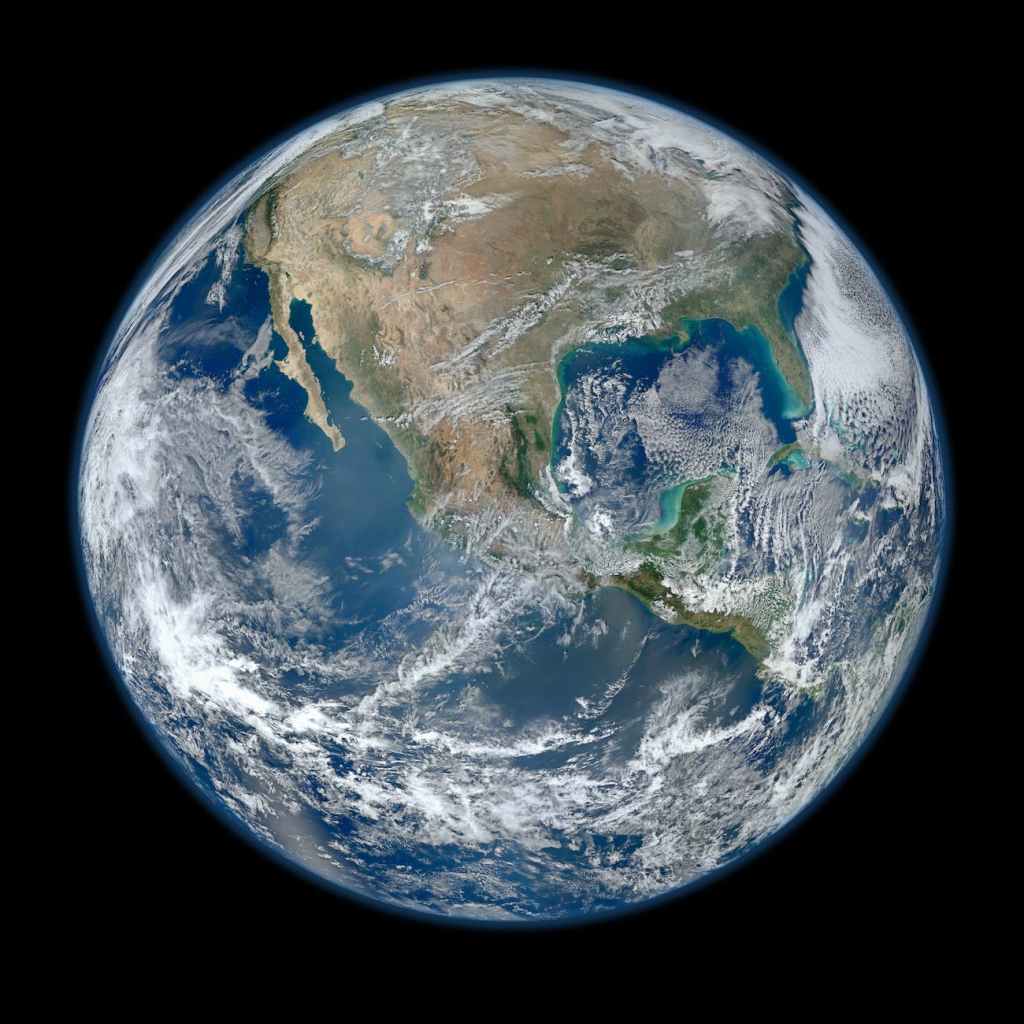
1 Intractable conflicts. People draw imaginary lines and then fight bloody wars across them. The current conflicts between Russia-and -Ukraine and Israel- and- Palestine are current examples, with no obvious resolution, if the nation state remains the highest form of political organisation. Older readers will recall how the conflicts between Mercia and Wessex dwindled once they were combined into England. It was the same after France and Germany joined the EU. A World Presidency would imply that all these ancient hatreds are in fact futile.

2 Climate Change/Global Warming What happens in the Antarctic, the Amazon Basin and the Great Barrier Reef affects us all equally. The existence of endlessly competing polities, each jockeying for its own advantage may fatally slow efforts to deal with this existential threat. A World Government would rapidly co-ordinate mitigation efforts and resource allocation, and it is likely that this one would indeed soon be a memory.

3 Migration and identity crisis People move from poor areas to richer ones according to the same irrevocable laws that govern the movement of ions in an electric field. Yet the deep crisis of identity this provokes has produced toxic political and intellectual consequences in the richer countries, which make it impossible to transfer resources to the poorer ones. By ordering this done, a World Government would have essentially removed the motivation to migrate at all, thus ending the crisis forever.

4 Pandemics Recent experience has shown that economy-shattering pandemics can spread with lightning speed. And, believe us, Covid-19 was mild compared to some viruses which are waiting in the wings. For some reason, those pesky viruses don’t respect frontiers any more than molecules of carbon dioxide do, suggesting that the whole idea of national solutions may be somewhat out of date.

5 Grasping the Opportunity If humanity is to survive, it would be judicious to give ourselves extra chances. Colonising the Moon or Mars would provide ample second homes, even if our local tribesmen blow this one up with their nuclear weapons. Such a colonisation would be faster, more efficient and more just if all were invited to participate and share in the consequences. A World Government would mean that the undertaking would not only be successful, but that existing squabbles were not exported among the planets.

We know this will be saying the unsayable, especially among certain classes of society. Yet there comes a point when a society is bulging in crises, bursting against the limits which constrain it. It’s our contention that these limits are artificial and self imposed. There can never be a return to the good times of the past. But with thought and effort, they may come again in the future.

#world government #nation state #pandemic #global warming #migration #inequality

Will multicoloured hydrogen save the world?

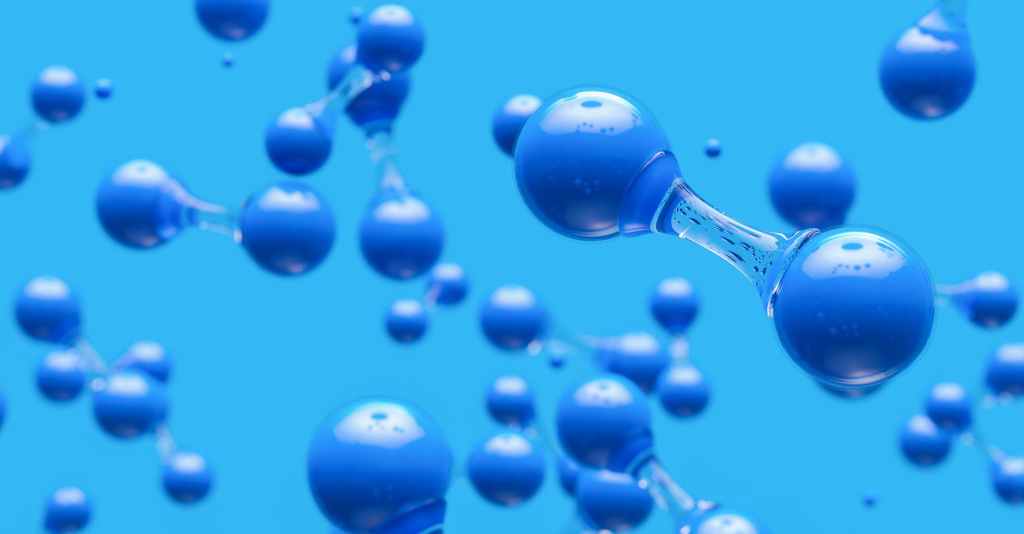
When we were young, hydrogen came in one colour-and you couldn’t see it. It was a just a load of bubbles the Teacher made in the chemistry lab. Fast forward fifty years, and it seems to come in a baffling spectrum of colours. There’s Green, pink, grey, gold, blue, black, brown and turquoise. [1] This handy guide from the National Grid will take you further. They’re all different industry nicknames where the stuff comes from. Just to confuse matters, different people seem to use the same nicknames to mean different things. But underneath all this lies one simple truth-hydrogen gas could represent a useful path to a sustainable future, and still enjoy what might pass for a tolerable lifestyle.

For reasons of space, we’ll concentrate on one exciting sounding candidate which insiders dub Gold hydrogen. The redoubtably named International Electrotechnical Commission waxes rather lyrical about it here [2] It’s a reputable outfit, and there are some good links for those with the coffee time to delve a little further. But-all that glistens is not gold, as Shakespeare once memorably observed. Writing in The Conversation, David Waltham produces a thoughtful balance sheet of the pros and cons of Gold Hydrogen (bewilderingly, his definition of it is a bit different to the IEC’s) He is far from anti; but this well-expressed caveat is well worth bearing in mind

The big question, though, is how seriously to take gold hydrogen. Will it turn out to be an over-hyped distraction of very limited utility? Or will it provide a pain-free path into a low-carbon future? The truth probably lies between these extremes, but only time (and further research) will tell us.

Well said Professor Waltham. That’s how LSS thinks. On just about everything.

[1]https://www.nationalgrid.com/stories/energy-explained/hydrogen-colour-spectrum#:~:text=Green%20hydrogen%2C%20blue%20hydrogen%2C%20brown%20hydrogen

[2]https://www.iec.ch/blog/could-white-and-gold-hydrogen-be-clean-fuel-options#:~:text=By%20contrast%20white%20hydrogen%20refers,conventional%20ways%20of%2

[3]https://theconversation.com/gold-hydrogen-natural-deposits-are-turning-up-all-over-the-world-but-how-useful-is-it-in-our-move-away-from-fossil-fuels-220230

#hydrogen fuel #fuel cell #green hydrogen #gold hydrogen #sustainable #global warming #climate change