
Heroes of Learning: The Master Kong (that’s “Confucius ” to you and me)

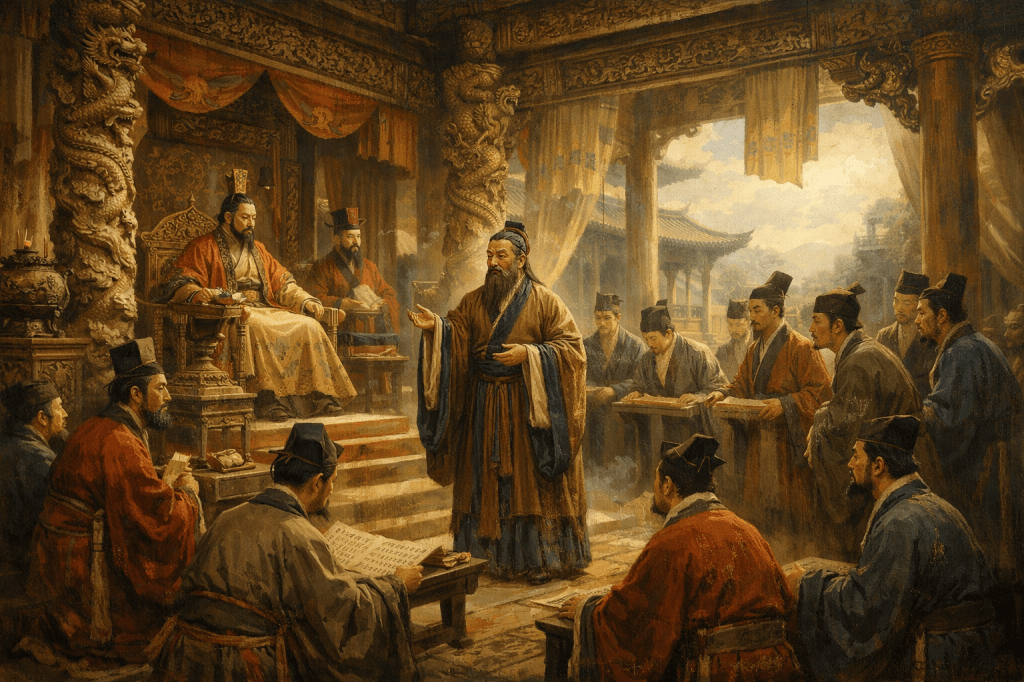
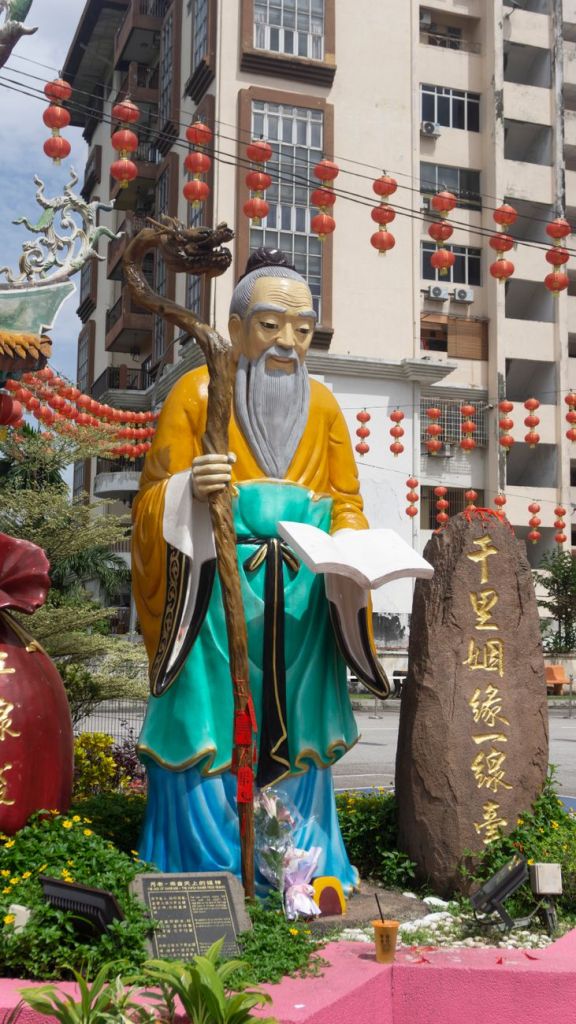
The most grievous defect of our Heroes of Learning series is that up to now, it has focussed almost entirely on subjects and thinkers from the Western Tradition. Which defect grows from our immersion in a cultural and educational system which has assumed that only Westerners ( and those being, largely, white men) have anything worthwhile to say on matters of philosophy and governance. A conceit cruelly exposed by current developments, especially in nations which have long nurtured independent traditions. Time then, with our world readership to look at other systems and thinkers. And we can think of no better place to start than The Master Kong(“Confucius” in the western tradition) who lived in the China’s Spring and Autumn Period probably between about 551 and 479 BC, making him a near predecessor  of such western sages as Plato and Aristotle.[1]

Unlike those refined thinkers, Kong spent a lifetime in the dangerous hurly burly of government service, experiencing wars, coups and even a period of exile. It made him ask above all ”what is the basis for a stable social order? How can the state be made harmonious with the people?” To westerners all the way from Plato through Enlightenment philosophers to moderns such as Rawls, the answer has always been: “ reform the laws; and: institute a just constitution.”  But for Master Kong, no set of laws, no constitution can long survive the actions of a venal and unstable ruler. For centuries, westerners seemed to have the answers. But recent experience of leaders who mistake authority for wisdom, bureaucracies that reward compliance over candour, and publics that lose trust when officials and private corporations behave without integrity, have shown this arrogance to be profoundly mistaken. Confucius inverts all: he insists that the State cannot exist without ethical leadership, truthful counsel and restraint. His Analects[2] [3] (actually compiled by his followers after his death exalt character, duty and wisdom as the basis for this stable State. And that these virtues must first of all be prized and cultivated by the leader and his counsel, before any other men will follow them

These teachings have been rediscovered and re-invented many times, becoming interwoven into the warp and weft of Chinese civilisation. They still inform the actions and thinking of leading statesmen to this day. The world has need of harmony and just order now. The prizes of attaining them are almost within grasp. The penalty of failing to do so will be lethal indeed. Has the world still time to learn from The Master Kong?

[1] Confucius – Wikipedia

[2]Confucio – Analectas, trad. Anne‑Hélène Suárez Girard, Editorial Trotta, Madrid, 2012.

[3]Edward Slingerland – Analects of Confucius: With Selections from Traditional Commentaries, Hackett Publishing, 2003.

#master kong #confucius #china #civilisation #order #law #governance #state #anarchy #politics

Yes, the brain can erase unpleasant memories-but what does that say about who we are?

An old friend once told us about his experiences as a child evacuee during the Second World War. Or rather, he didn’t: because those memories did not exist. Like those of millions of others, his experiences were agonisingly traumatic. And he had blotted them out altogether. News of how the brain achieves this erasure of painful memories comes in this story from the inimitable Nature Briefing called Dopamine hit overwrites memories of fear

In mice, dopamine acts on neurons in a brain region called the basolateral amygdala (BLA) to kick-start fear extinction — the overwriting of fearful memories when danger has passed. Researchers found that this dopamine is produced in a separate part of the brain called the ventral tegmental area. Humans have “the same evolutionarily conserved parts of the brain that regulate these fear responses” as mice, says neuroscientist Larry Zweifel, which hints that neurons in the BLA could be a target for drugs to help to treat fear-related conditions such as post traumatic stress disorder.Nature | 4 min read
Reference: 
Proceedings of the National Academy of Sciences paper

Normally we would riff enthusiastically on the hopes of a cure for PTSD, or admire the ingenuity of the scientists who have made these discoveries. But today, if you’ll forgive us, we want to go in a different direction.

For if unconscious and automatic healing processes of the brain can so affect our memories, what does that say about our consciousness? Are you really in charge of the way you remember, feel, and think? At first glance this may seem to be the abstract playground of a lot of philosophers, psychologists and neuroscientists. The trouble for us is that many religious and economic systems depend on the assumption that each of us is an autonomous individual. Who freely chooses between good and evil or cheap and expensive. And these doctrines affect the real lives of millions. As Keynes observed, every politician who prides himself on being an entirely pragmatic individual is always the intellectual slave of some long dead economist. The writers of many religious books are much older still: but millions still kill and die for their words. We freely admit to being utterly baffled by all this, and are unlikely to return to anything quite so intricate again any time soon. But next time we hear anyone declaiming confidently on things like politics or religion, we will wonder deeply about what is happening in their mind,

As promised above we will endeavour to keep away from all this philosophical stuff. But if you want to know more, the works of Timothy O’Connor, Ben G Yacobi, Benjamin Libet, Daniel Dennet and Sigmund Freud provide useful starting points.

#free will #neurology #unconscious #conscious mind #economics #religion #politics #philosophy