Friday Night Feast: Sangria

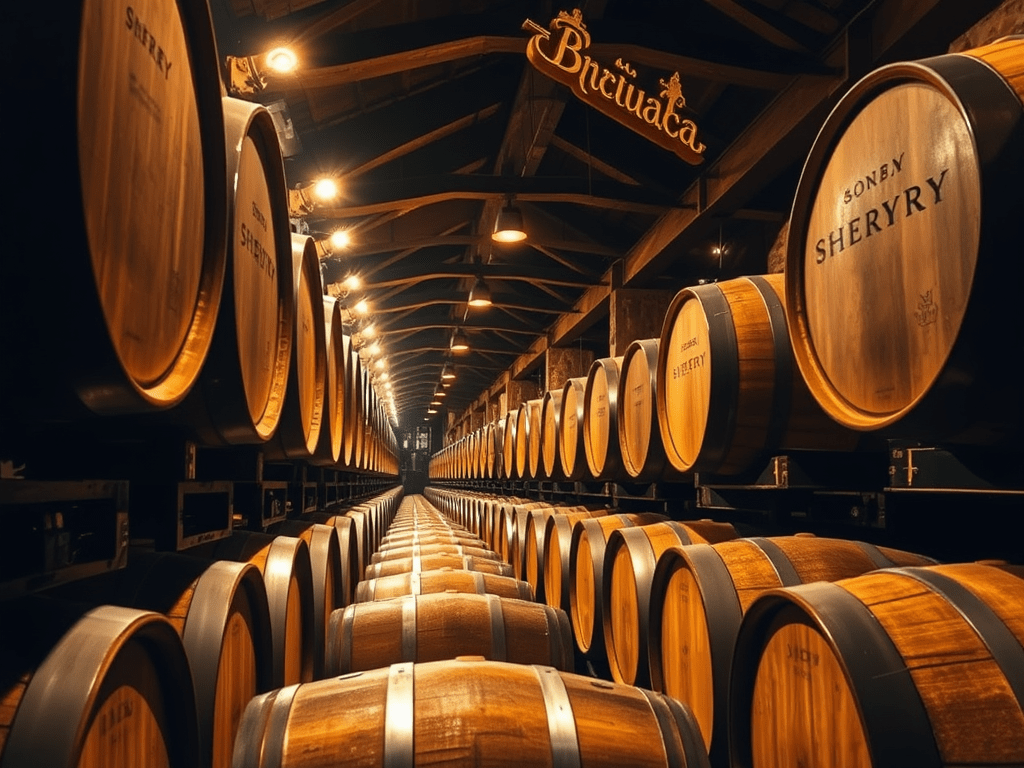
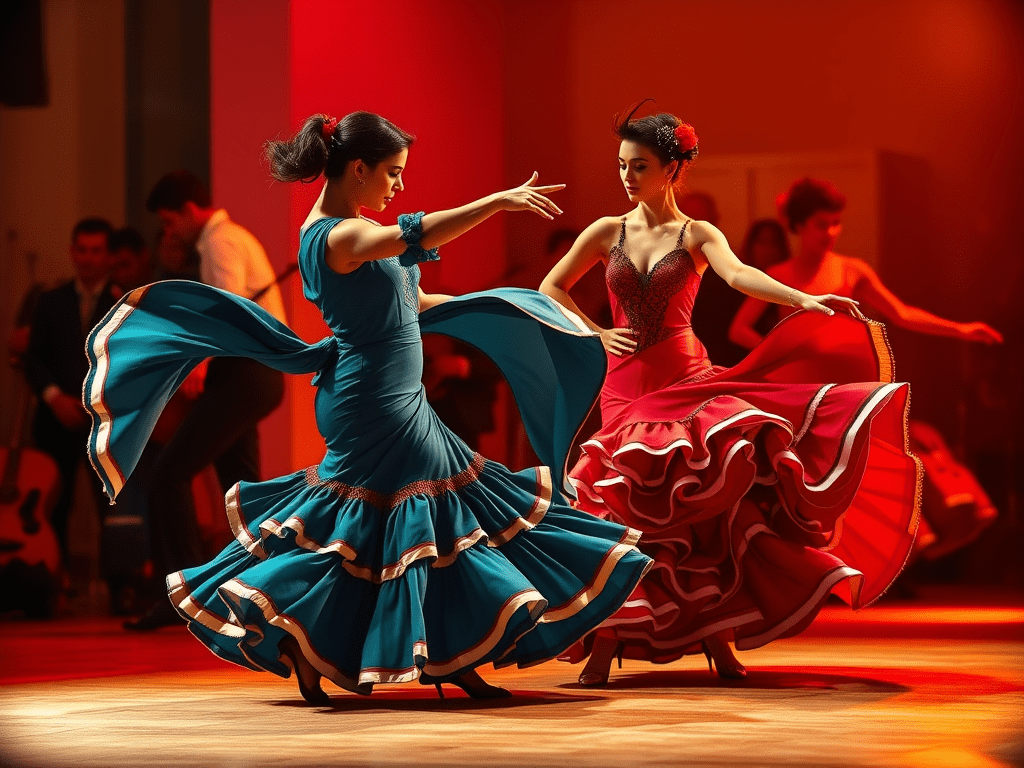
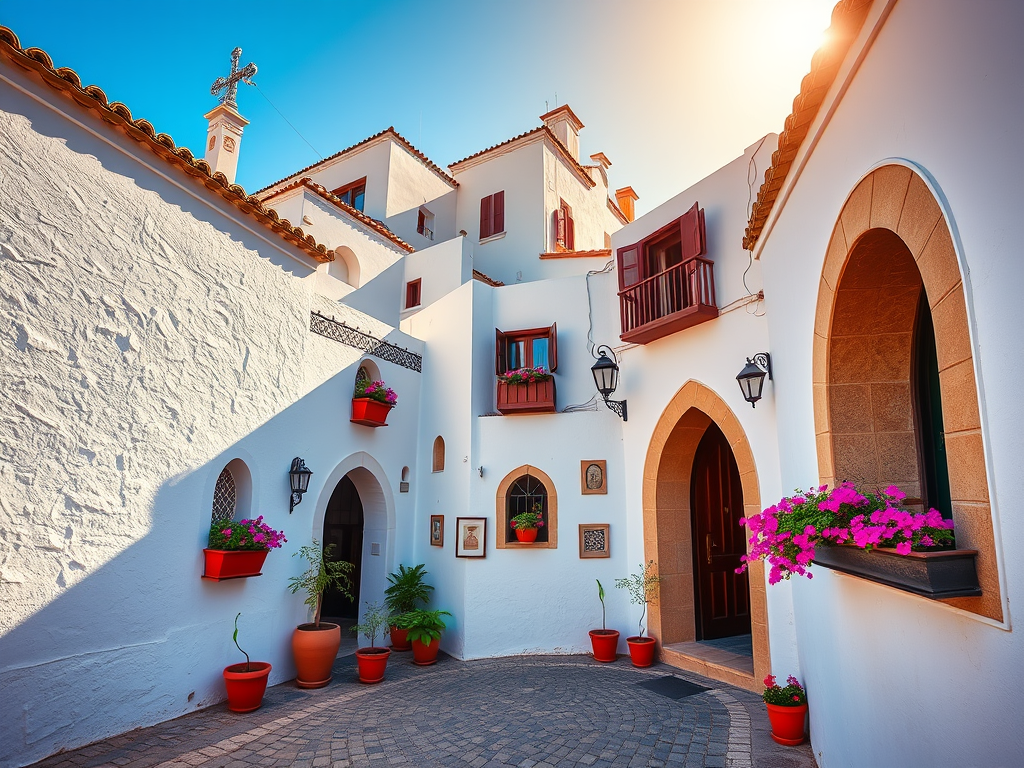
“We’ve just got back from Spain” To those growing up as a child in 1960s London, especially in poorer working class districts, those words rang with magical prestige. Few of us had even been on an aeroplane, let alone to somewhere as warm, as sunnily sandy, and as downright distant as Spain. If you were lucky enough to have a holiday at all it would be a week in a Victorian boarding house in some windswept grey town like Blackpool or Bognor Regis. But these lucky people brought back tales of modern hotels with receptions, swimming pools ,and bars, just like the ones in James Bond films. And the artefacts! Curious little black bulls in hollow plastic. Dolls in exotic flamenco costumes, arms frozen in some eternal paso doble. And funny china jars with a picture of Minorca on them, drinking cups to match. Which, they proudly informed us, were all for the drinking of Sangria. A taste for it was born; and we think it still remains one of the best parts of an Iberian holiday today (you can get it in Portugal too)

The aim is to make it with lots of ice, so that beads of dew form on the outside and trickle down in the hot Spanish night to the sounds of a flamenco guitar(these days it’s more likely to be Rosalia or Aitana; but no somos nadie as they say in that country) After all the ice, there as many variations on the theme as there are bars in Benidorm. This BBC recipe produces an out come as good as any which we have tried down the years. [1] 3 parts of a good full red wine such as one from the Duero or Rioja, one part of orange juice and two of lemonade will get you over the line. After which you can add the sorts of fruits you want, though it being Spain and all that, oranges and lemons seem almost statutory. A little twiglet of mint will give the whole things a most Pimms like ambience, and the scaling up possibilities for two to fifty drinkers are manifest.

The word sangria of course comes from the Spanish word sangre, or blood, as anyone who has holidayed in somewhere like Magaluf or Torremolinos will recognise at once: a reference to the deep red colour of the wine. There are records of something like it in eighteenth century Spain and Portugal. Though the Romans had been experimenting with similar wine punches long before. Don’t accept ones made with rose or white. they are poor imitations , avoided by locals and experienced costa hands alike And so, even though the nights are drawing in we raise a metaphorical copa of the stuff to you all gentle readers, and hope it evokes memories of happy sunny holidays. Thanks again for all your comments, ideas and other general feedback.

[1]https://www.bbc.co.uk/food/recipes/sangria_93847

#Spain #Portugal #sangria #wine #holiday #costa

The Best time to have been alive #4: Al-Andalus

Des kand meu Cidello venid/ton bona al-bishaara /com ray de shol yeshed/fi waad al-hiraaara*

When my Lord Cidello comes, what good news! He shines like a ray of sun on Guadalajara

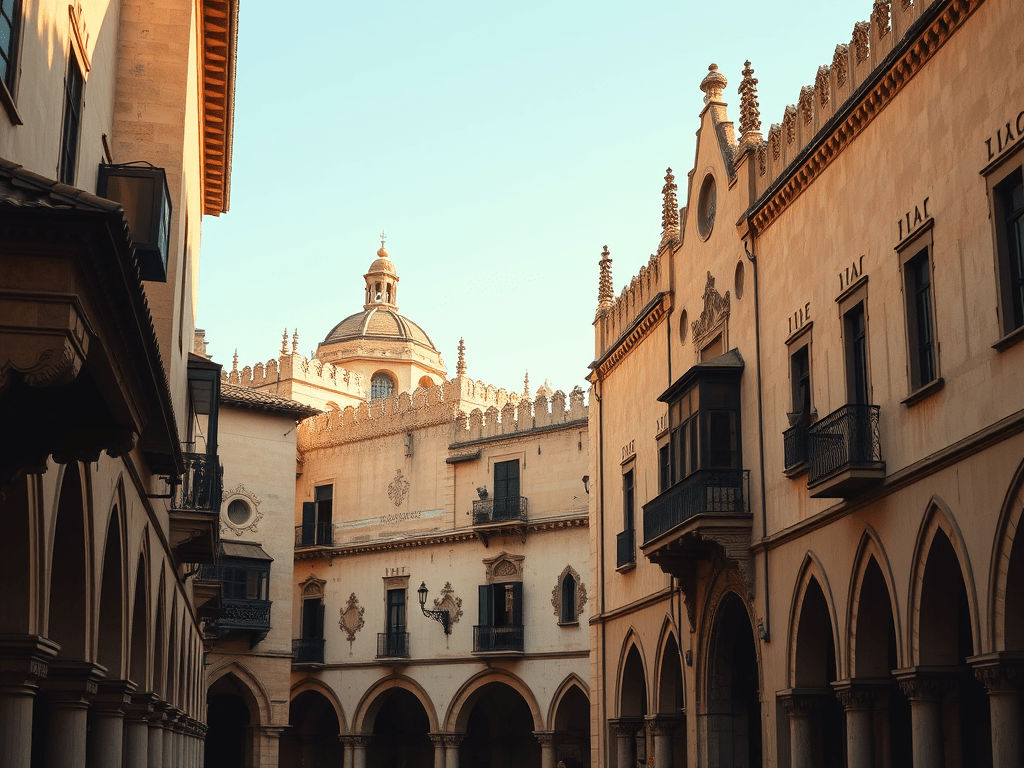
When someone suggested we tackle Muslim Cordoba at its peak (roughly, the Emirate and Caliphate, 750 -1031 AD  in the western calendar), we were unprepared for the cornucopia of historical  riches that awaited. But, as both frequent holidaymakers in the Iberian peninsula, and speaking a smattering of Spanish at least, here goes anyway.

The story starts with Abd al-Rahman I, the “Falcon ” who fled a purge in Baghdad  and founded the Emirate of Córdoba in 756. His survival story—crossing the Euphrates, losing his brother, and arriving in al-Andalus as a lone prince—is cinematic. He united fractious Muslim territories and laid the groundwork for a multicultural society. Córdoba became a haven for Muslims, Christians, and Jews, with Arabic, Berber, Romance, and Hebrew spoken in its markets and courts. The Great Mosque (Mezquita), begun under his reign, symbolized this fusion—its horseshoe arches and layered aesthetics echoing both Damascus and Iberia

Under Abd al-Rahman III, who declared the Caliphate in 929, Córdoba reached its zenith. The city boasted paved streets, public baths, and over 400,000 catalogued books in al-Hakam II’s library. Irrigation systems turned Andalusian soil into a breadbasket, exporting silk from Toledo, leather from Córdoba, and steel from Damascus- Scholars like Ibn Masarra and later Ibn Hazm flourished, while Jewish thinkers such as Hasdai ibn Shaprut advised the Caliph and translated medical texts. The court at Madinat al-Zahra shimmered with diplomatic prestige, hosting envoys from Byzantium and the Holy Roman Empire.

But all golden ages come to end. After the fall of the last strongman, Al Manzor, the Caliphate quickly declined into petty little kingdoms called taifas, each jealously guarding its privileges and rights. Easy prey indeed for the larger Christian states to the north. Yet the legacy of convivencia—coexistence—echoed through European Renaissance thought. Andalusia wasn’t just a place, but a possibility. A cultural experiment in coexistence, beauty, and intellectual ferment[2] which  makes it a contender for one of history’s “best times to be alive.”

[1] Al-Andalus – Wikipedia

[2] The Ornament Of The World by Maria Rosa Menocal | Waterstones

*Yehuda Halevi  celebrating Yosef ibn Ferrusiel   in a kharja ending a muwashshah c 1100 AD

* Kharja attached to a muwashshah attributed to Yehuda Halevi c 1095 AD

 #al-Andalus #islaam #abd-al-rahman #Cordoba #Caliphate #Emirate #Spain #Portugal #Arabic

American Scientists: Your new home in Europe awaits

Will the brain drain of the last hundred years reverse? Will the best and brightest minds start fleeing America and pitch up on Europe’s shores? We sort of raised this question last week(LSS 20 3 25) but now the admirable Alexander Hurst does it much better in the Guardian [1] Truly, it’s a real tour de force of why they’re thinking about it. It’s not just the cuts to Doctorate programmes or even the targeting of certain Universities like Columbia and Johns Hopkins for spiteful treatment. it’s the Administration’s underlying presumption that free enquiry and science are its enemies. And that the persecution has only just begun. As Alexander notes, astute minds at the University of Aix-Marseille have scented an opportunity with its Safe Place for Science initiative.[2] If the EU and associates like the UK really get their act together, Europe could look like a very good place to study nature indeed. So-where to settle,to work, and have a good life at the same time?

Our list below is little more than a list of hints and suggestions; we like to keep the blog as short as possible. But if only one or two aspiring post docs or lecturers glance over our list,and at least consider then our work for this day is done.

France The University of Aix Marseilles was first out of the starting blocks; but France also boasts such luminaries as the Sorbonne. When you throw in the food, wine and a culture that actually admires learning (you don’t get a reputation as tricky intellectuals for nothing) this is a calling card to keep near the top of your wallet.

Germany Beer’s great, food’s good and this was the home of such awesome polymaths as Goethe and the ground breakers at the centre of quantum physics. Instead of picking one or two Universities-we can’t, there’s too many good ones-we are going to tip the truly awesome Max Planck Institutes as your next home. Old LSS hands will recall our utter reverence for their Professor Paabo and his discoveries in human evolution. A glance at their website will reveal the other edges they are cutting daily. Has to be on your list [3]

United Kingdom The trio of Cambridge-Oxford-Imperial make a truly heavyweight bunch, but they sit at the top of a tree of fine institutions: if we picked out the Manchesters, Bristol and Sussex we would be doing a grave disservice to many other places of supreme excellence. Property can be pricey in these small islands, but don’t believe the stories about the food It has become immensely better in the last 45 years or so, and above all: these people speak American, godammit! [4]

Spain One of the joys of Hispanic studies was to discover that behind all the beaches, bullfighters and paellas lay a truly formidable network of research institutes and the like, which were particularly strong in Life Sciences. Again. the list is long. But The University of Barcelona and The Complutense University of Madrid are usually vying for the top places, just like Barcelona FC and Real Madrid in La Liga. With the economy growing well this really could be una casa nueva, amigos [5]

Italy Home not just of the Renaissance but a whole world of scholarship before and after (remember that Dante bloke?) this has to be a look -at. Currently Bologna and Padua are near the top, but their is a strong following pack. Once again, the food and the culture are strong selling points. Plus we visited recently, and those villages tumbling down the hillsides atill look exactly like the ones in Renaissance paintings. Were we charmed, or what?

To which we could add Switzerland, Ireland, Scandinavia, and a host of other places. but must sorrowfully admit there is no space in a short blog. Brains are like money; they tend to gravitate to where they’re appreciated. Time to leave l the Confederacy of bullies, evangelicals. good ol’ boys and conspiracists behind; once again they are on the wrong side of history. Time to look for a Union where you can once again feel at home.

There are plenty of websites which will give you the lists of top Universities by country. If you want to follow up, we urge you to visit them

[1]https://www.theguardian.com/commentisfree/2025/mar/24/french-university-scientific-asylum-american-talent-brain-drain

[2]https://www.univ-amu.fr/fr/public/actualites/safe-place-science-aix-marseille-universite-prete-accueillir-les-scientifiques

[3]https://www.mpg.de/institutes

[4]imperial college london

[5]https://ucm.es/english

#donald trump #science #learning #europe #united states #economics

We couldn’t resist this story about Brits in Benidorm

Well, it was the end of the week, gentle readers, and we hoped that we had finished you off in a satisfactory manner with not one but two great stories (count em, two!). But then our researchers came to us with this great picture story and we just couldn’t resist.

It’s written by Perkin Amalraj of the Mail. But, before overseas readers dive into Perkin’s lapidary prose, a word of explanation. As both English and Spanish readers will know, the town of Benidorm is famous for its welcoming attitude to foreign holiday makers. Moreover it displays little of the snobby exclusivity that one might find in places like the Côte d’Azur or Gstaad. No, Benidorm welcomes all, at prices all may afford. To enjoy a week of sunshine, fine dining and gentle exercise in the balmy sea breezes. No prim or prescriptive demands to learn the local language customs or cuisine are enforced either. One might as well be in Basildon or Burnley, it’s just hotter.

But sometimes pictures speak more than a thousand words, every one of them. And so we invite you to click on the link and enjoy ad essay in photojournalism of the highest quality, and greatest interest. And remember-there is no one as interesting as the people next door. Well not next door, hopefully. From a few streets away

https://www.dailymail.co.uk/news/article-13838683/Forget-anti-tourism-protests-theres-one-Spain-welcome-holidaymakers-gloomy-autumn-arrives-theres-plenty-fun-sun-Brits-BE

#benidorm #tattoo #brits english #beer

Tourism Tribes Trump Enlightenment

“We don’t like all these tourists!” A quick glance at the newsfeeds show mass protests against tourism and all its works breaking out across Spain, from the palmy island of Mallorca to stylish Barcelona, all the way out to the breezy Canary Islands. And it’s not just in Spain either. Venice was one of the first to start restricting access to the new breed of huge cruise liners that plough the sunnier waters of the world. And even in UK hotspots like Cornwall, some locals break out their tractors in high season and drive them slowly around country lanes with the deliberate aim of making life difficult for hated holiday visitors, whom they term “grockles” in the local dialect (we have been personally informed of this).

What on earth is going on? Students of Hispanic history and culture were long taught that the arrival of mass tourism not only brought floods of money, it also began to eat into the stifling repression of Franco‘s Spain, long before the arrival of democracy. Downsides like the ugly high rise sprawls of hotels and bars were glossed over. Also that whole areas could be taken over by hostile tribes of tattooed thugs, high on a sleazy culture of cheap beer, cocaine and promiscuous sexual encounters. And that’s just the women. We dare not name certain resorts where we have seen this this occurring on a daily basis . But we can understand why these protests are so strong in Mallorca.

Progressives need to confront a highly uncomfortable truth. Ramming people of very different cultures, languages even, together into tight spaces will ignite the oil wells of fear, mistrust and suspicion which lie latent in us all. And this will be so whatever the economic benefits the new arrivals bring. Ever since the Enlightenment, progressives of all types, from Adam Smith style ultra-marketeers to far-left Marx fans have asseverated that the spread of economic and intellectual advances will be irresistible. And that we thereby held the winning hand. Perhaps. But the natural instincts and impulses of most people seem to be very different. A truth which we have acknowledged before on these pages, in our posts on People like David Rofeldt, Amy Chua and Eric Kaufman. (LSS passim)Unless we think how to confront this tribal instinct, it will be used to Trump our project. And this time there will be no coming back.

[1]https://www.independent.co.uk/travel/news-and-advice/mallorca-menorca-spain-tourists-protests-b2551689.html

[2]https://www.msn.com/en-nz/travel/news/thousands-protest-in-spain-s-mallorca-against-mass-tourism/ar-BB1qny4g?ocid=BingNewsSerp

[3]https://www.bbc.com/mundo/articles/cw884y73j4do

#tourism #mallorca #barcelona #protest #free market