The Cambrian: Giant Explosion or small blast, few casualties?

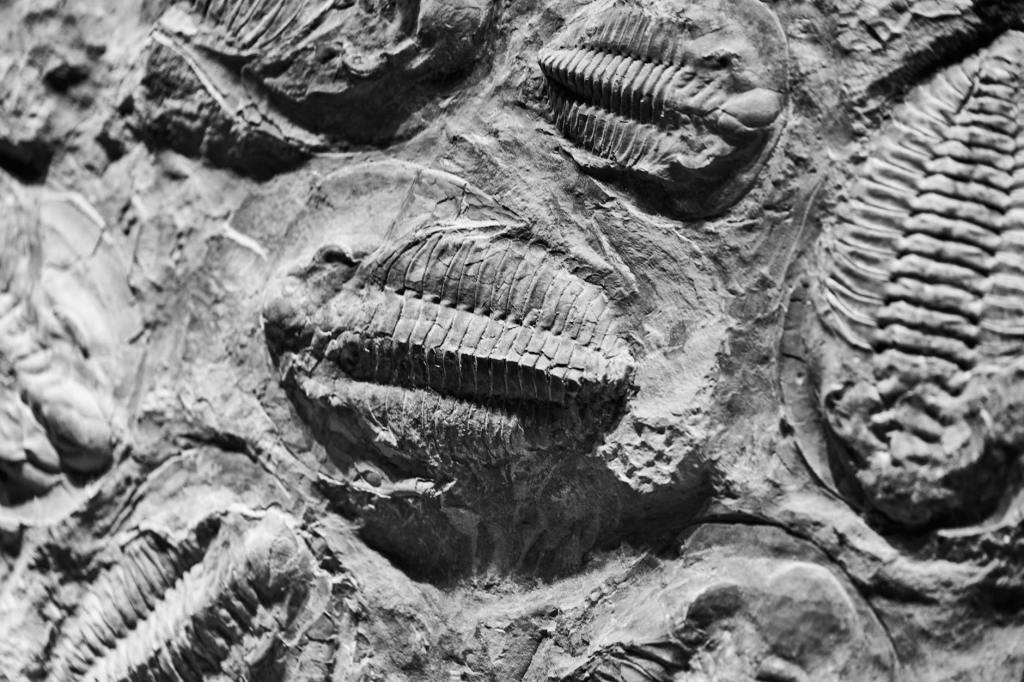
Was the Cambrian period (538-486 million years ago) the most significant in the history of Life? [1] Was there really a kind of biological explosion where simple single celled creatures suddenly transformed them selves into complex multicellular beasts with nervous systems, eyes, guts and feeding strategies? It’s always been a bone of contention with some shouting emphatically “yes” and others being a little more sceptical. “Sampling bias”, they say: correctly adducing that there were plenty of multicellular creatures in the Pre-Cambrian, it’s just very difficult to find their remains.

Now the proponents of the Big Change Theory have found their case strenghtened. Recent research. described here by Kate Ravilious for the Guardian, suggests a natural mechanism which drove the changes and caused a sudden leap in the diversity of life. According to Kate

changes in solar energy caused climatic changes that altered the amount of weathering of land surfaces – especially at high latitudes – with periods of fast weathering releasing bursts of nutrients into the oceans, which drove photosynthesis and pushed up oxygen levels, fuelling the high speed evolutionary changes. [3]

And the interaction of these changes in solar output with variations in the earth’s orbit would explain the timing and nature of these sudden leaps for life.

And our take? Something happened around Cambrian times, gentle readers-there really is a step change, as shown by the appearance of shells, backbones and all the other markers of our modern phyla. And the idea of a coinciding, plausible mechanism is persuasive indeed. However as veterans of the paleontological wars we have a few questions. Did the Cambrian explosion a generate an increase in total biomass, or just complexity of forms? If this pattern of solar cycles and variable orbit repeats every two or three million years, why have we not seen at least one comparable event since (500 million years is a long time) Were there no volcanoes, tectonic plates or asteroids to muddy the waters in the Cambrian, the way they did in the Permian or Cretaceous, for examples? We love the Cambrian explosion and the way it has driven curiosity and much good research. But like every Big General Idea-in science , history, psychology, whatever- we see them more as pointing the way to more research, not a final answer.

[1]https://en.wikipedia.org/wiki/Cambrian

[2]https://www.theguardian.com/science/2025/nov/26/changes-in-solar-energy-fuelled-high-speed-evolutionary-changes-study-suggests

[3]https://agupubs.onlinelibrary.wiley.com/doi/10.1029/2025GL118689

#evolution #paleontology #cambrian #precambrian #solar cycle #earth orbit #fossils

Life on Mars? Some of us have been here before

News that the latest findings from the Mars Perseverance mission may have detected the best evidence yet of life on our neighbouring planet should provide a flurry of media attention in the next few days. it’s always good for disinterested science to get a little coverage. And we take our hats firmly off to the ingenious scientists, technicians and engineers who set up these missions and study their results with such assiduity. That said, dare we inject just a tiny note of caution into these heady proceedings? We think it’s what our readers have come to expect.

First to the results themselves, Which we admit are intriguing {1] Writing in The Conversation, Sean McMahon not only gives us a really clear exposition, he has ample links to the papers you’ll need if you wish to go further. Essentially, while exploring the Cheyava Falls region of Mars, Perseverance has found strong evidence of redox reactions, the very essence of life itself. What’s more the nature of the rocks and the visual clues, a scatter of pale spots associated with organic matter, strongly resemble similar patterns created by certain living processes here on earth. Slam dunk, get out the old David Bowie records? We would still urge caution.

Firstly because we,ve been here before. Twice actually. Older readers will recall the excitement generated by the Viking missions in 1976. [2] Two of the on board detectors, the Labelled Release and the Pyrolitic Release reported positive. However the crucial GCMS did not. And despite heroic efforts to reinterpret this data, such as the ones involving perchlorates, the Viking results must remain inconclusive in any rational. evidence based system of thought. Then there was the famous Allan Hills 84001 meteorite in 1996, which contained intriguing visual and chemical hints of microorganisms. Once again other explanations were possible. And the general consensus was the scientific equivalent of a hung jury. Quite right too, we think

And secondly because final proof will not be known until NASA and the ESA can whack up the ginger and the money for a Mars Sample Return mission. Which so far hasn’t really got beyond the talked-about stage. So Perseverance sits on Mars containing 30 tubes ready for collection, including the enigmatic Cheyvara Falls samples. Back on earth people speculate, bicker and wonder when the next war will begin. Until something happens to break this impasse, we say-don’t get out ahead of your data.

[1]https://theconversation.com/signs-of-ancient-life-may-have-been-found-in-martian-rock-new-study-264960?utm_medium=email&utm_campaign=Latest%20from%20The%20Conversation%20fo

[2] https://en.wikipedia.org/wiki/Viking_program

[3]https://en.wikipedia.org/wiki/Allan_Hills_84001

#mars #astrobiology #microorganisms #evolution #life #NASA #ESA #perseverence

Fish farms in Space? They might be closer than you think

One thing about Science Fiction: the food in future worlds always seems a bit dodgy. From Soylent Green through 2001: A Space Odyssey all the way to Red Dwarf, it’s all a bit artificial. Despite the ingenious efforts of valiant biochemists and microbiologists,[1] it’s not really the same. But wait, gentle readers! Almost unbelievably a brilliant French Scientist called Dr Cyrille Przybyla really believes he has a way of serving up a tasty plate of fresh real Sea Bass in the dining room of a lunar colony, assuming we all survive to construct one.

According to Kim Willsher of the Guardian, it’s not so outlandish as it sounds.[2] Apparently our finny friends have been making trips into space since the 1970s. All Dr Przybyla and his his Lunar Hatch Project are doing at this stage is sending a few up to the ISS to see how they get on. But, if it’s a success-who knows. Bass are exceptionally rich in omega 3 and B group vitamins, all of which are good for fighting muscle loss which comes with low gravity or zero gravity environments. Being fish, they’re already weightless in effect, so they won’t care anyway. The idea of putting them into enclosed, self sustaining eco systems might be very feasible on the moon. We now know there’s plenty of water up there, so that potentially exorbitant problem is largely solved.

There’s so much to like about this idea. Firstly it’s new different thinking: but not so new that bits of it haven’t been tried already. Secondly, a cautious, step-by-step approach is being applied-always a good sign of a successful project. Thirdly, it addresses a real need. No wonder the Chinese are getting interested, as Kim points out. that’s because they look to the future, instead of wasting all their time and energy trying to restore a lot of rusty old factories whose time has long since passed. We think there’s a lesson in there somewhere.

[1]https://www.bbc.co.uk/news/articles/cp34wzql2xvo

[2]https://www.theguardian.com/environment/2025/apr/28/sea-bass-in-space-lunar-hatch-fish-farms-moon-aquaculture

#space exploration #fish farms #nutrition #sea bass #ifremer

Has the James Webb really found life? Let’s not jump to conclusions

Has the James Webb Telescope found life at last? Solid, incontrovertible evidence of biosignatures on another planet? We write these words in the afterglow of a half-heard item on BBC News this morning, which so far (8.30 27 4 24 UK time) we can’t confirm anywhere on the web, including the BBC itself. The story is intriguing, not only because of the implications if it’s confirmed, but as as an example of how good science journalism should work. First, a little background.

Well-informed readers will the recall the media excitement last autumn, when provisional findings suggested that the James Webb Telescope had indeed detected the presence of methane (CH4), Carbon Dioxide (CO2) and Dimethyl sulphide (CH3)2S on the planet K2-18-b which lies about 120 light years from Earth in the constellation Leo.[1] That last molecule was particularly intriguing, because according to many, it can only be produced by living process. All the traditional media wrote it up. Certain news magazines, not always renowned for cool and reflective judgement, seemed to get more than a little carried away. Was this it? Was this, you know, them, ET and all that? At which point we turn to an excellent piece of journalism by Eric Berger of Ars Technica, a model of level-headed reasonableness which all of us would do well to imitate. In this racket, and many other walks of life. [2]

Instead of commenting on Press Releases and other journalists’ stories, Eric went back to NASA and got quotes. These it turned out, were much more subtle, nuanced and provisional. The signs of real knowledge in fact. The difference, in fact, between the provisional first interpretations of a crime scene examiner, and their write-up months later in a final statement, when all findings have been integrated with a much larger investigative process. And, above all, reflected upon.

Perhaps today, perhaps next week we’ll get more reports, both in the mainstreams and in the science journals which will help us confirm or deny this potentially exciting discovery. But when it comes we will still ask the following questions

1 Is there any possibility, however small, that DiMethyl Sulphide can be produced by non-biological processes?

2 How easy is it to distinguish the spectroscopic signature of DiMethyl Sulphide from other molecules?

3 Are there other molecules which indicate the presence of life, and if so, have they been detected on K2-18-b?

4 Are there other factors(the presence of noxious compounds, extremes of temperature or radiation, for example, which make life impossible, despite these hopeful findings.

We await today’s news with anticipation.

[1]https://www.msn.com/en-us/news/technology/webb-studies-planet-k2-18-b-again-to-confirm-presence-of-gas-only-produced-by-life/ar-AA1nGfUo

[2]https://arstechnica.com/space/2024/01/no-the-james-webb-space-telescope-hasnt-found-life-out-there-at-least-not-yet/

#dimethyl sulphide #ocean planet #james webb telescope #exobiology #alien #astronomy #spectroscopy