Gentle readers we’re more than happy to present the next chapter in the story of Gepotidacin. Against all the gloom and doom we serve up here, it really is a wonderful new class of antibiotic We have covered it before (LSS 30 1 23 ; 17 4 23) but today Manuel Ansede of El País [1] serves up a handy little resumé, not only of where we are now, where we have come form, and all kinds of hyperlinks to bring you up to speed. We can add little but to such erudition as Manuel’s. But for the sake of long term readers will riff on these few -humbly derived- observations
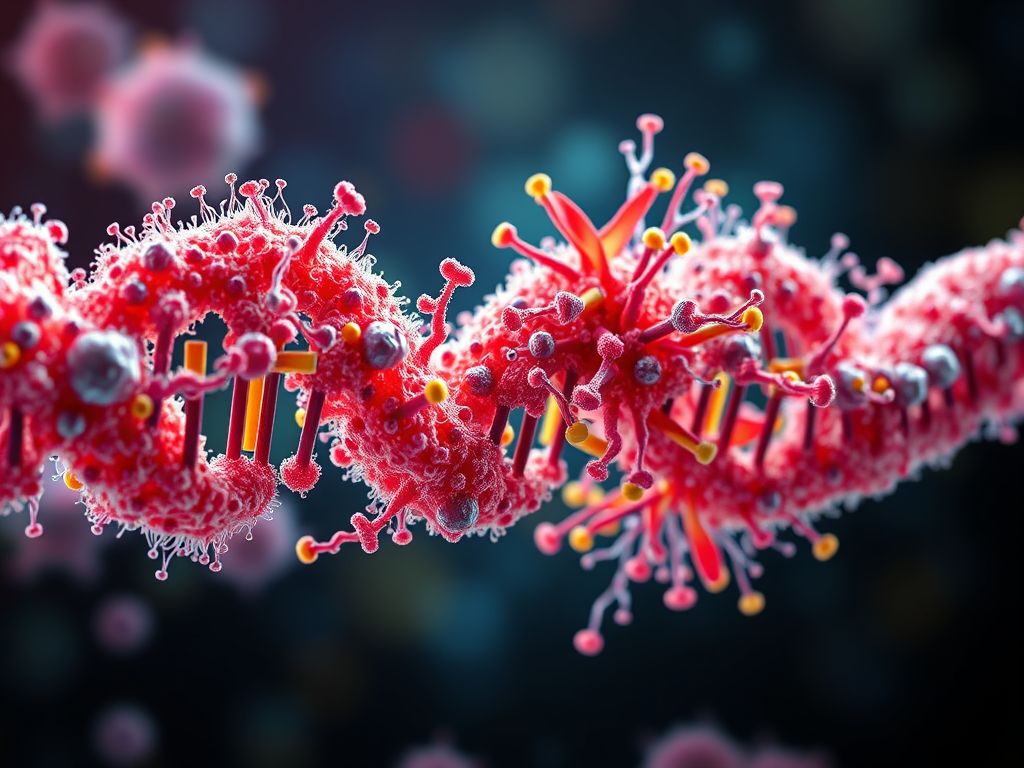
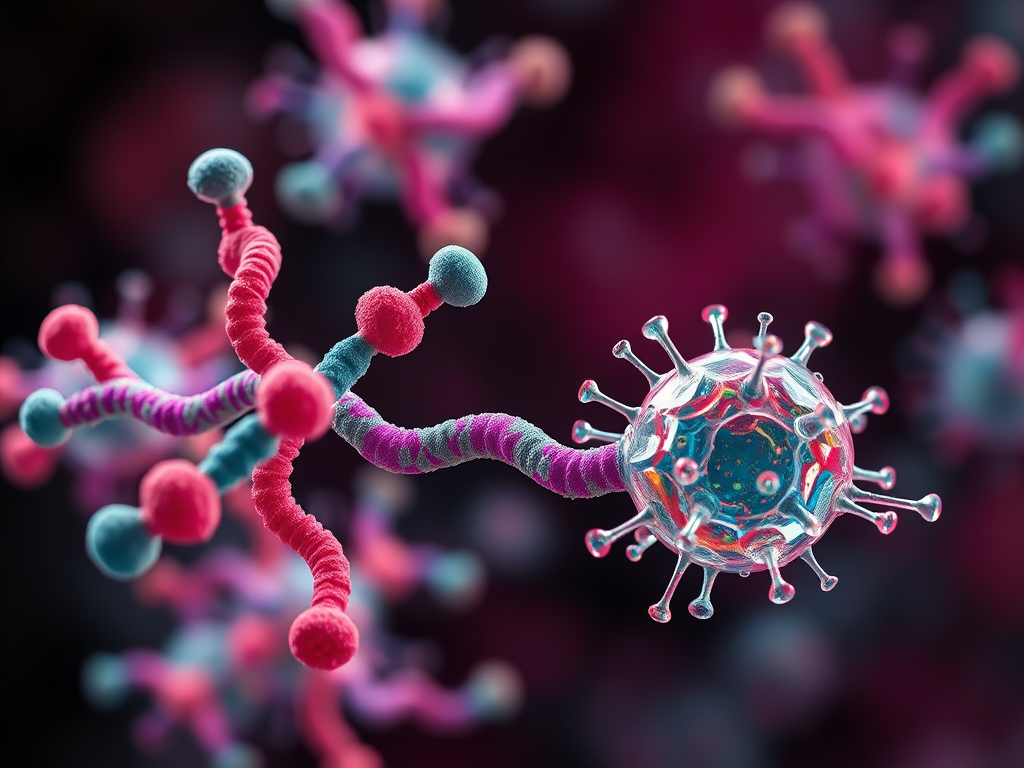
Firstly, this really is a new class of antibiotic., going by the snappy name of triazaacenaphthylene bacterial topoisomerase inhibitors. Unlike traditional antibiotics that target bacterial cell walls or protein synthesis, gepotidacin disrupts bacterial DNA replication by inhibiting two essential enzymes: DNA gyrase and topoisomerase IV. Which as most readers will instantly recall, are crucial for bacterial DNA replication and cell division. Thought so.
Secondly its already showing real world efficacy against all kinds of bacteria, including antibiotic-resistant strains like methicillin-resistant Staphylococcus aureus (MRSA) and multidrug-resistant Neisseria gonorrhoeae. Get that: real science works.
Thirdly, to make our old LSS point: effective action in medicine takes time. It requires teams of intelligent people. Who do not act alone, but exist in an ecosystem of universities . research institutes and government agencies. Which in turn requires careful nurturing , funds and right to feel safe enough to make long term plans without bullying and interference from the proudly ignorant and impulsive. American readers take note.
Photo by u041bu044eu0441u0438 u0414u0440u0435u043cu0430u043bu043eu0432 on Pexels.comPhoto by Ali Cuhadaroglu on Pexels.com
We have three stories for you this morning. Not only because the stories themselves are intriguing. But because they illustrate the scientific method at its best. Persistence. Careful collection of the data, Thoughtful analysis. And above all this” Extraordinary claims require extraordinary evidence.” It’s from the first of today’s features. But it runs like a thread through all of them, and much else that is done by scientists, and all true scholars everywhere. It is of course the antithesis of the claims of conspiracy theorists, hucksters and plain incompetents everywhere.
Floods in the Mediterranean We’ve known the idea that the Mediterranean Sea was once a hot dry basin, a sort of desert land. Until one fine day about five million years ago when a truly humungous great flood burst through the Straits of Gibraltar, turning the whole, thing into that vast lake suitable for swimming, sailing and other watersports which it remains to this day. The proponents of the theory, Daniel Garcia Castellanos and Paul Carling were careful to say this Zanclean Flood was just that, a theory, Until recently they found that the alignment of hills in Sicily. plus the way that rocks of the right age were lying around there, confirmed it nicely. Detective work worthy of Comissario Montalbano, that island’s most famous son!
Awesome Jaw About 20 years ago, a large ugly looking jaw was dredged up off the coast of Taiwan. No one knew exactly how old it was or how it fitted into the jigsaw of human evolution. Now some incredibly skilful work extracting and analysing proteins from it have revealed it to belong to a Denisovan, that intriguing third branch of modern humanity Here’s Nature Briefing: Mysterious Taiwan Fossil is Denisovan
A fossilized jawbone discovered more than 20 years ago belonged to an ancient group of humans called Denisovans. Named Penghu 1, the jawbone was dredged up by fishing crews 25 kilometres off the west coast of Taiwan. The confirmation that the bone belonged to a Denisovan — the result of more than two years of work to extract ancient proteins from the fossil — expands the known geographical range of the group, from colder, high-altitude regions to warmer climates.Nature | 5 min read Reference: Science paper
Standoffish Saharans Moving forward from the dawn of humanity to the dawn of agriculture, Chris Melore of the Mail has an intriguing story about the ancient proto-Neolithic populations of North Africa. Careful molecular detective work has revealed that they tended to keep themselves isolated from the population flows across the rest of the world which were happening about 7000 years BP. And this has quite profound implications for how agriculture and herding must have spread. One school has always held that Neolithic techniques were carried as cultural tropes by tribes who migrated out of the fertile crescent (a bit like the way particular European customs and technologies were carried to North America) The other school always held that local people came up with these ideas for themselves, perhaps with a bit of help from conversations with early travellers and traders. This evidence of isolated North Africans invented stock breeding and grazing economies independently is a definite plus for the second school and its ways.
Careful thoughts, provisional conclusions. This is what we are all about here, and we hope you are too. Perhaps more people could be like this, if they had been given a fairer life. It is a thought we will pursue in the next blog
Photo by Sawyer Sutton on Pexels.comPhoto by Duu0161an Cvetanoviu0107 on Pexels.com
If you want to explore the potential of a vast unknown region, first make a map of it. This why many of the finest minds from the sixteenth to the nineteenth century were cartographers. The human brain, with its astronomical numbers of circuits and connections, is our century’s equivalent of an unknown continent. Where the prizes( in medical research, pharmaceuticals and lucrative spin off disciplines) will go to those who have the best idea of the layout of the territory they are exploring. Which is why it came as no surprise to find that a multi-university team of American researchers have emerged as some of the foremost neurological cartographers of the year
Hannah Devlin of the Guardian reports the work of the teams from Baylor College, The Allen Institute and Princeton who have combined different techniques to create a 3-D circuit diagram of the neurons in a mouse brain. Now, there are some riders to note: this is only a tiny portion of the brain, comprising 84 000 neurons, half a billion synapses and about 5.4 km of the neuronal equivalent of wiring. Tiny numbers compared to the colossal sizes of a human brain, or that of an elephant or a dolphin. But it’s a start. Hannah quotes experts who honestly compare this work to the human genome project around the turn of the century. We need not remind readers as intelligent as ours of all the potential which that unlocked.
So: American researchers at the cutting edge. Princeton. Big research teams. “Yawn,” they said in the newsroom, “Where’s the story?” Well the story lies in the context of the consistent cuts in science funding by a certain Donald J Trump and his Administration. [2] It’s not just the money, it’s the attacks on the confidence and independence of the institutions themselves which stunt the development of a healthy research sector. And ultimately kill the goose which has laid so many eggs.(please-no more cliches!-ed) From the 1930s onwards America thrived by taking in the best researchers, and letting them work at what they excelled. Every science magazine you picked up, every episode of the old Horizon series on BBC, had an American somewhere in it. They even got to the Moon. Now there is a real danger that all that talent, all that potential will flow elsewhere. So far the EU and UK have not really go their act together. But they are waking up to the opportunity. Perhaps the first whole-brain maps will be made in Cambridge. The English one, that is.
We started out as an antibiotics blogs, and we’ll always defer to it when a good story comes up. So don’t be surprised as we offer you a really good story, which we found in Nature Briefing, that inestimable source of the very best stories on science and all its ramifications. Scientists unearth new anitbiotic-literally
Researchers searching far and wide for new antibiotic molecules have discovered one in their own backyard. The new molecule — found in soil samples collected from a lab technician’s garden — targets a broad range of disease-causing bacteria and doesn’t appear to be toxic to human cells. From the soil samples, the team spotted a lasso-shaped molecule they named lariocidin, which is produced by Paenibacillus bacteria. Lariocidin attaches to structures called ribosomes in bacteria, which disrupts their protein production. The molecule slowed the growth of a range of common bacterial pathogens, including many multidrug-resistant strains.Nature | 4 min read Reference: Nature paper
We know, gentle readers that we can occasionally overdo the bad news a tad on these pages. Today we’re glad to tip the balance back a little the other way.
If you want to receive the very latest on science and cutting edge technology, you won’t do beetr than sign up to Nature Briefing. We don’t know of anything as good as this which is still absolutely free. What’s more they have some sub briefing sites on more specialist areas if your want to keep up with a particular area why not visit these sites and see for yourself?
briefing@nature.co
Nature Briefing: Careers — insights, advice and award-winning journalism to help you optimize your working life
Nature Briefing: Microbiology — the most abundant living entities on our planet – microorganisms – and the role they play in health, the environment and food systems
Back in 2023 we praised the achievements of Google Deep Mind and its Alphafold system for predicting protein structures (LSS 23 2 23) The step change in productivity , (no disrespect to human biochemists) was so remarkable that we compared it to the invention of stone tools. Since when it has pretty much become a standard tool in medical research.
So much for proteins. What about RNA? Advances in understanding its structure, maybe even making a little of our own, might convey enormous medical benefits. Read this from Nature BriefingsSeeking an alphafold moment for RNA
“A tough nut to crack” Indeed. For one thing RNA has always suffered from that “middle child” syndrome, lost between its more glamorous siblings, DNA and proteins. So there is a lot less data to feed into the AIs. And even the main forms, t-RNA and m-RNA are fiendishly complicated, like any biological macromolecule. Fortunately, there is a superb article from the main part of Nature by Diana Kwon[1] which lays out the problems and challenges with great clarity; well worth a glance, However the advantage of getting on top of RNA and bringing it, so to speak, into the twenty first century could be colossal, Never forget that it was an m-RNA vaccine that finally got the SARS-Cov-2 virus on the run. That is a glimpse of what might one day be acheived.
Fans of the old Jacob Bronowski TV series The Ascent of Man will recall a key episode. In the early seventeenth century the Catholic Church decided to persecute aspiring scientist Galileo Galilei. In 1633 the Inquisition even put him on trial for having discovered that the Earth goes round the Sun. Using the threat of torture, they forced him to deny this simple reality. Bronowski’s take on all this was to assert that this was the key step which sent the Catholic part of Europe (hitherto the dominant bit) into decline. Scientists and scholars fled to the more tolerant environment of Protestant Europe, whose economies benefitted accordingly. The few Catholic thinkers of note remaining (Descartes and Pascal spring to mind) But they were like the last rays of a setting sun, before darkness and superstition suffocated all.
A one off? Special pleading? History suggests otherwise. From about the 8th Century to the 13th of the Christian Calendar (apologies to Islamic readers, but let it do for now) the Islamic world was dominant not only in trade and war, it was supreme in all the skills of learning and science. Thinkers such as Al Khwarizmi, Ibn Sina (known as Avicenna in western lands) and Al Birani made contributions to human learning which will last forever. Yet, starting about the middle of the twelfth century CE there was a slow but steady trend away from reason and science towards deeper religious orthodoxy as Hilel Ofek explains in his essay Why the Arab World rejected Science [1] Slowly the northern nations began to close the gap and eventually move ahead. Nearer our own time Corelli Barnett showed how Britains decline began as abstract studies of things like Latin and Greek came to dominate the Universities, while subjects like science and engineering were accorded second rate status. [2] [3] The values of a well entrenched landed aristocracy won out over the more plebian instincts of the middle class . With long term disastrous consequences for Britain’s place in the world
And the relevance of all this? Across the western world, there is now a strong, growing and incredibly well-funded movement against science and objective evidence. [4]It’s felt in policy debates on economic questions, university funding, on vaccines, and above all in the swirling brawls around climate science and global warming. The temptation is to put all this down to the ebbs and flows of political debate. But that is to miss the point. Questions of science are not political. They are not open to understanding by the mental tools developed for political and religious debate. A nation, a whole culture is being continually weighed in the balance, and can fall at any time. Is this now happening in the so called “advanced ” western nations.
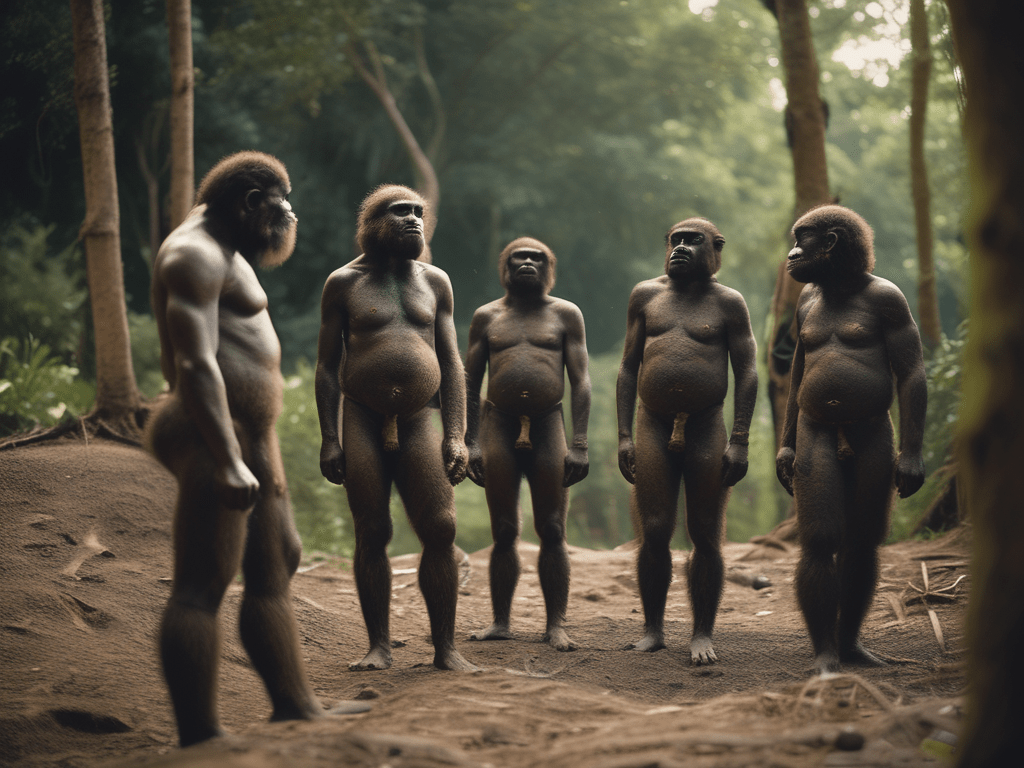
When we were young, we believed in a Story. First there was Australopithecus, a toolless, speechless, walking chimp. He begat a brave pioneer called Homo erectus, a handy sort of chap who at least had decent looking tools and invented fire. He begat two sons: a hairy, primitive savage one called Neanderthal Man, who deservedly came to a sticky end. And a tall, cool handsome one which called itself Homo sapiens (“the wise man”), in one of the most outrageous acts of vanity and self-delusion in history.
The truth turned out to be far more complicated. Even looking at the story of the last 500 000 years , when everyone was about as modern as you can get. First Neanderthals have been getting steadily cleverer for the last forty years or so. They probably had language, clothes and y even art, goddammit. Along came another relative, the Denisovans who were similarly equipped. And then came the geneticists lead by the inimitable Professor Paabo, whose discoveries have upended everything , blurred every category and wiped every line. Latest instalment in this trope comes from the discoveries of the learned Professor Cousins of Cambridge University which we channel both from Jonathan Chadwick of the Mail[1] and for those with a little more time, the original paper itself [2] The story of the last million years or so is not of some heroic hero on a quest for self-improvement. But bunches of largely helpless bipeds pushed hither and thither by the vagaries of climate and geology, splitting, meeting and breeding; spawning a mishmash of different types which their distant descendants come along and label with important- sounding names. And we think we see a pattern in all this.
Firstly :you know a lot less than you think you do. We have been tracking human evolution for nearly sixty years now, so we can be fairly confident about that statement. Secondly: there is always something buried out there which is going to upend everything you know; so stay cautious. Thirdly: someone in another field is going to park their intellectual tanks on your lawn sooner or later, reducing your omniscient learning to at most part of things, not the whole of it. And finally:-human evolution makes a pretty good paradigm for all other learning. Not just hard sciences, not just social sciences but also things like history and economics. Beware of anyone who knows the answers, because they are not telling the truth.
If there was one thing that has always been too much for us, it is trying to understand the fiendish complexity of the immune system. At school, at our various universities, trying again during the COVID pandemic…..we have never really got past T and B. So when the BBC announced this morning that a whole new part of it had been discovered,[1][2] you might have expected us to hold our collective heads in our hands and groan.
Far from it, gentle reader. For the new discovery has opened the possibility of a whole new class of antibiotics sitting right there in every cell of the body. An astute group of scientists led by Professor Yifal Herbl at Israel’s prestigious Weiszman Institute of Science have found that proteases, a regular part of cell function, may be able to unleash significant antibacterial function. A protease normally functions like the recycle department of your local council, chopping down old proteins and getting them ready for use. But the team found that many of the little peptides produced have strong antibiotic properties. Like the good scientists that they are, they then ran two objective tests. Do the proteases work as well as conventional antibiotics? And if you disable them, does the cell become more vulnerable to infection? To which the answers, broadly speaking, are Yes and Yes.
Once again we stress that this research, and its development into useful therapies, is still at early stages. Which we always do when we cover new points of departure like this. Yet it is, indubitably, a new departure, And it has been sitting there unnoticed until now. Something which has always tickled our fancy here, as regular readers will know. Hats off to Professor Herbl and her team. And-readers! Every tome a journalist publishes on the antibiotics crisis, why not write a very short e mail of thanks to them? They’ll love you for it.
with thanks to Gaynor Lynch
A note on today’s links We have two straight news stories and a link to the Weiszman Institute, to give you staring points. However, we could not get past paywalls to the Nature articles, and we doubt you will be able to as well
The news that a team of scientists at America’s prestigious Ohio State University have created a remarkable new battery that captures energy from nuclear waste might once have passed almost unremarked. Our link from Andrew Cuthbertson of the Independent[1] details how the remarkable Professor Cao and his team have taken spent nuclear fuel from reactors and converted the gamma rays into light, which can then power photovoltaic cells. We’ve put in a couple more links if you want to know more[2] [3] But for us, today, our interest lies in a slightly different direction. We suspect that astute readers my guess where.
For this kind of breakthrough used to be commonplace in the American Heartland. Starting after 1865 a vast ecology of Universities, Research Institutes and hopeful start-up companies grew. It gave the USA the economic power to surpass and then destroy the British Empire and to defeat Germany and the USSR in both armed and commercial conflicts. sitting at the centre of it was a belief in Science, at least among a sufficient mass of the population to count.
The current President of the United States looks hell bent to destroy all that. [4] as this link to a Nature main article shows. And look again at Anthony’s article. Which other country gets a mention? China, of course. Slowly ,steadily and with much less noise they steal a march on poor old Uncle Sam and its hapless, impulsive leader. Americans should ask themselves this question: is all this really worth it just to appease the prejudices of 20 million or so voters? Will any of you actually be voting in 2035, anyway?
Cancer is the great unspoken truth running through our civilisation. Everyone knows someone who has it. Most people know someone who has died of it. The statistics suggest one in two of us will develop it in one form or another. When strangers discover that we run a science blog it isn’t long before cancer cures edge into the conversation. Everyone deep down wonders “will it happen to me?” You do, don’t you?
Which is why it gets a lot of coverage, and fresh discoveries always make the news. Following Ellyn Lapointe for the Mail [1] and the Korean owned Medical Life Sciences News,[2] we showcase the work of the brilliant Professor Kwang-Hyun Cho of the Korean Advanced Institute of Science and Technology. Instead of painful drawn-out chemical treatments it looks to cure cancer by manipulating the biochemical mechanisms of the cell. Admirable, and you can read more by following the links. But for us, for today, that is not the point.
Look again. The Korean Advanced Institute of Science and Technology. Turns out it’s state owned. Paid for by taxes, Its at the centre of an ecosystem of research institutes, university departments, private companies and assorted government and non-government organisations whose collective wisdom and output is far more than the sum of its parts. It’s not so much arriving at another cure for cancer that is important for us today. It is because this cure is part of a rolling programme of research and discovery that throws up such discoveries as it goes along. Creating a thriving centre of excellence and high value jobs.
The view taken by most people in the UK is that taxes are evil things. The State is an evil parasite holding back economic growth and thereby progress. But isn’t our story today prime evidence that the opposite is the case?