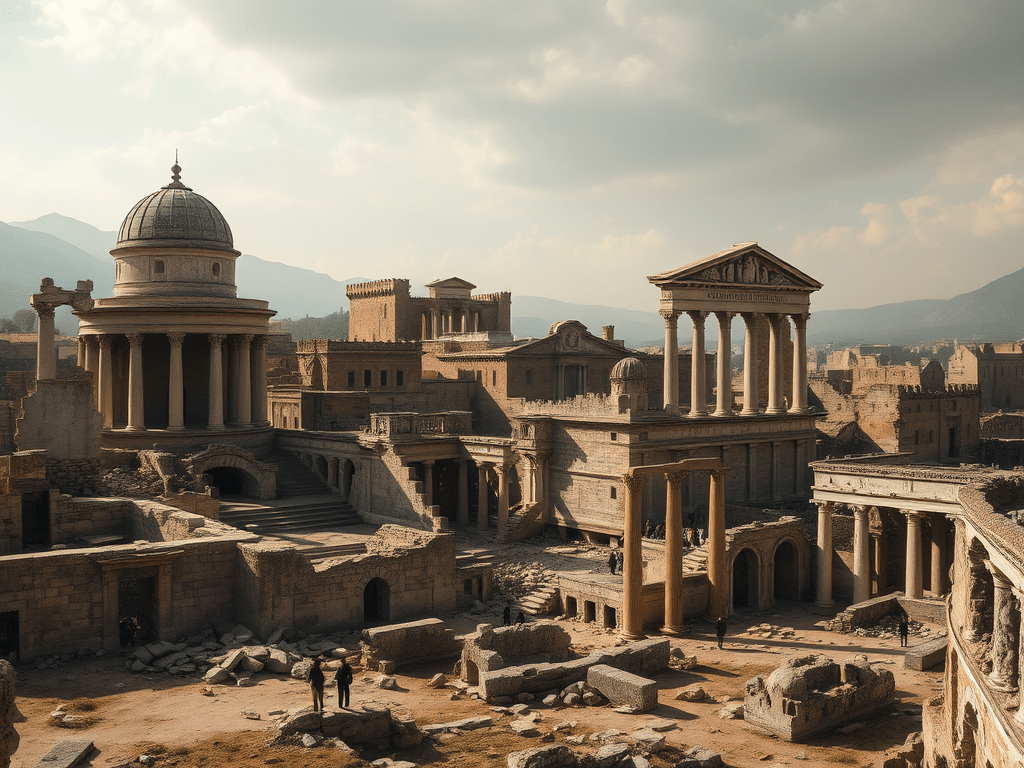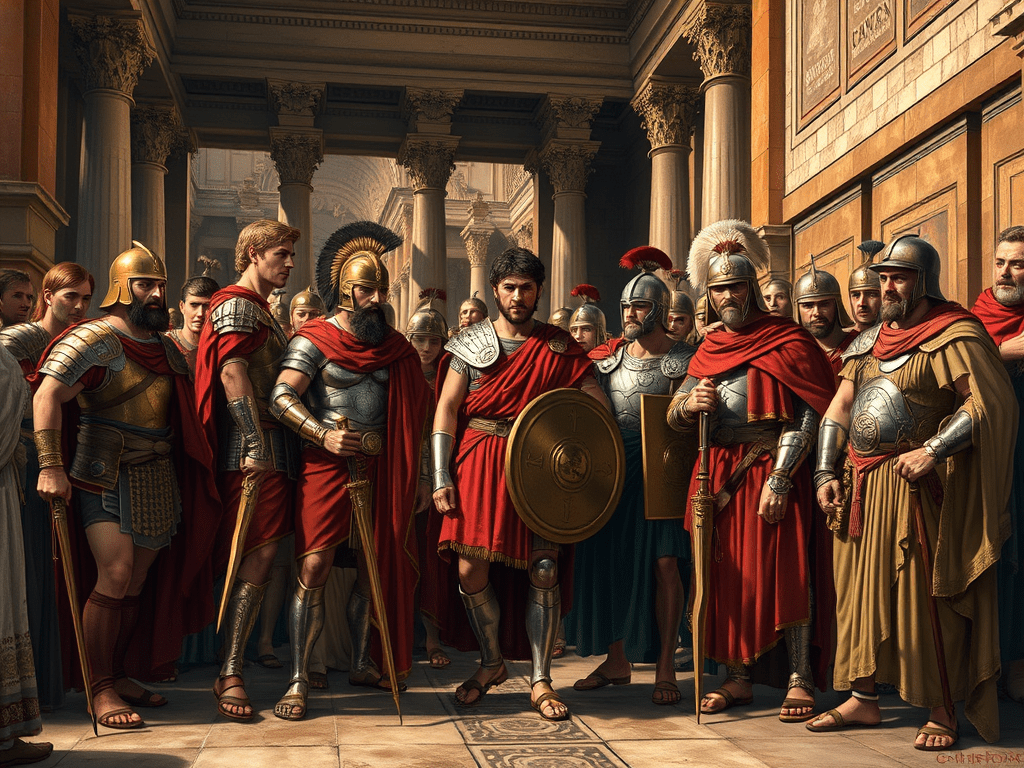
The Best Time to have been alive #2: Rome under Augustus

Imagine a group of friends sitting in the late afternoon in the square of a little town in northern Italy. A retired soldier, perhaps. A few successful traders-builders. metal workers, maybe a small-scale farmer or two. In the shade of some cypress trees they nibble at bread and olives, sip the deep red wine of the region, and discuss the latest news. But this is not modern Italy: this is a town like Bolonia1 or Mutina2 in the Age of the Emperor Gaius Julius Caesar Augustus. And the news they discuss is simple. The profound peace that has settled over the whole world from the northern shores of Gaul to the deserts of Syria.

Augustus’ political settlement has ended the long decades of war and instability that tore the old Roman Republic to pieces. It’s one man rule now, and no elections are truly contested. But the legions are fully paid up and back on the frontiers. Behind them, a network roads links towns like this to an almost uncountable number of similar ones. There is increasing uniformity of architecture, arts , language as Latin and Greek spread even into the forests of Germany. Above all the seas are open again, with a single Roman fleet dominating the whole Mediterranean basin. There is a universal system of laws and money, all well enforced. No wonder trade is picking up and everything seems to be getting better year by year. It’s unlikely anyone in our group were literate. But maybe one or two of their sons will go on to study law or engineering in one of the cities like Rome or Mediolanum3. In which case they may well encounter the works of writers Livy, Ovid and Horace, or architects like Vitruvius, all active in this time. Compared to previous generations, this group has a lot to be thankful for.

There were deficiencies of course: the facade of a golden age always hides them. The position of women and slaves was not to be envied. Even non-Roman provincials were very much second class. All power was, in the last resort, concentrated in the person of one man, which made i things potentially very unstable. And, though they could not have known it, the empire was living through a very favourable era called the Roman Climatic Optimum (200 BC-200AD). Its breakdown would produce some very uncomfortable consequences for Augustus’ distant successors. But that is to anticipate. Augustus was a first rate political genius, whose settlement brought over two hundred years of peace and prosperity, with a single brief exception. To have been there, at the beginning, must have made it a very good time to live indeed.

1 Bologna 2 Modena 3 Milano

#roman empire #augustus #peace #ovid #pax romana

No, Trump is being perfectly rational. That is is the real problem

A lot of abuse has been hurled at US President Donald Trump in recent days, particularly by those who have been inconvenienced by has actions. He has been accused of baseness of character, of capriciousness, of lacking moral fibre. But before we rush to judgement, let’s look at his action through the eyes of history. And a pattern emerges: he is taking the classic decisions made by an empire in decline, one that realises it can no longer be strong everywhere and therefore tries to husband its resources.

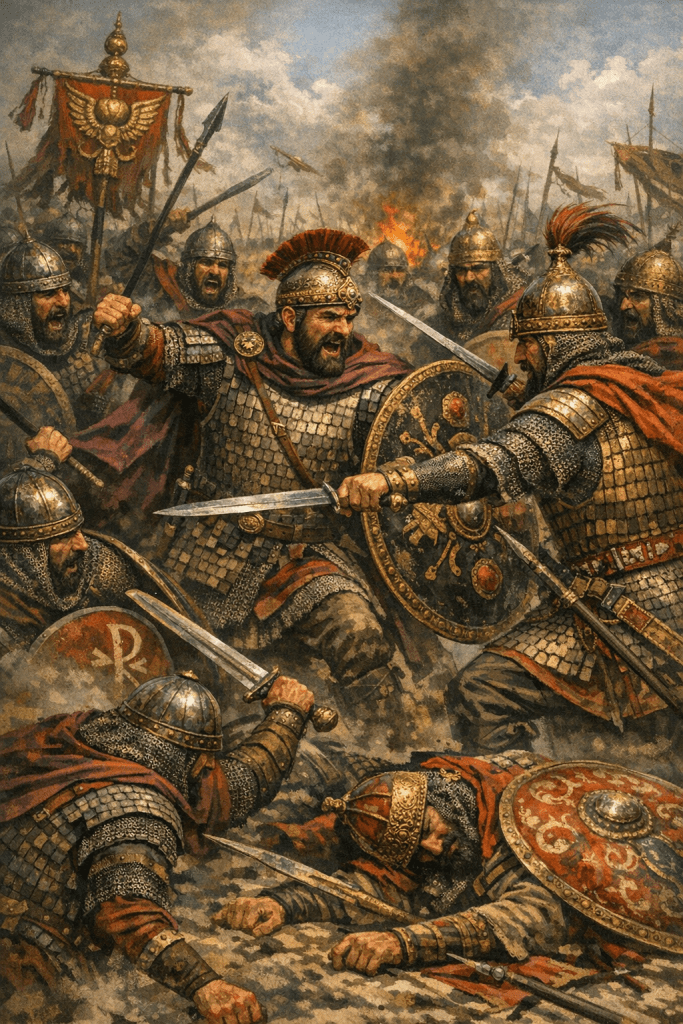
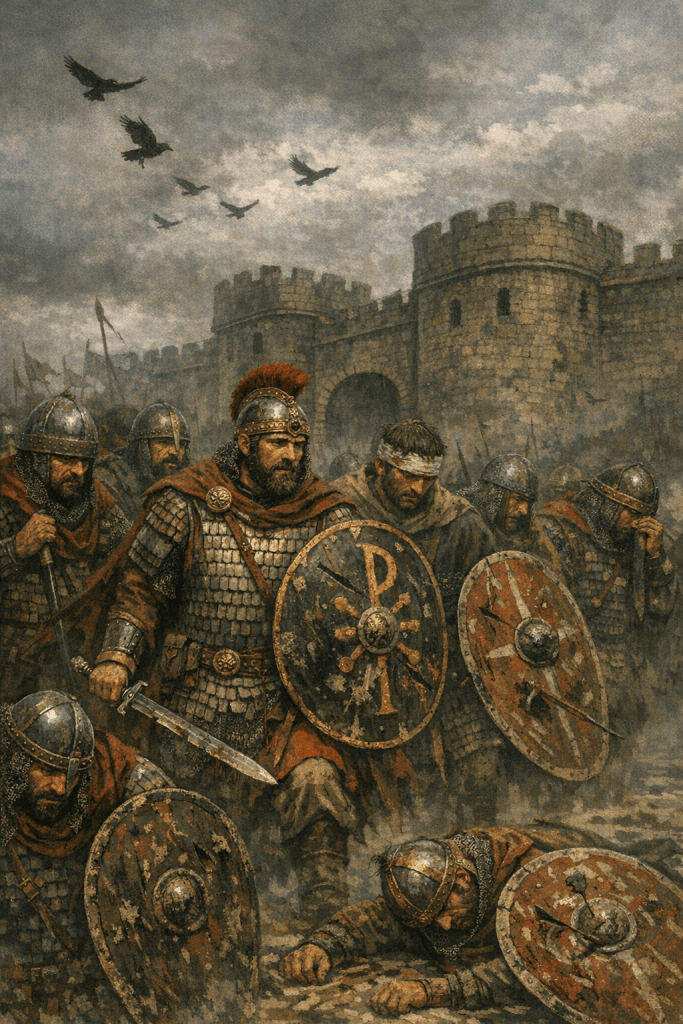
The first signs of decline in the British Empire were the need to concentrate its hitherto hegemonic naval forces in the North Sea and hand the security of its eastern possessions to an alliance with Japan. But the more telling historical parallel is with mighty Rome. From the fourth century onwards, Emperors like Constantine I and Julian realised they no longer had the men or the money to hold whole areas with regular Roman troops. Instead they handed over responsibility to foederati: barbarian tribes who marched under their own kings. In theory they were loyal allies of the Emperor, defending outlying provinces, But they spoke their own language, fought their own way and lived under their own rules. Where they were stationed Rome existed in name only. And that not for long.

Now Trump seeks to hand over defence of Ukraine to European allies. The American machine can no longer support the burdens it once carried with ease, and must choose its most dangerous enemy against which to concentrate. No, Donald Trump is not mad, nor disloyal. We think he and his advisers have looked into the books of the American Empire, and have found some very bad things indeed. They are trying to act accordingly, in order to slow its decline . Perhaps they will be temporarily successful, perhaps not. But decline is the result of long term historical forces, and once underway cannot be stopped. The rest of us, particularly former provincials in the Empire, once basked in the luxuriance of its protection. Now we must look to our own safety. Urgently.

#USA #China #donald trump #roman empire #history #geopolitics #NATO #europe

World Government #4: The Downsides

The Empire of the Romans filled the world, and when that Empire fell into the hands of a single person, the world became a safe and dreary prison for his enemies Edward Gibbon The Decline and Fall of the Roman Empire

For good commercial reasons the Roman World had expanded to its possible geographical limits, beyond which were nothing but deserts, oceans, and barbarians. It was the same with Imperial China. At least dissidents in present autocracies can live with the hope that somewhere are free men, or at least national enemies, who may still thumb their noses at the tyrant. A World Empire would close down dissent forever.

Such is the case made by the eloquent Ilya Somin for the Cato Institute [1] We do not always revere the pronouncements of this Institute as much as they might like. But there has always been an honesty of purpose about them, and we take this admonition very seriously indeed. In fact we would add another danger. The existence of nation states , each with different ways of doing things, potentially allows the growth of centres of excellence*, where new ways of thinking can be tried and tested. A single government might rapidly stifle progress, or at least slow it to a crawl.

Always beware of a good idea, especially when it is your own. We have spent three blogs advocating the benefits of a World Government. We hope that this one advertises the very real dangers sufficiently.

*The most intelligent person we have ever known believes in this concept

[1]https://www.bing.com/search?q=Cato+institure+world+government&form=ANNTH1&refig=CE70A53FE2214B2DB64595022921BCC8&pc=HCTS

#world government #edward gibbon #freedom #tyranny #economics #politics #Cato institute

The article we have attached contains everything you need to know(almost)

The Fall of the Roman Empire and the rise of Christianity are the two dominant events in Western Civilisation. For they form the framework of our entire intellectual approach to belief, to art. to science and to politics and society. The doings of Gregory the Great, Charlemagne, St Francis Xavier, Napoleon, the Founding Fathers of the USA, and many others were all entirely conceived and framed in that meta-narrative, The Renaissance, Enlightenment, and Christianisation of vast areas were due to those who still avidly studied Greek and Latin, or spoke daughter languages such as French, Spanish and Portuguese. How did the Roman Empire transform so quickly? And then collapse?

Dr Jonathan Kennedy[1] thinks he has the answer. Following closely the work of Professor Kyle Harper, a scholar we have often cited in these pages (LSS 13 5 24,24 6 21 10 3 21) he sees the plague of Cyprian of the mid third century as the key tipping-point. There had been a terrible plague before: the Antonine one of the late second century, but somehow, like a groggy fighter getting up off the canvas, the Empire had recovered. This time was different. This was the time that the Old Gods failed. They lost the people’s hearts forever to a new God, who, until then had not been doing notably well. And anyone with even a casual acquaintance with Roman History will tell you, the whole feel of the Empire changed in those fifty crucial years. A citizen of Alexander Severus(d 235) inhabited a world of temples, philosophers, the agora and open towns in a vast trading network, which would have been recognisable to Cicero, or even Plato. A subject of Diocletian(reigned 284-305) saw a world of Churches, walled towns, command economies: the Middle Ages in the bud. The Plague of Cyprian sits right across these years, although Professor Harper also cites climate change, as old LSS buffs know well.[3]

So- most of what you need to know? Well, yes, today more than ever. Once again a society that imagined itself to be prosperous and enlightened sees its very foundations threatened, The old open trade routes are rapidly giving way to protectionism. Massive climate change hovers in the wings. We have already had one pandemic, and it almost wrecked our economies. Others threaten. As we write these words news comes that avian flu has once again jumped the species barrier, wiping out a valuable collection of rare cats in the State of Washington in the USA.[2] If not this influenza, there will be others. Is our world about to be transformed again, forever?

[1]https://www.theguardian.com/commentisfree/2024/dec/25/birth-jesus-plague-roman-empire-christianity

[2]https://www.bbc.co.uk/news/articles/clyvx4d1n4vo

[3] Kyle Harper The Fate of Rome Princeton University Press 2018

#plague of cyprian #christianity #roman empire #pandemic #economics #society

Switzerland: an economy is never expensive if you live there

A sometime correspondent* and contributor to these pages has sent us the following report, which we have transcribed somewhat into a language fit for a lettered readership:

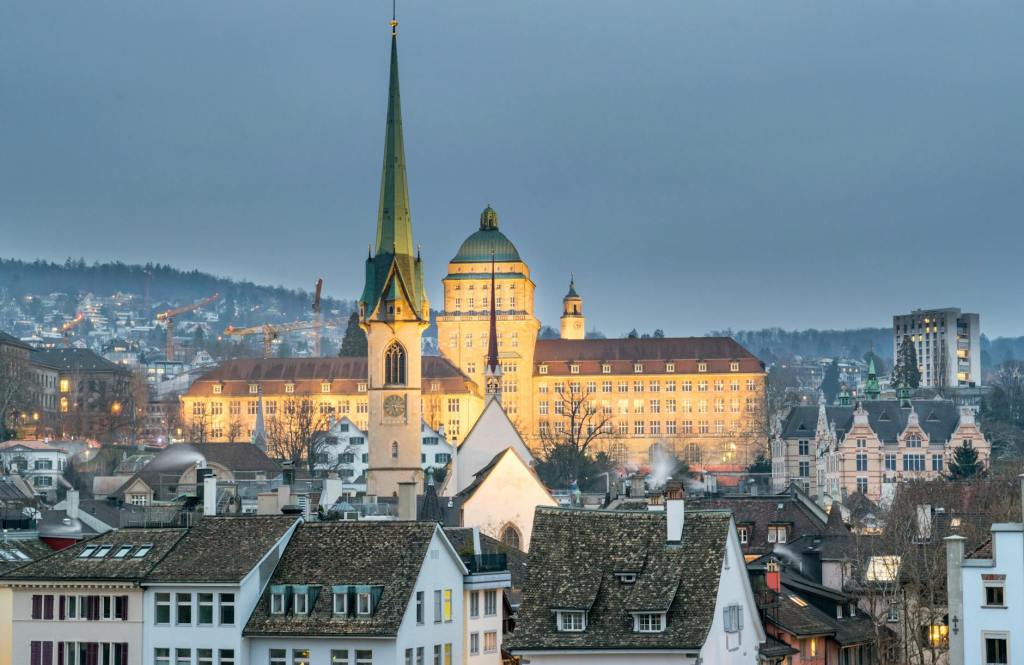
“Recently, my wife and I travelled through the republic of Switzerland, which was notable for many things. The cleanliness and order of all we saw, especially the city of Zurich. The split second precision of the trains and other means of transport. And the eye-wateringly expensive nature of food and drink. We were offered a bottle of the house red for £54, and it went up from there. Food was similarly exorbitant. Yet as soon as we crossed the border into Italy, the change in tone was remarkable. Trains were suddenly, and reassuringly, late at all times. But we could afford to eat once more” (they shared a delicious pizza-ed)

So what is going on? There are several lessons for us students of economics here. Firstly, you can run a high price, high paid economy rather well. Which renders all this talk about austerity and cuts rather irrelevant. Because an economy will not feel expensive to those who live in it , provided they use its currency. It will feel different to visitors from poorer countries, because their currencies will not fit with the prices on offer in the high wage economy. Secondly, if you want great services, they are perfectly possible- if you are prepared to pay for them. That these may be both a source of national pride and economic efficiency becomes a quod erat demonstrandum. Thirdly, that a cult of paying starvation wages is both inefficient and self-defeating. And finally-if you want a really good pizza, you still have to go to Italy.

We wish we could afford even that!

#switzerland #italy #price #income #keynes #friedman #economics

*for both legal and security reasons. we have been requested to keep the identity our correspondent anonymous

How an old History Book still has very real lessons for today

It’s funny how some books suddenly explain something you’ve puzzled all your life. One of our obsessions was always “What was the Roman Empire all about? And why did it fall?” And we ploughed our way through everything from Gibbon to Asimov’s Foundation series. Until we came across RH Davis A History of Medieval Europe”[1]. Suddenly, things began to fall into place.

Before the Industrial Revolution, it was far cheaper to transport goods by water than by land. The achievement of Rome was to be the culminating power that united the whole Mediterranean Basin into a single, prosperous trading area. Where cities could flourish, ideas spread and production be subdivided to the most efficient source. And to do it all with the minimum effort. This was partly by religious tolerance: before Christianity, all beliefs and none were accorded equal status. But it was also done by Law. As Davis explains

“…….[The Romans] knew that all the Mediterranean peoples had a common interest in the commerce of their sea…….they believed that all men had by nature an instinctive knowledge of what was right and what was wrong…and that it was possible to frame laws in accordance with the standard of nature. They distinguished between custom, which was of local significance and law, which appertained to justice and was of universal significance …...

But the barbarians who entered the Empire did not quite see things that way. Most of them-Goths, Burgundians , and so on, came to enjoy, not destroy. But:

barbarian invaders claimed that their own laws were were particular to themselves, since they were not founded ..on reason, but on the dictates of their divine ancestors….[the Roman Empire] was… cracked by the determination of barbarian invaders to prefer the law of their ancestors to the law of reason, since that preference implied the superiority of loyalty to one’s race over loyalty to the civilised world. It was shattered when traders lost the freedom of the sea. When that happened , the greater part of Europe reverted to an agricultural economy, in which there was no place for the cities that made men civilised” (all quotes pp 4-6)

Today, after a brief period of globalisation, we live in an age of retreat. In most places, people are reverting into ethnic or religious tribes. There are cries to tear down even the few international laws we have, which might have done some thing to keep the peace. Now, there is a very respectable argument to say this is in accordance with the most basic instincts of human nature. And so it might be. But Davis tells us very clearly what the price must be if we now follow this that course. The Dark Ages.

[1] RHC Davis A History of Medieval Europe from Constantine to St Louis Longman 1988

#RHC Davis #Middle ages #medieval #trade #henri #pirenne #dark ages #antiquity #economics