
Round up Birth order, resistant fungus, solar missions and much more

a few examples from this week’s news

Is Birth order Destiny?  We’ve long been intrigued by the thought that your birth order-whether you’re a sibling or an older child, older brother, younger sister,etc-affects your personality and life chances. Latest twist in the saga is this piece about disease from the Independent: Study suggests first-born children are more likely to develop neurological conditions and second-born are more prone to substance abuse

https://www.independent.co.uk/news/science/first-and-second-born-disease-risk-b3028407.html?fbclid=IwY2xjawTicCtwZG9mBWV4dG4DYWVtAjEwAGJyaWQRMFU1SjR6Q2hsamtwamFOMUxzcnRjBmFwcF9pZBAyMjIwMzk

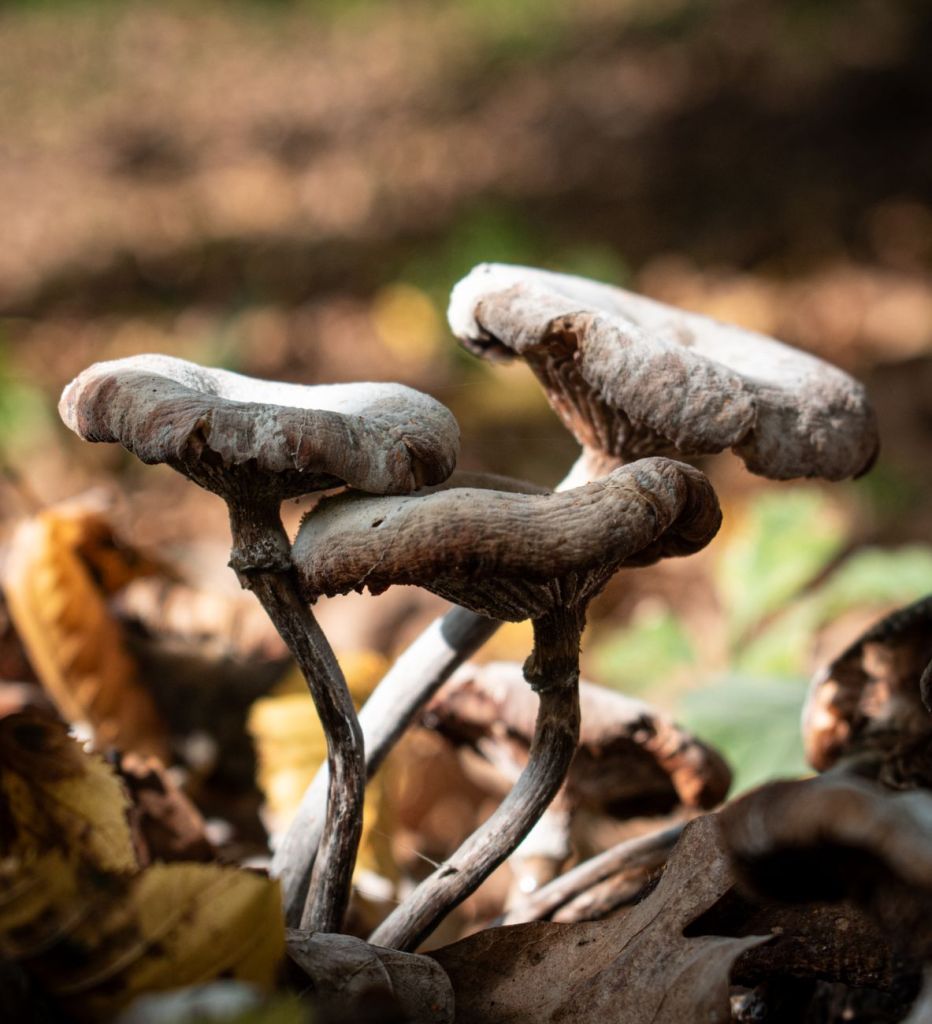
Recalcitrant Fungus “A drug-resistant fungus that kills thousands of hospital patients in the U.S. every year survives on human skin by hijacking the body’s immune response, scientists have just discovered.” declares Newsweek. So it’s not just bacteria then?

Is all this heat doing in your brain? A few years ago we published a blog speculating that extra carbon dioxide from global warming may be affecting our health (LSS 2 11 20) Well that may or may not be the case: but all that extra heat may well be affecting our brains, as this article from The Conversation makes clear indeed

Yet more quantum complexity As if quantum physics wasn’t already difficult enough to follow, what with all those bosons, muons hadrons and quarks, Nature Briefing has just made our life a little more difficult with this piece about the Gluon How are we meant to remember all this?

A team of physicists says it has observed strong evidence of a mysterious ‘glueball’, a particle made up of force-carrying gluons. The team says that a particle known as X(2370) is mostly made up of these glueballs — clusters of the gluons that bind quarks to form protons and neutrons and hold them inside the nucleus of an atom. There is no single smoking gun that proves that this particle is made of glueballs, says particle physicist Bruce Yabsley. But the findings are “quite persuasive”, he says. The group presented their results at the International Conference on High Energy Physics in Natal, Brazil, last week.

Nature | 5 min read

Why won’t ET phone us? Normally our Friday purpose is to bring you short snappy pieces before Cocktail Hour. But this Guardian Long Read on why those pesky aliens have never shown up is so very good that we felt it our duty to bring it to you nevertheless

https://www.theguardian.com/news/2026/aug/11/the-great-silence-why-havent-we-found-any-aliens-yet

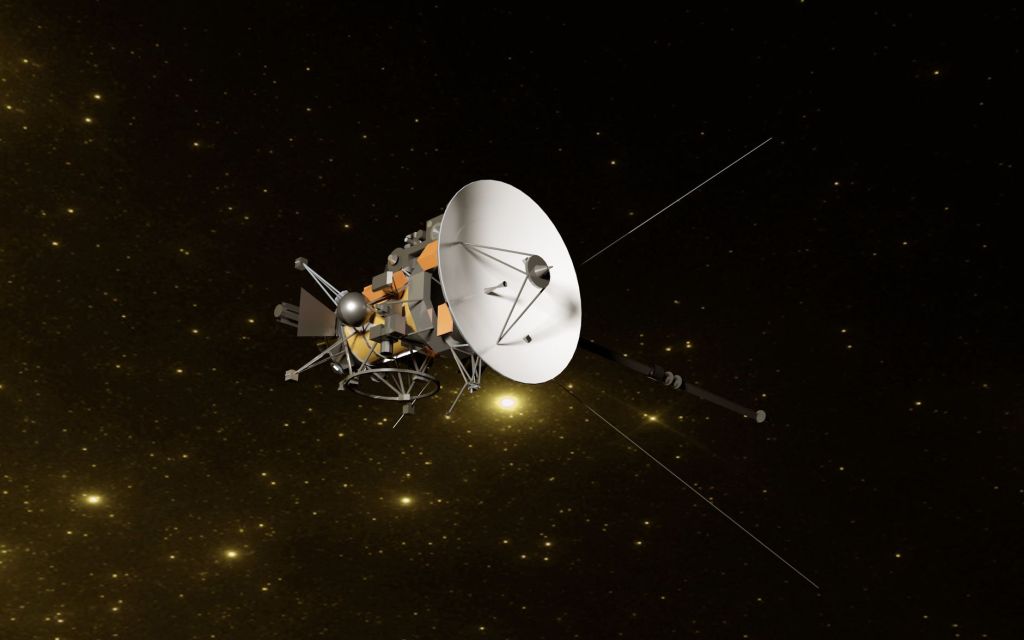
India’s day in the Sun If there’s one nation that is making huge leaps-commercial, technological, scientific- it is India. Proof if you want more comes from this admirable solar mission Aditya L1, admirably reported by the BBC

Aditya-L1: Indian solar mission’s new findings throw light on enduring Sun mysteries – BBC News

Quote of the week

Behold, how good and how pleasant it is for brethren to dwell together in unity!” — Psalm 133:1

#india #space #solar #global warming #antibiotic resistance #birth order #physics #climate #psychology #family #health #medicine

Round up for this week: What’s the biggest living thing. how many quantums in an atom, lupus progress-and international relations

Fungal internet  Its not whales or trees:Some of the largest living things on our planet are actually vast networks of microscope white fungi growing beneath the ground on which  we unthinkingly tread as The Conversation explains;

Don’t expect Putin to go quietly if he loses in Ukraine    If you think current developments in the Russian Ukraine war might lead to a status quo ante bellum, think again ,as this prescient article from the Guardian makes clear

https://www.theguardian.com/commentisfree/2026/jun/14/vladimir-putin-ukraine-war-borders-russian-president

Plant a tree in ‘73, plant some more in ‘74 was a Government slogan from our long distant youth But maybe trees won’t save us from climate change as well as we thought they might  as this piece  from The Guardian explains

Trees may store less planet-heating carbon than hoped, study suggests | Greenhouse gas emissions | The Guardian

A bestiary of bosons Nothing so  defeats us as the vast and baffling variety of particles ,waves and other strange things that make up the modern atom .So we welcomed this article from Nature Briefing which tries to make sense of the matter

 How many elementary particles are there?

Even if you know your fermions from your bosons, the actual number of fundamental particles — the electrons, quarks and other building blocks of physics — is still uncertain. From the 17 that feature on posters on classroom walls, “where you stop depends on your taste for complexity and mystery”, explains science writer Natalie Wolchover. “Plausible answers range from 17 to — in all seriousness — 995.5.”

Quanta | 13 min read

Lupus in remission Just before we pressed the “SEND” button, our researchers insisted that this  encouraging story about a new immunological technique which seems to be turning the tide on the debilitating disease of Lupus went in, Good for them. here’s the BBC

‘I’ve never been this good’ – revolutionary immune reset puts lupus in remission – BBC News

Quote of the week

He that hasteth with his feet sinneth.” (Proverbs 19:2)

#lupus #immunology #fungi #Russia #physics #quantum physics #vladimir putin #trees

Exclusive: We reveal the only definite finding from quantum physics(and you can be certain of it)

Always believe someone who tells you that they don’t know what’s going on. Especially when that someone is one of the best trained and most intelligent people in the world. That’s why this story from Nature Briefing caught our attention as the week-ender for this session of blogs: What Does quantum Physics Mean anyway?

First sketched out a century ago, the equations at the heart of quantum mechanics underpin technologies from computer chips to medical-imaging machines. But no one seems to agree on how best to describe the physical reality that lies behind the maths. A Nature survey of more than 1,100 researchers — the largest ever on the subject — has revealed just how widely researchers vary in their interpretations of the most fundamental features of quantum experiments, and their confidence in their answers. [1]

The survey asked questions like “is there a real quantum world behind – or does all this work we’ve done only represent what’s inside our heads? What are the most favoured explanations for quantum theory? What is a wavefunction anyway? Is there a boundary between classical objects and quantum objects (i.e ,between the table you’re sitting at and the atoms it’s made from) And the answers that came back-and remember who gave them-read more like the responses to political opinion polls or market surveys about the best brands of instant custard.

From all of which we concluded the following.

1 If the brightest and the best think like this about something they have studied for decades, it suggests the rest of us might do well to be a little less opinionated on many things

2 Above all this includes certain journalists who think they know it all on things like climate change, vaccines and global warming

3 Watch the last episode of Jacob Bronowski‘s TV spectacular The Ascent of Man on You Tube. or one of the other streamers. It’s still good after 52 years [2]

4 There is still much out there to discover-as we tried to hint with our little blogs on Euler’s number and π(LSS 14 3 22; 16 4 24)

5 All knowledge exists within certain limits, and is probable. Of this last point, you may be certain

[1]https://www.nature.com/articles/d41586-025-02342-y?utm_source=Live+Audience&utm_campaign=a8d315930b-nature-briefing-daily-20250730&utm_medium=email&utm_term=

[2]https://www.dailymotion.com/video/x20p9h4

#quantum physics #uncertainty principle #knowledge #reason #science #nature