Round up for this week: What’s the biggest living thing. how many quantums in an atom, lupus progress-and international relations

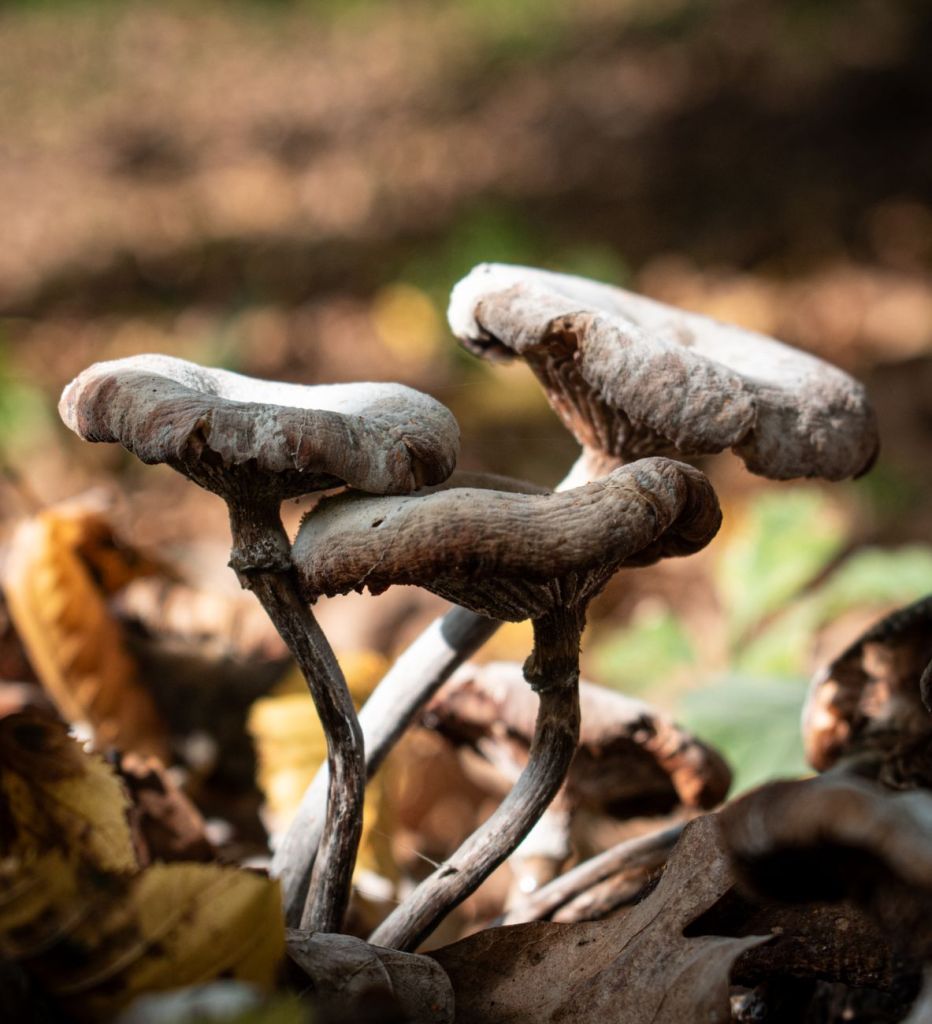
Fungal internet  Its not whales or trees:Some of the largest living things on our planet are actually vast networks of microscope white fungi growing beneath the ground on which  we unthinkingly tread as The Conversation explains;

Don’t expect Putin to go quietly if he loses in Ukraine    If you think current developments in the Russian Ukraine war might lead to a status quo ante bellum, think again ,as this prescient article from the Guardian makes clear

https://www.theguardian.com/commentisfree/2026/jun/14/vladimir-putin-ukraine-war-borders-russian-president

Plant a tree in ‘73, plant some more in ‘74 was a Government slogan from our long distant youth But maybe trees won’t save us from climate change as well as we thought they might  as this piece  from The Guardian explains

Trees may store less planet-heating carbon than hoped, study suggests | Greenhouse gas emissions | The Guardian

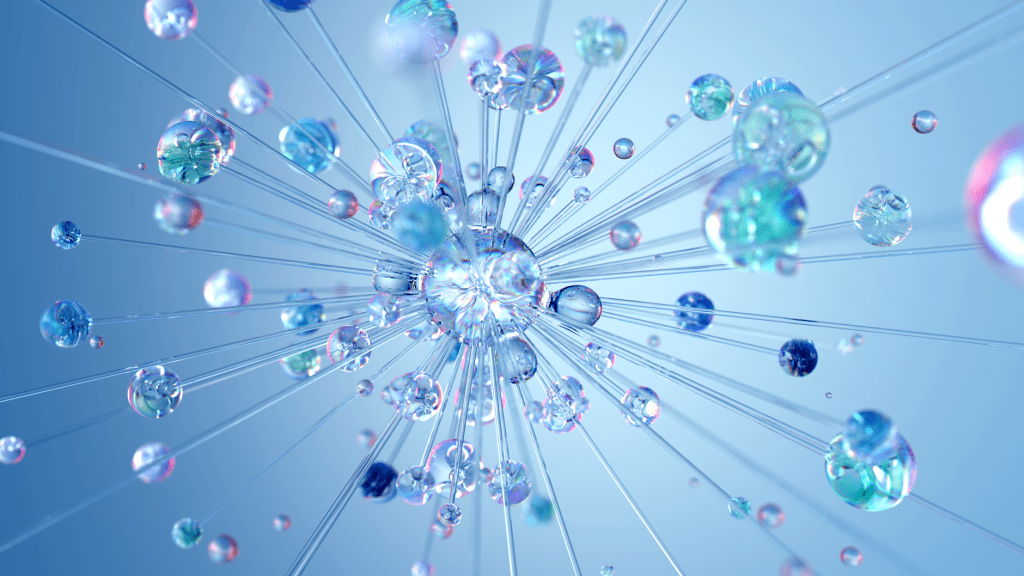
A bestiary of bosons Nothing so  defeats us as the vast and baffling variety of particles ,waves and other strange things that make up the modern atom .So we welcomed this article from Nature Briefing which tries to make sense of the matter

 How many elementary particles are there?

Even if you know your fermions from your bosons, the actual number of fundamental particles — the electrons, quarks and other building blocks of physics — is still uncertain. From the 17 that feature on posters on classroom walls, “where you stop depends on your taste for complexity and mystery”, explains science writer Natalie Wolchover. “Plausible answers range from 17 to — in all seriousness — 995.5.”

Quanta | 13 min read

Lupus in remission Just before we pressed the “SEND” button, our researchers insisted that this  encouraging story about a new immunological technique which seems to be turning the tide on the debilitating disease of Lupus went in, Good for them. here’s the BBC

‘I’ve never been this good’ – revolutionary immune reset puts lupus in remission – BBC News

Quote of the week

He that hasteth with his feet sinneth.” (Proverbs 19:2)

#lupus #immunology #fungi #Russia #physics #quantum physics #vladimir putin #trees

Do the Twistronics-and change the world

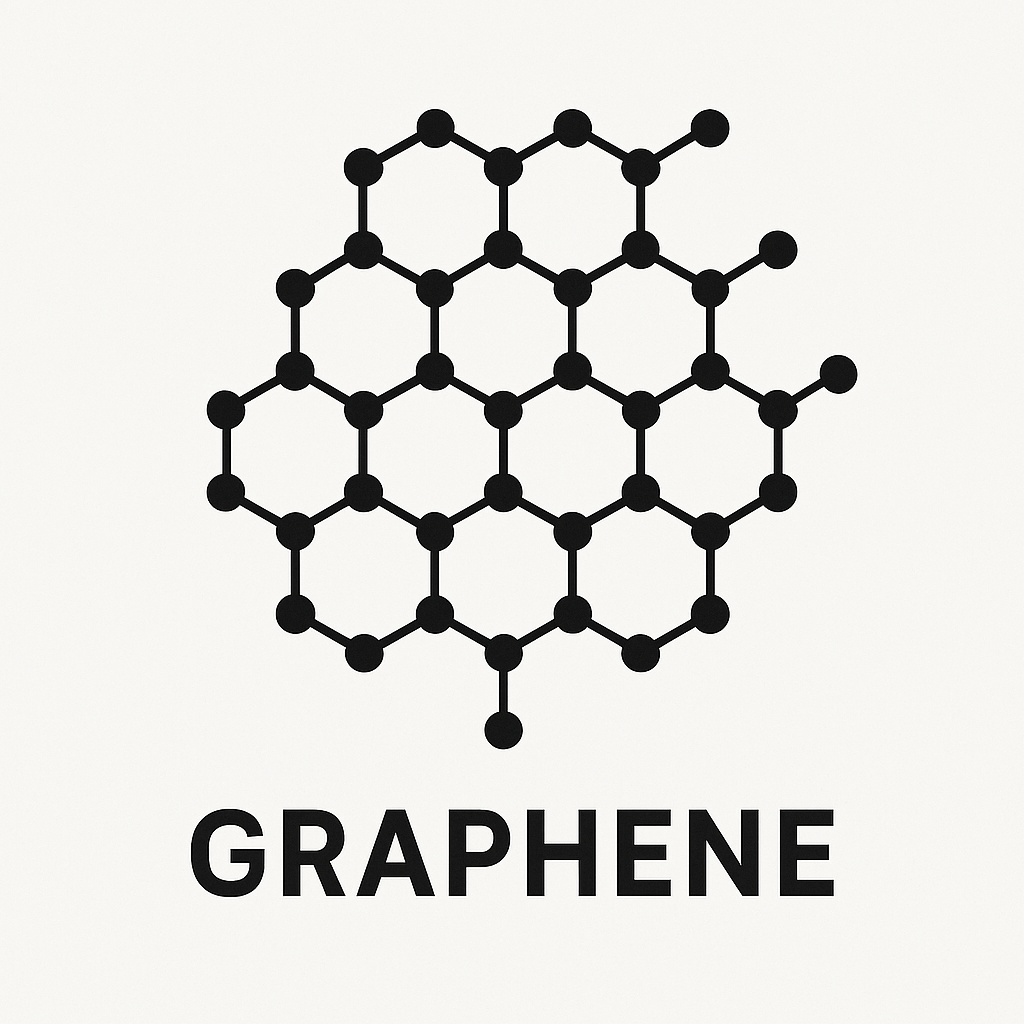
What happens if you take two sheets of graphene and rotate one slightly relative to the other?” It’s a question all of us must have asked ourselves at one point or another (it is?-ed) but never really found time to answer. But two remarkably intelligent  men did: Allan MacDonald, a theoretical physicist who posed it; and Pablo Jarillo‑Herrero who answered it by building ultra‑clean, precisely controlled graphene heterostructures –you know: the kind of devices where quantum subtleties become visible. Well, we said they were clever! Their work, and the prize which they won for it are admirably summarised by the erudite Selva Vargas Reátegui for El País [1]

Her excellent article contains much more on the details, so read it. Suffice it to say, the discovery not only revealed all sorts of weird and wonderful properties in graphene. It actually created a whole new field of learning: Twistronics.  Because researchers soon learned to twist not just bilayers as in graphene, but trilayers, multilayers, and heterostructures of many 2D materials. The field exploded because twist angle becomes a new starting point for designing quantum matter. While still early, the work hints at possibilities such as: designer superconductors, quantum simulation platforms, ultra‑sensitive sensors and  novel electronic devices based on correlated phases. Ok we are a tad shaky on one or two of these ourselves, but if it helps build something to do the ironing, we’re all in.

But the real point for us is conceptual. Changing the geometry alone can utterly change the properties of a material. It feels a bit like the time when some unknown genius in Old Mesopotamia started mixing tin with copper. As small, as unexpected and as potentially world changing. Oh, and another point: economics. The more you spend on basic science and research, the more your chances rise of repeating the trick somewhere else. Leaders of the world, you have nothing to lose but your accountants.

Premio Fronteras para los descubridores del ‘ángulo mágico’ que genera supermateriales | Ciencia | EL PAÍS English speakers: you need to hit the translation button

#Twistronics #graphene #quantum physics #geometry #bronze age #materials science

Hello we’re back-and we have Nobel Prizes!

First of all, apologies for our forced and utterly unwanted absence. But Domestic Renovations, and the sorts of people who carry them out, can be as tiresome and time-consuming as any other human relationship which the Gentleman Scholar must negotiate -domestic staff mistresses and lovers, cleaners, mechanics, and countless others. All require patient listening, multiple cups of tea and hefty pay offs, if only to still their incessant demands for even a moment. But here we are back again where it counts-with you, gentle readers. And we are glad to say that we return with one of our favourite sequences of the year. It’s Nobel Prize season again. [1]

For us, the Nobel prizes are the very essence of what this blog is all about. That careful learning and scholarship are not only what lifts our lives above the miserable condition of wild apes (well, some of us): they constitute the only only possible escape route from our current plights, many of which are serious and grave. And this time we think we can prove it. with the help of three of the very winners themselves-how’s that for endorsement, ladies and gentlemen? That’s the prize which will receive our first detailed attention, in the next blog: but let’s start with a roll call of the stupendously intelligent people who have stood out this year as the cream of humanity

Physics: John Clarke Michel H Devoret John M Martins Amazing work “for the discovery of macroscopic quantum mechanical tunnelling and energy quantisation in an electric circuit” Yup, we kind of lost too it after the fourth word in the citation, but we’ll try to understand it better in time for a later blog

Chemistry Susuma Kitagawa Richard Robson Omar M Yaghi Want to capture Carbon dioxide, water in the desert, store toxic gases and many other things? These discoveries will let you do all of them. If this isn’t right on the raison d’etre of this blog, we don’t know what is. Again, come back later for more

Physiology and/or Medicine Anything in these fields must be close to an LSS reader’s heart. So the work of Mary E Brunkow, Fred Ramsdell and Shimon Sakaguchi on the tricky world of the immune system requires our most emphatic hats-off

Literature and Peace Intelligence can be of the Emotional kind as well as the academic, as many of us discover with agonising slowness and pain. So although these subjects lie outside the remit of our blog we are proud to give honourable mentions to László Krasznahorkai and Maria Corina Machado respectively (is she a relative of Antonio Machado the famous Spanish poet, we wonder?-ed)

But finally our first next blog on this subject, as t’were, will be devoted to the patient Economics work of Joel Mokyr, Phillipe Aghion and Peter Howitt. Because finally they have shown at Nobel level, what we have believed for so long. It’s science and learning that drives the economy. Which is where we go next time.

[1] https://www.nobelprize.org/all-nobel-prizes-2025/

#nobel prizes #economics #physics #chemistry #medicine #physiology #economics

Exclusive: We reveal the only definite finding from quantum physics(and you can be certain of it)

Always believe someone who tells you that they don’t know what’s going on. Especially when that someone is one of the best trained and most intelligent people in the world. That’s why this story from Nature Briefing caught our attention as the week-ender for this session of blogs: What Does quantum Physics Mean anyway?

First sketched out a century ago, the equations at the heart of quantum mechanics underpin technologies from computer chips to medical-imaging machines. But no one seems to agree on how best to describe the physical reality that lies behind the maths. A Nature survey of more than 1,100 researchers — the largest ever on the subject — has revealed just how widely researchers vary in their interpretations of the most fundamental features of quantum experiments, and their confidence in their answers. [1]

The survey asked questions like “is there a real quantum world behind – or does all this work we’ve done only represent what’s inside our heads? What are the most favoured explanations for quantum theory? What is a wavefunction anyway? Is there a boundary between classical objects and quantum objects (i.e ,between the table you’re sitting at and the atoms it’s made from) And the answers that came back-and remember who gave them-read more like the responses to political opinion polls or market surveys about the best brands of instant custard.

From all of which we concluded the following.

1 If the brightest and the best think like this about something they have studied for decades, it suggests the rest of us might do well to be a little less opinionated on many things

2 Above all this includes certain journalists who think they know it all on things like climate change, vaccines and global warming

3 Watch the last episode of Jacob Bronowski‘s TV spectacular The Ascent of Man on You Tube. or one of the other streamers. It’s still good after 52 years [2]

4 There is still much out there to discover-as we tried to hint with our little blogs on Euler’s number and π(LSS 14 3 22; 16 4 24)

5 All knowledge exists within certain limits, and is probable. Of this last point, you may be certain

[1]https://www.nature.com/articles/d41586-025-02342-y?utm_source=Live+Audience&utm_campaign=a8d315930b-nature-briefing-daily-20250730&utm_medium=email&utm_term=

[2]https://www.dailymotion.com/video/x20p9h4

#quantum physics #uncertainty principle #knowledge #reason #science #nature