Drugs: Is moral corruption our best hope of freedom?

Russia and its dominions are now plagued by an entirely new wave of drug crime. It’s a fascinating subculture, based on the dark Web and full of its own new argot with terms like kladmen, seagulls and dead drops, all designed to get around the old models of illegal buying and selling.[1] This superb article by Max Daly of the Guardian explains all. First, a confession. We freely confess that not only do we have the greatest intellectual difficulty in understanding how all this works, but also in grasping how it can possibly exist in a totalitarian, utterly regulated society like Russia, where absolute obedience is prized above all.

The answer is that an outward show of absolute loyalty buys many freedoms. A totalitarian state can brook no challenge to its legitimacy. Yet those who cheerfully profess unswerving fidelity can go about their daily business virtually untouched, It’s a truth that western admirers of the old Soviet Union found hard to grasp: how could there be so many gangs and so much corruption in a Socialist Society? But there was: outfits like the Tambov Mafia gave more than one aspiring dictator their start. The biggest threat to a totalitarian system is not the dissidents, who can be quickly arrested and crushed. It is the loyalists whose activities slowly creep up, deviating the purpose of the State until it is rotten from within. It is the same everywhere: who can be more loyal than a policeman, dedicating his life to maintaining social order? Well, read this {2] about the alleged misdemeanours of a certain Oscar Sanchez Gil who was until recently head of the economic crimes unit of the Spanish National Police, and who allegedly had about 20 million euros in cash stuck inside the walls of his house. (of course, we stress that at this stage these are allegations. The Courts may yet prove Snr. Gil to be a fine upstanding citizen of impeccable character and honesty) But it’s the sort of case that illustrates our point.

Corruption may indeed be a bit naughty. But what is it really except the classic operation of a free market rushing to supply an immediate need? One thwarted by acres of state regulation and red tape? Back in the 1990s, we always laughed at card carrying Conservatives who grew hysterical about immigration and illegal drugs. Surely, we reasoned, this was just their free market operating to the laws of supply and demand? Of course one may make a judgement about what are real human needs. But that is a moral issue, not an economic one. If free market theory is correct, then it must be one of the best descriptors of human nature yet found. And ultimately, it will bring down every system, however cruel.

[1]https://www.theguardian.com/world/2024/nov/14/russia-rise-of-powerful-darknet-drug-industry-dead-drops-punishment-beatings

[2]https://uk.news.yahoo.com/spain-arrests-anti-fraud-police-113717604.html

#russia #dark web #drugs #spain #corruption #free market #immigration #soviet union

From American Decline to World Government: fasten your seatbelts for a bumpy ride

When did America’s Decline end, and the Fall begin? Although future historians will debate, Tuesday November 5th 2024 will be as good as any other point to start from. For it was on this date that a concatenation of forces-economic, political, social-produced the re-election of Donald Trump, and all that was to follow. These forces included an irresolvable racial rancour dating back to slavery; a deep pollution of information in the public sphere; a chronic failing in public education and the ethos to support it. But above all it was the worship of money, and the catastrophic, merciless social and economic inequalities that this engendered, that brought everything low. Writing for The Nation, Tom McCoy details these rather well in the first part of his article [1] (Don’t read the second bit until we say you can) To cut a long story short, we could call this obsession with cash NeoLiberalism.

Let’s just jump across the Atlantic for a moment to say goodbye to Larry Elliott who quits his post at the Guardian after 36 years {2] He too is eloquent on the many things he has witnessed. Among them is this observation on this same cocky, self-satisfied NeoLiberalism

…… the free-market experiment has failed, as some of us said it would all along. Wealth did not trickle down, and instead the gap between the haves and the have-nots widened. The workers laid off when the factories closed in northern England and the US midwest did not find new well-paid jobs but were either thrown on the scrapheap or found low-paid insecure work …………

Financial speculation ran rife once controls on capital were removed, but growth rates in the west were slower than in the postwar heyday of social democracy. Warnings of trouble ahead were ignored until the world’s banking system came close to collapse in the global financial crisis of 2008. [2]

Producing an alienated and impoverished group of vast voting power) which was impervious to the imploring of reason, fact and education. And who could blame them? The exalted free markets have produced such insecurity that a nationalist backlash was inevitable. It is now tearing down every shibboleth that the neoliberals held dear. Low tariffs, free movements of capital and labour, cultural and intellectual exchange are going to the wall, and we can see nowhere that this process can now stop..

Except one. Because while Larry’s article closes with a final nod to the re-emergence of the Nation State, Tom’s goes further and look to the future.(OK, click on his article again) The problem with the Nation State is Pride. It is national Pride which will cause Donald Trump and his friends to start drilling for oil again. By which means all combined attempts to prevent global warming will collapse, as each nation looks to its own interest. Runaway global warming will produce such desolation that any economy and any body politic will become unsustainable, probably as early as the next decade. The resulting chaos will make a world Government essential for human survival. And tom details how this may come about, perhaps in the sixties or seventies.

The American hegemony is now certainly over, How ironic that this was hastened by an arch nationalist such as Trump!

[1]https://www.thenation.com/article/world/american-hegemony-climate/

[2]https://www.theguardian.com/business/2024/nov/10/from-thatcher-to-trump-and-brexit-my-seven-lessons-learned-after-28-years-as-guardian-economics-editor

#global warming #economics #climate change #donald trump #neoliberalism #free trade #protectionism

Six insoluble mysteries which may end us all

Occasionally we come across websites with lurid titles like “10 UNSOLVED MYSTERIES TO GIVE YOU THE HEEBIE JEEBIES!” And it’s all to do with odd bits of old stone or dodgy claims about flying crockery. Which made us think of a few everyday mysteries about Homo sapiens which are enough to give anyone the aforesaid Heebies, with a few jeebies thrown in for good measure. Because if we do not develop the cognitive capacity to solve them, we could well be heading for the biological equivalent of the junkyard,

(1) Where is the line between the individual and society? Countries that go too far towards prizing the State end up economically stagnant, as the society is captured by a small self-serving elite who grab all the resources. (Think USSR or Venezuela) On the other hand societies with no idea of the common good, where untaxed individuals run around doing what they like, not only end up without worthwhile armies or roads. They also get captured by an elite, this time billionaires, with almost identical outcome to the deluded Commies. No one has resolved this tension in any stable way.

(2) Emotion utterly dominates reason. All the technological and scientific advances that make life worth living (you really wanna give up soap, huh?) are formed in the reasoning part of the brain. Yet most people are driven by deep tides of emotion welling up from the subconscious. These rarely lead to anything profitable, and are the principal causes of most of the obsessions, addictions and generational hatreds which form such an immense drag on progress. Why is logic so weak and blind passion so strong?

(3) The drive to divide into hostile groups We often allude to this one; think football supporters and the Robbers Cave experiment. The American writer James Baldwin saw identity as a serious trap, denying us our own better nature. It may take all the AI in the world to solve this one

(4) The constant need for persecution of others, particularly the weak or disabled. Anyone still deluded about “the moral superiority of the oppressed” could learn from what happens to disabled neighbours in cheap housing estates, and how the noble proletarians make their lives utter hell. Why does everyone want justice, but only for themselves?

(5) The local and the trivial Why do so many people spend so much time learning about the lives of celebrities in tacky media outlets, when they would profit much more from reading magazines like The Economist or Science?

(6) An utter inability to change minds Most people are really rather deft and clever about what is around them; the hierarchies around their neighbours, families, jobs, and so on. But most of what they learned about bigger things like science or society was laid down decades ago. And the habits of mind formed in youth seem impossible to change, even when the survival need to do so becomes clear. This may ultimately be the most dangerous mystery of them all.

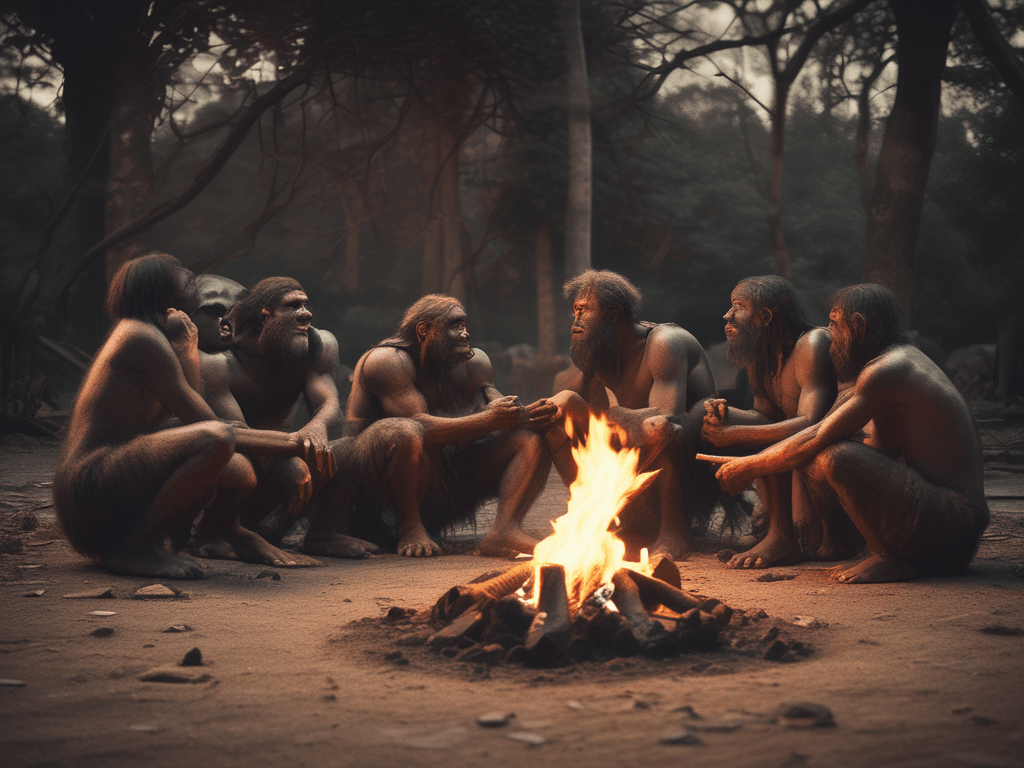
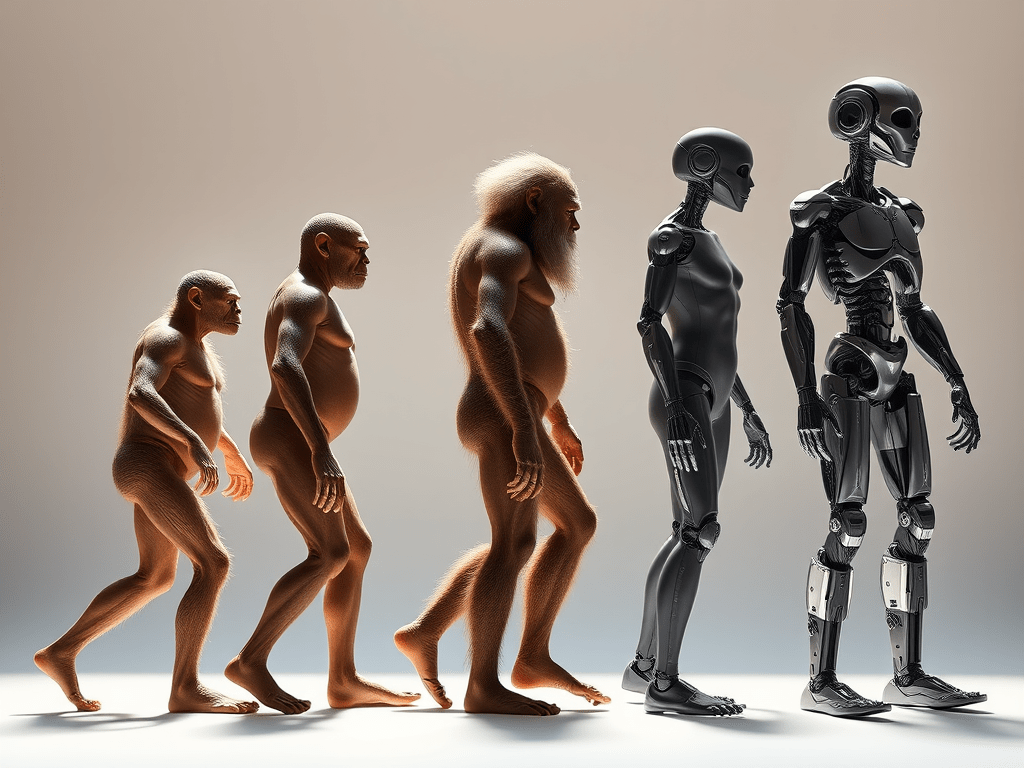
No species, however successful it seems at its peak, can long survive the competition from a better-adapted one. Our predecessor Homo erectus had evolved into top predator, and colonised three continents. Before it was utterly outclassed by the more intelligent Homo sapiens in its various subspecies. A newer, more intelligent form of human, perhaps incorporating elements from artificial intelligence and genetic engineering should be able to solve the above cognitive problems with ease. If that happens, there will be little enough space for the predecessor, and no motive to preserve us either.

#climate change #learning #cognition #human evolution #unsolved mysteries