Rookwood Operations: Clearing phosphates AND capturing carbon

Today we have a good news story, brought to us by the ineffable Robin McKie of the Guardian, which brings genuine hope, Because it solves two problems for the price of one.[1]

To begin at the beginning. In the last fifteen years or so, England’s rivers have started to fill with huge, choking blooms of algae, which seize all the oxygen from the water, thus killing everything else before, dying back themselves . To leave a poisonous foul-smelling sewer , like the ones you used to find in old towns in the Industrial revolution. The cause? High levels of phosphates on agricultural lands, which runs off into the waterways, producing sudden spurts in the aforementioned algae-and down we go to death, for the ecosystem that is. Now, it could be argued that without high phosphate levels we could not feed our population ( feed or fatten?-ed) So how to square the circle?

The answer is to trap the run-off phosphates and return them to the land. And a small company called Rookwood Operations[2] is doing just that, down in the leafy county of Somerset. Their new Phosphate Removal Material just sits in the water, soaking up the phosphates until it’s full. Whereupon it is returned to the land ready for the farmers to exploit again. And get this:

For every metric ton of PRM produced, carbon is sequestered, locking CO2 for up to 1000 years.
PRM is made from completely natural circular sourced sustainable components

How’s that for two in one? There’s so much to like here for LSS readers. There’s even a feminist angle, as one of the company founders was up for the prestigious UK Women in Innovation Award.

Thinking new. Thinking differently. Using existing technologies to squeeze progress in a new way. Surely that trumps going round smashing your friends over the head because it makes you feel better?

[1]https://www.theguardian.com/science/2025/feb/02/uk-scientist-wins-prize-for-invention-that-could-help-avert-phosphogeddon

[2]https://rookwoodoperations.co.uk

#Rookwood operations #phosphates #river pollution #capture technologies #agriculture #technology

Digital Technologies offer step change in Antibiotic resistance

If something isn’t going too well, you try to look to throw something new into the mix. Something different, from outside the field. We’ve been bashing away with new drugs, education, media ops for ten years now. And still the problem of microbial resistance to antibiotics hasn’t gone away.

Which is why we welcome this new idea covered in The Lancet. The application of advanced digital technologies in things like diagnostics, data collection, clinical decisions -the thousand and one everyday things of medical life-could be a real game changer. So we are rather proud to present these articles from The Lancet. the first [1] by Timothy Rawson and co-workers is a marvellously detailed road map for how it might all work. (Warning-there’s a lot of it, this is going to take more than one coffee break) The second is a general guide from the Lancet about how they will be promoting and covering the whole trope. Well done, them.

We need a game changer, gentle readers. We sincerely hope this is it. Remember- you read it here first. Well, sort of. Anyway, the less you have of us, the more time you will have to read the papers. Off you go!

Thanks to G Herbert

[1]https://www.thelancet.com/journals/landig/article/PIIS2589-7500(24)00198-5/fulltext

[2]https://www.thelancet.com/series/AMR-and-digital-approaches?dgcid=facebook_organic_landigamr24_whod_landig&utm_campaign=landigamr24&utm_content=316076562&

#antibiotics #microbial resistance #digital technologies #the lancet

Round up: Stem Cells, Venezuela, allergies, goodbye to Old King Coal, and the second-most-famous Austrian of all time

stories that caught our eye

Adios, Venezuela, Stage Left : It has always been a conceit on the Left that somehow, whatever bad things we do, we are still somehow the exclusive guardians of the flame of human progress. Whereas the Right, poor dears, are steeped in superstition and ignorance. But Left-wing Governments, at least extreme ones, can do just as much damage to the scientific culture of their country as any Right-wing theocracy, as this piece form Nature Briefings makes clear

Some researchers in Venezuela fear that science in the country is “going down the drain”. The country’s economy has been in crisis and national science funding is proportionally smaller than in comparable countries, leaving research institutions and universities struggling to stay open. Young scientists have left in droves seeking out high-quality education or stable career prospects. And an ‘anti-NGO’ law now requires non-governmental organizations to share information about their funding with the Venezuelan government. Researchers, who sometimes look to NGOs for support, worry that this gives the government discretion to prosecute anyone whose motives it does not agree with.Nature | 6 min read

Every Breath you take: We hear a lot about microplastics in water and food. Now it seems we are breathing them in from the very air itself. And what’s really scary is that the risks of this are quite, quite uncharted, a bit like tobacco in 1924. Here’s Michael Richardson and Meiru Wang for The Conversation:

Stem Cells give hope for diabetics About twenty or so years ago, we had the privilege of a few words with one of the greatest scientific entrepreneurs of this generation. And he told us that Stem Cells were going to be in the in thing for the future. Proof of this foresight comes in this second piece from Nature Briefings

A woman with type 1 diabetes started producing her own insulin less than three months after a transplant of reprogrammed stem cells. This case represents the first successful treatment for the disease using stem cells from the recipient’s own body, which could avoid the need for immunosuppressants. She was injected with the equivalent of 1.5 million stem-cell-derived islets in June 2023. While promising, the woman’s cells must continue to produce insulin for up to five years before considering her ‘cured’, cautions endocrinologist Jay Skyler.Nature | 6 min read
Reference: Cell paper

Allergies Rising? One of the few good things about the Covid-19 pandemic was the rise to prominence of Professor Devi Sridhar, that most clear-sighted of thinkers. So when she says: “allergies are really on the rise, this is not just a sampling error”, we sit up and take notice. So should you, via her article for The Guardian.

https://www.theguardian.com/commentisfree/2024/sep/30/food-allergies-children-england

Goodbye Coal and steel No one gloats at the loss of great workplaces and the terrible social changes their workers must now endure. And no one more than us, blissed-out children of the Enlightenment/Industrial Revolution can deny that coal and steel were really big steps forward in their day. But their comes a time both for individuals and societies when they really must move on, because it’s the future where reality lies. So Britain closes its last coal power station and blast furnaces. It is a brave step, and one day it will pay off.

https://www.bbc.co.uk/news/articles/ckgn4gg5y2yo

https://www.bbc.co.uk/news/articles/c8vdq6y56v0o

Mozart Rise and Fall of a genius few years ago we saw a rather nifty series called Rise of the Nazis. It was one of those drama documentaries where they mix a narrator over pictures of actors depicting real people, including such luminaries as Heinrich Himmler, Herman Goering and a certain Mr A. Hitler. It looks like the producers must have sat down and asked themselves; “Who’s the next most famous Austrian everyone’s heard of we can do?” No it wasn’t Arnold Schwarzenegger: instead they came up with this excellent series on Wolfgang Amadeus Mozart. We have always put him right up there in the top five or so musicians of All Time. So we loved it, and hope you will too Here’s a link which we hope works to the BBC i Player. Hasta la vista, baby!

https://www.bbc.co.uk/iplayer/episodes/m0021zdr/mozart-rise-of-a-genius#:~:text=Mozart:%20Rise%20of%20a%20Genius.%20Child%20prodigy,%20flawed

#allergies #microplastics #mozart #president maduro #venezuela #climate change #fossil fuels #stem cells #diabetes #medicine #health

Waves of hope, waves of despair-yes, it’s another round up of top stories!

We hope you like the headline, good job WH Auden never got there first! Now, to business: our round up this week is a mix of stories, some designed to comfort the afflicted (“HOPE”) and others designed to afflict the comfortable (“DESPAIR”) So, without further ado, let’s set off on our journey of discovery!

HOPE: Smart Insulin We have always sympathised with diabetes sufferers who must depend for life itself on regular injections. Imagine if these were replaced with a smart insulin molecule that “knew” to kick in exactly when it was needed! Well, that day may dawn quite soon:

https://www.dailymail.co.uk/news/article-13733337/Scientists-uncover-holy-grail-insulin-adapts-diabetics-changing-blood-sugar-levels-real-time-inject-week.html

DESPAIR: Antagonistic antibiotics We have always hymned the praises of antibiotics. But we are also a fair and balanced lot (we would be thrown out of the Whig Party if we weren’t) and we candidly admit that there may be circumstances in which the prescription of antibiotics can produce unwelcome effects.

https://www.dailymail.co.uk/health/article-13724201/antibiotics-rash-life-threatening-Britons.html

HOPE: Solar Power everywhere. Last year a prominent member of the Editorial Board had Solar panels installed. And remarkable they have proved. But every technology is only as good as the year it’s made in. What if you could develop a new type which you could coat onto everything-the car, your anorak, the garden wall? Scientists at Oxford University may have done just that:

https://www.ox.ac.uk/news/2024-08-09-solar-energy-breakthrough-could-reduce-need-solar-farms

thanks to P Seymour

DESPAIR: Microbes Mutate in the Microwave We keep a pretty clean microwave round here-and rightly so. All those nasty little stains contain microbes-and it looks as if some of them can mutate to survive the radiation beams. If they can do it a microwave oven then, they can do it in the presence of antibiotics or bacteriophages too. Depressing.

https://www.dailymail.co.uk/sciencetech/article-13719161/germs-lurking-microwave-Radiation-resistant.html

HOPE Fusion Spin Offs before there is fusion One of our core beliefs is that learning generates learning. Discoveries in one area can have amazing spin offs in others. So, with a certain pride, we finish with this piece which suggests that all the herculean efforts to develop nuclear fusion technologies have not been in vain. We may not get the power until the late thirties-but there are already amazing benefits in everything from health to green energy. Next time some genius suggests cutting taxes, ask them if it will affect the University sector.

https://www.theguardian.com/science/article/2024/aug/11/nuclear-fusion-research-tae-power-solutions-cancer-propulsion?CMP=Share_iOSApp_Other

And finally: this thought from the late great Arthur C Clarke, who noted that there must be intelligent life elsewhere in the Universe: proof of this comes in the fact that they have never visited us on this planet.

#microorganisms #solar power #climate change #antibiotics #arthur c clarke

Processed Foods: Reader Feedback

Today we reproduce the comment of our regular reader Ms Gaynor Lynch, on our recent piece about processed foods. Many thanks to her for taking the time to contact us:

Ultra-processed foods are bad for you – full stop. They are highly addictive and affect your brain chemistry so that you crave them more. Emerging research suggests ultra processed foods are particularly bad for not just the gut but the heart and brain as well, with mood and cognition badly affected.

Professor Tim Spectre is the go expert on the gut https://zoe.com/post/tim-spector-gut-tips,

There is an excellent excellent article in National Geographic on brain health but there is a pay wall. It may be available through your library service.

https://www.nationalgeographic.com/premium/article/ultra-processed-foods-damage-brain-depression-anxiety-cognitive-decline#:~:text=Although%20many%20ultra-processed%20foods%E2%80%94soda%2C%20candy%2C%20energy%20bars%2C%20fruit-flavored,brain%2C%20with%20mood%20and%20cognition%20taking%20a%20hit.

Abstract of research article in the journal Neurology on associations between ultra-processed food consumption and adverse brain health outcomes. Free, paywall to full article.

https://www.neurology.org/doi/10.1212/WNL.0000000000209432

We at LSS think that this whole issue is only going to grow in the next few years and welcome the thoughts of any other readers who might care to join the debate

#nutrition #obesity #food #diet #sustainability #health #heart

Are Ultra-Processed foods bad for your immune system? The Conversation thinks they might be

Go on any diet course these days (we’ve been on many) and the chances are that your course leader will inveigh against the dangers of processed foods[1] You know, those ones that saved us all so much time in the 1980s and 1990s, when it was essential to answer your e-mails and plan a talk over a delicious microwaved chicken korma. Well, processed foods comprise a lot more than just quick ready meals.And, l like a lot of labour-saving devices, they’re not all bad if used in moderation. Trouble comes when we all go too far. And our old friends The Conversation have an intriguing take on that. [2] Look at this extract frpm their article by Sam White and Phillipe Wilson

[there is] growing evidence that ultra-processed foods may affect how our immune system works. This may explain why some studies have linked ultra-processed foods with inflammatory bowel disease and potentially autoimmune diseases.

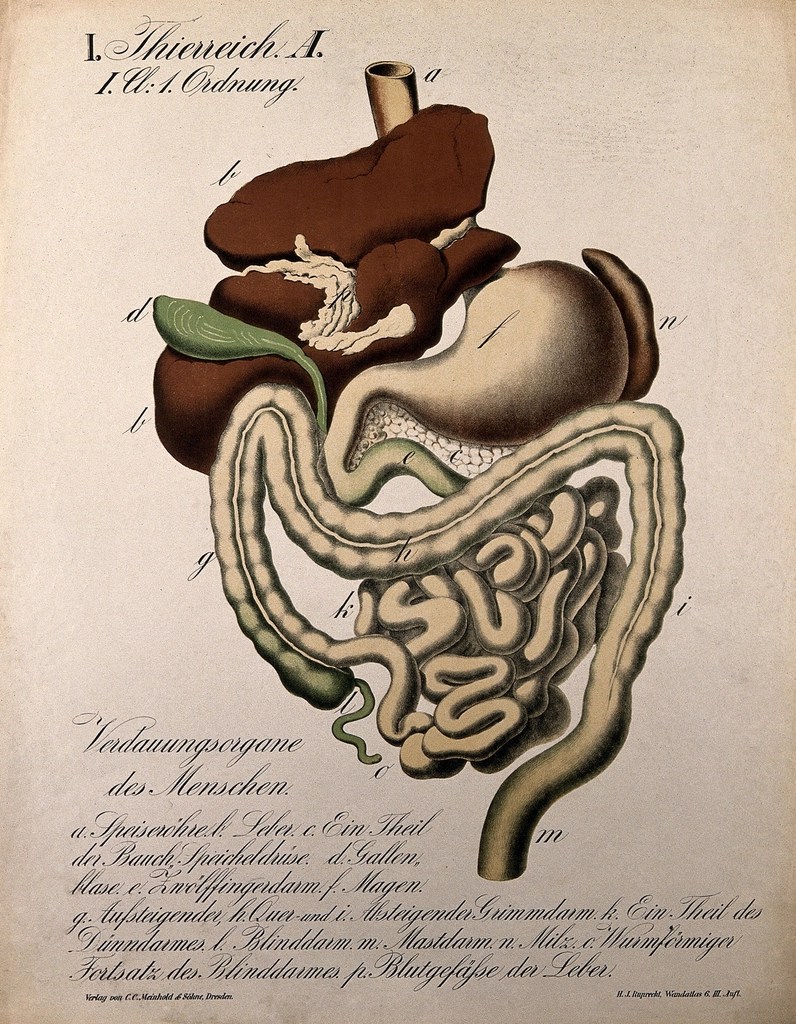
We on this blog have been tracking stories which link the digestive tract and immune system for some years. So it’s nice to see some real scientists really opening up this field. But there is a deeper lesson for us here, and it’s from economics, not science. Because economists of the classical school, or at least those who swallow their undergraduate textbooks, whole, always asseverate the a pure free market is the quickest way to achieve the optimum benefit. Well, processed foods are certainly free market. They have developed at breakneck speed, and certainly give the people what they want. The question is: how much do they need it? And at what cost does it come?

[1]https://www.nhs.uk/live-well/eat-well/how-to-eat-a-balanced-diet/what-are-processed-foods/

[2]https://theconversation.com/ultra-processed-foods-heres-how-they-may-affect-the-way-the-immune-system-functions-231884?utm_medium=email&utm_campaign=Latest

diet #food #microbiome# gut #immune system

Could your gut microbiome be making you anxious?

We always like intriguing new stories about health and biology here. That’s why we’ve showcased this item from Peter Hess of the Mail, Do you have Social Anxiety? Scientists Find the Condition lives in your gut. Peter reports some results from University College, Cork. Essentially, scientists there have transferred gut material from people with Social Anxiety to mice. And found that they have thereby induced significant changes in the nervous systems of those creatures: specifically, making them more prone to anxiety and fear [1]

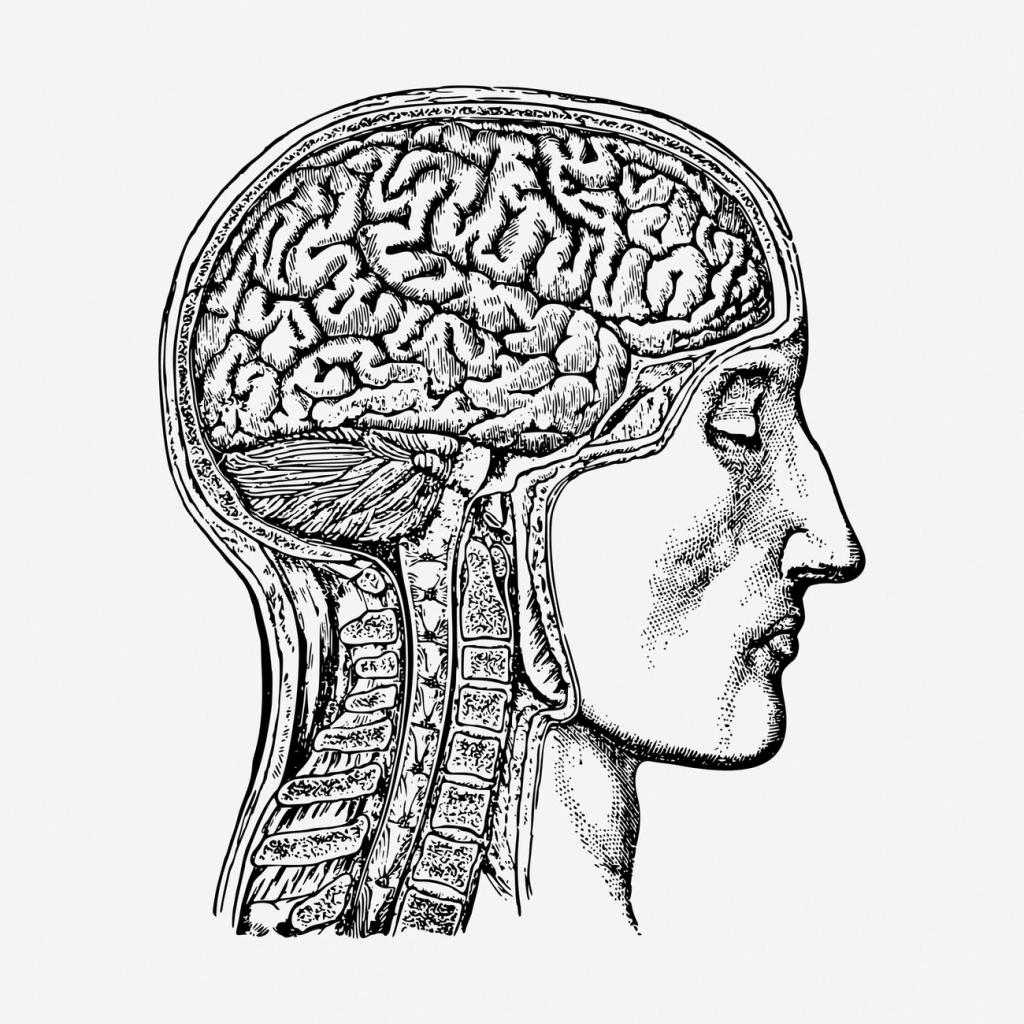
The work is undoubtedly interesting, and it’s good journalism to write it up Especially when it’s one of our old tropes, in this case the relationship between the the digestive system and the nervous system (LSS 9 3 23 and passim). Is it the answer to all our woes? It’s too early to say.

Essentially, journalists report two types of science story. Definitive ones, which answer all the questions and close the subject down. Or intriguing ones on early research which opens a subject up and sets the questions for future researchers. It’s our gut feeling that this work belongs in the second category. For one thing, the numbers are small (12 people and 72 mice, if our maths is anywhere near correct) Good start, but we’d like to see replication across much larger numbers. And what is Social Anxiety Disorder anyhow? Psychiatric conditions are notoriously hard to define exactly. Could there be other causes of anxiety, such as war service or growing up with violent parents? They need to be controlled for.

It’s good work in an intriguing area, and we hope these researchers are given more time and money to pursue it. But we still wait and see for definitive conclusions.

[1]https://www.dailymail.co.uk/sciencetech/article-13156095/social-anxiety-gut-scientists-treatment.html

[2]https://www.bbc.co.uk/news/health-46986709

#diestive system #nervous system #health #anxiety