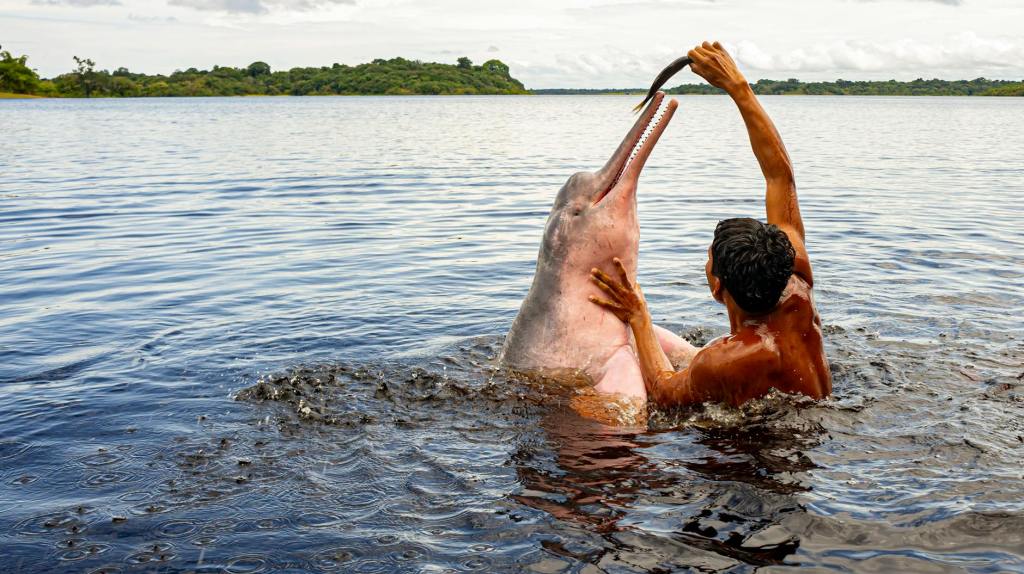
Does this whale hold the secret of eternal youth?

I have lived long enough, my way of life is fall’n into the sere, the yellow leaf…..Macbeth Act V scene 3)

Most of us would pretty much agree with the Thane of Glamis. But up to now, achieving that Pan-like state of eternal youth has been no more than a dream, whatever the cosmetics companies say. Until today, when recent discoveries of a protein in the Bowhead whale suggests that this same eternal dream may actually come true. We’ve two takes on the story: a popular one from Ashleigh McCaul of the Mail: and a more in-depth view from Nature Briefings Secrets of a 200 year old whale which carries, as ever, links to deeper coverage (no whale pun intended)

A cold-activated protein that helps to repair broken DNA could be the bowhead whale’s secret to living sometimes for more than 200 years. Researchers travelled to northern Alaska to collect samples of tissue from the whales (Balaena mysticetus) from Iñupiaq Inuit communities. The team found that the whale’s cells produce a protein called CIRPB, which helps to mend potentially cancerous DNA mutations. The results show that an efficient DNA repair system is “a very effective strategy to confer this extreme longevity”, says molecular biologist Zhiyong Mao.Nature | 4 min read
Reference: Nature paper

And our opinion? it’s interesting how science is fine when its discoveries coincide with the deepest wishes of the population. Yet science is not so convenient when it reminds of certain uncomfortable truths, such as the imminence of catastrophic climate change, The response of some is to launch culture wars, wherein the conclusions and recommendations of the educated must not only be resisted, they must be actively torn down if at all possible. This article by Alex Heffron and Tom Carter-Brooks for the Conversation chronicles how this is currently playing out in the English countryside., where some persons are trying to foment opposition to the installation of solar panels on private land. Of course, motives will be mixed: and not all of us think an array of panels is quite as pretty as a meadow of waving wheat. But we must have clean power: or we will surely die, young and old alike.

We are certain you will find a comparable example near to where you live, gentle reader Yet it’s the psychology of all this that gives us this thought, for what it may be worth. Now, It was said of Peter Pan than he never grew up. The best definition of growing up is to realise not all your wishes can come true at once. It seems some people must do more to recognise that, however many decades they have accumulated.

[1]https://www.dailymail.co.uk/sciencetech/article-15247935/How-whales-hold-secret-humans-living-FAR-longer-scientists-discover-longest-living-mammal-repairs-DNA.html

[2]https://theconversation.com/you-cant-eat-electricity-how-rural-solar-farms-became-the-latest-battlefront-in-britains-culture-war-268128?utm_medium=email&utm_campaign=Latest%

[3]https://theconversation.com/you-cant-eat-electricity-how-rural-solar-farms-became-the-latest-battlefront-in-britains-culture-war-268128?utm_medium=email&utm_campaign=Latest%

#climate change #global warming #renewable energy #peter pan #ageing #whale

Could a humble fungus cure cancer?

We have a of a confession here. We’ve always neglected fungi, that third mighty kingdom of life in favour of their more photogenic relatives, the animals and the plants. It’s a stupid oversight, as anyone who has enjoyed a glass of beer along with a bite of cheese can tell you. Not to mention Penicillium which was, after al the raison d’etre, the very fons et origio of these blogs which we so selflessly pen every day for your common benefit, gentle readers. Well now that’s all going to change. Fungi are on their way in from the cold starting with this intriguing piece from Emily Stern of the Daily Mail. Intriguing because it turns a bit of a baddie into a very Good Thing indeed.[1]

For many years researchers into old things like dead Pharaohs and dead Kings of Poland had a problem. A number of them kept dropping dead, due to the activities of a fungus called Aspergillus flavus[2] that lived in the shrouds and wrappings on the bodies of the extinguished rulers. Normally it performs a useful role in places like gardens and allotments by breaking down plant matter of all kinds. But get too close, breathe it in-and you could be a goner. So it has always been treated with a a wary circumspection. However, the ingenious Dr Sherry Gao and her co workers have discovered something else. Hidden inside the tissues of the meek mould are chemicals called asperigimycins. They seem to have anti leukaemia potentialities on their own: but, if combined with certain classes of lipid, they can get very good at it indeed. Read this from Emily’s matchless prose

They then added a lipid that’s also found in royal honey to another variant of asperigimycins and found the method killed just as many cancer cells as the drugs cytarabine and daunorubicin. 

There’s a few lessons here for those who like a good moral tale. Firstly that Nature is full of hidden goodies about which we have no clue. Secondly even dangerous things can be turned to our advantage if you handle them with due care and caution(remember our old blog on Komodo dragons and antibiotics?) And thirdly, as in nature as in people: you never know which one is the one who saves your life. Treat them all with respect.And stop chopping down all the forests.

[1]https://www.dailymail.co.uk/health/article-14839831/deadly-ancient-fungus-turns-cancer-fighting-powerhouse.html

[2]https://en.wikipedia.org/wiki/Aspergillus

#cancer #leukaemia #fungus #medicine #health

Panzootic Disease: When The Guardian and Daily Mail agree, be very afraid indeed

They’re new and they spread fast. They mutate, jumping species barries with ease. Many of them are new, meaning there are no vaccines and no established treatments. They seem to come in many forms- prions, viruses, bacteria, whatever. What are they? Panzootic diseases. They may turn out to be the most significant health risk of this decade, making it time we all thought more about them. So here are two articles which we hope will give you, gentle reader, a sort of jump-off point from which can can know more.

Let’s start with the eloquent Luke Andrews of the Mail, who concentrates specifically Chronic Wasting Disease, or CWD for short.[1] It is caused by our old friends Prions (remember CJD?) and seems to be fatal to every animal it infects. Infection is by simple contact with any body fluid; and as deer are widely hunted from Wyoming to Pennsylvania, Luke identifies a growing problem, at least in the United States. More worrying for us is Luke’s report that it has jumped to wild pigs (that’s it displaying panzootic behaviour); it causes us to worry what may come next,

Pulling back for a broader view, we come to the erudite Phoebe Weston of the Guardian.[2] Unsurprisingly to well-informed LSS readers, her classic example of a Panzootic is H5N1, the avian flu which is currently ripping through hecatombs of our most iconic species of mammals and birds. If you think in terms of hard cash, how good is that for the tourist trade? Intriguingly, she sees COVID-19 as a classic Panzootic disease as well, as it seems to have spread to 48 species (no, we didn’t know that either). Best of all, Phoebe praises a book by a man called Mark Honigsbaum called The Pandemic Century; we link to a quick review here.[3] Because the causes of this are actually quite simple: uncontrolled development. destructive short-term farming and an insatiable hunger for things which bring instant, short-term gratification. That is the real sickness.

[1]https://www.dailymail.co.uk/health/article-14280007/researchers-warn-chronic-wasting-disease-zombie-deer.html

[2]https://www.theguardian.com/environment/2025/jan/15/age-of-the-panzootic-scientists-warn-of-more-devastating-diseases-jumping-between-species-aoe?CMP=

[3]https://www.theguardian.com/books/2019/jun/23/the-pandemic-century-one-hundred-years-panic-hysteria-mark-honigsbaum-review-riveting

#panzootic disease #prion #pandemic #CWD #habitat loss #global warming #virus

CSAR Carbon Capture technology: small hope in difficult times?

If US President Elect Donald Trump does what he says-pulling his country out of international climate agreements and encouraging oil drilling wherever possible-then the world will enter a catastrophic downward spiral. Urgent measures will be desperately needed. Could Continuous Swing Adsorption Reactor Technology be the answer? According to Darren Orf of Popular Mechanics, yes it could. [1]

A Norwegian Institute called SINTEFF [2] has not only researched this intriguing double capture process to achieve new levels of efficiency, but is actually testing it on industrial plant. As every schoolchild knows it’s not enough to come up with new sources of clean power, like wind farms. It’s going to be vital to seize the carbon from all those dirty industries like cement, metal production and waste incineration. Well, the results look good. Get this:

Although CSAR performed well in laboratory settings, the technology needed to be tested in the wild. Over the summer, SINTEF worked with the BIR AS waste combustion plant outside Bergen, Norway………In a 100-hour-long test operation, the CSAR pilot demonstration captured the same amount of CO2 gas as it had in a laboratory setting. In total, this represents roughly 100 kilograms of CO2 per day…………..

How ironic that a small country like Norway should be right at the cutting edge of such vital design! Or is it really surprising? Back in the 1980s both Britain and Norway enjoyed a bonanza of money from North Sea Oil. Norway sensibly invested theirs in a state owned sovereign wealth fund. It led their tiny population to acritical economic mass, allowing them to develop projects like this. And Britain? They spent it all on tax cuts for City Brokers and Landowning Grandees. Not surprising at all, when you think about it.

with thanks to P Seymour

[1]https://www.popularmechanics.com/science/green-tech/a62855594/csar-cabon-capture-climate-change/

[2] https://www.sintef.no/en/sintef-research-areas/ccs_ccus/

#carbon capture #carbon storage #global warming #donald trump #runaway greenhouse effect

Could despised carrion feeders save us all?

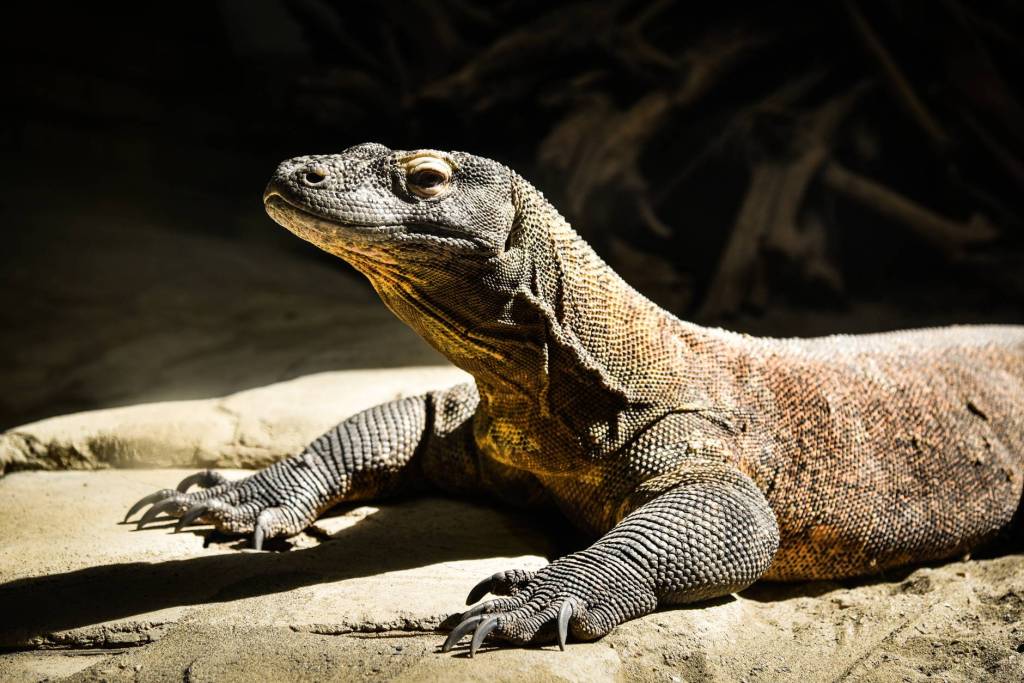
A few years ago we published a blog (LSS 27 10 20;6 9 21) wherein we hymned the praises of the Komodo dragon (Varanus komodoensis). Specifically, because these scary monitors could be a source of new antibiotics. Why might that be? Because they spend their lives feeding on filthy, rotting carrion and should therefore be all dead by now.

So why do carrion eaters (wolves flies, vultures are but some of the many types of animals that come to mind) not only survive, but thrive in their chosen niche? One which to us seems a little unpleasant and down market. According to Tim Cushnie, Darren Sexton and Vijitra Luang-In of the Conversation, these intrepid beasts have each developed a range of techniques to avoid bacterial infections which must be thriving on their dinners. What interests us most on this blog their chemical defences. They seemed to have evolved pathogen recognition and destruction systems which are far in advance of their carnivorous and herbivorous relatives. The authors cite several classes of compound which seem to ripe for exploration. And indeed are being explored by researchers in Germany, China and the US.[2]

And the moral of the story? Firstly, do not despise carrion feeders. They are Nature’s clean-up squad. Secondly, there must be hundreds of other plants and animals in nature which may have equally useful contents. So, if you tear down nature to build a car park you will probably have lost something. Finally, if used our Universities to train up a few more Biologists and a few less accountants, we are all going to be much, much richer.

[1]https://theconversation.com/antibacterial-discovery-how-scavengers-avoid-infection-and-what-we-can-learn-from-them-229828?utm_medium=email&utm_campaign=

[2]https://www.tandfonline.com/doi/full/10.1080/07388551.2024.2389175

scavenger #carrion #komodo dragon #immunology #bacteria #antibiotic

Will Wetlands save the World?

Every so often we receive a well-meaning, but slightly plaintive communication from people who yearn for improved methods of carbon capture, by which they mean huge industrial undertakings not unlike the filthy power stations which they are meant to replace. “Good point!” we cry “but it’s going to take years to perfect the technology. Then scale it up. By which time it will all be much too late.” What if there are far more efficient carbon capture stations already out there, cheap to develop, quickly scalable, which might in addition act as huge natural flood defences. Before you reply “too good to be true” have a look at these two stories about wetlands which have recently crossed our screens.

Mangroves in Brazil Brazil has had more than its fair share of bad ecological news recently, what with chopping down massive swathes of the Amazon and so on. But now Mr Bolsonaro has gone, we are able to report a more hopeful story, by Maurice Saverese via Apple News.[1] A new project in the Guanabara Bay, near Rio De Janeiro has planted up to 30 000 mango trees. Not only will these act as a massive flood defence, stabilising the coastline against erosion, but will provide a valuable new source of income to local fisherman as crabs and other economically valuable species return to the healthy waters.

Wetlands in Washington Since the 1780s the USA has lost about half of its wetlands. Which is a shame because although wetlands comprise just 10% of the world’s surface, they contain perhaps 25% of its soil carbon. That at least is the estimate of a team from Washington University, who are investigating the potential of vast carbon-capturing wetlands beneath the rain forests of the Pacific Northwest [2] You’ll have to get past the paywall for this one from Natalia Mesa of the Atlantic, again via Apple News. but it’s well worth it. Because the rainy north west also includes parts of California, Oregon and much of western Canada. If the Americans can only keep out Trump and his supporters, then once again they might have saved the planet, this time on a massive scale.

Sometimes the answer lies not in doing new things, but adapting old ones to new uses.

thanks to P Seymour

[1] https://www.pbs.org/newshour/world/rio-de-janeiro-bay-reforestation-shows-mangroves-power-to-mitigate-climate-disasters

[2]https://www.theatlantic.com/science/archive/2024/05/wetlands-forest-unmapped-carbon-washington/678513/?utm_source=apple_news

#wetlands #carbon capture #mangroves #washington state #donald trump

Volcanoes and Viruses-two deadly warnings of trouble to come

The slew of tv documentaries and news stories about the recent discoveries in the Roman town of Pompeii, destroyed by a cataclysmic eruption of nearby Mount Vesuvius in AD 79, certainly afford material for reflection. [1] Here was a thriving town, blotted out in a single day. Yet this was a small eruption. Far greater damage was done to the Roman Empire by the titanic eruptions in the age of the Emperor Justinian in 536 AD. [2] The resulting world-wide winter produced cataclysmic hunger, which in turn weakened the resistance to the bubonic plague epidemic which ravaged the Empire in the following decade. It is easy to think that we moderns, with all our advanced technologies are far superior to those old Romans, and thereby conclude “it won’t happen to us”. Don’t be so sure, at least until you have looked at this piece from Nature Briefings The Next Big Eruption will come. And, like the inhabitants of Ancient Rome, it looks as if we are woefully unprepared:

Tamsin Mather’s book Adventures in Volcanoland takes readers on a journey to some of the world’s most notorious and active volcanoes — and reminds us that the next volcanic catastrophe is inevitable. Yet global preparedness for volcanic eruptions is severely lacking, says fellow volcanologist and reviewer Heather Handley. There is no international treaty organization for volcanic hazards and no global coordination on issuing comprehensive warnings of risks of eruptions, she says. Mather’s book “reminds us that we should all keep careful watch on the world’s volcanoes”.Nature | 7 min read

And where will it happen? We’ve linked to this handy guide to the top five or so candidates, which, if they blew, could easily plunge us all into an economy-collapsing winter.[3] They include Popocatapetl, Mount Fuji and Mount Ranier. But don’t forget the highly active caldera of magma which sits under Naples, and includes Vesuvius itself. Are you sure it won’t happen?

As Justinian and his subjects found, deadly plagues soon follow the societal collapse produced by a giant volcanic event. Of course, these plagues can happen anyway without help from under the ground. Proof of how close this might be comes with alarming news that bird flu viruses have now jumped the species barrier into mammals. Which means they could spread rapidly among humans any time soon. The potential consequences will be far, far graver than the recent Covid-19 outbreak, which is already passing into memory. Nature Briefings takes up the story

“In my flu career, we have not seen a virus that expands its host range quite like this,” says virologist Troy Sutton about H5N1, an avian influenza virus that has rapidly infiltrated species well beyond birds. While most mammal infections were probably caused by contact with an infected bird, there’s evidence that the virus has now evolved to spread directly between some species, such as sea lions. Spreading in more species gives H5N1 opportunities to further adapt to mammals, including humans. So far, the virus doesn’t show signs of being able to cause a pandemic, Sutton says. “If we don’t give it the panic but we give it the respect and due diligence, I believe we can manage it,” adds Rick Bright, chief executive of a public health consultancy.The New York Times | 10 min read

One thing you won’t get at LSS is frivolous celebrity gossip nor trivial items about the doings of footballers, actors and minor royals. Instead, we offer timely and thoughtful warnings about the real issues which confront us. How you respond to them, gentle readers, is up to you.

[1]https://www.bbc.co.uk/news/science-environment-68777741

[2]https://en.wikipedia.org/wiki/Volcanic_winter_of_536

[3]https://www.worldatlas.com/articles/the-most-dangerous-volcanoes-in-the-world.html

[4]https://nhess.copernicus.org/preprints/nhess-2020-51/nhess-2020-51.pdf#:~:text=The%20Naples%20%28Southern%20Italy%29%20area%20has%20the%20highest,within%20twenty%20kilometres%20from%20a%20possible%20eruptive%20vent.

#volcano #caldera #volcanic winter #ad536 #pandemic #plague

What has inequality got to do with climate change?

Article of the week

Old hands on this blog will recall our admiration for the work of Richard Wilkinson and Kate Pickett. We still give copies of their seminal 2009 work The Spirit Level as Christmas and birthday presents to this day. Their key insight-that high levels of economic inequality are inimical to a healthy society- seems more valid than ever. But now they go further, averring the the societal dislocations caused by inequality may be actively impairing our response to the looming ecological collapse.

And so we present their thoughts by linking to Nature Briefings. Good scholarship is always provisional. But we think this is pretty robust. And we are fully confident that the intelligent readers of our blog will be able to ask, and answer, the right questions.

But we think you should look.

#climate change #inequality #global warming #ecology #sustainability #consumerism

If the Gulf Stream collapses, you won’t need ice in your Gin and Tonic

According to the American writer Gore Vidal, one must choose between two missions in life. Either to Comfort the Afflicted; or to Afflict the Comfortable. Now, generally speaking, the Daily Mail is normally very much on the side of the Comfortable. Hardly a bunch of Islington Green Remoaner Marxist Liberals, you might say. So when they publish something which might in some way be slightly comfort-afflicting, we know it’s been through a pretty fine toothcomb first. And today we present just such a story by their admirable Jonathan Chadwick called The Real Life Day After Tomorrow. Not only does it speculate that the warming currents of the North Atlantic might collapse, plunging us into a new Ice Age. But there is a chance that it might happen rather soon. [1]

Most people know that the reason that Western Europe is tolerably warm is due to the fact that certain ocean currents move vast quantities of heat up from the warm waters of the Gulf of Mexico to these otherwise benighted shores. Thanks to global warming and melting ice caps, those currents could switch off as early as next year. We cannot hope to improve on the excellent explanations and top notch, easy-to-understand graphics in Jonathan’s article. But we could beg you to look at some of the comments. and the squeals and howls of outrage from those whose weltenschauung is horribly imperilled by Jonathan’s words. Denial, evasion and getting shouty are common psychological defence mechanisms of people who are often uncertain of their own case. Blaming the messenger can be another; although we are all guilty of that.

Perhaps the latter was on display in the case of climate scientist Michael Mann, who, because of his scientific work, became the subject of unpleasant personal attacks from those who objected to his findings. To us it all seems a bit reminiscent of what happened to Galileo in the 1640s. Fortunately Mann has won damages from some of his adversaries , and this may buy back some space for objective debate in some areas of science. We wait to see. Whatever happens, those who prefer to deny, for whatever reason, should remember. Reality, be it economic, physical or logical, will eventually come round to charge a price. The longer you leave it, the higher that price will be.

[1]https://www.dailymail.co.uk/sciencetech/article-13073449/Gulf-Stream-plunging-Europe-deep-freeze.html

[2]https://www.nature.com/articles/d41586-024-00396-y?utm_source=Live+Audience&utm_campaign=0f1db6493c-briefing-dy-20240212&utm_medium=email&utm_term=

#jonathan chadwick #climate change #global warming #ice caps #AMOC #climate denial

Exclusive: we reveal the secret conspiracy that runs the world

These days everyone is talking about conspiracy theories and trying to find out who is in the secret conspiracy that controls everything. Some say it is Davos Man, but surely he can’t do it all on his own? Some say it’s the illuminati; others cite a rather boring man called George Soros who looks and sounds like someone at home in the impenetrable back pages of the Financial Times. But today, we at LSS can reveal that the real conspirators are the same they have always been. The Movers and the Shakers, and the Great and the Good. (although some claim to be in more than one of these categories at the same time) It’s about time that the Ordinary Citizen learned more about them. So you can recognise one in the street and, if possible, pointedly ignore them in a hostile way.

A note before we start The Movers and the Shakers, the first two rungs in the career ladder, are not to be confused with the 1960s California Soft Rock band of the same name whose hit single Baby I want your Love was the sound track for a whole generation who passed their golden youth in ancient camper vans on the golden beaches of places like La Jolla and Malibu.

Movers Can easily be recognised because they still inhabit the kind of flats they lived in when they were students, except now they own the flats and rarely wear baseball caps. Because their company/career/practice is in its early stages they still talk to people they knew at University. May even occasionally be seen at places like La Jolla, although the van is massively improved,. Hoping to become a…

Shaker By this time the company/career/practice is doing so well they can afford the all the extra houses/cars/mistresses that reinforce their new status. Do not expect Christmas cards/birthday cards/second wedding invitations from them any more. Quick to exalt the virtues of people like themselves who have made it big, they are longing to be called to a Selection Board in order to join the next stage, commonly known as :

The Great Yes, there are boards and examinations which you have to pass to reach this stage. But the questions are not like those in ordinary exams, such as “which is the largest copper-exporting country in South America?” or “integrate the function y=Cos x3-8 x1/2-4x”. Instead the questions are “are you going to Glyndebourne this year? or “were you at Rupert’s party in the Hamptons? Isn’t Piers Morgan one helluva guy?” One thing to know: the Great would never, ever, even be seen dead on beaches in places like La Jolla, however luxuriously-appointed was the camper van. But their major trouble is that they have spent so much time preparing for their role that they have learned nothing useful which might help them to do it. Which is way they make such a mess of things. And the hours are dreadful; if you are Great, your life is no longer your own. So many of them cannot wait to resign, and go as soon as possible to the last stage:

The Good Once upon a time being the Good was best of all. There were senior roles in things like the Arts Council or even your own 14-part cultural series on BBC2. Nowadays, with all these shopping channels and the internet, such gigs are few and far between. Instead they spend their time running international Institutes which nobody can see the point of. Or writing long newspaper articles which nobody reads, because the author is no longer Prime Minister, and never will be again. Apart from that, they just fret in case those ghastly locals build a caravan site on a hill which overlooks their villa in Tuscany. They have villas in Tuscany because they are far too old for beach life-especially among the heavy waves of La Jolla.

So now you know, you have two choices. You could Rise in Righteous Indignation and overthrow them. But; someone’s got to to do the job, why would you be any better? And do you you really want to give up your old camper van, with its digitally remastered tracks like Baby I want your love, just to fly to Davos and endure a string quartet?

No, we thought not.

#george soros #illuminati #conspirators #davos man #the great and the good #movers and shakers #malibu #la jolla