Faecal Pellets: Watch the good bacteria chase out the bad

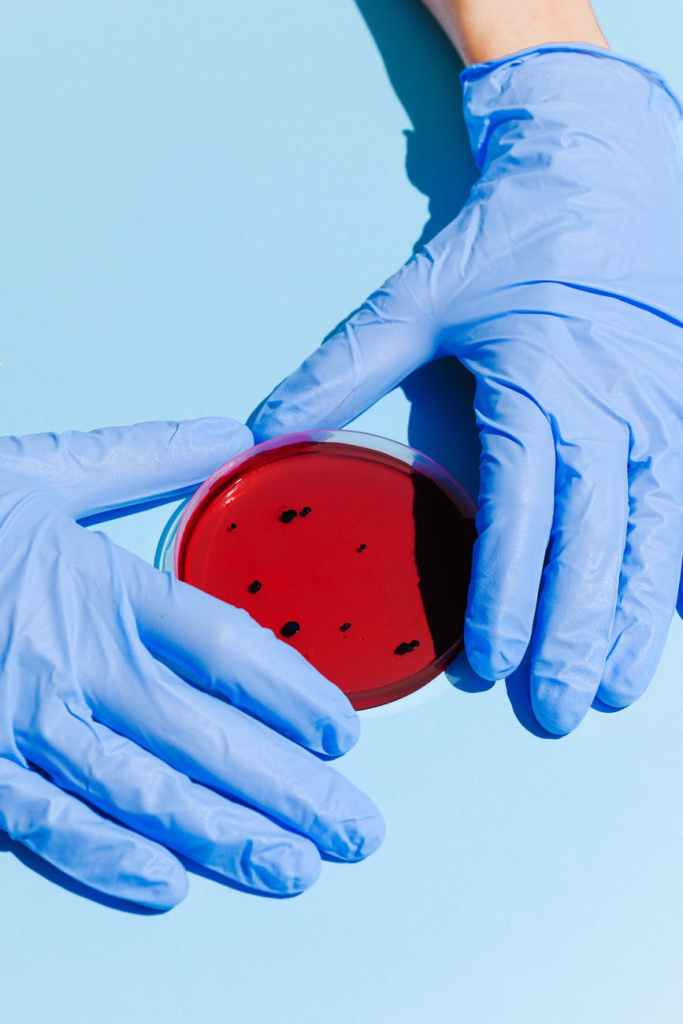
Imagine you get bad news: antibiotic resistant bacteria have set up a colony in your intestine. OK here’s some worse: they could escape and invade your blood, kidneys, whatever. In which case you have real problems. This is a very real scenario which that brilliant researcher Dr Blair Merrick of Guys and St Thomas Hospital has sought to address. [1] as reported by James Gallagher of the BBC Why not, he has reasoned, get some good non resistant bacteria to chase out all those bad ones? It is his chosen method which may raise more than one eyebrow among you, gentle readers

According to Dr Merrick, the way to get the good bacteria into his subjects is via pills made of…..well, made of faecal matter, you know,,,poo. To quote James:

Dr Merrick says there are “really promising signals” that poo pills could help tackle the rising scourge of superbugs and that donor bacteria could be going to microbial war with the superbugs as they compete over food and space on the lining of the gut and either rid the body of them completely or “reduce them down to a level that doesn’t cause problems”.

We like this for all sorts of reasons. Firstly the gut really is such a good harbour of antibiotic resistant bacteria. Secondly, as in all things ecological, making its flora more diverse can only be a good thing. Thirdly, we think it has a clever little principle behind it. Antibiotic resistant bacteria have devoted a tiny bit more of their genome to this purpose than non resistant ones. In the world of ecological competition, where tiny differences can make an enormous difference to long term survival, this could be crucial. If done correctly, the good non resistant ones should out compete the bad ones.

It’s early days yet, and the early trials have only been on 41 subjects But as seasoned veterans of the long wars of antibiotics will know, we at LSS welcome every initiative, however unusual it may at first seem. We wish every success to Dr Merrick and his team and hope that their early accomplishments continue in the bigger trials to come,

thanks to Ms G lynch

[1]https://www.bbc.co.uk/news/articles/clyge290l4xo

#gut #microbiome #antibiotic resistant bacteria #health #medicine
Gepotidacin marches on

Gentle readers we’re more than happy to present the next chapter in the story of Gepotidacin. Against all the gloom and doom we serve up here, it really is a wonderful new class of antibiotic We have covered it before (LSS 30 1 23 ; 17 4 23) but today Manuel Ansede of El País [1] serves up a handy little resumé, not only of where we are now,  where we have come form, and all kinds of hyperlinks to bring you up to speed.  We can add little but to such erudition as Manuel’s. But for the sake of long term readers will riff  on these few -humbly derived- observations

Firstly, this really is a new class of antibiotic., going by the snappy name of triazaacenaphthylene bacterial topoisomerase inhibitors.  Unlike traditional antibiotics that target bacterial cell walls or protein synthesis, gepotidacin disrupts bacterial DNA replication by inhibiting two essential enzymes: DNA gyrase and topoisomerase IV. Which as most readers will instantly recall, are crucial for bacterial DNA replication and cell division. Thought so.

Secondly its already showing real world efficacy against all kinds of  bacteria, including antibiotic-resistant strains like methicillin-resistant Staphylococcus aureus (MRSA) and multidrug-resistant Neisseria gonorrhoeae. Get that: real science works.

Thirdly, to make  our old LSS point: effective action in medicine takes time. It requires teams of intelligent people. Who do not act alone, but exist in an ecosystem of universities . research institutes and government agencies. Which in turn requires careful nurturing , funds and right to feel safe enough to make long term plans without bullying and interference from the proudly ignorant and impulsive. American readers take note.

[1]https://elpais.com/ciencia/2025-04-14/el-primer-antibiotico-descubierto-en-30-anos-llega-justo-a-tiempo-de-evitar-que-la-supergonorrea-sea-imposible-de-tratar.

#gepotidacin #antibiotics #antibiotic resistance #health #medicine

Good news on antibiotics coming thick and fast this spring

More good news on antibiotics research for you today, gentle readers. And this time it’s the subtlety of the extra thinking that has captured our attention. Up to now antibiotics-and many other therapies- have been more of a bludgeon than a rapier. Yes they do a lot of good, smashing away dangerous bacteria from your system. But they can do a lot of bad, by killing all those beneficial bacteria in your biome, which help you digest your food, as well as performing many other Good Works. But what if we could design an antibiotic which only does the good stuff, while keeping harmful side effects to a minimum? According to Nature Briefings, Smart Antibiotic spares the Microbiome, lolamicin may do just that:

An antibiotic called lolamicin targets disease-causing Gram-negative bacteria without disturbing healthy gut bacteria. Broad-spectrum antibiotics against these pathogens wreak havoc on the gut microbiome and can allow potentially deadly Clostridioides difficile to take over. Mice infected with antibiotic-resistant Gram-negative bacteria survived after being given lolamicin, whereas almost 90% of those that didn’t receive the drug died within three days. Lolamicin did not seem to disrupt the gut microbiome and spared mice from C. difficile infections.Nature | 4 min read
Reference: Nature paper

For more stories like these, update your preferences to sign up to our free weekly Nature Briefing: Microbiology.

(We took their link a little further today, so you can see that they offer a special service for those who want to follow this whole trope more closely)

As you know we at LSS tend to be a tad wary of huge new, all-field-encompassing, breakthroughs. What we like is when someone tweaks existing learning in a small but significant way. This seems to be one such, and good luck to the researchers concerned.

#antibiotics #microbiology #microbial resistance #research #microbiology