
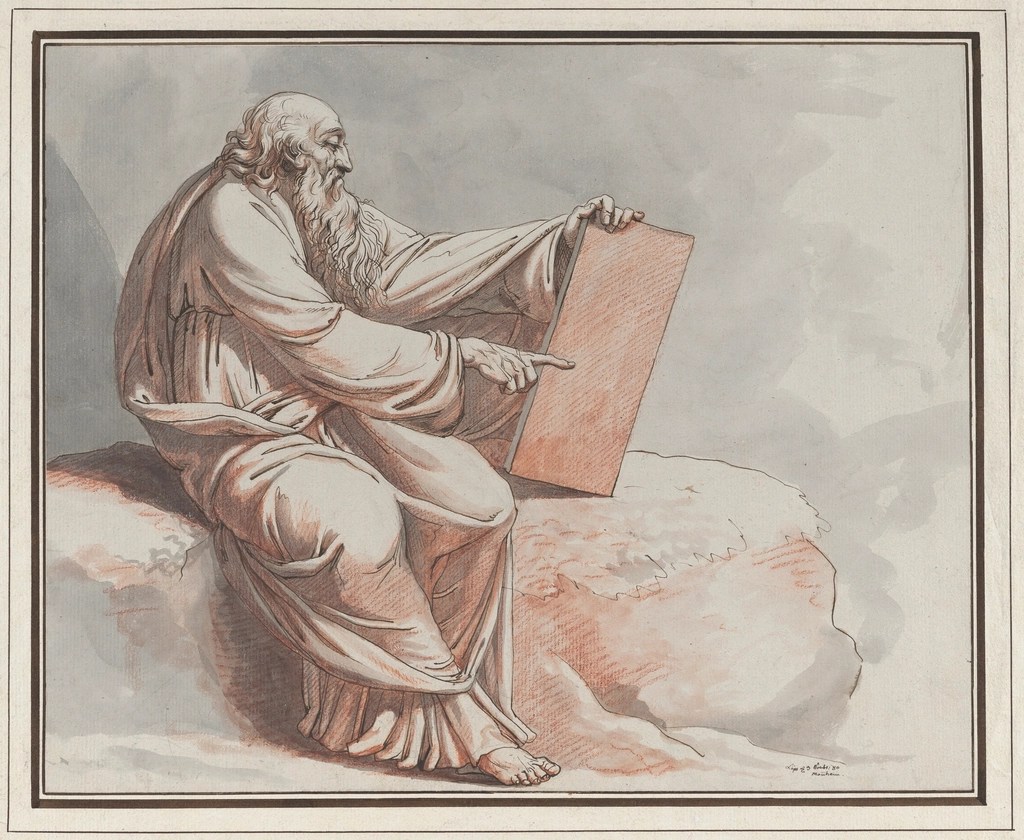

One thing we’ve always admired at this blog is someone whose predictions come true. Over the years we have praised seers as diverse as Edmund Burke, Gillian Tett, John Maynard Keynes and Rachel Carson, among others.(LSS passim) And one thing they all had in common: they called it before it happened which is not bad prophetting. To which illustrious company we would now like to add St John the Divine, the Patmos bloke, whose Revelations not only bookends to the whole Bible, it has generated no end of controversy and interpretation ever since.
Now we freely admit that St John doesn’t come across as a congenial fellow. A bit irascible and censorious, you might say. Not the sort of chap you’d invite round to your next dinner party to show off your latest bottle of Waitrose Claret. We suspect he even had a huge beard(always a warning sign) and the sort of scowl which instantly disapproved of conversations about holiday homes on Greek islands. But just pay attention to two of the things he wrote, around 95 AD while sojourning on one of them:
For all nations have drunk of the wine of the wrath of her fornication… and the merchants of the earth are waxed rich through the abundance of her delicacies.” (Revelation 18 3)
Now follow it up with this little bon mot
Come out of her, my people, that ye be not partakers of her sins, and that ye receive not of her plagues.” (Revelation 18 4)
All written when the Roman Empire was at its most prosperous and powerful height. Which leads us to the works of two authors who have explained two of the greatest mysteries which have ever bedevilled our minds: why was Rome(Republic and Empire) so successful? And if so, why did it so undeniably fail, around about 400 AD? The first of these answers was provided by the great Professor RH Davis in his immortal History of Medieval Europe [1] It was the genius of Rome to unite all the peoples of the Mediterranean into a single trading block, in which therefore peace and prosperity flourished by the standards of the time. Hence all those parties of which St John so heartily disapproved. And the second was Professor Kyle Harper who so convincingly demonstrated that much of Rome’s Fall was due to terrible plagues, such as the Antonine and Cyprian which entered the Empire and spread so well because of the efficient trade networks it had engendered. Two strikes, and Rome was out.
So how did a miserable old git, sitting alone in his shack while the rest of the island partied, get it so right? Was he a diva at economics? Epidemiology? Was he just lucky? Or could it be, was it just possible he had it from Someone who knew for sure-and whispered in his ear? we leave you to judge.
[1] Davis, R.H.C. A History of Medieval Europe: From Constantine to Saint Louis. London: Longman, 1970.2nd edition Longman1989 see especially pp 3-7
[2] Harper, Kyle. The Fate of Rome: Climate, Disease, and the End of an Empire. Princeton: Princeton University Press, 2017.
#St John the Divine #Revelations #prophecy #Roman Empire #History #epidemiology #climate change #economics
 Learning, Science and Society