Is Donald Trump a Socialist? #2: some readers responses

A few months ago(LSS 7 4 25) we published a blog called Is Donald Trump a Socialist? It was one of those end-of -the -day tired pieces which we expected to be soon forgotten, by ourselves and everybody else. Instead it turned out to be one of the most read, and remarked-upon pieces we have put out in months. Sadly, much more so than our ones on antibiotic resistance ones which was what this blog is supposed to be all about.

The essence of the piece boiled down to this. Capitalists, Liberals, Neo-liberals, call them what you will, believe that individual liberty is the only true basis of a healthy society and a prosperous economy. People making their own choices on how to spend their money, whom to hire and whom to fire, where to live, etc will allow the optimum possible outcome in the supply of Capital, Goods and Labour. The essence of socialist belief is that people cannot be trusted to make those decisions and that the state must often step in to ensure the best possible social and economic outcomes. In that sense, Mr Trump’s attempts to control the supply of Labour by immigration controls, and of Goods by tariff controls are socialist policies, not capitalist ones. The responses have been coming ever since. Here are a few which are broadly representative . (We protect the respondents anonymity for all sorts of reasons)

MC from Edinburgh pointed out that if a Communist like Mr Xi could run a capitalist economy in China, why shouldn’t a Capitalist like Trump run a socialist one in America? (intriguing!)

DG from Texas said that Mr Trump’s policies were not Socialist, they we Nationalist (that doesn’t make them Capitalist, we thought)

JS from Massachusetts said he had studied economics at Princeton. And that essentially we had “placed Trump on a New Deal continuum, with fewer unions and more nationalisation” (We are still struggling to understand this)

V. from Mumbai wondered “if all leaders become Socialist when it comes to steel and swing states”

As we write an actual self-proclaimed Socialist called Zohran Mamdami is running for Mayor of New York, that Holy Ground Zero of Capitalism. If we are right, he and Mr Trump may find more in common than they realise. Maybe it’s all about what you do, not what you call yourself, that counts.

But we feel exceedingly grateful for your reactions. Keep ’em coming.

#Donald Trump #Xi Jinping #Capitalist #communist #socialist #liberal #neo liberal #free market #tariff #immigration control

No that last blog does not make us a bunch of Communists

Every so often one of our blogs engenders some intriguing feedback . Alongside the usual welcome comments with all their nods and frowns, we occasionally get one that is a little-uh- longer, yet expresses its views with passionate clarity, to push euphemism to its limits. Such was the case today, when a reader alleged that our criticism of fossil fuel and tobacco companies was a sure sign that we were under the influence of Communists, who aim to tear down the free market system and replace it with a “nightmare of bureaucratic state socialism” of the sort found in places like Venezuela and North Korea. In particular the reader observed:

What you’ve got to remember is that markets not governments are best at allocating resources. Intervening in fossil fuel markets is crypto socialism- it will only distort price signals, stifle innovation and lead to unintended consequences”

When we asked if this was true for immigration control as well, they replied

“Absolutely! Free markets mean the free movement of labour. Anything else is protectionism in disguise.

So, where does that leave us at LSS? Having worked for many years in the Government Employ and thereby known the ways of Civil Servants, we can more and more share the view that Free Markets really do work better. No, it’s the “unintended consequences” that pulls us up. Free markets can have those too. Totally unregulated sales of tobacco produced an epidemic of cancer. We suspect that over enthusiastic marketing of certain foods and drinks will one day produce an epidemic of obesity. As for gushing out vast quantities of poisonous mineral oil and burning it with heedless abandon-well we wish people had been better informed before this was started. To call for better product information, and to ask that consequences of free markets are cleaned up, or at least controlled, does not make one a Communist. Or anything like it.

Thanks for the feedback, and we appreciate that in view of this respondent’s employment, they must remain anonymous

#climate change #free markets # global warming #immigration #communism #socialism #capitalism #hayek #marx

Forensic Science shows why privatisation doesn’t work

Being an employee of the UK Forensic Science Service used to open doors back in the year 2000. Even if you you were too lowly to personally know the top people, you worked for them,: you saw them in corridors and said good morning. People as far away as San Francisco wanted to know about their pioneering DNA techniques, excellence in evidence handling and preservation, in new intellectual approaches like Bayesian statistics. It was like playing for Manchester United (then popular and successful exponents of the game of Association Football)

But lurking in the background was a disease that would kill this particular goose and the golden eggs it laid. “Private sector good, public sector bad” It was a mantra that had taken deadly root in the Thatcher years. The private sector, it held, was full of hard working go getting, sharp- suit- wearing entrepreneurs who cut through the red tape and got things done. Civil servants(the FSS and its predecessors were Civil Service bodies) were lazy, hidebound, slow, risk averse pen pushers who needed nothing so much as a good kick up the backside The result was that anything and everything (except police and armed forces) was sold to private investors. Eventually even the Forensic Science Service went under the hammer. The results are made clear in this story by Hannah Devlin of the Guardian [1] We cannot begin to do justice to the wasteland of failed justice, loss of expertise and collapsing confidence which has resulted. All we can do is quote this extract-and beg you to read the whole thing

Forensic science in England and Wales as currently configured isn’t working for anyone – not for the police, not for the lawyers or for the courts, not for the scientists themselves, and not for the general public who get caught up in the criminal justice system,” said Prof Angela Gallop, co-chair of the Westminster Commission on Forensic Science.

“Like a plane hurtling downwards in what has become known as a ‘graveyard spiral’, with the pilot in desperation making increasingly erratic decisions, it can only be a short time now before it impacts the ground.”

Perhaps the Manchester United metaphor was not so facile. Things sort of function- but at laughable shadow of their former glory.

This is what happens when a country is seized and held by a single doctrine. When the lazy self interested opinions of journalists and the gin sodden flies who hang around golf club bars are substituted for rational policy No one would deny that Forensic Science under the Government had its inefficiencies, or the odd passenger. It contained more than a few fools who loudly praised the tax cuts and bought the gas shares that Thatcherism created. Its even arguable that some industries did benefit from the injection of private capital and techniques (water is not one of them) But like water, the whole sorry mess now needs clearing up. And none of it ,none of it , needed to have happened. That’s the biggest injustice of all.

https://www.theguardian.com/law/2025/jun/09/forensic-science-crisis-miscarriages-of-justice-england-and-wales-report

#forensic science #justice #police #courts #evidence #economics #privatisation #thames water

Simon Kuper on how to Make the Transition to Intelligence and Wisdom

One of Saturday morning’s great pleasures, an hour or so before Spanish class, is to settle down in Costa with a coffee and a hard copy of the Financial Times. And one of the best writers in that journal is Simon Kuper. He’s clear, he’s brief, he deals in the currency of short sentences and defined concepts. He’s also a polymath, covering subjects as diverse as politics, urban planning and football(he’s even done a very workmanlike guide to the affairs of Barcelona FC . [1] In fact, he’s exactly the sort of writer we ought to showcase here, because he believes in our core LSS values of evidence, reason, and reserved judgement.

How appropriate therefore that his last column was called Seven Intellectual Habits of the best thinkers., for there can be no better short guide. [2] The problem is that access is behind a paywall. As LSS is such an important institution, and our readers so avid for wisdom, we rang the Editor of the Financial Times a to demand that this be lifted as a Special Case., and that he/she/ they might like to buy us lunch to discuss the matter further. The young person on the switchboard thanked us very much and promised they would call us back. So far they have not done so(that was three days ago) but doubtless there were other callers. So, while we are waiting, we thought that we could offer you a distilled reproduction of Simon’s thoughts:

1 Read Books ” Their complexity is a check on pure ideology” People who simplify the world are the ones who fall for conspiracy theories or the offers of charlatans.

2 Don’t use screens much Apparently, biochemist Jennifer Doudna, who invented CRISPR technology gets her best insights when she’s out weeding her tomato plants. Obviously you have to use screens a bit, or you couldn’t read this! But we get Simon’s drift: a little screen time is a lot.

3 Do your own work, not the world’s The same Doudna got a gig at Genentech, leading their research. She lasted two months before hightailing it back to Berkeley where the true intellectual freedom led her to the Nobel Prize. We agree: people who spend all their time on office politics actually accomplish very little that is either interesting or of value.

4 Be multidisciplinary Kuper cites the examples of Hayek, Godel, Van Neumann and others who all studied one thing, trained in another and did their best work in a third. Daniel Kahneman is cited as another multi-disciplinarian polymath of formidable intellectual power. Rather worryingly, our AI system has set his book as homework for us. Where’ are John and Sarah Connor when you really need them?

5 Be an empiricist who values ideas Kuper cites the case of Isaiah Berlin and his marvellous work the Hedgehog and the Fox , a masterpiece of political philosophy. Incidentally Winston Churchill got him mixed up with Irving Berlin and invited the wrong one to dinner.”My British Buddy” as Berlin himself would later remark in song.

6 Always assume you might be wrong Yep: in this country we are still trying to repair the effects of the blissful certainties of Brexit. You will doubtless have examples from your own lands

7 Keep learning from everyone “Only mediocrities boast as adults about where they went to University at 18.They imagine that intelligence is innate and static. In fact people become more or less intelligent through life depending on how hard they think. The best thinkers are always learning from others, no matter how young or low status” We quote Kuper rather fully here as the first part seems one of the most admirable and accurate summaries of the sorts of people one met on a daily basis during long decades in the Scientific Civil Service. Now there’s intelligence indeed.

[1]https://www.worldofbooks.com/en-gb/products/barca-book-simon-kuper-9781780725543?sku=NGR9781780725543&msclkid=6c7699156a7f1cc4c9f2f1238

[2]https://www.ft.com/content/c42cb640-a03c-441b-868f-d1a92d78bcb7

#wisdom #intelligence #FC Barcelona #isaiah berlin #daniel kahneman #thinking #financial times #simon kuper

Is this a collapse of Civilisation?(they’ve happened before)

Do Civilisations collapse? Do elaborate trade networks fall apart? Giant cities turn into uninhabited ruins? Ancient systems of law, education and custom vanish entirely ? Leaving nothing but an illiterate dark age, racked by violence and disorder? Yes, they can. We’ve alluded once or twice here to the collapse of the Greco-Roman world (LSS 10 3 21; 17 12 22) Professor Harper makes a convincing case for climate change and disease pandemics as the causes of that one. We in western countries are haunted by the Fate of Rome; it was relatively close in time. But there have been others.

The Bronze Age collapse 1200 BCE is further back in time, and has left fewer records, That it occurred there is no doubt. [2] For several centuries a large network of trade had built up across regions which we now call the Near East and Europe. There were cities, elaborate systems or wring and belief, Considerable prosperity; for some, and by the standards of the time. Around 1200 BCE all this was suddenly and violently cast down, with waves of wars and invasions. It took four or five hundred years at least for order of a sort to be restored and progress to resume, Further afield , the collapse of the Shang dynasty in China (c. 1050 BCE) and the Olmec Civilisation of Central America (c, 400 BCE) are chilling reminders that civilisational collapse is not unique to the West.

Art this distance in time it is possible to see a pattern. The natural human instinct to trade and ma make a bit of spare cash gradually leads to the growth of larger and larger cities. These require common systems of law to maintain the rising levels of prosperity. The resulting peace is very pleasant to live under for a few generations. But lurking in the trade routes are the pandemic diseases which can shake societies to their foundations. When you combine that with the ability to cause massive changes in climate(no one would dream of blaming the Myceneans for that!) the potential for sudden catastrophic failure is multiplied exponentially.

Such an event would confront the educated classes(of which the readers of this blog are such valuable members) with a number of inconveniences. We will look at possible responses in the next few blogs,

[1]Kyle Harper The Fate of Rome Princeton University Press 2017

[2] https://en.wikipedia.org/wiki/Late_Bronze_Age_collapse

#olmecs #shang dynasty ##kyle harper #pandemic #climate change #global warming #collapse

Genetics: a whole new perspective on human evolution?

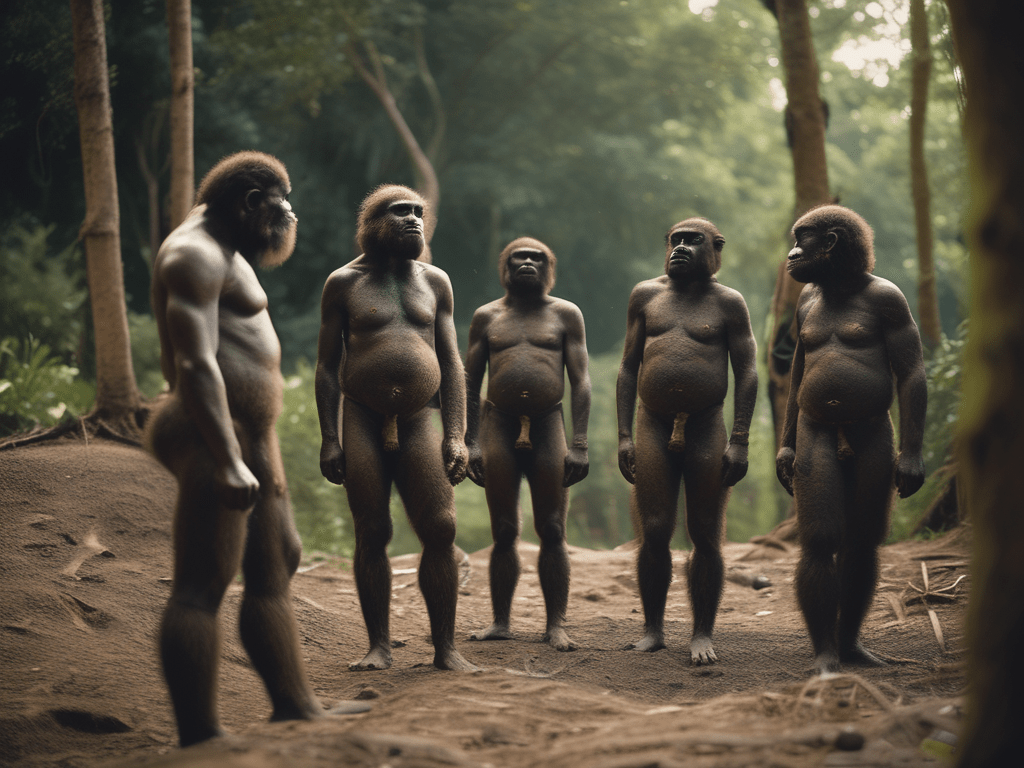
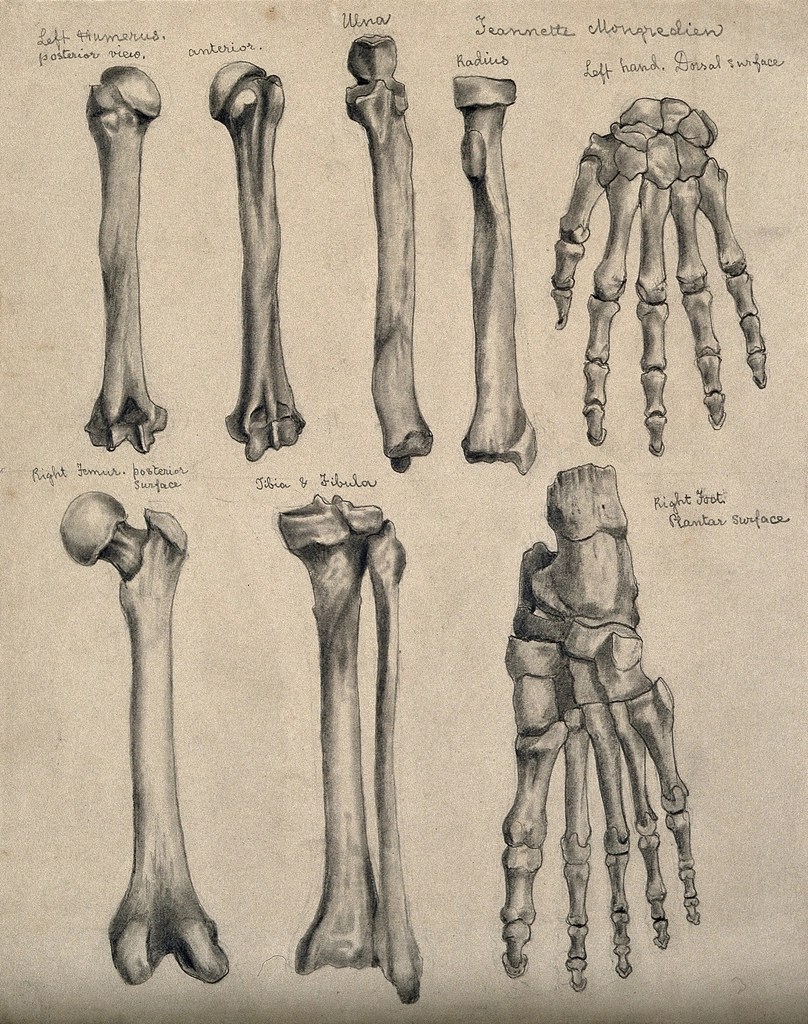
Every so often it pays to look at the same problem from a completely different perspective. For the past 57 years or so we have been collecting and grading reports of human fossil bones and old tools the way that cricket fans collect the records of every game their team has played. But today, with the help of one or two of our redoubtable AI chums, we present a whole new perspective on the old story. Much of it is locked in our genes and has been uncovered by the amazingly intelligent efforts of genetics researchers.

Their discoveries are so extensive that there is too much for a tiny blog: so we’ve summarised the findings below. But look at the timing of the mutation in the famous FOXP-2 gene, and the human species which were running around at the time. True humans fall naturally into two groups. One one side, big -brained essentially modern forms : Homo heidelbergensis, Denisovans, Neanderthals and Homo sapiens. On the other? Poor old Homo erectus, significantly smaller-brained and with a much more exiguous technological and cultural life. In this light, the mutation is almost eerily coincident.

Of course the time lines of the mutations are a bit open ended; but the picture from the fossils is a bit vague too. What really impresses us is the way that, give or take an Ice Age or two, the geneticists provide independent validation of the fossil finders’ picture overall. And there’s an even deeper lesson. The same truth can be seen in two completely different ways, Like those night sky apps you can get which can show the same firmament through visual light, x-rays, microwave or radio waves; whichever you choose. Next time you argue with someone ask yourself and them: are we really talking about two different things? There’s a cognitive advance for the ages.

all based on peer reviewed or reputable pre pubs sources (microsoft assistant)

Time (Million Years Ago)Key Genetic MutationHominins Present
~6 MYAARHGAP11B (linked to brain expansion)Sahelanthropus tchadensis (early bipedal ape-like species)
~4.4 MYAChanges in genes affecting bipedalismArdipithecus ramidus (early upright walker)
~3.3 MYASRGAP2C (enhanced neuron connectivity)Australopithecus afarensis (Lucy and her relatives)
~2.4 MYAMYH16 (jaw muscle reduction, allowing brain growth)Early Homo habilis (first tool users)
~2 MYASCN9A (pain sensitivity mutation)Homo erectus (first hominin to leave Africa)
~700,000 YAFOXP2 (language-related gene)Homo heidelbergensis (ancestor of Neanderthals and modern humans)
~900,000 – 4.5 MYAChromosome 2 fusion (reduced chromosome count from 48 to 46)Various early Homo species
~300,000 YAMicrocephalin & ASPM (brain development genes)Early Homo sapiens (our direct ancestors)

#genteics #paleontology #tools #fossils #anthropology #human evolution

Is Keir Starmer becoming a Socialist?

Because he’s certainly acting like one. Forget the labels that people apply to each other, and to themselves. They’re mostly rubbish anyway. Look at someone’s actions. Today, Sir Keir (great name, by the way) has announced that his government has announced major new controls on the flow of immigration into the United Kingdom.[1] In support of this action, he cites the social problems caused by uncontrolled immigration and the harm it does to the social fabric. In doing so he makes the classic socialist case for controlling the laws of supply and demand. The same argument that socialists of all kinds from the most milk-and-water Social Democrats way out to the crazed ravings of Maoists and Trots.

The Capitalist argument is quite different. The law of supply and demand is the best approximation we have to the way people live in groups. Any restriction of free movement of anything such as taxes, business regulation or migration controls is contrary to nature, and must therefore lead to long term harm. After all, what is more socialist than civil servants telling employers whom they may, and whom they may not, hire to do a job? The socialist riposte is clear: the State should ban your desire to hire foreign workers if by doing so you harm the well being of members of our community here.

No, we are not going to say which one we agree with. The capitalists had their time to run the world, particularly after 1991. Their dream of universal prosperity seemed to be a true busted flush after 2008. Since then, the wind has been blowing in a socialist, that is to say, regulated direction. Whether it is to be socialism of the National or International variety remains to be seen

[1]https://www.theguardian.com/politics/live/2025/may/12/immigration-keir-starmer-labour-reform-visa-foreign-workers-uk-politics-latest-live-news

#socialism #capitalism #sir Keir starmer #immigration #economics #politics

Friday Night Feast of Fun: VE day

The 80th anniversary of VE Day has bought an immense outpouring of celebrations. Millions who were not there will tell you how they long to put on a zoot suit and jive the night away to Vera Lynn, or roam the streets of London getting up to goodness knows what with perfect strangers on bomb sites (wasn’t it a bit cold?-ed)

But-how much would you have enjoyed it? For those who advocate free markets and liberal trade as the best cures for human ills, the Second World War makes very difficult reading indeed. The Government seized control of the nation’s food supplies in 1939,introducing an utterly comprehensive system of rationing, backed by bulk buying and ruthless imposition of standards. By VE Day on 8 May 1945 the nation was thinner, heathier, fitter and better fed that it had ever been before. Or would be ever again. But Civil Servants are not chefs, and the menus available on that famous date may seem very spartan indeed to the modern palate. We thought we’d offer the kinds of things which might have been served up. With the help,naturally, of one of the most likeable books in our collection: The Ration Book Diet [1] And follow it up with what you could drink.

First Course There isn’t one Both shipping and fuel were in short supply, making this stage a superfluous luxury. Now you know why they were so healthy. Wanna try it?

Main Course In their spring section, Brown et al suggest recipes for Kidney with Mustard and Madeira Gravy(p76) Vinegar and mustard baked chicken(p78) or broad beans with minted salsa verde (p80 ) Other things served up might have been Ham and pickle pie monkfish and bacon casserole or salad of some sort. Everything grown locally, or sourced form the nations own fields and fishing grounds. Should we go that way again?

Dessert They would probably have called it “afters” or “pudding”. Apricot compote , rhubarb bread pudding or rhubarb fool might have graced many a VE Day table . For treats as the night drew in: oatmeal scones. And that really is it. There were things about like spam, corned beef and even cheese(heavily on the ration) But you’ll have to read the book iof you want to know more about them.

Happy so far? Let’s pour a drink , or go to the pub

Popular beers of the day included Bass, Guinness and Trumans At home, these would have come in bottles. There were no fridges of course. The Ministry had strained every nerve to ensure the pubs were well stocked with much the same. We also found a cocktail list from a site called Bistrot Pierre. For us, the Gin Fizz stands out as an iconic component of the war-time vocabulary. At least from the films and TV programmes we’ve seen.

And wine? Oh come on. It all came from the continent, which had been under enemy occupation for four years. You had about as much chance of finding a mobile phone as bottle of chardonnay in London in 1945.

Still want to go there?

[1] The Ration Book Diet Mike Brown Carol Harris CJ Jackson The History Press 2010 https://www.amazon.co.uk/Ration-Book-Diet-C-Jackson/dp/1803993448

[2]https://www.bistrotpierre.co.uk/propeller/uploads/2020/04/VE-Day-cocktails.pdf

#food #drink #VE day #world war two #diet #health

Academia has its Robbers Caves too, you know

Here at LSS we’re always praising the learned. Exalting the scientists, doctors and philosophers who would unleash a trouble-free prosperous world, if only we were given the chance. Instead all those nasty hypermacho builders, farmers, football supporters and military types have imprisoned us in a hopeless nihilistic trap of warring tribes which we called The Robbers; Cave(LSS 1 4 2025)

There may be some truth in it. But before we hand over the world to a bunch of Professors and nerdy Civil Servants, let’s flag down a large black cab and ask it for a journey to the Reality Hilton Hotel. Because, we ask-are all these brainy types so immune from Robberscavism, to coin a phrase? Anyone like us who has followed Arts, Sciences and Letters for fifty years or so will notice at once how its practitioners have a tendency to divide themselves into warring camps, like so many followers of certain East London Football teams. Back in the Middle Ages there were the Nominalists versus the Realists. In economics you get Behaviouralists going toe to toe with the Rational Choice Theory crowd, while Linguistics seems to have more warring schools than practitioners. It’s the same for us fans of the Neolithic revolution, where opinion is hopelessly divided too. One lot asseverate that the Neolithic way of life was carried out from the fertile crescent by a single contiguous culture, who replaced(exterminated?) those unfortunate hunter-gatherers who got in the way. Their opponents counter that farming, sheep herding and all those Neolithicky -type things were learned, picked up by enthusiastic locals from traders and traders and adopted with the enthusiasm reserved for certain types of computers and mobile devices in our own age. And the truth? According to studies by the learned Drs Javier Rivas and Alfredo Cortell, writing in the Conversation, [1] it was a bit of both. At one place, at one time the incomers seem to have bludgeoned in and extirpated the natives, as the English did in Tasmania. Elsewhere the locals seem to have picked up the new hoes, made better ones and then jolly well got on with life down on the farm.

And the moral in all this? For practical people, especially those who hand out grants and bursaries, always take one step back. Sometimes you have to make decisions(think of Courts and Forensic Scientists here) But the real joy of learning isn’t in constructing theories and and then fighting to impose them on everyone else. It’s in the journey of discovery itself: gathering the facts, weighing the evidence and above all talking with the people you meet on the way. The ancient virtues of humility and suspended judgement are the most settled and non controversial of all.

[1]https://theconversation.com/how-human-connections-shaped-the-spread-of-farming-among-ancient-communities-254852?utm_medium=email&utm_campaign=Late

#learning #science #neolithic #academic controversy #tribalism #robbers cave experiment #whig

Whatever happens, Donald Trump still matters

As we write these words, President Donald Trump seems to have run into some largely self-inflicted economic troubles. It is hard to say how serious or long lasting these are, and whether they will permanently affect his ability to govern. But one thing is clear: even if he fell from office tomorrow, his significance, his very presence would last for all time. He and his movement are a symptom not a cause. As two articles in the Guardian, one by Richard Partington, and the other by George Monbiot, make clear what has been going on. [1] ]2]

Globalisation, Neo-liberalism, free movement of capital and people, call it what you will, has brought us unprecedented advances in knowledge, and prosperity for billions of people who would otherwise have been excluded from both these things Yet in the countries where the creed began, especially those free market Anglo-Saxon economies of the USA and UK, it has left millions behind. Whose lives rot in the shadow of decaying factories, crumbling roads and decrepit health systems. While lurid images of good times and progress still flit across their screens, their only link to the bright hopeful world beyond. Some, like the educated and the rich are still doing well. Why not them? In such desperate circumstances it is all too easy to start blaming foreigners, global elites, or the tiny fraction who follow divergent sexual practices. And if the educated become an enemy, how will they adopt our values of reason and evidence?

Trump speaks for millions of these people, and that is why his support not only holds up, it may even grow as the crisis gets worse, as George opines. We don’t agree entirely with his analysis: many people we know who hold populist opinions are securely embedded in well funded pensions or established businesses. For us, the roots of xenophobia and self congratulation are far deeper. But the vast spread of uncertainty, insecurity and above all a pervasive sense of dread, the downsides of economic “efficiency” and ergonomic supply chains are the sea in which these emotions thrive. “Socialists do fine until they run out of other peoples’ money” runs the old saloon bar cliche. To which Donald Trump and others would retort “Capitalists do fine until they run out of other people’s security. And jobs. And eventually their nations.

Why did no one ever make a better case for a mixed economy, surely the answer to our problems?

[1]https://www.theguardian.com/business/2025/apr/13/trump-bullying-must-stop-but-true-costs-globalisation-remain

[2]https://www.theguardian.com/commentisfree/2025/apr/13/trump-populists-human-nature-economic-growth?CMP=Share_iOSApp_Other

#USA #donald trump #neo liberalism #globalisation #populism #economics #inequality