
Recycling the way to new antibiotics

If there was one thing that has always been too much for us, it is trying to understand the fiendish complexity of the immune system. At school, at our various universities, trying again during the COVID pandemic…..we have never really got past T and B. So when the BBC announced this morning that a whole new part of it had been discovered,[1][2] you might have expected us to hold our collective heads in our hands and groan.

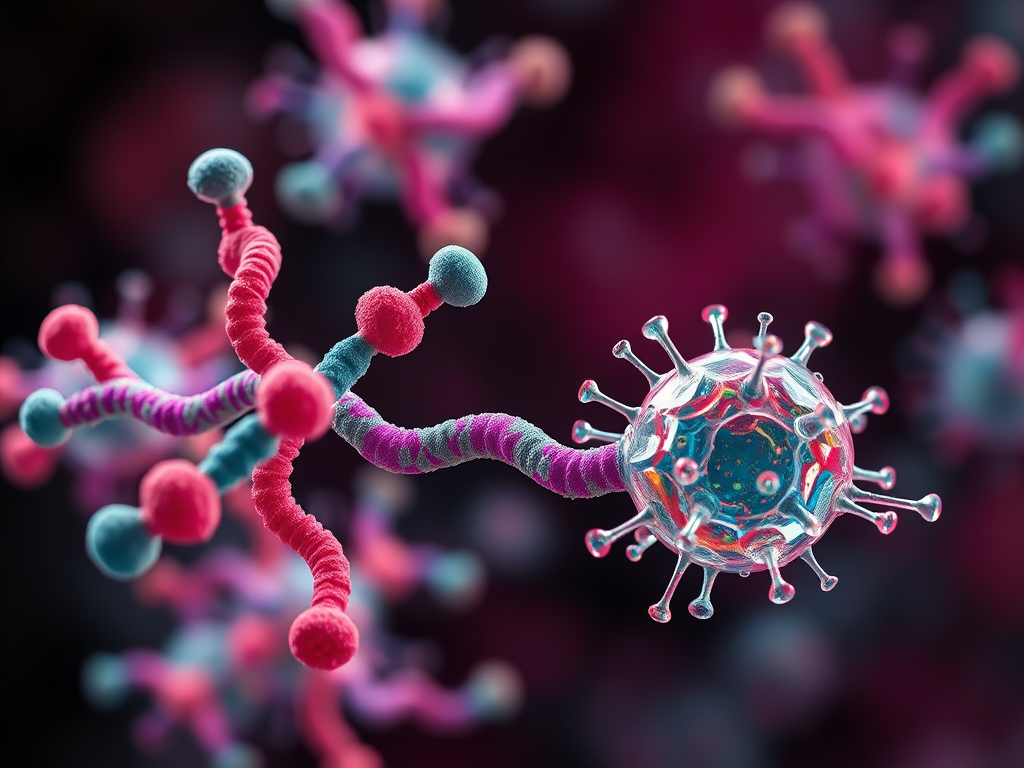
Far from it, gentle reader. For the new discovery has opened the possibility of a whole new class of antibiotics sitting right there in every cell of the body. An astute group of scientists led by Professor Yifal Herbl at Israel’s prestigious Weiszman Institute of Science have found that proteases, a regular part of cell function, may be able to unleash significant antibacterial function. A protease normally functions like the recycle department of your local council, chopping down old proteins and getting them ready for use. But the team found that many of the little peptides produced have strong antibiotic properties. Like the good scientists that they are, they then ran two objective tests. Do the proteases work as well as conventional antibiotics? And if you disable them, does the cell become more vulnerable to infection? To which the answers, broadly speaking, are Yes and Yes.

Once again we stress that this research, and its development into useful therapies, is still at early stages. Which we always do when we cover new points of departure like this. Yet it is, indubitably, a new departure, And it has been sitting there unnoticed until now. Something which has always tickled our fancy here, as regular readers will know. Hats off to Professor Herbl and her team. And-readers! Every tome a journalist publishes on the antibiotics crisis, why not write a very short e mail of thanks to them? They’ll love you for it.

with thanks to Gaynor Lynch

A note on today’s links We have two straight news stories and a link to the Weiszman Institute, to give you staring points. However, we could not get past paywalls to the Nature articles, and we doubt you will be able to as well

[1]https://www.bbc.co.uk/news/articles/cpv4jww3r4eo

[2]https://phys.org/news/2025-03-cellular-trash-reveals-immune-defense.html

[3]https://www.weizmann.ac.il/pages/

#antibiotics #proteases #immune system #peptides #microbes #bacteria #ealth #medicine

At last, another antibiotics story….but it’s not all good news

Yes, gentle readers, back to our Core Mission Values, our raison d’etre, our philosophical DNA (stop there-ed) We just wish it could be better news. For Andrew Gregory, that accomplished science journalist of The Guardian has just written up a magisterial survey of the UK’s efforts to contend with antimicrobial resistance by the National Audit Office(NAO). [2]”Could do better” is the verdict.

First the good news: UK Governments have recognised the problem and are” taking measures,” as the old saying goes. Good! We’ve been on this one for ten years now, and compared to then, the general awareness is indeed very high. Now for the bad: according to Andrew:

Of five domestic targets set in 2019, only one – reducing antibiotic use in food-producing animals – was met. Drug-resistant infections in humans have increased by 13% since 2018, despite a target to reduce them by 10%, the NAO said

There’s lots more good stuff in here, including some killer statistics about where we will be in 2050 if nothing is done. If you haven’t got time for the report, at least read Andrew’s piece.

The reason we take all this seriously is where it comes from. If there is one thing that still marks out a little of the old British excellence it lies in objective institutions like the Civil Service and the BBC, whose cool objectivity have long been the admiration of our overseas friends(we know this from personal experience) The reports assiduously collected facts and judicious observations are a model of intellectual clarity. Britain may not be great anymore, but it is still a pretty representative country. We suspect that much in this report may apply to where you live too, gentle reader. If so, our collective efforts still need to be stepped up. By a lot.

[1]https://www.theguardian.com/society/2025/feb/26/uk-falling-short-in-fight-against-rise-of-superbugs-resistant-to-antibiotics

[2]https://www.nao.org.uk/reports/investigation-into-how-government-is-addressing-antimicrobial-resistance/#:~:text=This%20report%20sets%20out%20information%20on

#amr #antibiotic resistance #microbiology #public health #NAO #medicine #hospitals

Lung cancer rising again Plus: is all that plastic in your brain doing you any good?

One of the great achievements that we progressives can still chalk up is the gradual elimination of smoking. Ok it’s still out there. But in western countries it’s in steep decline, and cases of lung cancer were falling accordingly. Or so it seemed. But since about 2020 it seems to be on the rise again. Among non smokers. Among women non-smokers in fact. Odd, isn’t it? The reasons are discussed by Dr Pinar Oysal Ongoner of the prestigious University of Westminster[2] *for the Conversation.[1] She is particularly interested in the rise in adenocarcinoma. The cause ? It looks as if air pollution is a strong candidate, with a strong pointer to our old friend PM2.5 which is spewed out daily by millions of cars, lorries taxis and vans. Clean air zones, anyone?

As if one pollution story wasn’t bad enough, here’s another that may be worse. Ten years ago the idea of plastic micropollution getting into the brain was either ignored or scoffed at. Now we know better: Our Brains are full of plastic bits from Nature Briefings

Toxicologist Matthew Campen estimates that he can isolate about 10 grams of microplastics from a donated human brain; that’s about the weight of an unused crayon. Scientists are scrambling to understand how these tiny fragments, which have been found in every recess of our planet and our bodies, affect our health. They need clear data to communicate potential risks to policymakers, and with plastic production reaching new highs every year, they’re in a race against time. “It’s very scary to think the concentration of plastics in my brain will go up several percentage points before we have answers,” says Campen.Nature | 11 min read

A whole crayon’s worth of plastic in your brain? isn’t that, like, rather a lot? It took decades to discover the link between tobacco and lung cancer. And many more to overcome the vested interests and start saving lives. At that rate, how soon are we going to cope with this new plastic threat?

*The University of Westminster is not only famed for its academic excellence but also for the production of graduates of outstanding charm, good looks and modesty. Well, Postgraduates, actually

[1]https://theconversation.com/why-is-there-an-increase-in-lung-cancer-among-women-who-have-never-smoked-249406?utm_medium=email&utm_campa

[2]https://www.westminster.ac.uk/

#cancer #pollution #traffic #pm2.5 #plastic #drinking straws

If you want to cure cancer, try paying more taxes

Cancer is the great unspoken truth running through our civilisation. Everyone knows someone who has it. Most people know someone who has died of it. The statistics suggest one in two of us will develop it in one form or another. When strangers discover that we run a science blog it isn’t long before cancer cures edge into the conversation. Everyone deep down wonders “will it happen to me?” You do, don’t you?

Which is why it gets a lot of coverage, and fresh discoveries always make the news. Following Ellyn Lapointe for the Mail [1] and the Korean owned Medical Life Sciences News,[2] we showcase the work of the brilliant Professor Kwang-Hyun Cho of the Korean Advanced Institute of Science and Technology. Instead of painful drawn-out chemical treatments it looks to cure cancer by manipulating the biochemical mechanisms of the cell. Admirable, and you can read more by following the links. But for us, for today, that is not the point.

Look again. The Korean Advanced Institute of Science and Technology. Turns out it’s state owned. Paid for by taxes, Its at the centre of an ecosystem of research institutes, university departments, private companies and assorted government and non-government organisations whose collective wisdom and output is far more than the sum of its parts. It’s not so much arriving at another cure for cancer that is important for us today. It is because this cure is part of a rolling programme of research and discovery that throws up such discoveries as it goes along. Creating a thriving centre of excellence and high value jobs.

The view taken by most people in the UK is that taxes are evil things. The State is an evil parasite holding back economic growth and thereby progress. But isn’t our story today prime evidence that the opposite is the case?

[1]https://www.dailymail.co.uk/sciencetech/article-14369821/breakthrough-switch-reverses-cancer-human-body.html

[2]https://www.news-medical.net/news/20241223/Groundbreaking-technology-converts-cancer-cells-into-normal-cells.aspx?form=MG0AV3
#cancer #medical sciences #economics #research

Rookwood Operations: Clearing phosphates AND capturing carbon

Today we have a good news story, brought to us by the ineffable Robin McKie of the Guardian, which brings genuine hope, Because it solves two problems for the price of one.[1]

To begin at the beginning. In the last fifteen years or so, England’s rivers have started to fill with huge, choking blooms of algae, which seize all the oxygen from the water, thus killing everything else before, dying back themselves . To leave a poisonous foul-smelling sewer , like the ones you used to find in old towns in the Industrial revolution. The cause? High levels of phosphates on agricultural lands, which runs off into the waterways, producing sudden spurts in the aforementioned algae-and down we go to death, for the ecosystem that is. Now, it could be argued that without high phosphate levels we could not feed our population ( feed or fatten?-ed) So how to square the circle?

The answer is to trap the run-off phosphates and return them to the land. And a small company called Rookwood Operations[2] is doing just that, down in the leafy county of Somerset. Their new Phosphate Removal Material just sits in the water, soaking up the phosphates until it’s full. Whereupon it is returned to the land ready for the farmers to exploit again. And get this:

For every metric ton of PRM produced, carbon is sequestered, locking CO2 for up to 1000 years.
PRM is made from completely natural circular sourced sustainable components

How’s that for two in one? There’s so much to like here for LSS readers. There’s even a feminist angle, as one of the company founders was up for the prestigious UK Women in Innovation Award.

Thinking new. Thinking differently. Using existing technologies to squeeze progress in a new way. Surely that trumps going round smashing your friends over the head because it makes you feel better?

[1]https://www.theguardian.com/science/2025/feb/02/uk-scientist-wins-prize-for-invention-that-could-help-avert-phosphogeddon

[2]https://rookwoodoperations.co.uk

#Rookwood operations #phosphates #river pollution #capture technologies #agriculture #technology

Antibiotic Resistance: predicting it before it happens

In war, Intelligence is just about the most vital thing you can have. You know, predicting the enemy’s next move before he makes it. How useful it would be to know which bacteria will show resistance to our next antibiotic, where, how , and when! That’s why some new work from Dr Kalen Hall and team of Tulane University, reported on Phys.org is so exciting [1]

They have identified a genetic signature in the bacteria Pseudomona aeruginosa which predicts the likelihood of developing genetic changes which facilitate resistance to antibiotics. Ingeniously, they studied the DNA mismatch repair pathway, which spurs rapid mutations in the genome. As every schoolchild knows, the more mutations you throw up, the more likely it is that one will give you resistance to antibiotics.

But for LSS homies there’s a deeper learning point. The team took their cue from similar research being carried out in the field of cancer treatment. The idea was to use it to predict carcinogenic mutations-but look what these antibiotic folk have done with it! Science breeds science. Knowledge and learning breeds more knowledge and learning. To our readers in the United States we would observe that this is a lesson you used to know well. Why have you started to forget?

[1]https://phys.org/news/2025-01-genetic-fingerprint-bacteria-drug-resistance.html

#microbiology #dna #antibiotic resistance #cancer #bacteria

Dementia and Resistance: Two Antibiotics stories from the front line, plus our take on Glasgow Rangers v Manchester United

A Cure for Dementia? What hope, what unexpected hope, there may be in antibiotic drugs! We knew that when we started this blog. We did it because we were scared of resistant bacteria. But we never anticipated this benefit: antibiotic drugs may protect us from dementia. So might antiviral drugs. So might vaccines too. Andrew Gregory of the Guardian has been following the work of Dr Ben Underwood. In a nutshell

…….One unexpected finding was an association between antibiotics, antivirals and vaccines and a reduced risk of dementia. The finding supports the hypothesis that some cases of the disease may be triggered by viral or bacterial infections. [1]

Of course, there are many questions to be answered. But for us the point is how precious these drugs are, how important it is not to waste them. Which leads us to:

War starts spike in microbial resistance Armed conflicts produce vast surges in traumatic casualties, in dirt and in squalor. All of which necessitate an understandable increase in prescription of antibiotics. Which in turn leads to rising levels of resistance. As Abdujalil Abdurasulov adduces for the BBC [2]

………war appears to have accelerated the spread of multi-resistant pathogens in Ukraine.Clinics treating war injuries have registered a sharp increase of AMR cases. More than 80% of all patients admitted to Feofaniya Hospital have infections caused by microbes which are resistant to antibiotics, according to deputy chief physician Dr Andriy Strokan.

Once started, these resistant strains of bacteria will not go away. They will spread and multiply. How ironic if many of us end up as casualties of a war between third parties, with whom we have no direct connection. Which leads us to:

War For all? We are beginning to suspect that the tendency to divide into hostile camps , who quickly resort to violence, may be a major cognitive defect in the brains of Homo sapiens. Here is our exhibit A: Recently the followers of the popular Association Football Team Manchester United were involved in violent fighting with the followers of the popular Association Football Team Glasgow Rangers. Why? What economic, intellectual or spiritual gains to they hope to make from such an expenditure of time and effort.?(not to mention the legal penalties which may accrue) What on earth divides them so deeply? Yet if people can fight over such infinitesimal differences as theirs, what hope for any of us? One thing is clear to this blog: there will be a lot more antibiotic resistance. Natural Selection does not forgive species that indulge in maladaptive behaviour. What is waiting in the wings to replace us?

[1]https://www.theguardian.com/society/2025/jan/21/antibiotics-antivirals-and-vaccines-could-help-tackle-dementia-study-suggests?CMP=Share_iOSApp_Other

[2]https://www.bbc.co.uk/news/articles/c20k5wrgz13o

[3]https://www.bbc.co.uk/news/articles/cy7gnd72xe8o#:~:text=Trouble%20before%20and%20during%20Manchester%20United%27s%20Europa%

#antibiotic resistance #medicine #health #ukraine #russia #football #manchester united #rangers

Panzootic Disease: When The Guardian and Daily Mail agree, be very afraid indeed

They’re new and they spread fast. They mutate, jumping species barries with ease. Many of them are new, meaning there are no vaccines and no established treatments. They seem to come in many forms- prions, viruses, bacteria, whatever. What are they? Panzootic diseases. They may turn out to be the most significant health risk of this decade, making it time we all thought more about them. So here are two articles which we hope will give you, gentle reader, a sort of jump-off point from which can can know more.

Let’s start with the eloquent Luke Andrews of the Mail, who concentrates specifically Chronic Wasting Disease, or CWD for short.[1] It is caused by our old friends Prions (remember CJD?) and seems to be fatal to every animal it infects. Infection is by simple contact with any body fluid; and as deer are widely hunted from Wyoming to Pennsylvania, Luke identifies a growing problem, at least in the United States. More worrying for us is Luke’s report that it has jumped to wild pigs (that’s it displaying panzootic behaviour); it causes us to worry what may come next,

Pulling back for a broader view, we come to the erudite Phoebe Weston of the Guardian.[2] Unsurprisingly to well-informed LSS readers, her classic example of a Panzootic is H5N1, the avian flu which is currently ripping through hecatombs of our most iconic species of mammals and birds. If you think in terms of hard cash, how good is that for the tourist trade? Intriguingly, she sees COVID-19 as a classic Panzootic disease as well, as it seems to have spread to 48 species (no, we didn’t know that either). Best of all, Phoebe praises a book by a man called Mark Honigsbaum called The Pandemic Century; we link to a quick review here.[3] Because the causes of this are actually quite simple: uncontrolled development. destructive short-term farming and an insatiable hunger for things which bring instant, short-term gratification. That is the real sickness.

[1]https://www.dailymail.co.uk/health/article-14280007/researchers-warn-chronic-wasting-disease-zombie-deer.html

[2]https://www.theguardian.com/environment/2025/jan/15/age-of-the-panzootic-scientists-warn-of-more-devastating-diseases-jumping-between-species-aoe?CMP=

[3]https://www.theguardian.com/books/2019/jun/23/the-pandemic-century-one-hundred-years-panic-hysteria-mark-honigsbaum-review-riveting

#panzootic disease #prion #pandemic #CWD #habitat loss #global warming #virus

Vaccine Doubts, Rational Fears

One of the curses of being an LSS reader is that we tend to see how everything is connected. The current dismays in politics, international affairs, popular perceptions of science and economics all merge into each other, meaning we cannot escape. Not even into the quiet groves and ivory towers of Académe. Not even for a moment.

Proof of this came from our reading of an excellent article in The Conversation from the learned Professor Sven Bōlte,[1] who has been investigating the depressing reasons that people, including the President-Elect of the United States of America still obdurately refuse to let go of: the idea that vaccines cause Autism. Because every one of the reasons he cites can also be cited to explain the decay of democracy. Let’s look at a few, and you’ll see what we mean

Unawareness of Evidence

Reliably and accurately communicating research results to the public is difficult,” states Sven, “Popular media is typically superficial and often primarily interested in controversy that generates public attention.”

For research results read political issues Remember the £350 million on the side of the bus in the UK Referendum campaign? Quod erat demonstrandum

Challenges Understanding Science (shouldn’t that be “to understanding”?-ed)

Science is complicated and in medicine there are rarely absolute truths. The public, however, might expect clear consensus or have difficulty grasping the precise nuance of the science and its findings”.

For science read economics or law.   Yes they do struggle a bit with nuance, don’t they?

Doubts of science

“The human need for immediate and simple explanations for complex issues fuels misbelief”.

The word “research” does not mean sitting on the internet for 30 minutes and pasting up your favourite clicks.

Invisible success of vaccine programmes.

Vaccination programmes are among the most cost-effective public health interventions available and have averted deaths and long-term disease on a global level in the last decades.

They take it all for granted when it works.  Like everything else we’ve given them since The Enlightenment. You know. Soap, Schools. Scooters. Computers. Machines upon which to play their popular musical ditties.  A certain entitlement has crept in; and a price must always be paid for that.

We could go on, and you may read the whole article for yourself, gentle reader, by clicking on the link.  Does all the above suggest the bulk of humanity lacks the cognitive ability to live in a post industrial world? Or are they just festering with resentment because we stopped them from smoking and burning witches? We await your thoughts.

[1]https://theconversation.com/why-do-false-claims-that-vaccines-cause-autism-refuse-to-die-here-are-nine-reasons-246360?

#autism #vaccines #science #medicine #evidence #conspiracy #reason #emotion

hMPV: Shock Horror, or small pandemic, few hurt?

As all journalists know, there are two types of story. One is “HUGE SOMETHING SHOCK HORROR” the other is “small thing happens, Few hurt or injured” Which do you think catches more clicks/sells more papers/hooks more viewers? So it is with a certain caution that we approach the current media froth around the new hMPV virus that is clearly occupying the thoughts of so many members of the Daily Mail newsroom.

hMPV (human metapneumovirus) is a pretty standard seeming single strand RNA virus of the respiratory syncytial group.[1] It is one of many that surge in late winter in the northern hemisphere after people have been living close together for long weeks in the warm, but with regular trips out into the cold. It can be dangerous, there’s no doubt about it, especially to vulnerable groups such as young children the elderly and those with respiratory conditions. As it is not in our interests for any of our readers to die or lose family members, we urge you to take the sensible precautions enjoined by medical authorities.

What is interesting is the way it’s being reported, especially in western media. The two stories our researchers have put up, both from the Mail are actually pretty representative of all western media, regardless of political, social, racial, sartorial and gender affiliation. [2][3] The westerners are anxious for China to share more information and data on the current outbreak. The Chinese, with long memories of western interference, have their own concerns. Everyone recalls the bitter trading of accusations, suspicions and mistrusts during the COVID-19 pandemic, and are all about as calm and rational as a pair of nestling blackbirds in May.

And our thoughts ?Call us naive, but we long for a world where scientific and medical questions are treated as such, and the maximum co-operation is effected. Let the boys with their toys worry about things like who has most battleships later. Unfortunately it seems to be a human cognitive weakness to elide any possible phenomenon into a weapon to bash the enemy. We are not experts, but we suspect their may be bigger existential threats than this virus. Perhaps a more advanced species will one day make better distinctions.

[1]https://en.wikipedia.org/wiki/Human_metapneumovirus

[2]https://www.dailymail.co.uk/health/article-14254567/symptoms-HMPV-mystery-illness-surging-China-UK.html

[3]https://www.dailymail.co.uk/health/article-14258029/china-details-hpmv-outbreak-UK-experts.html

#hmpv #virus #pandemic #china #west