Energy and Cancer: Three stories that give us hope in dark times

“The sleep of reason brings forth monsters” Goya’s famous painting never seemed so relevant as it does today, as humans divide themselves into mutually hating tribes in Europe, the Middle East and even the USA. “he that is quick to Anger exalteth folly” [1]. We here take the opposite view, Real progress is only achieved by slow, careful thought. And as evidence of that, we’d like to cite three examples, small in their own way of what can be done to fix real problems. When we pause to actually think, that is.

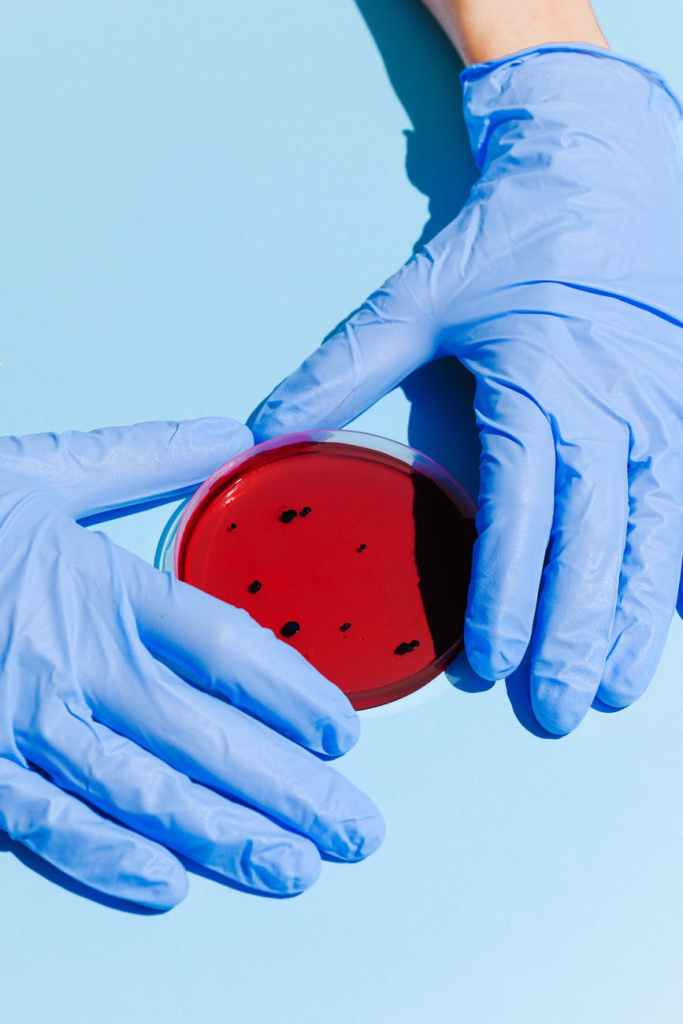
Seeing the cancer One of the most tragic moments in life is to here a cancer patient tell you “it’s come back” after an operation. This is not to blame the surgeons; it’s just that up to now they haven’t always been able to see all the cells. Now, according to Colin Fernandez of the Mail, a new technique will light up the tumorous cells, making them much easier to spot and excise altogether. By the way, some of this work was funded by Cancer Research UK,[2] a marvellous organisation whom we have often covered in these pages.

https://www.dailymail.co.uk/health/article-13511467/dye-prostate-cancer-tumours-glow-surgeons.html

Spotting the Cancer We have often hymned the praises of AI as well. Particularly in medical and biological research. One of its principal advantages is that it can carry out the routine stuff much faster than we can, without tiring. Kate Pickles of the Mail covers how it’s being applied to look at cancer scans to rapidly improve diagnostics. In the long term we could see AI applied to any number of laboratory techniques from Forensic science to Ecology, opening the way to boundless new knowledge and techniques

https://www.dailymail.co.uk/health/article-13518481/AI-better-doctors-spotting-prostate-cancer.html

Concrete Batteries? After they lost the battle on the reality of global warming, Big Oil and its lackeys have waxed lyrical on how difficult the transition to clean energy might be. “yes you can make clean energy, but how are you going to store it?” they would sneer. Well, lots of ways, it has turned out. But one we never dreamed of was the very concrete that makes up our roads, bridges and homes themselves. Unbelievable as it may seem researchers at MIT are looking at new types of concrete which will store and release energy exactly as we need it. What price oil and gas now? This excellent piece is from Victor Tangerman of the Byte:

Thanks to P Seymour

https://futurism.com/the-byte/new-concrete-stores-electricity-homes-batteries

Tiny examples, perhaps. But the mark the dividing line between the Thoughtful and the Emotional. We’ll go with the former.

[1] Proverbs 14 29

[2]https://www.cancerresearchuk.org/get-involved/donate?gclid=69712e6308111b89fbbd480a7616017d&gclsrc=3p.ds&msclkid=69712e6308111b89fbbd4

#cancer #health #medicine #AI #global warming #climate change #renewables #concrete

AI and antibiotics-another good news story

We have always hoped that AI would do for antibiotics what it has already done for protein design. (LSS 1 12 20; 26 3 23) Now there is a real possibility that these hopes may come true. Eric Berger of the Guardian covers a truly remarkable set of research by Professor de la Fuente and his team at the University pf Pennsylvania. [1] They have used an algorithm to mine vast sets of data to sieve out any compounds with potential anti microbial properties. As any reader will know, it would have taken years, if not decades, if they had just used teams of scientists in labs. Click on to Eric’s article, its very easy on the eye. But we’ll leave you with these thoughts:

Is this a game changer? Potentially, yes. It could allow the construction of a vast library of potential antibiotic compounds. The real problem of the last forty years has been, not just the steady failure of existing antibiotics, but the lack of a stream of potential replacements as resistance builds up. But we see a deeper lesson, good for all science. There is nothing so cooperative, so international, as a library or a database. Its contents cut across divisions of nationality, race, class, time even. If we are to survive the antibiotics crisis, and many other looming threats, we will need this approach more. Something to think about when some journalist or politician turns a group of people into “others”. Maybe we can learn something from them, instead.

[1]https://www.theguardian.com/society/article/2024/jun/05/ai-antibiotic-resistance

#antibiotics #AI #microbiology #research #database

How to help viruses live longer and kill more of us

Illness is like gambling. It’s all about statistics. The longer you stand near a virus/bacteria/fungus, or whatever, the higher are your chances of contracting it. So what if the air we breathe becomes ever more virus-friendly, helping them to live longer and infect more people? No, we hadn’t thought of that either. But read this CO2 boosts airborne Viruses from Nature Briefings:

Carbon dioxide is often used as a proxy for healthy air — such as when CO2 monitors are deployed to determine COVID risk. Now it seems that high levels of CO2 actually help viruses to survive in the air. Using an innovative instrument to study airborne pathogens in unparalleled detail, researchers determined that CO2 appears to help keep the particles we exhale at a pH-level that is more hospitable to viruses. “By increasing the CO2 in the air, we’re getting rid of a natural means by which viruses become inactivated,” said environmental chemist Allen Haddrell, who led the new work. “It’s fascinating, but it’s also horrifying.”STAT | 10 min read

The link from Stat, by the admirable Megan Molteni is so good that we’ve provided a double link [1]

Are all crises interlinked? We’ve run other blogs here suggesting, for example ,the link between habitat destruction and the release of new infectious diseases. How the floods brought on by global warming have acted as huge artificial vectors for old diseases like malaria. Or even that a steady rising background level of CO2 could have disastrous consequences for health (LSS passim) This is just a further indication that this gloomy thought may be right. But any parent or grandparent reading this would do well to find out more.

[1]https://www.statnews.com/2024/06/04/co2-ventilation-research-virus-airborne-life-haddrell-celebs/?utm_source=Live+Audience&utm_campaign=2a53b9910b-nature-briefing-d

#global warming #climate change #disease #public health #virus #bacteria

Good news on antibiotics coming thick and fast this spring

More good news on antibiotics research for you today, gentle readers. And this time it’s the subtlety of the extra thinking that has captured our attention. Up to now antibiotics-and many other therapies- have been more of a bludgeon than a rapier. Yes they do a lot of good, smashing away dangerous bacteria from your system. But they can do a lot of bad, by killing all those beneficial bacteria in your biome, which help you digest your food, as well as performing many other Good Works. But what if we could design an antibiotic which only does the good stuff, while keeping harmful side effects to a minimum? According to Nature Briefings, Smart Antibiotic spares the Microbiome, lolamicin may do just that:

An antibiotic called lolamicin targets disease-causing Gram-negative bacteria without disturbing healthy gut bacteria. Broad-spectrum antibiotics against these pathogens wreak havoc on the gut microbiome and can allow potentially deadly Clostridioides difficile to take over. Mice infected with antibiotic-resistant Gram-negative bacteria survived after being given lolamicin, whereas almost 90% of those that didn’t receive the drug died within three days. Lolamicin did not seem to disrupt the gut microbiome and spared mice from C. difficile infections.Nature | 4 min read
Reference: Nature paper

For more stories like these, update your preferences to sign up to our free weekly Nature Briefing: Microbiology.

(We took their link a little further today, so you can see that they offer a special service for those who want to follow this whole trope more closely)

As you know we at LSS tend to be a tad wary of huge new, all-field-encompassing, breakthroughs. What we like is when someone tweaks existing learning in a small but significant way. This seems to be one such, and good luck to the researchers concerned.

#antibiotics #microbiology #microbial resistance #research #microbiology

Nicola Davis leads the way on antibiotics journalism

One of our stated purposes at LSS is to scan the media feeds, both news and scientific, to bring you the best possible stories on the continuing crisis caused by antibiotic resistant micro-organisms. That’s superbugs in short. And one journalist whose work we have featured time and again is the indefatigable Nicola Davis who writes for the Guardian. Well today she has done it again, in an intriguing new take. It’s going to take quite some time before new drugs can be tested and made ready. Meanwhile people are starting to die, in quite large numbers. What can we do? [1]

Well, quite a lot according to Nicola. Like a good journalist, she starts by reprising how truly awful the current situation is. The figures are eyewatering. To take 2019 as a good pre COVID baseline, antibiotic resistant microorganisms were implicated in 4.95 million deaths, with a definite attribution possible in 1.27 million cases. So are we just going to wait, to sit around and wring our hands until new antibiotics come along? No, quite a lot is possible in the meantime, Citing the work of Professor Laxminarayan of Princeton, she writes:

……………AMR-associated deaths in LMICs could be cut by 18%, equivalent to about 750,000 a year, through three key steps……..The team team suggests an estimated 247,800 deaths are preventable through universal access to clean water and improved sanitation and hygiene, while 337,000 deaths could be prevented through better infection prevention and control in healthcare settings…….Another 181,500 deaths are preventable by means of childhood vaccinations,

But Nicola’s article, and the link she provides to The Lancet, are far more detailed [2]

An our thoughts? After so many years bashing you on your heads, gentle readers, we see actual grounds for optimism First journalists like Nicola are getting on to this.( See also MD of Private Eye and Stacey Liberatore of the Mail) Secondly, there’s nothing so likely to wither effort as the thought that we are powerless. Beyond hope. Passive. And as this article shows, nothing could be further from the truth.

[1]https://www.theguardian.com/society/article/2024/may/23/huge-number-of-deaths-linked-to-superbugs-can-be-avoided-say-experts

[2]https://www.thelancet.com/series/antibiotic-resistance

#superbugs #antibiotic resistance #pandemic #health #vaccination #sanitation #preventive medicine #nicola davis #md private eye #stacey liberatore

What if you could detect cancer before it was cancer?

If you want to cure a cancer, identify it as soon as possible. That’s long been a truism among medical experts. But what if your techniques were so advanced that you could identify the precursor steps to cancers before they had even started to initiate a tumour in someone’s body? According to an article by Anna Bawden and Nicola Davis of the Guardian, the first steps to do just that are now feasible, as two studies suggest.

Instead of simply rehashing their excellent prose[1] upon which we urge you to click, we’ll provide a brief summary, and raise some interesting and rather hopeful observations. The first looked at 44000 samples from the UK Biobank. 618 proteins were identified, which could then be linked to 19 different types of cancer. In a different take on the same trope, a second study using a whopping 300 000 samples came up with 40 different proteins linked to 9 different types of cancer. We dare not comment, but dare to observe:

1 It’s amazing the amount of new discoveries you can make just by crunching data. As AI comes into its own, it should be able to handle bigger and bigger numbers. Think of alpha-fold, if you don’t believe us-and that quite old hat by now!

2 Talking of hats, let’s all take ours off to Cancer Research UK, whose steady, patient work down the decades has not only provided a congenial ecosystem for researchers, but also a steady stream of reliable income for the planners and the finance people. Come on, hands in pockets, please! [2]

3 We were impressed that the results were already identifying different types and subtypes of cancers. It suggests a subtlety of technique which has probably only just got going.

and, finally:

4 The bigger the database, the better. Without belittling today’s researchers and journalists, these are still relatively small numbers. Imagine an AI supercomputer tirelessly combing the biological samples of every human on the planet. And maybe their pets. Would might it not find.

Oaks and acorns times, gentle readers. Keep donating.

[1]https://www.theguardian.com/society/article/2024/may/15/proteins-blood-cancer-warning-seven-years-study

[2]https://donate.cancerresearchuk.org/donate?gclid=cf2827b39f4311a97ff841f589e5c887&gclsrc=3p.ds&utm_source=bing&utm_medium=cpc&utm_campaign=IMP%20%

#database #cancer #medicine #AI #protein #gene #prediction

Why the UK has ended up like Manchester United

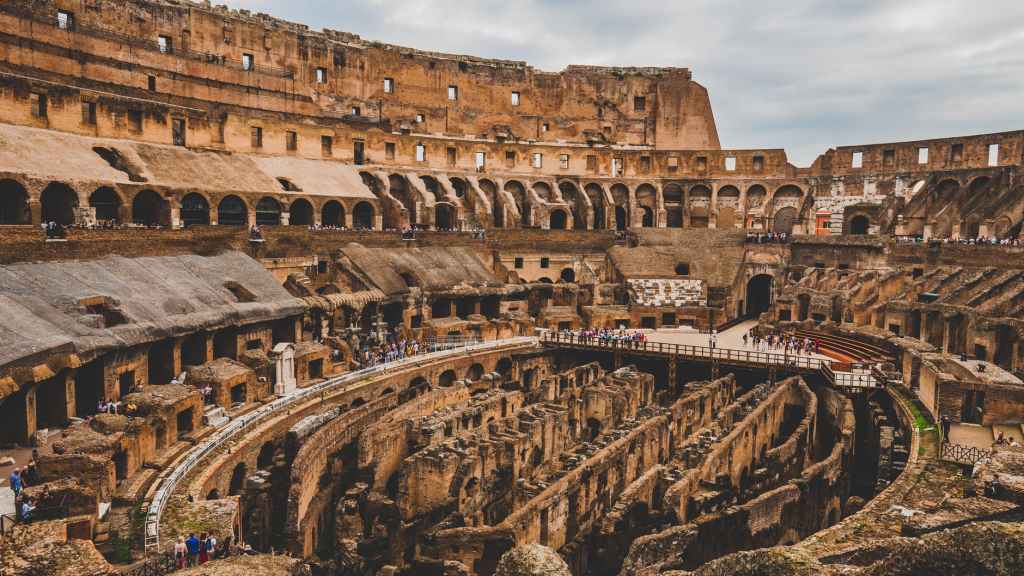
Followers of football often discuss the fate of Manchester United FC. A once hugely-successful club, awash with money that is now desperately underperforming, despite an endless stream of new mangers and fresh starts. Some compare it with the fate of Rome (the Empire of that name, not the football club). But there may be an another comparison, more recent and much closer.

Why is the UK so desperately underperforming? Why is the state of its mental health so very poor, when compared to other countries? Why have peoples hopes and expectations stagnated? Why is the health service so bad? Housing so squalid and insecure for so many? Especially as all the terrible social and economic problems were tackled so ably, especially in the years between 1945 and 1975? One intriguing set of ideas has been presented by George Monbiot. [1] [2] Intriguing because they link together so many disparate observations. Refreshing, because they challenge existing orthodoxies of Right and Left. For George, the culprit is Neoliberalism, which he defines as a cultish ideology based on a relentless cutting of the state, privatisation, low taxes and the freest possible flows of taxes and people. (the latter certainly explains why we couldn’t see the pictures in the Uffizi galleries in Florence)

Of course, it’s a contribution, not a panacea. But it touches on the same sort of themes as Thomas Piketty, Wilkinson and Pickett, Hutton and others whom we have referenced on these pages from time to time. That the endless competition by individuals for wealth and status will end up by leaving all of us poorer. Except the very rich, who own all the media by which we are told what a great idea all of this is. And as for the UK and poor old Manchester United? Perhaps both of them need to take a very long, cool look at the fundamental causes of their unhappy states. Before worse happens.

[1]https://www.msn.com/en-gb/health/other/why-is-britain-s-mental-health-so-incredibly-poor-it-s-because-our-society-is-spiralling-backwards/ar-BB1m8tVR?ocid=msedg

[2]https://www.theguardian.com/commentisfree/article/2024/may/10/britain-mental-health-society-neoliberalism-politicians

#neoliberalism #finance #wealth #mental health #housing #inequality

Why the Wolf of Wall Street (probably) won’t get prostate cancer

Ejaculation is good for you. That’s the message in a startling article from Daniel Kelly, a senior lecturer in Biochemistry, admirably showcased in the latest edition of the Conversation. [1] According to Daniel, it may even reduce the chances of prostate cancer. Now this is a real problem in men’s health; according to the article, this form of cancer is now the second-most-commonly diagnosed. In men in the UK( a reasonably representative country, gentle readers) it is actually the most commonly diagnosed one. Anything to reduce it has to be a good thing. And how might this be achieved? Well, according to Daniel:

Although the mechanisms are not completely understood, these studies fit with the idea that ejaculation can reduce prostate cancer by decreasing the concentration of toxins and crystal-like structures that can accumulate in the prostate and potentially cause tumours…..Similarly, ejaculation may alter the immune response within the prostate reducing inflammation – a known risk factor for cancer development – or by increasing immune defence against tumour cells…..Alternatively, by reducing psychological tension ejaculation may lower the activity of the nervous system which then prevents certain prostate cells from dividing too rapidly and increasing the chance of them becoming cancerous.

Yes, it’s far from conclusive yet; but that last point reminds us of an intriguing scene from the film The Wolf of Wall Street (2013) in which senior manager Mark Hanna (played by Matthew McConnaghy) is advising rookie broker Jordan Belfort (Leonardo di Capprio) about the perils of stress, and how to deal with them. He sings the praises of conventional remedies, such as cocaine and hookers. But then the conversation turns serious. [2] Hanna enquires if Belfort “jerks off” and if so, the frequency thereof. Disappointed on learning the answer is only three or four times a week, he counsels

Gotta pump those numbers up .Those are rookie numbers in this racket.”

He goes on to provide detailed advice based on his own practice, which those of naive religious or philosophical persuasion may find hard to assimilate But we reproduce the link for you here, dear friends.[2]

Once again, we stress the provisional nature of these findings. We do not know the current state of health of Jordan Belfort, the real Wolf. But isn’t it intriguing to think that the brokers of Wall Street had stumbled onto something really useful for once, if only by accident?

[1]https://theconversation.com/does-ejaculating-often-reduce-your-risk-of-prostate-cancer-228166?utm_medium=email&utm_campaign=Latest%20from%20The%20Conversation%20for%20A

[2]https://www.bing.com/videos/riverview/relatedvideo?q=wolf+of+wall+street+matthew+mcconaughey+scene&mid=49C5DB555170FD1DC29749C5DB555170FD1

#wall street #prostate cancer #jordan belfort #mens health

More hidden numbers – Or a glimpse of the Mind of God?

A couple of years ago, we published a little blog in which we dared to suggest that the recurrence of certain numbers, such as pi and Euler‘s might hint at deeper universal phenomena that are not yet fully understood.(LSS 14 3 22) So we were more than gratified to come across an intriguing article by Steven Pappas for Live Science which further confirms our suspicions.

A team led by Vaibhev Mohanty at MIT has been trying to answer a simple but profound question. “How many mutations do you need in a genome before it changes the phenotype( i.e. proteins, etc) of the carrying organism? Now, we will confess at this point that our grasp of mathematics is appalling. However:

Scientists have discovered that a key function from a “pure” branch of mathematics can predict how often genetic mutations lead to changes in function. These rules, laid out by the so-called sum-of-digits function, also govern some aspects of protein folding, computer coding and certain magnetic states in physics. 

The report explains, in verbal form, some more about how the team arrived at these conclusions. But for us the key is that the same mathematics applies across several fields of science, as though something much deeper is going on. Well, that’s what we speculate. But we were not the first. As educated readers will recall, Plato speculated that the universe was formed of deep underlying structures, which he termed “forms”. And in his view a single Divine mind had created the universe through these same forms. So we pose this question: have these scientists, and others, had a tiny glimpse of the Mind of God?

[1]https://www.msn.com/en-gb/health/mindandbody/scientists-uncover-hidden-math-that-governs-genetic-mutations/ar-AA1f95OM?ocid=msedgdhp&pc=HCTS&cvid=7d80

[2] https://academic.oup.com/edited-volume/41754/chapter-abstract/354205224?redirectedFrom=fulltext

#genes #proteins #mathematics #plato #theology #mutation

The Hidden Dangers #3: Microplastics

It’s hard to convey now what plastics meant to us Space-Age children of the 1960s. Bright, cheap, coloured, light, clean and multipurpose, they were the material of choice for a democratic age. They were what your new Fireball XL5 rocket was made of. The tape recorder for your Beatles songs. The beakers for your free school milk. The fittings in your Dad’s new Ford Anglia. With them we would create a new heroic age, and get to The Moon.

Sixty years on? Well, they’re just everywhere, aren’t they? Up on the top of Mount Everest. Deep at the bottom of the Marianas Trench. And everywhere, everywhere, in between. In the blossom in your garden. Blowing in the wind between the trees. In your water. In your food. In your bodies. And that last should afford pause for thought. Because the effects of all this plastic are not really understood. According to Anne Pinto-Rodrigues of Science News,[1] microplastics particles can be found in the gut biome; in the reproductive system; in breast milk; and in blood. What’s worse, some of the additives, such as BPA can act as endocrine disruptors (see LSS 26 3 24). There is even a chance that they may have a harmful effect on the immune system.

There’s lots more. Instead of summarising all the literature, which astute LSS readers will do for themselves, we’ll just point to one case study. It comes from Sue Hughes of Medscape, and though its primary focus is on cardio vascular disease, we think it’s a pretty good representative of what is to come, as more is found out in the next few years. And one other thought: how on earth do we clean this lot up?

with thanks to Gary Herbert

[1]https://www.sciencenews.org/article/microplastics-human-bodies-health-risks

[2]https://www.medscape.com/viewarticle/plastic-particles-carotid-plaques-linked-cv-events-2024a10004ge

#plastic #BPA #microplastics #health #pollution #contamination