Pancreatic Cancer-the brave ladies who offered hope

Escaping the concrete canyons of Croydon recently, we took a short break in the Sussex town of Worthing. (Which has been compared to Nice in Provence ; but only by people who have never been to Nice). While strolling along the Promenade at Worthing, we ran into a group, mainly comprising ladies, who were dressed in a variety of outre costume, including those of Pink Panthers and Star Wars Galactic Warriors. It turned out to be one of those happy occasions when we learned, not something new, but when something which we were dimly aware of was moved sharply up our agenda . For they were campaigning to gather money for the rising disease of Pancreatic Cancer. [1] And this is what we learned (overseas readers- we bet the UK is pretty representative of your jurisdiction too)

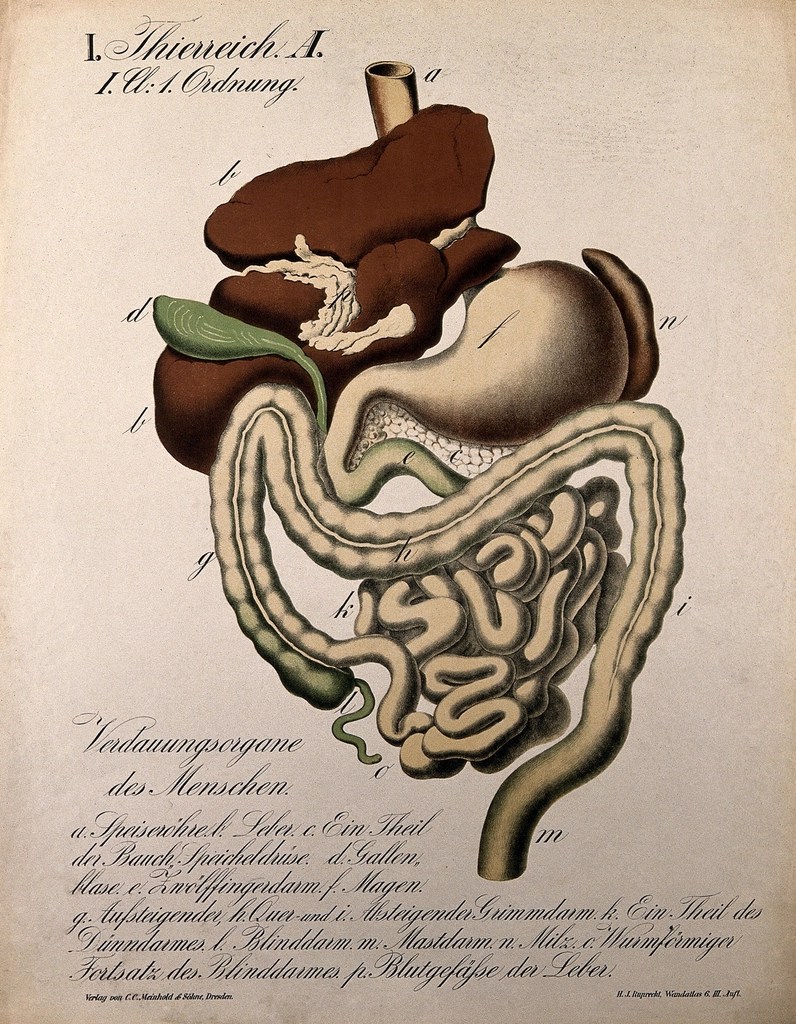
The pancreas is a vital organ, standing at the crossroads of both your digestive and endocrine system. So getting cancer in it is a pretty bad state of affairs. There are several types of this cancer. But last year, overall, saw 10 500 new cases in the UK. Actually, its among the 10 most common forms of cancer in these islands. The risk factors? You guessed it. Being overweight., smoking and diabetes are among the highest. All the features of a civilisation focussed too much on quick-fix marketing, and not enough on quality of life. If you want to drill down, here’s another link from the Charity Pancreatic Cancer UK. [2]

So these ladies, and the charity which they represent means that, even if your family is struck with this terrible affliction, you will not be alone. And, as we parted from the ladies, we closed on a moment of hope. For Pancreatic Cancer UK works closely with the other cancer charities in this country. And we agreed how useful it was to set up laboratories with ethe money raised. Who knows what other discoveries could be made with all those scientists and all that kit? Apparently these ladies intend to run the whole of the seafront down there, and back again. Good luck to them, we say. And thanks.

[1]https://www.pancreaticcancer.org.uk/information/just-diagnosed-with-pancreatic-cancer/what-is-pancreatic-cancer/

[2]https://cdn.shopify.com/s/files/1/0424/0949/2641/files/221123PC01_PCUK_What_is_Pancreatic_Cancer_Factsheet_Updates_Web.pdf?v=1670945787

#pancreatic cancer #cancer #research #health #medicine #charity

Processed Foods: Reader Feedback

Today we reproduce the comment of our regular reader Ms Gaynor Lynch, on our recent piece about processed foods. Many thanks to her for taking the time to contact us:

Ultra-processed foods are bad for you – full stop. They are highly addictive and affect your brain chemistry so that you crave them more. Emerging research suggests ultra processed foods are particularly bad for not just the gut but the heart and brain as well, with mood and cognition badly affected.

Professor Tim Spectre is the go expert on the gut https://zoe.com/post/tim-spector-gut-tips,

There is an excellent excellent article in National Geographic on brain health but there is a pay wall. It may be available through your library service.

https://www.nationalgeographic.com/premium/article/ultra-processed-foods-damage-brain-depression-anxiety-cognitive-decline#:~:text=Although%20many%20ultra-processed%20foods%E2%80%94soda%2C%20candy%2C%20energy%20bars%2C%20fruit-flavored,brain%2C%20with%20mood%20and%20cognition%20taking%20a%20hit.

Abstract of research article in the journal Neurology on associations between ultra-processed food consumption and adverse brain health outcomes. Free, paywall to full article.

https://www.neurology.org/doi/10.1212/WNL.0000000000209432

We at LSS think that this whole issue is only going to grow in the next few years and welcome the thoughts of any other readers who might care to join the debate

#nutrition #obesity #food #diet #sustainability #health #heart

Are Ultra-Processed foods bad for your immune system? The Conversation thinks they might be

Go on any diet course these days (we’ve been on many) and the chances are that your course leader will inveigh against the dangers of processed foods[1] You know, those ones that saved us all so much time in the 1980s and 1990s, when it was essential to answer your e-mails and plan a talk over a delicious microwaved chicken korma. Well, processed foods comprise a lot more than just quick ready meals.And, l like a lot of labour-saving devices, they’re not all bad if used in moderation. Trouble comes when we all go too far. And our old friends The Conversation have an intriguing take on that. [2] Look at this extract frpm their article by Sam White and Phillipe Wilson

[there is] growing evidence that ultra-processed foods may affect how our immune system works. This may explain why some studies have linked ultra-processed foods with inflammatory bowel disease and potentially autoimmune diseases.

We on this blog have been tracking stories which link the digestive tract and immune system for some years. So it’s nice to see some real scientists really opening up this field. But there is a deeper lesson for us here, and it’s from economics, not science. Because economists of the classical school, or at least those who swallow their undergraduate textbooks, whole, always asseverate the a pure free market is the quickest way to achieve the optimum benefit. Well, processed foods are certainly free market. They have developed at breakneck speed, and certainly give the people what they want. The question is: how much do they need it? And at what cost does it come?

[1]https://www.nhs.uk/live-well/eat-well/how-to-eat-a-balanced-diet/what-are-processed-foods/

[2]https://theconversation.com/ultra-processed-foods-heres-how-they-may-affect-the-way-the-immune-system-functions-231884?utm_medium=email&utm_campaign=Latest

diet #food #microbiome# gut #immune system

New test leads to real progress on antibiotic prescriptions

One of the scourges of modern medicine is the over-prescription of antibiotics. The more they are used, the more chances are made for target organisms to develop resistance. ( as well as other bacteria that live alongside them) Hence the current crisis. Everyone agrees we should be saving our last antibiotics for when they are really, really needed, not just throwing them at every random infection presented in the Doctor’s surgery on a rainy Monday morning.

A typical example is infections of the urinary tract, as James Gallagher explains for the BBC. [1] It’s never easy to know whether one of these is bacterial or viral. And currently it can take three days to find out. Yet the risk of an untreated bacterial infection is so high, the consequences so grave, that Doctors have to prescribe antibiotics, just in case. Of course, if it turns out to be viral. the antibiotics are useless, and the risk of adding more resistant bacteria to the ecosystem has just been ratcheted up again.. If only there was a way of cutting diagnostic time!

Well some Swedish researchers seem to have done just that. Their new test seems to have cut the time to answer the question “is this an antibiotic-treatable infection?” down to 45 minutes. James waxes lyrical, with the aid of some excellent graphics. Even more encouraging, the system is now being marketed by a pioneering firm called Sysmex Astrego [2] which suggests a strongly robust, repeatable test which could be rolled out in the millions. Billions, even? There’s lots of good news here, and we hope that all involved enjoy their Longitude Prize. If anyone deserves a little celebration, it is surely they.

[1]https://www.bbc.co.uk/news/articles/crggj9led0no

[2]https://www.sysmex-astrego.se/

#antibiotic resistance #medicine #bacteria fungi virus #superbug

No-Sky Post Traumatic Stress Disorder. We interview A. Doctor

Following media speculation about No Sky Post Traumatic Stress Disorder, a new syndrome sweeping the nation, LSS is proud to present this exclusive interview with Ann Doctor

LSS Is there really such a syndrome as No Sky Post Traumatic Stress Disorder  (NSPTSD)?

AD Yes,  NSPTSD is a  new syndrome , but it’s very real nonetheless.

LSS What causes it? And what are the symptoms?

AD It happens when an otherwise healthy child is deprived of Sky TV in their formative years. It causes many tragic symptoms. A desire to stand out in the rain for long periods. A phobia about meeting important world leaders causing the sufferer to rush back to England to do an  interview in ITV.  To ignore obvious cues, such as the word “TITANIC” in the background, or hoping to rev things up by hanging around deserted motor car racing tracks in Northamptonshire. And otherwise make all kinds of gaffes, mistakes, blunders and unforced errors.

LSS is there any cure?

AD Generally we advise sufferers to collect as much money as they can and depart to a warm place, such as California, as soon as possible. And never, ever come back.

© Ann Doctor 2024

Energy and Cancer: Three stories that give us hope in dark times

“The sleep of reason brings forth monsters” Goya’s famous painting never seemed so relevant as it does today, as humans divide themselves into mutually hating tribes in Europe, the Middle East and even the USA. “he that is quick to Anger exalteth folly” [1]. We here take the opposite view, Real progress is only achieved by slow, careful thought. And as evidence of that, we’d like to cite three examples, small in their own way of what can be done to fix real problems. When we pause to actually think, that is.

Seeing the cancer One of the most tragic moments in life is to here a cancer patient tell you “it’s come back” after an operation. This is not to blame the surgeons; it’s just that up to now they haven’t always been able to see all the cells. Now, according to Colin Fernandez of the Mail, a new technique will light up the tumorous cells, making them much easier to spot and excise altogether. By the way, some of this work was funded by Cancer Research UK,[2] a marvellous organisation whom we have often covered in these pages.

https://www.dailymail.co.uk/health/article-13511467/dye-prostate-cancer-tumours-glow-surgeons.html

Spotting the Cancer We have often hymned the praises of AI as well. Particularly in medical and biological research. One of its principal advantages is that it can carry out the routine stuff much faster than we can, without tiring. Kate Pickles of the Mail covers how it’s being applied to look at cancer scans to rapidly improve diagnostics. In the long term we could see AI applied to any number of laboratory techniques from Forensic science to Ecology, opening the way to boundless new knowledge and techniques

https://www.dailymail.co.uk/health/article-13518481/AI-better-doctors-spotting-prostate-cancer.html

Concrete Batteries? After they lost the battle on the reality of global warming, Big Oil and its lackeys have waxed lyrical on how difficult the transition to clean energy might be. “yes you can make clean energy, but how are you going to store it?” they would sneer. Well, lots of ways, it has turned out. But one we never dreamed of was the very concrete that makes up our roads, bridges and homes themselves. Unbelievable as it may seem researchers at MIT are looking at new types of concrete which will store and release energy exactly as we need it. What price oil and gas now? This excellent piece is from Victor Tangerman of the Byte:

Thanks to P Seymour

https://futurism.com/the-byte/new-concrete-stores-electricity-homes-batteries

Tiny examples, perhaps. But the mark the dividing line between the Thoughtful and the Emotional. We’ll go with the former.

[1] Proverbs 14 29

[2]https://www.cancerresearchuk.org/get-involved/donate?gclid=69712e6308111b89fbbd480a7616017d&gclsrc=3p.ds&msclkid=69712e6308111b89fbbd4

#cancer #health #medicine #AI #global warming #climate change #renewables #concrete

AI and antibiotics-another good news story

We have always hoped that AI would do for antibiotics what it has already done for protein design. (LSS 1 12 20; 26 3 23) Now there is a real possibility that these hopes may come true. Eric Berger of the Guardian covers a truly remarkable set of research by Professor de la Fuente and his team at the University pf Pennsylvania. [1] They have used an algorithm to mine vast sets of data to sieve out any compounds with potential anti microbial properties. As any reader will know, it would have taken years, if not decades, if they had just used teams of scientists in labs. Click on to Eric’s article, its very easy on the eye. But we’ll leave you with these thoughts:

Is this a game changer? Potentially, yes. It could allow the construction of a vast library of potential antibiotic compounds. The real problem of the last forty years has been, not just the steady failure of existing antibiotics, but the lack of a stream of potential replacements as resistance builds up. But we see a deeper lesson, good for all science. There is nothing so cooperative, so international, as a library or a database. Its contents cut across divisions of nationality, race, class, time even. If we are to survive the antibiotics crisis, and many other looming threats, we will need this approach more. Something to think about when some journalist or politician turns a group of people into “others”. Maybe we can learn something from them, instead.

[1]https://www.theguardian.com/society/article/2024/jun/05/ai-antibiotic-resistance

#antibiotics #AI #microbiology #research #database

How to help viruses live longer and kill more of us

Illness is like gambling. It’s all about statistics. The longer you stand near a virus/bacteria/fungus, or whatever, the higher are your chances of contracting it. So what if the air we breathe becomes ever more virus-friendly, helping them to live longer and infect more people? No, we hadn’t thought of that either. But read this CO2 boosts airborne Viruses from Nature Briefings:

Carbon dioxide is often used as a proxy for healthy air — such as when CO2 monitors are deployed to determine COVID risk. Now it seems that high levels of CO2 actually help viruses to survive in the air. Using an innovative instrument to study airborne pathogens in unparalleled detail, researchers determined that CO2 appears to help keep the particles we exhale at a pH-level that is more hospitable to viruses. “By increasing the CO2 in the air, we’re getting rid of a natural means by which viruses become inactivated,” said environmental chemist Allen Haddrell, who led the new work. “It’s fascinating, but it’s also horrifying.”STAT | 10 min read

The link from Stat, by the admirable Megan Molteni is so good that we’ve provided a double link [1]

Are all crises interlinked? We’ve run other blogs here suggesting, for example ,the link between habitat destruction and the release of new infectious diseases. How the floods brought on by global warming have acted as huge artificial vectors for old diseases like malaria. Or even that a steady rising background level of CO2 could have disastrous consequences for health (LSS passim) This is just a further indication that this gloomy thought may be right. But any parent or grandparent reading this would do well to find out more.

[1]https://www.statnews.com/2024/06/04/co2-ventilation-research-virus-airborne-life-haddrell-celebs/?utm_source=Live+Audience&utm_campaign=2a53b9910b-nature-briefing-d

#global warming #climate change #disease #public health #virus #bacteria

Good news on antibiotics coming thick and fast this spring

More good news on antibiotics research for you today, gentle readers. And this time it’s the subtlety of the extra thinking that has captured our attention. Up to now antibiotics-and many other therapies- have been more of a bludgeon than a rapier. Yes they do a lot of good, smashing away dangerous bacteria from your system. But they can do a lot of bad, by killing all those beneficial bacteria in your biome, which help you digest your food, as well as performing many other Good Works. But what if we could design an antibiotic which only does the good stuff, while keeping harmful side effects to a minimum? According to Nature Briefings, Smart Antibiotic spares the Microbiome, lolamicin may do just that:

An antibiotic called lolamicin targets disease-causing Gram-negative bacteria without disturbing healthy gut bacteria. Broad-spectrum antibiotics against these pathogens wreak havoc on the gut microbiome and can allow potentially deadly Clostridioides difficile to take over. Mice infected with antibiotic-resistant Gram-negative bacteria survived after being given lolamicin, whereas almost 90% of those that didn’t receive the drug died within three days. Lolamicin did not seem to disrupt the gut microbiome and spared mice from C. difficile infections.Nature | 4 min read
Reference: Nature paper

For more stories like these, update your preferences to sign up to our free weekly Nature Briefing: Microbiology.

(We took their link a little further today, so you can see that they offer a special service for those who want to follow this whole trope more closely)

As you know we at LSS tend to be a tad wary of huge new, all-field-encompassing, breakthroughs. What we like is when someone tweaks existing learning in a small but significant way. This seems to be one such, and good luck to the researchers concerned.

#antibiotics #microbiology #microbial resistance #research #microbiology

Nicola Davis leads the way on antibiotics journalism

One of our stated purposes at LSS is to scan the media feeds, both news and scientific, to bring you the best possible stories on the continuing crisis caused by antibiotic resistant micro-organisms. That’s superbugs in short. And one journalist whose work we have featured time and again is the indefatigable Nicola Davis who writes for the Guardian. Well today she has done it again, in an intriguing new take. It’s going to take quite some time before new drugs can be tested and made ready. Meanwhile people are starting to die, in quite large numbers. What can we do? [1]

Well, quite a lot according to Nicola. Like a good journalist, she starts by reprising how truly awful the current situation is. The figures are eyewatering. To take 2019 as a good pre COVID baseline, antibiotic resistant microorganisms were implicated in 4.95 million deaths, with a definite attribution possible in 1.27 million cases. So are we just going to wait, to sit around and wring our hands until new antibiotics come along? No, quite a lot is possible in the meantime, Citing the work of Professor Laxminarayan of Princeton, she writes:

……………AMR-associated deaths in LMICs could be cut by 18%, equivalent to about 750,000 a year, through three key steps……..The team team suggests an estimated 247,800 deaths are preventable through universal access to clean water and improved sanitation and hygiene, while 337,000 deaths could be prevented through better infection prevention and control in healthcare settings…….Another 181,500 deaths are preventable by means of childhood vaccinations,

But Nicola’s article, and the link she provides to The Lancet, are far more detailed [2]

An our thoughts? After so many years bashing you on your heads, gentle readers, we see actual grounds for optimism First journalists like Nicola are getting on to this.( See also MD of Private Eye and Stacey Liberatore of the Mail) Secondly, there’s nothing so likely to wither effort as the thought that we are powerless. Beyond hope. Passive. And as this article shows, nothing could be further from the truth.

[1]https://www.theguardian.com/society/article/2024/may/23/huge-number-of-deaths-linked-to-superbugs-can-be-avoided-say-experts

[2]https://www.thelancet.com/series/antibiotic-resistance

#superbugs #antibiotic resistance #pandemic #health #vaccination #sanitation #preventive medicine #nicola davis #md private eye #stacey liberatore