What’s in the water? Water is good for you, beer is bad. True, up to a point, especially for those of us who worry about our girth. But think before you drink, as they say. There may be more in that innocent glass of tap water than you bargained for, as this piece from The Conversation makes clear. Forever Chemicals in our drinking water……………
Clever moggy finds new virus Ailurophiles of all lands will applaud the tale of this serendipitous kitty who brought home a mouse that contained a hitherto-unknown, and rather scary virus, to his biochemist owner. Here’s the Daily Mail
Antibiotics from the past Leafing through our old pharmacopoeias and other databases may yet be an important new source of antibiotics. God knows we need to look anywhere and everywhere. Fortunately, Science Alert shows the way, with really good graphics(yes we always like those)
Can weight loss drugs boost your mental health? We at LSS recommend no drug or substance, as we are not doctors. But we will report on new reports about those drugs, provided these are covered by reputable outfits such as New Scientist. Here’s one about new research into possible mental health benefits of these new weight loss drugs which are so fashionable in today’s Zeitgeist, as t’were. Two caveats: once again, don’t do anything with these until you’ve spoken to your doctor; and, moreover, you’ll have to jump the paywall on this one. Thanks to G Herbert
Adios, Venezuela, Stage Left : It has always been a conceit on the Left that somehow, whatever bad things we do, we are still somehow the exclusive guardians of the flame of human progress. Whereas the Right, poor dears, are steeped in superstition and ignorance. But Left-wing Governments, at least extreme ones, can do just as much damage to the scientific culture of their country as any Right-wing theocracy, as this piece form Nature Briefings makes clear
Some researchers in Venezuela fear that science in the country is “going down the drain”. The country’s economy has been in crisis and national science funding is proportionally smaller than in comparable countries, leaving research institutions and universities struggling to stay open. Young scientists have left in droves seeking out high-quality education or stable career prospects. And an ‘anti-NGO’ law now requires non-governmental organizations to share information about their funding with the Venezuelan government. Researchers, who sometimes look to NGOs for support, worry that this gives the government discretion to prosecute anyone whose motives it does not agree with.Nature | 6 min read
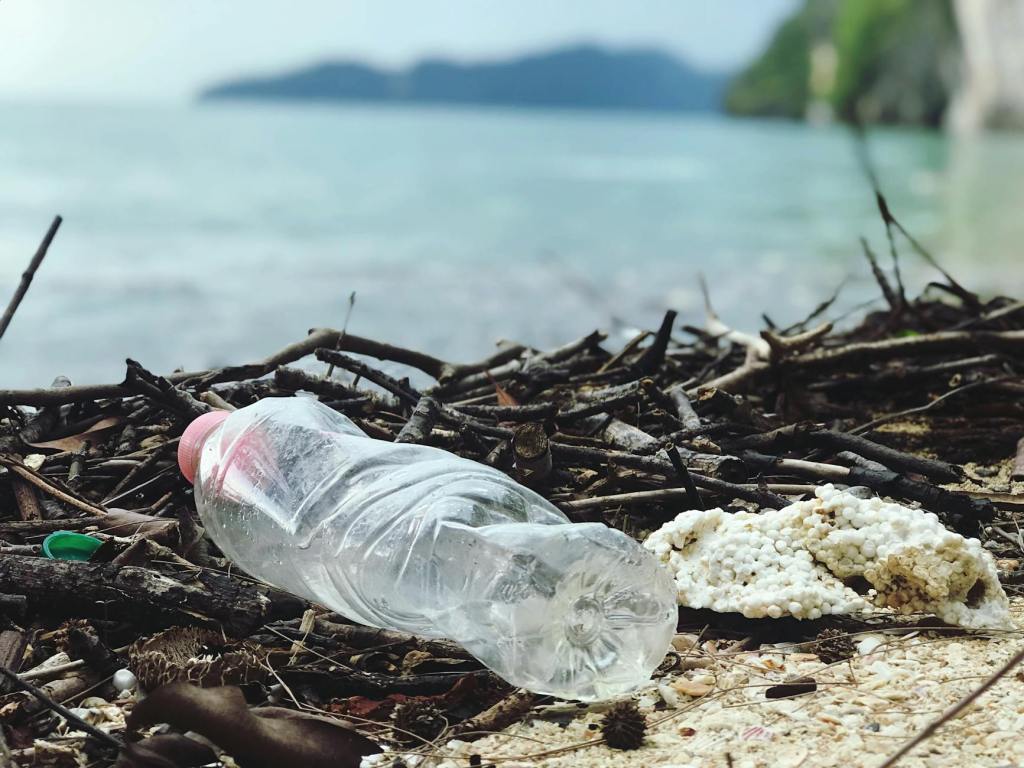
Every Breath you take: We hear a lot about microplastics in water and food. Now it seems we are breathing them in from the very air itself. And what’s really scary is that the risks of this are quite, quite uncharted, a bit like tobacco in 1924. Here’s Michael Richardson and Meiru Wang for The Conversation:
Stem Cells give hope for diabetics About twenty or so years ago, we had the privilege of a few words with one of the greatest scientific entrepreneurs of this generation. And he told us that Stem Cells were going to be in the in thing for the future. Proof of this foresight comes in this second piece from Nature Briefings
A woman with type 1 diabetes started producing her own insulin less than three months after a transplant of reprogrammed stem cells. This case represents the first successful treatment for the disease using stem cells from the recipient’s own body, which could avoid the need for immunosuppressants. She was injected with the equivalent of 1.5 million stem-cell-derived islets in June 2023. While promising, the woman’s cells must continue to produce insulin for up to five years before considering her ‘cured’, cautions endocrinologist Jay Skyler.Nature | 6 min read Reference: Cell paper
Allergies Rising? One of the few good things about the Covid-19 pandemic was the rise to prominence of Professor Devi Sridhar, that most clear-sighted of thinkers. So when she says: “allergies are really on the rise, this is not just a sampling error”, we sit up and take notice. So should you, via her article for The Guardian.
Goodbye Coal and steel No one gloats at the loss of great workplaces and the terrible social changes their workers must now endure. And no one more than us, blissed-out children of the Enlightenment/Industrial Revolution can deny that coal and steel were really big steps forward in their day. But their comes a time both for individuals and societies when they really must move on, because it’s the future where reality lies. So Britain closes its last coal power station and blast furnaces. It is a brave step, and one day it will pay off.
Mozart Rise and Fall of a genius few years ago we saw a rather nifty series called Rise of the Nazis. It was one of those drama documentaries where they mix a narrator over pictures of actors depicting real people, including such luminaries as Heinrich Himmler, Herman Goering and a certain Mr A. Hitler. It looks like the producers must have sat down and asked themselves; “Who’s the next most famous Austrian everyone’s heard of we can do?” No it wasn’t Arnold Schwarzenegger: instead they came up with this excellent series on Wolfgang Amadeus Mozart. We have always put him right up there in the top five or so musicians of All Time. So we loved it, and hope you will too Here’s a link which we hope works to the BBC i Player. Hasta la vista, baby!
We’ve been in the habit of making clarion calls for new research on anti-microbial drugs here for donkey’s years now. Even reported, where we could, on promising new results. Progress has been slow, we admit. But if you lift your head up and look at the bigger picture, there’s quite a lot of stuff we could be doing to ward off the fateful day when every bacterium becomes resistant. And once again, it’s that excellent website Nature Briefings which suggests some simple, common sense steps people can take now to keep them safe. Particularly in poorer countries, where the stupidities of the world economic order have combined to make cash a little tight. They’ve put up two blocks today, with links, and they’re well worth a read.
HOW TO SAVE MILLIONS OF LIVESLast week, we learnt that more than 39 million people could die from antibiotic-resistant infections by 2050. But it doesn’t have to be that way, argues epidemiologist Ramanan Laxminarayan — if we make sure that people in low- and middle-income countries get the appropriate antibiotics they need. “Even a fairly modest global investment — in the range of hundreds of millions of US dollars — to help prevent bacterial infections and improve access to relatively inexpensive antibiotics could avert millions of deaths,” he writes.Nature | 5 min read Reference: The Lancet report
STRAIGHTFORWARD SOLUTIONS TO AMR Better sanitation, improved infection control practices at health-care facilities and increased vaccination are among the solutions proposed by four specialists — from Bangladesh, Brazil, Nigeria and the Middle East — who spoke to Nature ahead of a United Nations meeting on antimicrobial resistance (AMR). For example, microbiologist Iruka Okeke says that access to clean water and toilets in Nigeria could reduce gastric infections and AMR simultaneously, yielding an estimated return of US$5 or more for every $1 spent.Nature | 10 min read
We always like it when brisk, cheap solutions, using existing ideas and technology make a real difference. We hope you do too, gentle readers.
#antibiotics #drug resistant micro-organisms #health #sanitation #clean water
Old hands on the LSS blog may be forgiven for thinking antibiotic resistance is all about bacteria, and that it all goes in in hospital with lots of medical folk in white coats and humming machines that do funny things with graphs, and all that sort of thing.
Well, it’s about a lot more than that. It isn’t just bacteria that are resistant to our drugs. Down on the farm, there’s a whole class of creatures called Playtyhelminths (aka flatworms) that can do untold damage to sheep, for example. For years their ravages have been controlled by drugs. Now theses pesky creatures are showing strong resistance to these drugs, And to make matters worse, these drugs are getting into nature from the sheep pastures, and starting to wreak havoc there. It’s a lose-lose situation. And we, that is to say humanity, are the losers.[1]
Why is this happening? It’s Natural Selection in action. The flatworms in the sheep guts are animals like any other. Expose them to a threat, (antagonistic drugs) and most will die. But a very few will carry resistant genes, thrown up by random mutation. They and their offspring will survive, and multiply. Mightily. Just like all those bacteria do with the drugs we send against them. The point is resistance is just an evolutionary response. It will happen everywhere at all times. The trick is to stay ahead of it. And the way to do that is to spend a little more on science and research labs. To plan to educate more people with the scientific habit of mind, where we suspend judgement and become open to evidence. And listen a little less to the kind of unreasoning. emotion driven story telling that pollutes so much of the Information Sphere. Some hope.
CREDIT We got this story by watching an episode of the popular BBC television programme Countryfile. [2] Not quite our normal cup of tea, you might think? Well, its amazing how their light, cheerful style gives you an in to some much deeper issues. Worth the odd watch, we say.
As if the threat from cancer, dementia and heart disease wasn’t enough, the world’s older inhabitants face a new danger. It’s our old friend antibiotic resistance-and it’s growing fast. That’s according to Kat Lay of the Guardian,[1] who has produced a fascinating review of the work of the Global Research on Antimicrobial Resistance Project.[2.3} They looked at data from 204 countries from 1990 to 2021, and have projected their findings forwards into the 2050s.
Young people will suffer from the problem it’s true. But their overall death rate from infections has been falling, partly from the success of things like improved hygiene and vaccination problems. It’s among the elderly that the situation gets bleak. Their death rates from antibiotic resistant organisms have skyrocketed by 80% over the last three decades. The authors estiamte by 2050 this demographic will be suffering 1.3 million deaths per year directly from resistant organism infections. And the resistance will be implicated, at least in part in a further 8.2 million annual deaths. Readers of LSS will observe, wearily, that every one of them will be avoidable.
So, what to say after all these years of blogging? After reporting on the work of so many fine researchers, and thanking so many fine journalists like Kat, and all her colleagues who labour tirelessly to keep this problem on the public eye? The fact that people are more aware of all this than when we started back in ’15 is something. And there have been signs of progress, as we have sometimes noted here. Keep people aware, readers. If you see a journalist who has raised it, try to find a way to thank them. Keep giving money to the charities who are trying to do something about it.[4] And, as with many things-don’t stop hoping
Syphilis, that terror of the early modern age, is back. Almost eliminated in the 1990s, by 2022 here were 200 000 cases in the US alone. And, if you are not worried start now. Because this is waht it does according to this short extract from Jessica Glenza of the Guardian [1]
“More advanced stages of the disease can bring feared complications, such as neurosyphilis, with dementia-like effects, or ocular syphilis that can cause blindness. Congenital syphilis, when the disease is passed from mother to child, is a special horror: the disease can cause death and neurological devastation in infants.“
How have we let it get out of control, and rather more pertinently, what can be done about it? The first is easy to answer: neglect of medical services to pay for tax cuts, and the general concentration on the narcissistic rewards of a consumer society. The latter is rather more interesting. And it sits across many of the concerns we raise on these pages, such as antibiotics, testing, new DNA based technologies and all the other things we admit we bang on about too often(no wonder we never get invited to parties) And frankly, Jessica’s article is a tour de force from which you will learn much about these many subjects, gentle readers.
While not wishing to spoil her article, which you must read, we’ll leave you with this particular thought. There is an antibiotic available: Bicillin L-A. But waht happens if it runs out, or significant resistance to it develop?. We suggest that you keep monitoring these pages.
Just when you thought we were finally getting a handle on antibiotic resistant microbes, Damien Carrington of the Guardian[1] reveals a whole new, and rather surprising new danger. Antibiotic resistant organisms are not only thriving in agriculture, they are being blown across the planet by the winds. Ready to drop into an ecosystem near you. And start to spread their mischief once again.
That at least seems to be the conclusion of the versatile Professor Rodó and his colleagues at the Barcelona Institute for Global Health. Sampling the low air wind patterns (0.97-3.05km) between North China and Japan they found that potentially pathogenic, antibiotic-resistant organisms were blowing up to 2000 km downwind. And landed perfectly capable of reproducing at the other end. To make matters worse, the samples included organisms such as E Coli and Clostridium difficile, no strangers to these pages.
Why are we worried? Well, frankly we didn’t see this coming. Although given the massive misuse of antibiotics in intensive farming, maybe we should have done. And, if this is the situation between advanced countries like China and Japan, what must be happening in less fortunate regions of the world? One thing is clear. Antibiotic resistance joins global warming and mass migration as one of those problems which no country will ever solve on its own. Remeber that next time you hear them banging on in the bar of the Dog and Duck.
We hope you like the headline, good job WH Auden never got there first! Now, to business: our round up this week is a mix of stories, some designed to comfort the afflicted (“HOPE”) and others designed to afflict the comfortable (“DESPAIR”) So, without further ado, let’s set off on our journey of discovery!
HOPE: Smart Insulin We have always sympathised with diabetes sufferers who must depend for life itself on regular injections. Imagine if these were replaced with a smart insulin molecule that “knew” to kick in exactly when it was needed! Well, that day may dawn quite soon:
DESPAIR: Antagonistic antibiotics We have always hymned the praises of antibiotics. But we are also a fair and balanced lot (we would be thrown out of the Whig Party if we weren’t) and we candidly admit that there may be circumstances in which the prescription of antibiotics can produce unwelcome effects.
HOPE:Solar Power everywhere. Last year a prominent member of the Editorial Board had Solar panels installed. And remarkable they have proved. But every technology is only as good as the year it’s made in. What if you could develop a new type which you could coat onto everything-the car, your anorak, the garden wall? Scientists at Oxford University may have done just that:
DESPAIR: Microbes Mutate in the Microwave We keep a pretty clean microwave round here-and rightly so. All those nasty little stains contain microbes-and it looks as if some of them can mutate to survive the radiation beams. If they can do it a microwave oven then, they can do it in the presence of antibiotics or bacteriophages too. Depressing.
HOPEFusion Spin Offsbefore there is fusion One of our core beliefs is that learning generates learning. Discoveries in one area can have amazing spin offs in others. So, with a certain pride, we finish with this piece which suggests that all the herculean efforts to develop nuclear fusion technologies have not been in vain. We may not get the power until the late thirties-but there are already amazing benefits in everything from health to green energy. Next time some genius suggests cutting taxes, ask them if it will affect the University sector.
And finally: this thought from the late great Arthur C Clarke, who noted that there must be intelligent life elsewhere in the Universe: proof of this comes in the fact that they have never visited us on this planet.
#microorganisms #solar power #climate change #antibiotics #arthur c clarke
Photo by Duu0161an Cvetanoviu0107 on Pexels.comPhoto by Roger Brown on Pexels.com
A few science and health stories which prove there are still few intelligent people out there working for the common good
Mouth Bacteria may protect against cancer To beat cancer we need to think laterally at times, and take bits of luck when they come from unexpected discoveries. According to XanthaLeatham of the Mail, Scientists at London’s prestigious St Thomas Hospital may have done just that. It looks like the organism Fusobacterium may protect against certain types of neck cancer. We love these serendipitous discoveries by lab scientists-real shades of Alexander Fleming!
Antibiotics for sepsis We scraped this straight from Nature Briefings, that most worthy source of scientific information Definitely a sign of progress, we think:
EU powers ahead on renewables Like other big power blocks such as India and China, the EU is rapidly achieving crossover on renewable energy generation, as this article by Ajit Naranjan for the Guardian makes clear. Smaller countries like the UK are doing well too. That’s the way the whole world is moving. And therein lies our real problem with Mr Donald Trump. “Drill, baby drill!” is a policy based on the psychology of nostalgia, not science. One day it will have to be reversed. At what cost?
Life on Mars? Well David Bowie’s eponymous song was a long time ago. But not so long as these billions-of-year-old spots discovered by the Perseverance rover at Mars’ Neretva Vallis formation. Were they alive? Scientists are being very cautious, as Ian Sample explains for the Guardian. But when Bowie released his ditty back in 1971, it was almost heresy to suggest life anywhere in our star system. Now Mars, Europa, and Enceladus head a list of real hopefuls. Wahttps://www.theguardian.com/science/article/2024/jul/26/nasa-rover-discovery-hints-at-ancient-microbial-life-on-marstch this space, as they say.
Well, we won’t be rounding up every week. But every so often we hope to bring you these little clutches of news which show our side is still out there-and keeping busy.
“You can’t stop me smoking! It’s an assault on my liberty!” It was a common cry in the early days of trying to save the world from tobacco pollution. Somehow the smokers never considered that that the toxic fumes they spread might inflict upon the liberties of others. Smoking is the world in miniature. For the same self-centred mindset may be found in those who cannot think beyond the boundaries of their own religious or ethnic group. So here are 6 problems which affect us all, and each of which will only be solved by deliberate acts of collective action, however cognitively difficult that may prove for some people.
1 Pollution As my country pumps out toxic metals, sh*t, plastics or whatever, it will get into the water, air and land of surrounding countries, poisoning their unfortunate inhabitants. If you don’t want to breathe someone else’s smoke, ways will be have to be found of asking people to stop. And to keep them stopped. Agreements, anyone?
2 Global Warming A subset of pollution really, except that we are only talking about carbon dioxide and methane. But as the water levels rise and the ocean currents collapse, you will have the comfort of blaming someone else. And they can blame you. Will you feel better?
3 Migration As we have said before, the real cause of this is imbalances in living standards between different parts of the planet. Successful transfers of wealth to the areas where migrants come from will slowly but surely eliminate the problem. How many Germans migrate to Iraq, for example?
4 Knowledge and fakery Since the invention of the Interweb and the subsidiary technologies that feast upon it, the world has been plagued by a deluge of fakes. Fake news stories, fake scientific papers, fake images and the utterly uninformed opinions thereby generated. Only a single world reference library with the veracity of its contents contents carefully agreed by all will allow a single reliable point of reference. This won’t be perfect, but will allow a fresh starting point, and mimics the way that single standards of things like currencies and weights and measures slowly ameliorated the human condition
5 The next pandemic Everyone agrees it’s coming, the question is where and when does it start. IT will probably be a virus. But could our hoary old favourite, an antibiotic-resistant superbug, be the killer?
6 Inequality As long as the super-rich can move their money and their yachts from jurisdiction to jurisdiction, the rest of us will never see a fair share of the wealth which we have created. Hence the shortages of things like hospital beds, school places, decent roads, etc.A single world taxation and financial authority would not only eliminate this problem, it would rapidly provide the resources to deal with those discussed above.
National sovereignty, tribal identity or whatever are extremely powerful forces in human affairs. And we ignore them at our peril, as we have oft-times warned on these pages. But they are also licences to pollute. Are we clever enough to reconcile the the conflict?