Every so often someone comes along with a piece that seems to capture our thinking, give words to what we have been trying to say, only does it much better than we ever could. Such is today’s showcase article: After America: The Causes and Consequences of US Global Decline by Alfred W. McCoy for the Fair Observer.[1] Clear and succinct, it’s an easy voyage across a vast range of time, empires and continents, and you should read it. So magisterial that we cannot summarise it in this short space; but we hope the following, our personal takeaway, will at least whet your appetite for what is a masterclass in history, and a guide to where it may dump us all next.
In McCoy’s analysis, the American Empire rose to final geostrategic dominance in 1945. Its essential strength lay in manufacturing and energy, which was translated into power via its easy dominance of world finance through such diverse means as the IMF, dollar supremacy and other instruments large and small. Its essential strategic act was to dominate the Eurasian landmass (still the overwhelming centre of world population and production). This was achieved by the plantation of subject allies (NATO at one end, Japan and Taiwan at the other) coupled with unrivalled suzerainty over the world’s sea and air communications: a final culmination of the doctrines of Mahan, another Alfred, who had midwifed much at this empire’s birth.[2]
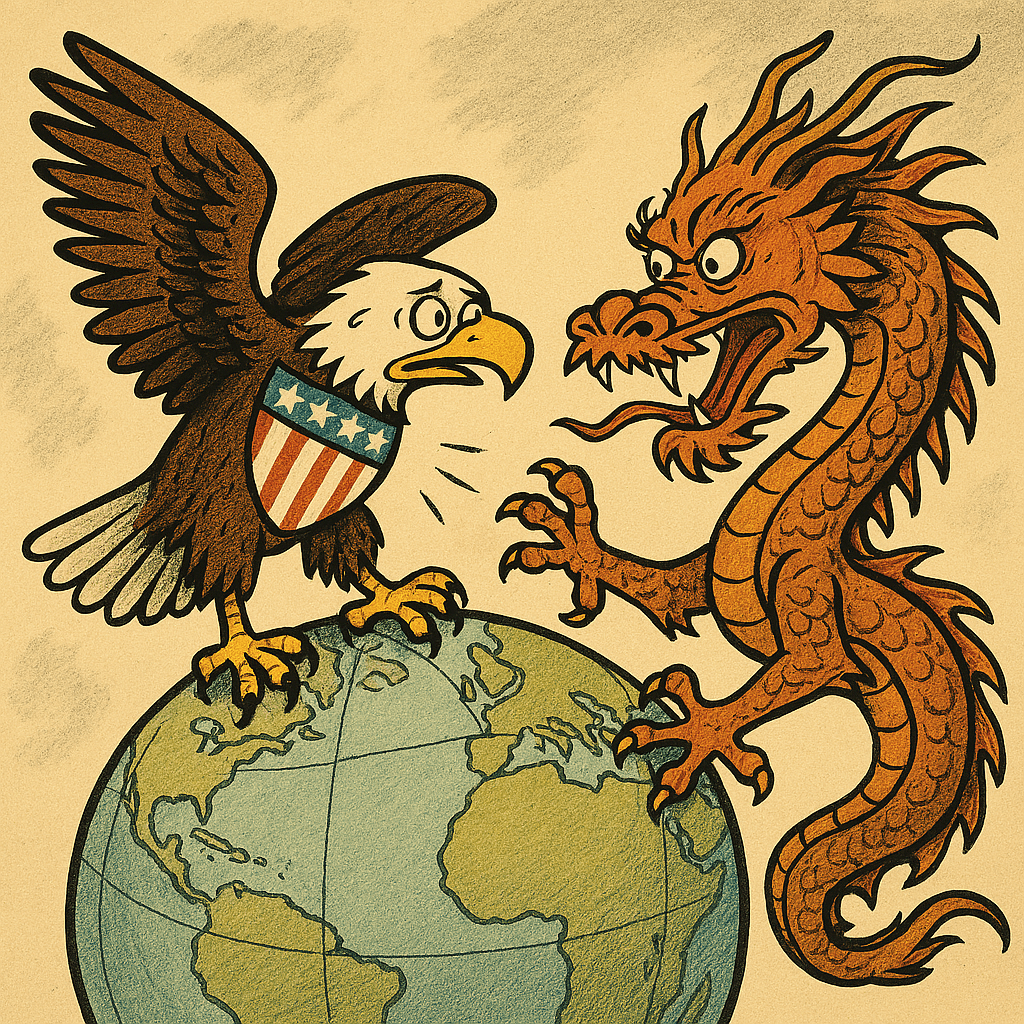
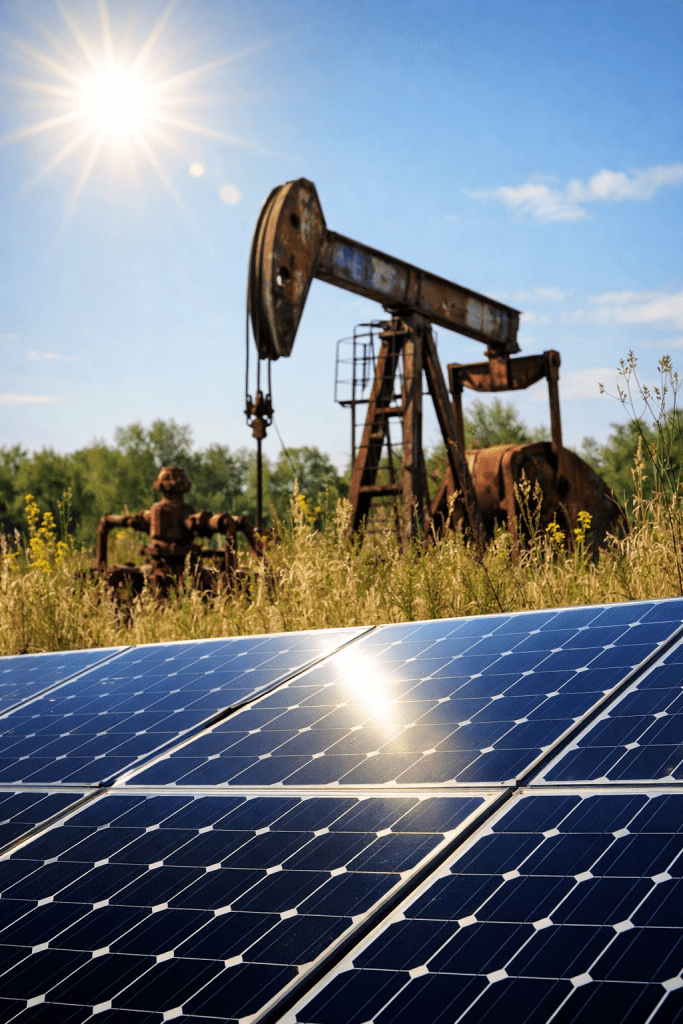
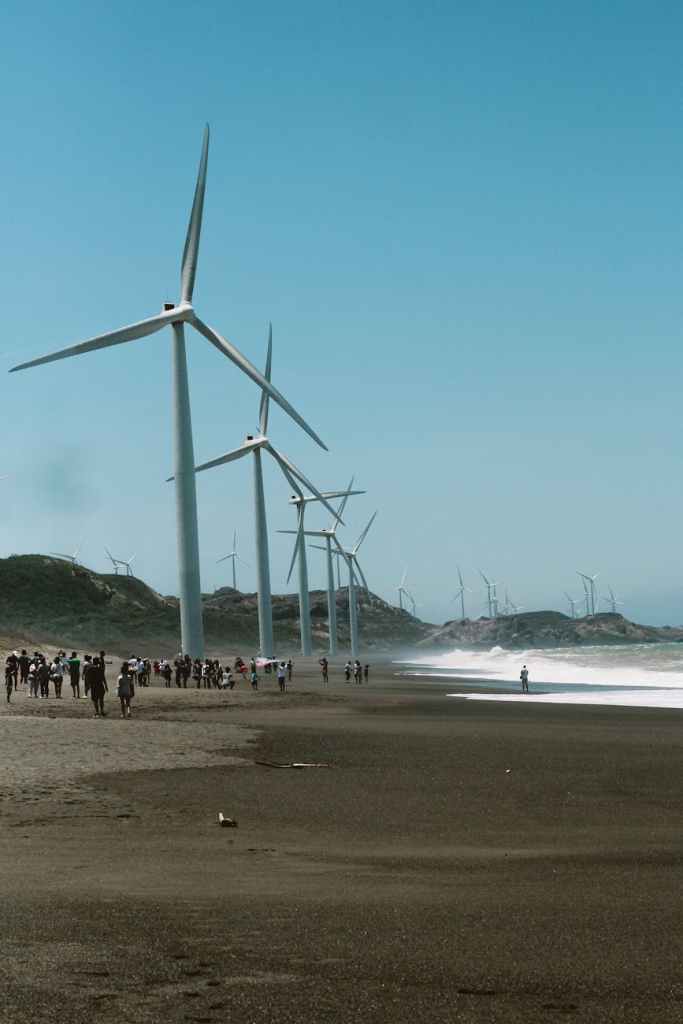
Generally speaking, 1945–2025 seems to be a good run by contemporary imperial standards. Like other empires, U.S. hegemony waned slowly: the rise of large economic blocs such as the EU, ASEAN and MERCOSUR would gradually erode America’s relative position. But the empire which Donald Trump inherited in 2025 was not only largely intact; it seemed actively to be addressing some of the causes of its decline. Chief among these were energy technologies. For just as the British Empire grew great on coal and steam, to which totems it became wedded, so the American fuel of choice was oil and combustion engines. China saw this and began to prepare for the coming age of green renewables, which are both safer and cheaper than planet‑destroying hydrocarbons. And while America had wasted trillions on futile wars in Iraq, Afghanistan and now Iran, China cashed in its IOUs to build the inexpungable Belt and Road across the crucially contested landmass, relegating its rival imperium to a peripheral role.
We think it is unfair to blame Trump and his acolytes for all that has gone wrong: the trajectory of their empire had long since been sent downwards by the decisions of others a quarter of a century before. But in our opinion the stubborn disregard of clean technologies has squandered a precious opportunity for further decades of leadership — and handed that in turn to a power likely to be far less sympathetic to Westerners in general and certain chosen allies in the Middle East and elsewhere. But once again — read the article, we implore you.
[1]After America: The Causes and Consequences of US Global Decline
[2]Mahan, Alfred Thayer. The Influence of Sea Power upon History, 1660–1783. Boston: Little, Brown and Company, 1890.
The reflections above represent our own reading of Alfred W. McCoy’s article “After America: The Causes and Consequences of US Global Decline.” They are offered as fair comment on a work of public interest. Any interpretations, analogies, or historical parallels are our own and should not be taken as McCoy’s views unless directly attributed to him. Readers are warmly encouraged to consult the original article to appreciate the full nuance of his argument.
#USA #China #energy #renewable technologies #history #economics #geostrategy #communications #iran #iraq #oil