
Stem Cell Therapy: Lamarckism by Force Majeure

First of all hats off to Oliver Chu, the brave boy from California who has just undergone a successful trial of stem cell therapy for a terrible condition called Hunters Syndrome. [1] as Ian Sample of the Guardian explains. It’s caused by a simple mutation in a gene called IDS-1 which controls the production of a vital enzyme Iduronate-2-sulfatase; without which the body cannot break down key sugars, leading to organ damage of all sorts and cognitive decline. The trick has been to extract the stem cells from Oliver’s blood: replace the faulty gene with a true copy using a viral vector; and pop them back in to Oliver, whenceforth they will thrive happily, self reproducing from their own line, and producing bountiful quantities of the enzyme for life.

And this for us is the key part. Let’s repeat : the new stem cells with the engineered gene will start their own self replicating line. In Oliver. Now Oliver himself started from a single stem cell-a single fertilised ovum, as do all living things. With DNA that was used to build every single following cell as it grew . An Ur stem cell if you like. But now. young Oliver has two. All the cells from his original cell, Plus the new line, from the engineered stem cell. whose line is now flooding his system with the good enzyme..

The central tenet of biology up to now is that we all of us-tigers, pterodactyls, humans, whatever-have a single unmodifiable line of DNA in our cells. Random variations may be passed to the next generation and tested by Natural Selection. But the actual DNA deep in the cells cannot be changed or modified. That’s the Darwinian positioned its held up pretty well for centuries. The alternative, proposed by Lamarck is that organisms are modified by the environment and this information can be learned inthe genes and passed on. So far there has been no evidence to support this view whatsoever . But what if the environment contains clever humans who can choose to modify DNA, and thereby create what are in effect hybrid organisms with two separate DNA lines-like young Oliver? Is this Darwinian? It’s not how it happens in nature, and its been done by force majeur. But it sounds a lot like Lamarckism from where we sit.

[1]https://www.theguardian.com/science/2025/nov/24/groundbreaking-uk-gene-therapy-manchester-hunter-syndrome

#stem cells #hunters syndrome #darwin #lamarck #evolution #medicine #health

PERT: Next step in gene editing offers real hope for hereditary diseases

Almost a quarter of hereditary diseases can be put down to mutations which break an established pattern of DNA, so it can no longer be read. No wonder they are called nonsense mutations. Often these mutations are expressed as STOP codons: just a short three letter sequence that stops protein synthesis dead, like a bad piece of coding in a computer programme. Now a new technique called PERT (Prime Editing RNA Therapy)allows the cellular process to override glitch in the DNA and resume synthesis. The new technique equips cells with engineered tRNAs that override these stop signals, letting the ribosome continue translation and produce the full protein. Here once again is Nature Briefing with one of their excellent short explanations Versatile gene-editing tool fixes nonsense, plus hyperlinks if you wish to delve deeper.

A multipurpose gene-editing tool can correct several genetic conditions in mice by restoring proteins that have been cut short by disease-causing mutations. The method, called PERT, uses engineered RNA molecules that allow protein synthesis to continue even when a DNA mutation tells it to stop prematurely. These ‘nonsense mutations’ comprise nearly one-quarter of known disease-causing DNA variants. As such, if PERT proves effective in humans, it could overcome the need to design bespoke treatments for individual diseases.Nature | 5 min read
Reference: Nature paper

There’s a lot to like here. Firstly the prime editing is straight out of the same stable as the CRISPR and Base Pair Editing techniques which we have heralded here for years (LSS passim) Secondly, unlike most gene therapies, which must be tailored to each mutation, PERT could treat many different diseases with a single editing agent. This is a huge shift in scalability. And if the suppressor tRNA is permanently installed in the patients genome, it is possible that only one treatment may be needed. Once again we are reporting at the early stages (that’s our brief) so all parties are careful to emphasise we are nowhere near clinical applications yet. However, just as we learned during the COVID 19 pandemic , the ability to intervene at the RNA level, precisely between gene and protein, appears to be one of the most fertile areas in medical knowledge for years to come.

#hereditary disease #RNA #DNA #molecular biology #health #medicine

Heroes of Learning: Svante Pääbo

It’s hard to remember how different human evolution was before Svante Pääbo and his transformative discoveries in genetics. There were some bones, but they were bit few and fragmentary. People argued interminably over them like so many medieval nominalists and realists. There were tools, and heroic studies of the scratches thereon. People spent lifetimes following various primates in and out of the rain forest: but it is hard to say whether a chimpanzee is really like a human ancestor, or a baboon is : or is not.

Then in 1997 at the Max Planck Institute in Leipzig, Svante Paabo announced a breakthrough: the actual DNA from inside the mitochondrion of a real (dead) neanderthal. For the very first time here was something tangible, data rich, and available for statistical scrutiny. Now we knew who we were, and who they were. As if that were not enough, in 2009 his team announced a whole Neanderthal genome. Then came immortality: on the floor of a cave in distant Siberia came a tiny bone which Pääbo showed to be a third type of human: the Denisovans. The utter. twisted, anastomosing complexity of the modern human story became clear: and with it the implication that it had always been thus. Giving him the Nobel Prize in 2022 must have been the easiest decision since that monkey in 2001: a space odyssey thought a horse skull might be a good place to land a good thwack.

But the real significance of Svante Pääbo lies deeper. It’s in the observable phenomenon that every so often some genius comes along and turns a field upside down. That every debate, however heated and angry, will one day become futile as more gets found out. It’s like that in all sciences, and a good many non sciences too. The biggest mistake any of us can make is to think we have all the answers. Thanks Svante Pääbo for showing there’s always something new around every corner.

[1]https://en.wikipedia.org/wiki/Svante_P%C3%A4%C3%A4bo

#genome #dna #human #neanderthal #anthropology #evolution science

CRISPR gallops ahead (article contains a warning for xenophobes)

Warning: this article may make uncomfortable reading for xenophobes everywhere)

Progress in CRISPR-Cas-9 (Clustered Regularly Interspaced Short Palindromic Repeats)[1] and the associated enzyme is getting faster and faster. We started reporting on this truly innovative technique in 2020 and regular readers will recall updates ever since. Only four years ago it still felt a bit theoretical. But now radical applications are coming thick and fast Read this from Nature Briefing CRISPR horses spark debate reporting on the rather recondite world of polo pony breeding

the horses pictured above{*} are the first of their species to have been created with the help of the CRISPR–Cas9 gene-editing technique. They are clones of the prize-winning steed Polo Pureza, with a tweak to myostatin — a gene involved in regulating muscle development — that is designed to quicken their pace. Critics say that genetic manipulation has no place among polo’s traditional breeding practices — it has already been banned by some of the sport’s governing bodies. But a zoo of CRISPR-edited animals, from cows to sheep, is gaining acceptance in agriculture.Nature | 5 min read

{*} sorry LSS readers-we can’t show this-ed

In one sense there’s nothing new here. Humans have been modifying the genetics of plant and animal species since the dawn of the Neolithic. CRISPR and other base editing techniques have simply speeded the whole process up by making specific, designed changes and crucial nodes in the subject organism’s development. There is every reason to suppose that any number of new modifications to animals(and crop plants such as wheat) will be developed in the next few years. Some may even enable us the preserve the integrity of food supplies despite the ravages of things like plastics pollution and global warming. Also, as we have also reported here, gene editing is beginning to show real applications in medical fields such as sickle cell disease and certain cancer therapies. All of which leads us to an intriguing thought.

If ponies may be so easily modified, why not humans? One could start small by just modifying athletes and other small groups. Yet eventually the techniques could become ubiquitous in our species. Hang on-our species? Because the genetic differences between beings consisting entirely of CRISPR modified genes and the rest of us would then be far, far greater than those currently existing between our different races and ethnic groups. Are xenophobes everywhere already wasting their own time?

[1]https://www.yourgenome.org/theme/what-is-crispr-cas9/

#CRISPR Cas 9 #base pair #medicine #biotechnology #sickle cell #agriculture #stock breeding

How life evolved long ago is absolutely relevant today

Long suffering readers of this blog will recall our occasional sallies into the remote past. Like some latter day Doug McClure we occasionally take you into a world stuffed with dinosaurs, ape men and pterodactyls, to the detriment of more relevant stuff on antibiotics or the US Ten Year Bond. And so, although we were privately raving about this piece below called How did life get multicellular? from Nature Briefing, we thought we ‘d spare you from our private obsessions about things that took place between 800 -600 million years ago.

Until a chance encounter with one of more intelligent friends in the car park at our Spanish Conversation group produced the most inspiring thought. “All those Choanoflagellates. protometazoans. Filasterea. whatever, have to do several things if they are to succeed in living together. To glue up to each other. To signal little messages. To co-ordinate the cycles of cell division. Just like cancer cells have to, in fact. And then it hit us. These funny little organisms are the perfect way to model the behaviour of cancer cells. Not just the molecular and genetic mechanisms, but also the Information and Complexity models we must build to understand them: a cancer cell is a typical metazoan cell gone wrong.

Which confirmed a very old principle of this blog. All research however abstruse it may seem, will have a pay off somewhere one day. If it doesn’t benefit the economy, it will make us live longer; sometimes it may do both. These researchers are not just having fun on the edge of time: they may be contributing directly to the study of a disease which will kill half of us. There’s a thought for anyone who wants to cut university budgets or meddle with the findings of scientists.

To play out we shall first post the Nature Briefing paragraph. If you can get past that we’ve some supporting evidence for our basic proposition. We hope both will inform

Across all forms of life, the move from being single-celled to multicellular seems to have happened dozens of times — for animals, though, the jump was one-and-done. The unique cocktail of environmental and genetic factors that helped animal ancestors make that jump still eludes our understanding. To investigate, researchers are focussing on unicellular organisms that ‘dabble’ in multicellularity, occasionally forming colonies of many cells. By studying these organisms as they flit between the two states, scientists are hoping to illuminate how multicellularity stuck in animals — and what sparked the single successful event that gave rise to the animal kingdom.Nature | 11 min read

ASTRACT BECOMES APPLIED

This work discusses how cancer disrupts the gene regulatory networks (GRNs) that evolved to coordinate multicellular life. These networks balance genes inherited from unicellular ancestors (handling basics like metabolism and division) with newer multicellular genes (handling coordination, differentiation, and tissue integrity). https://genomebiology.biomedcentral.com/articles/10.1186/s13059-024-03247-1

and this how somatic mutations in early metazoan genes specifically disrupt the regulatory links between unicellular and multicellular gene networks. The result? Tumours behave like rogue unicellular entities, ignoring the cooperative rules of multicellularity. Some of these disrupted genes even correlate with drug response, hinting at therapeutic relevance

thanks to R Muggridge

https://elifesciences.org/articles/40947

#cancer #evolution #multicellularity #medicine #health #choanoflagellates

Heroes of Learning: Steven Rose (and why things are never simple)

No book ever tore through the calm assurances of progress through co-operation like Richard Dawkins’ The Selfish Gene. [1] It wasn’t so much the book itself. That was an attempt to popularise, albeit sometimes in colourful language, the discoveries of an important group of evolutionary theorists such as William Hamilton and EO Wilson. It was the use made of it by political activists, zealous propagandists of the Free Market, to prove that every attempt at co operation, collective action and sharing resources was against the basic laws of nature. “Out upon your Trades Unions, your Keynesian economics” they thundered in a thousand articles in places like the Daily Mail “we are nothing but animals. Your only purpose is to pass on your DNA to make copies of yourself. Look at them lions. mate! When one of them takes over a pride he kills all the cubs and mates wiv the females to make sure his genes get frough! Go and do like wise!” It was not an experiment we felt disposed to try. Compete, for the other fellow is your genetic enemy was their credo. All barriers to that competition were both evil and deluded.

It was simple, it was seductive, it was based on some facts. It played well in the broken restless zeitgeist of the 1970s when the pillars of the old prosperity- high taxes, demand management for the common good, collective institutions like the IMF and UN seemed ineffective. It sold by the million; and swept ever more voters into the booths for one Margaret Thatcher in 1979, whose own simplistic and reductionist nostrums seemed to chime so well with those of the book.

One man did not buy. His name was Steven Rose, a remarkably accomplished scientist who spent most of his work in neurobiology and biochemistry [2] This obituary summarises his work better than us. But it was his insistence on complexity and the irreducible flexibility of the human mind, that still allowed hope for a way out from the genetic prison in to which we had been so neatly incarcerated

He wrote: “It is in the nature of living systems to be radically indeterminate, to continually construct their – our – own futures, albeit in circumstances not of our own choosing.”

Look at that carefully, then leap with us to another part of the scientific forest. Where the BBC showcases a new technique to rid the world of the scourge of inherited mitochondrial disorders [3] Basically you take a fertilised ovum from a normal male-female coupling, but put it as the nucleus in the egg of a different female. Which then develops as a normal embryo until nine months later a healthy baby emerges[3] A three parent child? Sort of. Two parents get to pass on their DNA, no doubt to the blissful delight of Dawkins’ more extreme followers. And a different mother sends her mitochondrial DNA cascading down the ages, which rather complicates matters for some. Now look at the Rose quote again what was that about continually constructing?

At the time of the great Dawkins controversy the old BBC Horizon programme ran a show in which the quoted one of the wiser and more humane scholars in the Selfish Gene camp. His name was John Maynard Smith. And he ended with this thought “humans are not just animals- we are not prisoners of simple genetics” At the time it seemed a forlorn hope. It has just been proved triumphantly real.

[1]https://en.wikipedia.org/wiki/The_Selfish_Gene

[2]https://www.theguardian.com/science/2025/jul/10/steven-rose-obituary

[3]https://www.bbc.co.uk/news/articles/cn8179z199vo

#richard dawkins #sociobiology #biochemistry #medicine #DNA #mitochondria

Weekly Round up: Air Pollution, Gene therapy and raspberries

Air pollution is the new smoking   Stopping smoking has led to massive falls in rates of lung cancer. But this fearsome disease is still lurking out there. The current cause? Air pollution ,as Ian Sample explains for the Guardian

https://www.theguardian.com/science/2025/jul/02/air-pollution-lung-cancer-dna-mutations-study

Gene therapy chalks up another win Ok,today it’s one particular form of deafness, attributable to one particular gene, as  Maoli Duan explains for the Conversation. But: the more science you do the more you learn. Meaning other disabilities may one day prove susceptible as well. And the more you spend on scientific research the more you get benefits like this. A lesson rapidly being forgotten in the United States of America

https://theconversation.com/gene-therapy-restores-hearing-in-toddlers-and-teenagers-born-with-congenital-deafness-new-research-258112?utm_medium

 Machines that out think humans It’s the scary nightmare of science fiction films from Blade Runner to the Terminator series. Up until recently the idea still seemed to be fiction.  All that may be about to change as Nature Briefing reports

An artificial-intelligence system called Centaur can predict the decisions people will make in a wide variety of situations — often outperforming classical theories used in psychology to describe human choices. Trained on data from 160 psychology experiments in which 60,000 people made more than 10 million choices, the system can simulate human behaviour in tasks from problem-solving and gambling, and even those it hasn’t been trained on. Using Centaur, “you can basically run experimental sessions in silico instead of running them on actual human participants”, says cognitive scientist and study co-author Marcel Binz.

Nature | 4 min read
Reference: Nature paper

Friday Night Feast Raspberries and Ice cream We are not all gloom and serious stuff here. Thinking it was time for a quick Friday Fun feature, we realised that we’d done strawberries several times (LSS passim), In which case the humble raspberry can make a really pleasant alternative, especially if combined with ice cream instead of cream. After all, even if we are on a diet-you, gentle reader may not be.  So- eat a bowl for us  we used to love it.

#cancer #AI ~pollution #gene therapy #raspberries

Genetics: a whole new perspective on human evolution?

Every so often it pays to look at the same problem from a completely different perspective. For the past 57 years or so we have been collecting and grading reports of human fossil bones and old tools the way that cricket fans collect the records of every game their team has played. But today, with the help of one or two of our redoubtable AI chums, we present a whole new perspective on the old story. Much of it is locked in our genes and has been uncovered by the amazingly intelligent efforts of genetics researchers.

Their discoveries are so extensive that there is too much for a tiny blog: so we’ve summarised the findings below. But look at the timing of the mutation in the famous FOXP-2 gene, and the human species which were running around at the time. True humans fall naturally into two groups. One one side, big -brained essentially modern forms : Homo heidelbergensis, Denisovans, Neanderthals and Homo sapiens. On the other? Poor old Homo erectus, significantly smaller-brained and with a much more exiguous technological and cultural life. In this light, the mutation is almost eerily coincident.

Of course the time lines of the mutations are a bit open ended; but the picture from the fossils is a bit vague too. What really impresses us is the way that, give or take an Ice Age or two, the geneticists provide independent validation of the fossil finders’ picture overall. And there’s an even deeper lesson. The same truth can be seen in two completely different ways, Like those night sky apps you can get which can show the same firmament through visual light, x-rays, microwave or radio waves; whichever you choose. Next time you argue with someone ask yourself and them: are we really talking about two different things? There’s a cognitive advance for the ages.

all based on peer reviewed or reputable pre pubs sources (microsoft assistant)

Time (Million Years Ago)Key Genetic MutationHominins Present
~6 MYAARHGAP11B (linked to brain expansion)Sahelanthropus tchadensis (early bipedal ape-like species)
~4.4 MYAChanges in genes affecting bipedalismArdipithecus ramidus (early upright walker)
~3.3 MYASRGAP2C (enhanced neuron connectivity)Australopithecus afarensis (Lucy and her relatives)
~2.4 MYAMYH16 (jaw muscle reduction, allowing brain growth)Early Homo habilis (first tool users)
~2 MYASCN9A (pain sensitivity mutation)Homo erectus (first hominin to leave Africa)
~700,000 YAFOXP2 (language-related gene)Homo heidelbergensis (ancestor of Neanderthals and modern humans)
~900,000 – 4.5 MYAChromosome 2 fusion (reduced chromosome count from 48 to 46)Various early Homo species
~300,000 YAMicrocephalin & ASPM (brain development genes)Early Homo sapiens (our direct ancestors)

#genteics #paleontology #tools #fossils #anthropology #human evolution

We said Base Pair editing would outshine CRISPR. This breakthrough proves we were wrong. Or not

When is CRISPR- Cas-9 Base Pair Editing, and when is Base Pair editing CRISPR Cas-9?. Readers of this blog may be forgiven for thinking Base Pair Editing was the exciting new kid in town that was going to make CRISPR look like VHS tapes ( what they?ed) But according to reports of a recent breakthrough in medicine, they are, sort of, one and the same thing.

Perhaps we had better start with the breakthrough. Doctors in Pennsylvania in the USA have used gene editing techniques to treat a poor little boy whose liver lacked the necessary enzyme system to process ammonia. Our reports come firstly from Ian Sample of the Guardian and the New England Journal of medicine via hyperlink) , where Base Pair is very much to the fore While Nature Briefing has the following take , again with the hyperlink to the NEJM, Baby Boy Receives CRISPR for One Therapy

A baby boy with a devastating genetic disease is thriving after becoming the first known person to receive a bespoke, CRISPR therapy-for-one. KJ Muldoon, now almost 10 months old, received three doses of a gene-editing treatment designed to repair his specific disease-causing mutation, which impaired his body’s ability to process protein. While Muldoon appears healthy, it is too soon to use the word “cure”, says paediatrician Rebecca Ahrens-Nicklas. “This is still really early days.”Nature | 5 min read
Reference: New England Journal of Medicine paper

From all of which we have obtain the following Learning Points for your Edification , gentle reader:

1 It matters less what you call it, and more that it works-the kid’s OK now!

2 Maybe Base Pair Editing is a subset of CRISPR the way that Hammersmith is a region of London. OK, it’s Hammersmith. But it’s London too. What’s the big deal?

3 It would be interesting to learn if other big cities like New York or Madrid for examples, contain smaller areas with funny names. But we will leave that to another day.

4 If you educate people, teach them critical thinking skills and give them some money to buy test tubes with, things like this can happen

5 If you keep people working long hours for little money, educate them to a minimum and give them things like Fox News to watch, societal outcomes may be very different

[1]https://www.theguardian.com/science/2025/may/15/us-doctors-rewrite-dna-of-infant-with-severe-genetic-disorder-in-medical-first?CMP=Share_iOSApp_Other

also: see LSS 23 7 2022 and follow ups

#gene therapies #base pair editing #CRISPR Cas-9 #medicine #health

Is this plastic eating bacterium the ultimate in antibiotic resistance?

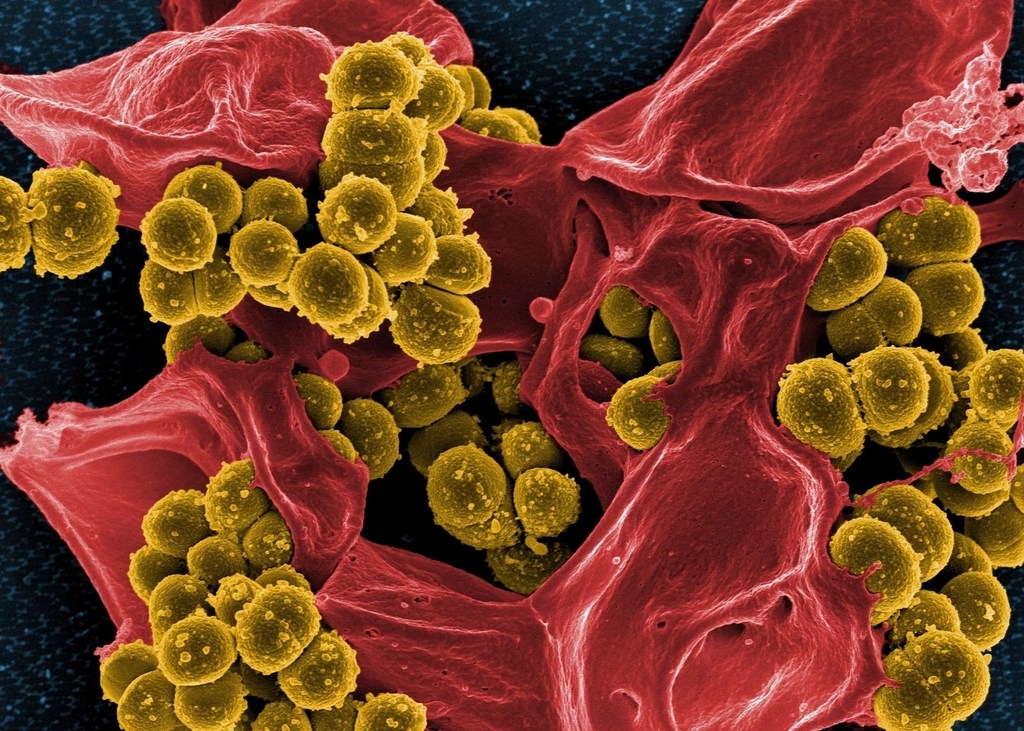
Bacteria that mutate to resist the strongest known antibiotics. At this blog, it’s in our DNA, if you will pardon the flippant quip. But-get this-what if the bacterium in question starts eating the walls you are trying to contain it in? Sounds fantastic, like the plot of one of those old 1950s B movies. Read this piece called Hospital Superbug eats Medical Plastic from the admirable Nature Briefings

Pseudomonas aeruginosa — a strain of bacterium that often causes antibiotic-resistant infections in hospitals — can produce an enzyme that can break down medical-grade plastic. Researchers found that the enzyme, dubbed Pap1, can break down a plastic called polycaprolactone that is commonly used in health care because of its biodegradable properties. The ability to break down plastic could explain why these microbes persist in hospital environments, says biomedical scientist and study co-author Ronan McCarthy.Nature | 4 min read
Reference: Cell Reports paper

We’ve put up the Cell Reports posting for you too here[1]in case the clicker above does not get you through

So is this it? The big one? A wave of highly infectious bacteria that not only eats us humans, but gleefully chomps its way through the very defensive systems we use use to contain it? Possibly, yes. But-let’s keep our Alans on, as they used to say in the old Guy Ritchie movies. For there are two good reasons to do so.

First, it’s only eating one type of plastic, so far. There are lots of others which could be deployed for special medical uses which will be less vulnerable.

Secondly, the fact that this plastic is indeed biodegradable, and that something has found a way to do it, offers great hope. Imagine a plastics ecosystem wherein every bottle, every carton, each piece of wrapping is open to attack by this Pap-1 enzyme. Potentially it opens the way to clean beaches, litter- free hedgerows and unblocked rivers and sewers. There is no reason that the genes to make the enzyme could not be spliced into a safer organism than Pseudomonas aeruginosa. It’s an ill wind that blows no one any good, we say.

[1]https://www.cell.com/cell-reports/fulltext/S2211-1247(25)00421-8

#plastics #antibiotics #microbial antibiotic resistance #science #ecology #pollution