
The Best time to be alive: The University of Paris in the Middle Ages

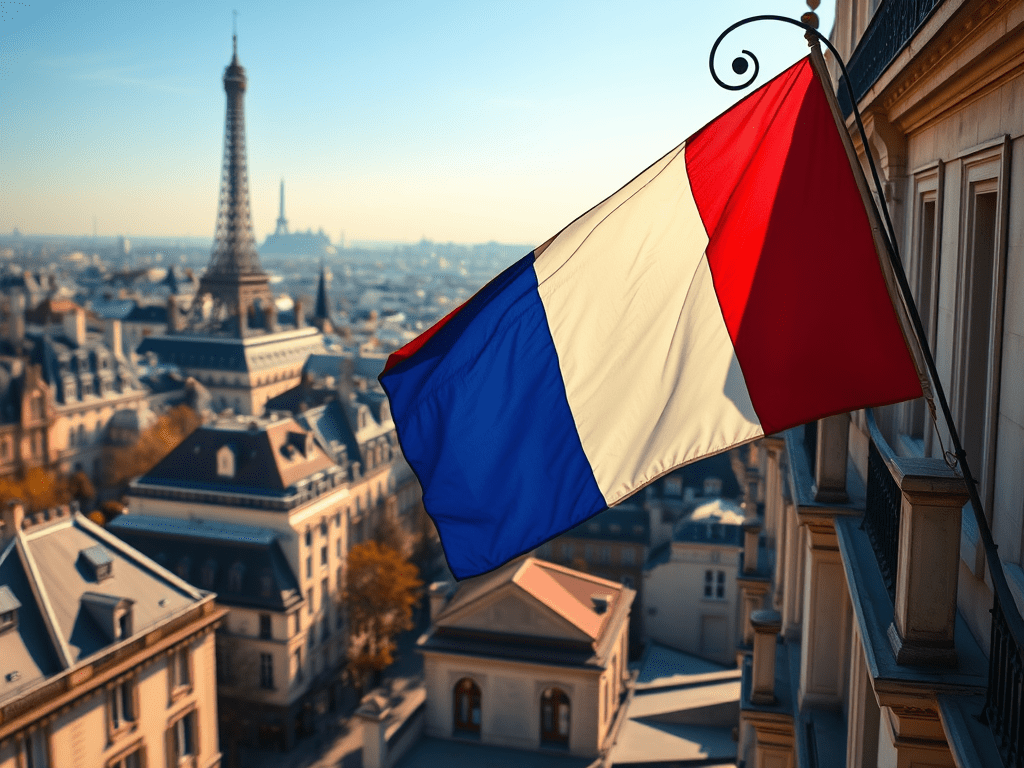
Paris. Everyone knows what that word means, even though most people have never been there. Style. Sophistication. Fashion. Learning. Power. Money. A place to be, a box that must be ticked. How did one more city in northern Europe get ahead of all its peers? What is the secret of Brand Paris?

We think the answer lies in the foundation of the University of Paris. Starting as an adjunct to the Cathedral school before 1100, it gradually expanded into a powerhouse of teaching which began to attract the best minds from all over the world. It drew the patronage of magnates such as King Phillipe Augustus and Pope Innocent 111, who recognised the value of cultural capital and soft power. While the roll call of alumni from the earliest time to the present includes such names as Peter Abelard, St Francis Xavier, John Calvin, Marie Curie, Louis de Broglie, Emmanuelle Charpentier, Simone de Beauvoir and Yann Le Cun. This was where it was at, to coin a phrase: and the network of hotels cafes, art studios, bookshops and spin-off enterprises simply grew around in a multiplying effect that would gladden the heart of any fan of Keynesian economics. (For the curious the Sorbonne started as one college of the University, but expanded so much that its name became metanymic for the whole thing)

It was one of the earliest Universities in Europe, and even today its successor institutions remain among the best. But if you had been a student there, perhaps of Abelard, you would have known yourself at the start of something big, new and world changing, that was going to last the ages. But let’s close when our own original thought When they set it up, the costs must have seemed rather large, the incomings rather small. No doubt the same argument was advanced against the Pyramids in Egypt or the monuments in Rome. But they have paid for themselves over and over again in tourist revenue alone ever since. As its greatest alumnus of all, St Thomas Aquinas said

Sicut enim maius est illuminare quam lucere solum, ita maius est contemplata aliis tradere quam solum contemplari.”

“Just as it is better to illuminate than merely to shine, so it is better to pass on what one has contemplated than merely to contemplate.”

And we agree.

#france #middle ages #university of paris# #sorbonne #philosophy #learning

When was the best time to have been alive? Start of a new series

When was the best time in History that you could have lived in? With all the problems facing us now, like climate change, rising xenophobia, faltering economies-it’s natural for the mind to wander to other times and other places , where they had it good, in ways that we just can’t seem to manage.

It’s easy to idealise bits of the past when you didn’t have to live there and use the toilets. It’s also easy to make mistakes. “Bliss was it in that dawn to be alive!” declared Wordsworth, while on a tour of Revolutionary France. He just got out with his life, as did many other deluded middle class intellectuals. And even the Nazis tried to drum up a cultural vibe, what with Leni Reifenstahl and all that modernist architecture. That duly said, it is possible to pick out certain periods when the humans really did seem to be doing better for a while. Like a football team putting together a run of successful results. We will try to identify those times using the following criteria, if you will forgive us, gentle readers.

There has to be peace, or general political stability, over a wide area. We”ll illustrate this with a counter example: Beethoven and Schubert wrote some pretty good music during the Napoleonic wars, but you wouldn’t have wanted to have lived through those wars would you?

Learning is advancing, preferably big time : despite all the wars and coruuption, Big Stuff was happening in Renaissance Italy- arts, sciences, architecture, you name it. By that criterion. all those Cardinals and Condottieri have to be in with a shout

Trade must boom According to the great Professor Davis, this is the great sine qua non of civilisation

The staging must be right The backdrop of islands and temples etc gives the Classical Greeks an enormous leg-up before they even take the pitch. Whereas Lancashire in the Industrial revolution? You mainly died at thirty, after a lifetime of bracing hard work. Although it probably felt like much longer.

There must be a long running cultural movement No one sat down one day and declared “OK chaps, it’s the Bronze Age and humanity stands on the edge of a bright new frontier. Put away all those stone tools and mammoth skins, and let’s start living in cities!” The periods we refer to must be embedded in a long movement of progress and general moving forward.

And all too often they come at the end of it. The swinging sixties ended in strikes and inflation. The Renaissance city states were leaned upon, terminally, by much bigger places like France and Spain. The long peace of Rome degenerated into the Crisis of the Third Century. But we are nothing if not triers here. And so our first try in the next blog of the series will be China in the Tang dynasty 618-907 AD, using the western calendar. Let’s see if they were really, really, like, cool?

#renaisance #history #china #greeks #learning #science #society

American Scientists: Your new home in Europe awaits

Will the brain drain of the last hundred years reverse? Will the best and brightest minds start fleeing America and pitch up on Europe’s shores? We sort of raised this question last week(LSS 20 3 25) but now the admirable Alexander Hurst does it much better in the Guardian [1] Truly, it’s a real tour de force of why they’re thinking about it. It’s not just the cuts to Doctorate programmes or even the targeting of certain Universities like Columbia and Johns Hopkins for spiteful treatment. it’s the Administration’s underlying presumption that free enquiry and science are its enemies. And that the persecution has only just begun. As Alexander notes, astute minds at the University of Aix-Marseille have scented an opportunity with its Safe Place for Science initiative.[2] If the EU and associates like the UK really get their act together, Europe could look like a very good place to study nature indeed. So-where to settle,to work, and have a good life at the same time?

Our list below is little more than a list of hints and suggestions; we like to keep the blog as short as possible. But if only one or two aspiring post docs or lecturers glance over our list,and at least consider then our work for this day is done.

France The University of Aix Marseilles was first out of the starting blocks; but France also boasts such luminaries as the Sorbonne. When you throw in the food, wine and a culture that actually admires learning (you don’t get a reputation as tricky intellectuals for nothing) this is a calling card to keep near the top of your wallet.

Germany Beer’s great, food’s good and this was the home of such awesome polymaths as Goethe and the ground breakers at the centre of quantum physics. Instead of picking one or two Universities-we can’t, there’s too many good ones-we are going to tip the truly awesome Max Planck Institutes as your next home. Old LSS hands will recall our utter reverence for their Professor Paabo and his discoveries in human evolution. A glance at their website will reveal the other edges they are cutting daily. Has to be on your list [3]

United Kingdom The trio of Cambridge-Oxford-Imperial make a truly heavyweight bunch, but they sit at the top of a tree of fine institutions: if we picked out the Manchesters, Bristol and Sussex we would be doing a grave disservice to many other places of supreme excellence. Property can be pricey in these small islands, but don’t believe the stories about the food It has become immensely better in the last 45 years or so, and above all: these people speak American, godammit! [4]

Spain One of the joys of Hispanic studies was to discover that behind all the beaches, bullfighters and paellas lay a truly formidable network of research institutes and the like, which were particularly strong in Life Sciences. Again. the list is long. But The University of Barcelona and The Complutense University of Madrid are usually vying for the top places, just like Barcelona FC and Real Madrid in La Liga. With the economy growing well this really could be una casa nueva, amigos [5]

Italy Home not just of the Renaissance but a whole world of scholarship before and after (remember that Dante bloke?) this has to be a look -at. Currently Bologna and Padua are near the top, but their is a strong following pack. Once again, the food and the culture are strong selling points. Plus we visited recently, and those villages tumbling down the hillsides atill look exactly like the ones in Renaissance paintings. Were we charmed, or what?

To which we could add Switzerland, Ireland, Scandinavia, and a host of other places. but must sorrowfully admit there is no space in a short blog. Brains are like money; they tend to gravitate to where they’re appreciated. Time to leave l the Confederacy of bullies, evangelicals. good ol’ boys and conspiracists behind; once again they are on the wrong side of history. Time to look for a Union where you can once again feel at home.

There are plenty of websites which will give you the lists of top Universities by country. If you want to follow up, we urge you to visit them

[1]https://www.theguardian.com/commentisfree/2025/mar/24/french-university-scientific-asylum-american-talent-brain-drain

[2]https://www.univ-amu.fr/fr/public/actualites/safe-place-science-aix-marseille-universite-prete-accueillir-les-scientifiques

[3]https://www.mpg.de/institutes

[4]imperial college london

[5]https://ucm.es/english

#donald trump #science #learning #europe #united states #economics

Friday Night Feast of Fun: The Joy of Charcuterie

We can’t think of a better suggestion for you tonight, dear friends, than Charcuterie. It’s a French word, but the cuisines of many countries now feed in, as we shall see. Its such a simple way to up a range of flavours for guests. There’s usually always something in the mix that anyone and everyone can eat. Above all, sharing and comparing are such good conversation starters that the busy hostess or host will find that half of their task has already been completed. How’s that for ergonomics?

Without further ado, lets start with the food. We’ve put up Laura Wingrove‘s post for BBC Food [1] Ostensibly designed for Christmas, Laura’s run-through will give you all you need to serve up a mouth-watering board at any time of year. There’s no law against using this for Easter, you know. The hams include piquant Parma, and mouth watering Mortadella, all the usual suspects in fact. We confess that our favourite is the famous Spanish Jamon Serrano. As for spiced meats, French Saucisson moved to the top of our culinary Hit Parade some years ago, and has stayed there ever since. She also waxes lyrical on the best accompaniments like cheeses, olives and so on, as well as handy ways you can serve it all up to transport your guests to a rough stone Provencal kitchen diner, where we understand such meals are served all the time. Well, according to certain lifestyle magazines they are,

And to drink? The Wine O Mark website puts up its 7 best parings. [2] What we like about this is the selection of old Mr Reliables, like Reislings, Merlots and Sauvignon Blanc. Remember the trick is to serve to the lowest common denominator, but to do it well , which is exactly what they achieve. Our researchers suggest a good range of cold beers might not hurt as well- Eurolagers like San Miguel or Kronenbourg might add to the ambience here.

All of this can be picked up at good supermarkets: we might suggest Marks or Waitrose as the few extra pounds spent will more or less underwrite you against disaster.

Good luck and Happy Eating!

[1]https://www.bbc.co.uk/food/articles/charcuterie_board

[2]https://www.wineomark.com/best-wine-for-charcuterie/

#charcuterie #food #wine #beer #cheese #jamon #saucisson