
Friday Night: Brandy Alexander

The first cocktail we ever saw prepared-or drunk- was almost exactly fifty years ago in a pub in West London where we worked for a summer job. The drink was lovingly prepared by one of the barpersons, a kindly soul, for her daughter who was visiting the pub on her birthday. Back then alcohol came in two forms-beer, and lager. We knew some middle class folk drank wine-but what was this curiously complicated concoction, assembled with such reverence? And which the daughter drank with due appreciation, we are happy to report.

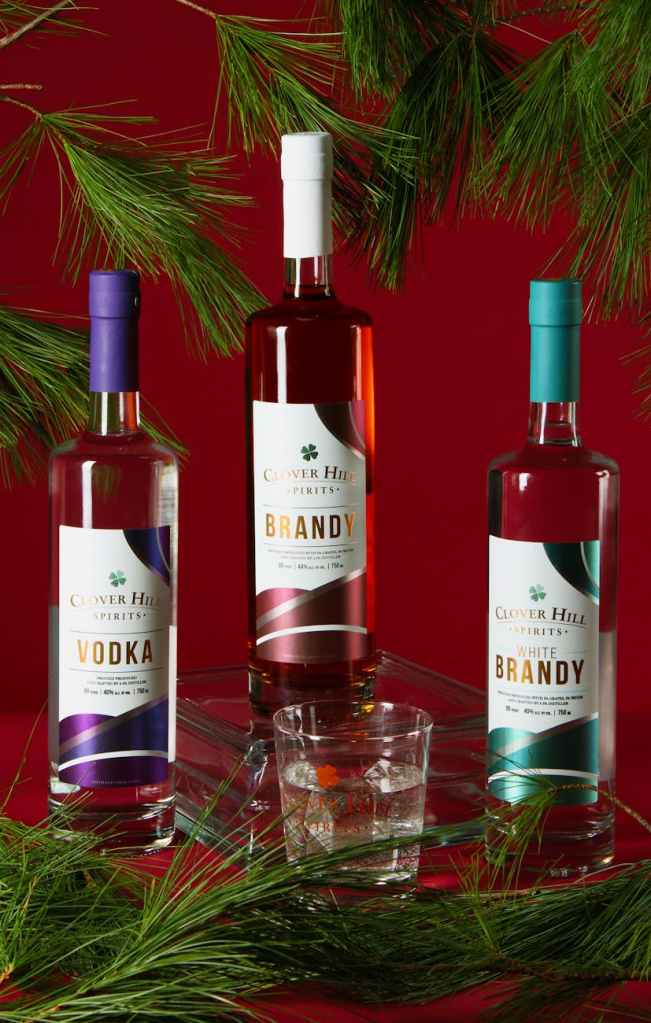
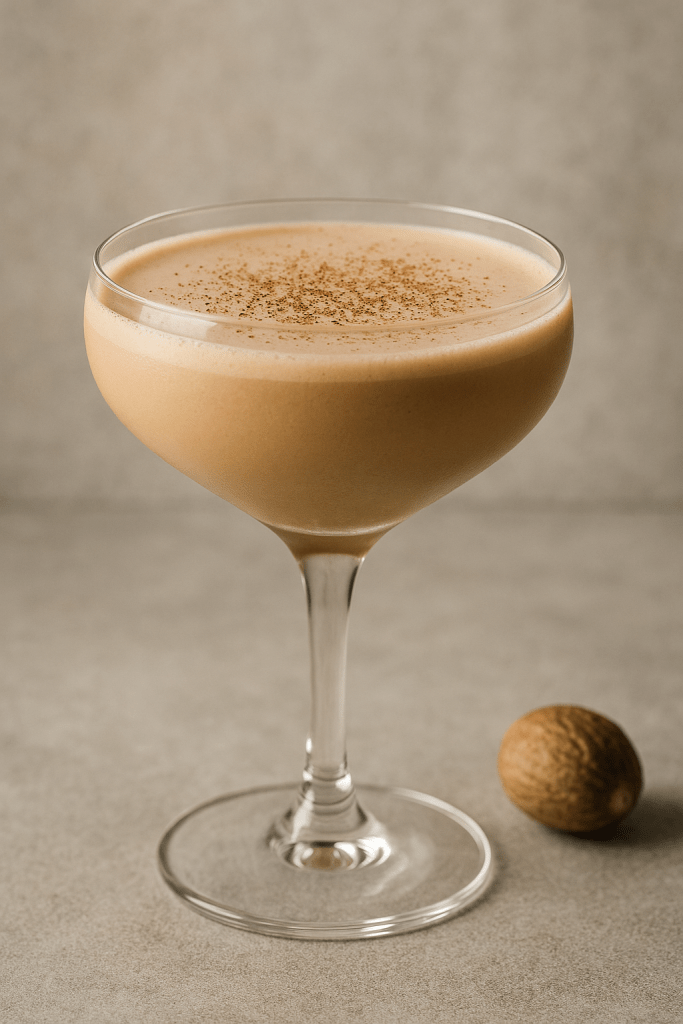
The drink in question was the Brandy Alexander, a smooth creamy cocktail with a hidden kick. To make it, add a number of ice cubes to your shaker, one measure of brandy (yes, the cheap stuff from Malaga duty free will do fine), one of crême de cacao and, for la pièce de résistance, two of double cream. Shake vigorously and pour to an open martini-style glass. A sprinkle of nutmeg makes a good decoration, but not too much, we always say.

The original Alexander cocktail was gin-based, dating back to the early 20th century. The Brandy Alexander emerged later, gaining popularity during Prohibition when brandy was more palatable than bathtub gin The memory of those days is preserved in the gin based Alexander No 2 and there are variations based on spirits such as Tequila, Rum or Bourbon

Since that long ago summer, our knowledge of cocktails has blossomed and grown. Obviously- or we could not write this column. But we will always remember the care with which this kind but not too wealthy woman, made a special treat for her daughter. Look for kindness where you can find it, gentle readers. Even in cocktails.

#brandy alexander #cocktails #friday night #entertaining #drinks

Food: is it quite as good as you thought?

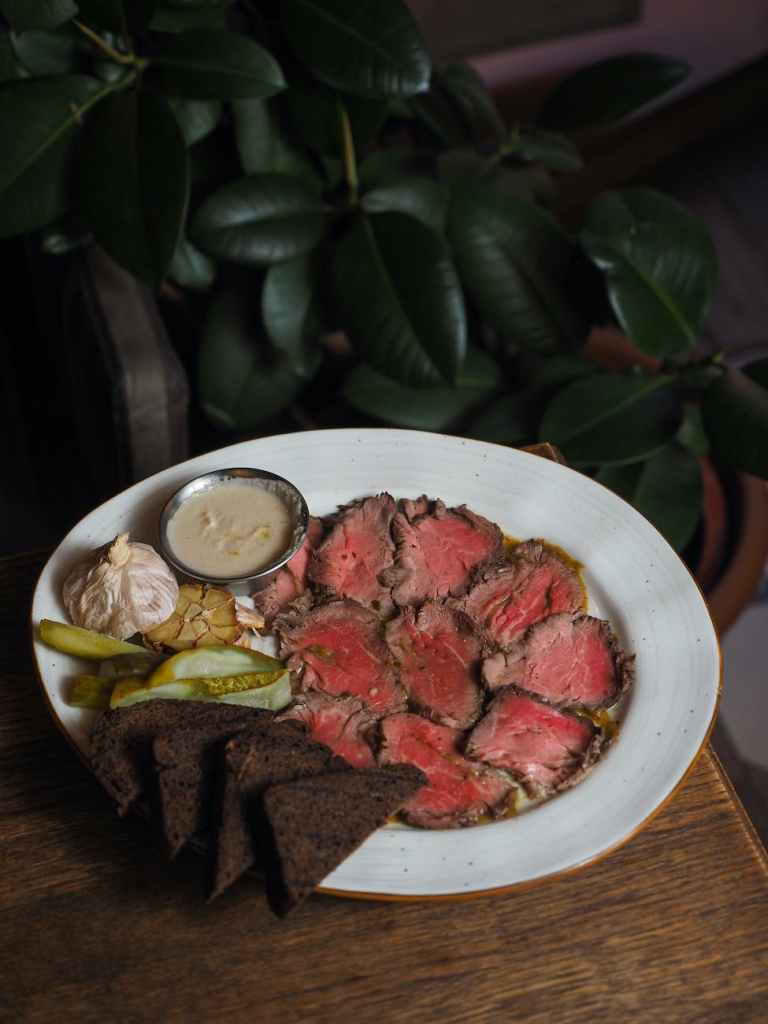
Food is everywhere these days. Shelves groan with glossy cookbooks, restaurants and gastropubs queue up for tax breaks, and the airwaves are thick with chirpy kitchen‑dwellers—some dropping their aitches with theatrical enthusiasm, others sounding as if they’ve just strolled out of a rowing club bar. Everywhere you look, there’s another beaming evangelist waving a saucepan and assuring us that their latest ‘blend’ is nothing short of a revelation. One could be forgiven for thinking that food itself has become a national moral project, a jolly good thing in which we are all expected to take an interest.

However the readers of our little blog being a thoughtful lot, we thought we’d put up two stories which might provide a little counter-balance to the general merriment. The first from the indefatigable Kat Lay of the Guardian (clearly she knows about more than just antibiotics) does not suggest food is bad per se. But it does suggest that being extremely careful about what you eat, and who is selling to you might be a very good idea[1] Her headline tells you exactly what we mean: Ultra-processed foods should be treated more like cigarettes than food – study

“OK, OK”. you say, “but wot I eat is my choice, innit, guvnor? If I ain’t doin’ no one else no ‘arm, wosser problem?” Well according to Nature Briefing, Eating Well is about more than your health, this might be:

Debates over what to eat — more protein, say, or less ultra-processed food — often neglect any mention of how our food systems affect the biosphere that keeps us alive. But nutrition doesn’t exist in a vacuum, notes Earth-systems scientist Johan Rockström. He co-chaired the latest update to the Planetary Health Diet, which aims to optimize human health globally and reduce environmental and social harms. It notes that “global greenhouse-gas emissions could be cut by 20% by 2050 by eating healthily, reducing food waste and adopting sustainable production practices”, writes Rockström. “If diets remain unchanged, however, emissions will increase by 33%.Nature | 7 min read
Reference: The EAT-Lancet Commission on healthy, sustainable, and just food systems report

We want humanity to survive, really we do. If you went extinct there would be no one to man the check out tills at supermarkets and we’d have to use those ghastly check-out-yourself tills that are so slow, complicated and inconvenient. Yeah food is alright, sometimes. But as the old saying goes-be careful what you wish for.

[1]https://www.theguardian.com/global-development/2026/feb/03/public-health-ultra-processed-foods-regulation-cigarettes-addiction-nutrition

#food #nutrition #climate change #obesity #health #fat #protein #fast food #processed food

Friday Night: How about a Glass of Sherry?

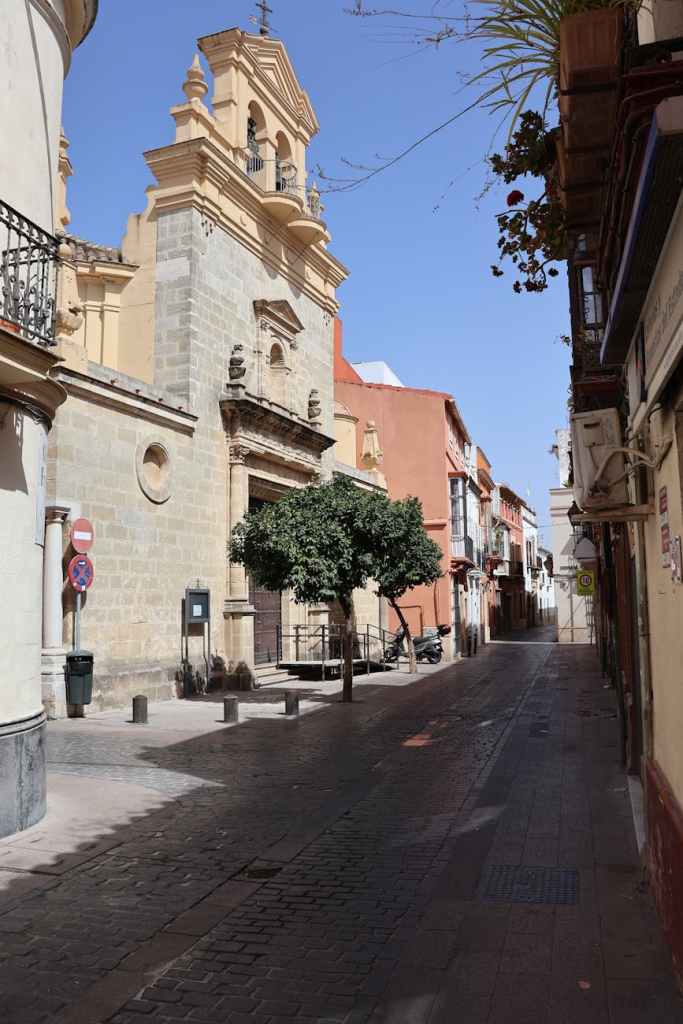
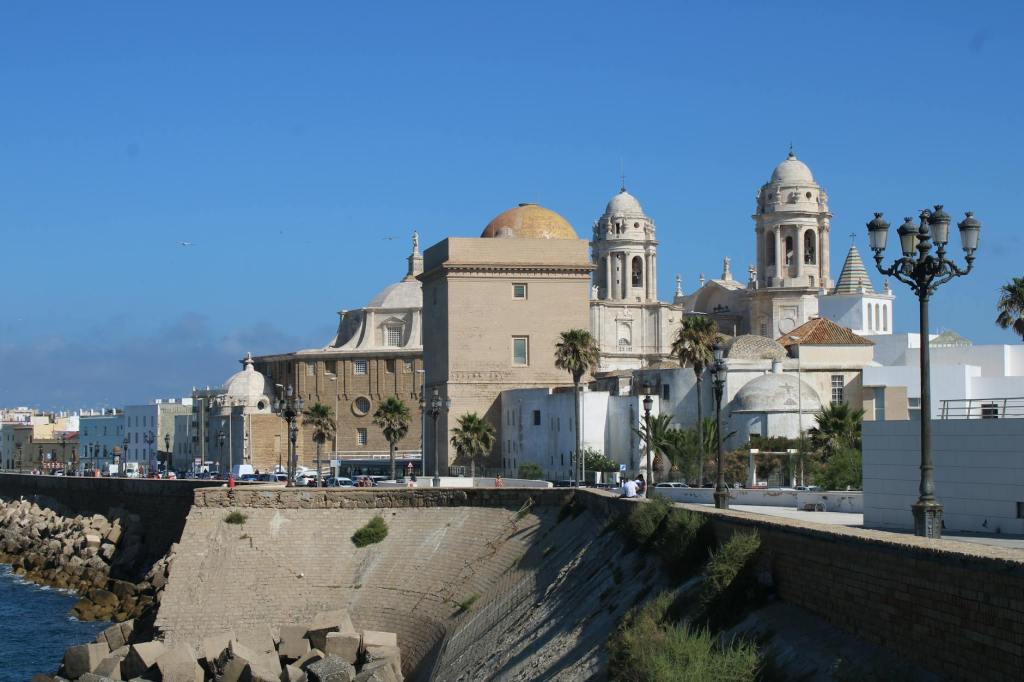
Southwest Spain, the Costa de la Luz, that tucked-away corner where the Atlantic meets the mouth of the Guadalquivir is off the beaten track as far as many tourists are concerned. Its empty marshes and estuaries, flat low farmlands and ancient cities as about as far as one can imagine from the concrete canyons of the Costa del Sol, Benidorm and all those tattoos. Which is odd because this region was civilised for thousands of years while all the beer and paella  joints were tiny  fishing hamlets. Famous too, for many things. And one of them is Sherry wine  to which we devote today’s little blog

Sherry from the D.O. Jerez–Xérès–Sherry spans a small but wildly expressive family of wines, all born in the “Sherry Triangle” of Jerez, Sanlúcar, and El Puerto. Fino is the palest and driest: crisp, saline, aged under flor, tasting of almonds and sea‑spray—drink it fridge‑cold with olives, almonds, jamón, or seafood. Manzanilla, made only in Sanlúcar, is even more briny and delicate, perfect with fried fish or prawns. Amontillado begins life under flor but finishes oxidatively, giving a haunting mix of hazelnut, caramel, and dried herbs; serve cool with artichokes, consommé, or mushrooms. Oloroso is fully oxidative—rich, nutty, sometimes leathery—best slightly cool with game, stews, or hard cheeses. Palo Cortado sits mysteriously between Amontillado and Oloroso: elegant, aromatic, and complex, a contemplative wine for roasted meats or simply a quiet evening. Sweet styles—PX and Moscatel—are luscious, raisiny, and dessert‑like, wonderful with blue cheese or poured over ice cream  But we found this excellent site called the Sherry Region [1] will tell you everything you want to know, and for which we have no room here, including history, types of wine and lots, lots more about this fascinating part of Iberia.

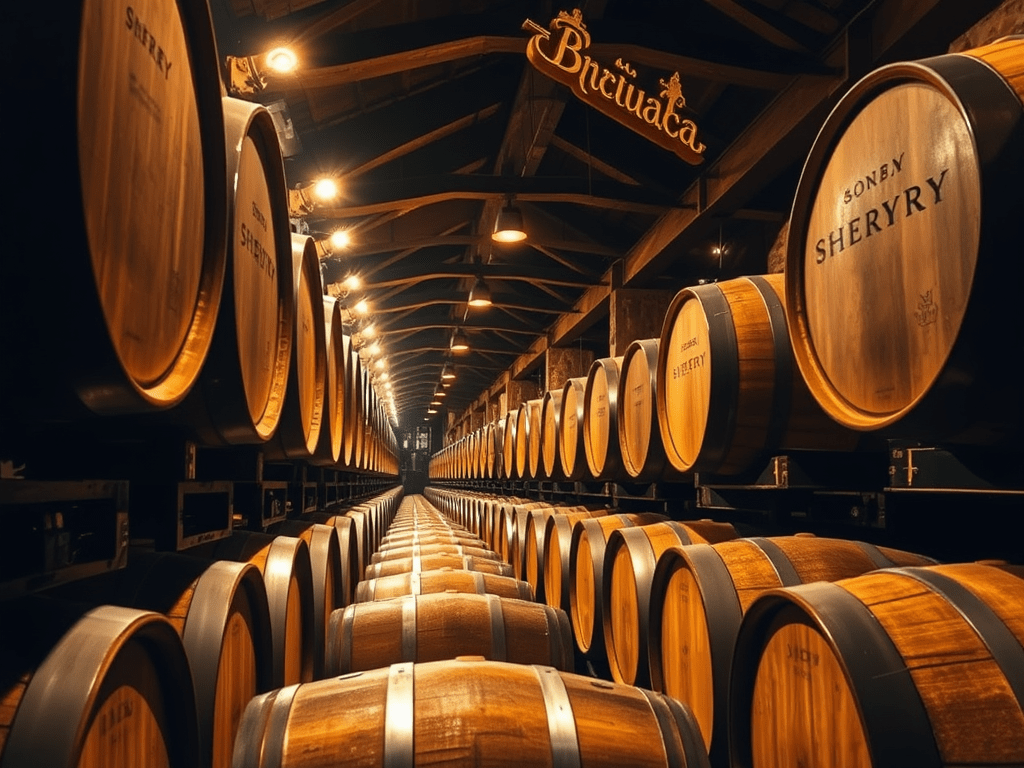
No trip to the Sherry Country would be complete without a trip around one of the fascinating  Bodegas  belonging one of the different companies These are not tiny lodges, but large production facilities which face each other across the streets like the  premises old car companies did  in Birmingham in the 1970s. We dare not advertise: but the one which  we often choose offers wine trains, guided tours and huge vaults with ancient barrels containing the chalked autographs of some of the most famous people who have ever lived in the last 126 years. Yes they liked a drop of this stuff too. And you will find out why when you attends the generous  tasting at the end, which can become convivial indeed. We will close with this warning: don’t go to the one in the morning, or that’s the rest of the day written off.

[1] Sherry Region | El Marco de Jerez | Sherry Wines Origin – Sherry Wines

#Spain #Jerez de la Frontera #Cadiz #sherry #wine #Atlantic #tourism

Two New Year Cocktails from 2020: we can’t improve on them

December 31 2020: it seems such a long time ago! It was the year Joe Biden had defeated Donald Trump to win the Presidency of the United States. The year a COVID-19 ravaged world was waiting for the first vaccines. And our already-growing pool of loyal readers was was waiting in addition for our advice about what to do for cocktails on what was going to be a rather restricted New Years Eve festival. And here is what we wrote in a piece titled Two Champagne Cocktails for New Year-Even if You’re Staying In:

Well, New Years Eve has always been a traditional time for fun and japes and conga lines-and lots and lots of champagne. Sadly, old Mr Covid-19 is going to crimp that this year, and by more than a little! But, do not despair, good reader. We at LSS have a couple of delicious champagne cocktail recipes for you to try as the big countdown to the glorious hour begins.

French ’75

Supposedly named after a powerful piece of Gallic field artillery, this is a fun sharpener with quite a slug of our favourite spirit-gin. The lemon and caster will give it the feel of a sparkling version of that old LSS favourite Between the Sheets. So, adapted from from Hamlyn‘s The Ultimate Cocktail Book:

Half fill a tall glass with cracked ice. Add 1 measure of good dry gin, the juice of half a fresh lemon, one teaspoon of caster sugar, and chilled champagne. These days Bollinger or Veuve Clicquot are perfectly acceptable, unless you live in somewhere like Monaco. You can decorate this one well with orange, lemon or lime slices to give that real party feel.

The Bellini

Most readers of LSS will be more than familiar with Renaissance Art, and the works of Giovani Bellini in particular. We know this from our focus groups. So it may come as no surprise that this one was named after the eponymous author of such works as St Jerome in the Desert, Christ Blessing and St Francis in Ecstasy. We are a bit unsure about that last one; surely a small tipple before evensong would have been sufficient? Anyway, once St Francis had come back down he, and you, could well have enjoyed the following. Again it is from our immortal Hamlyn, which is to us what Das Kapital is to the followers of Karl Marx.

Take a large, robust wineglass. Add two measures of fresh peach juice. Add four measures of chilled champagne and a dash of grenadine. Hamlyn recommends peach slices to decorate. We say: use your imagination, it’s New Year’s Eve!

You can read the full histories and more about these cocktails below via Wikipedia. But don’t forget, Knowledge and objective learning are now in deep, deep danger. Wikipedia is one of the best guardians of truth that we have. And so we earnestly beg you to think how much you can donate to this marvellous resource. They too must survive another year: details below in the links.

French 75 (cocktail) – Wikipedia

Bellini (cocktail) – Wikipedia

Support Wikipedia – Wikimedia Foundation

The Ultimate Cocktail Book Hamlyn 2004

#french75 #bellini #champagne #newyearseve #cocktails #wikimediafoundation

Quick cocktails for Christmas morning guests

One thing about Christmas morning-it’s going to be busy. Those crucial hours between eleven o’clock and one o’clock when half the street drops in, yet you dare not forget the relatives who are staying, or the steadily building drumbeat of the Christmas Dinner preps, can be frantic. You need to entertain them, you need to shut them all up. Above all you need to do it quickly and painlessly so you can concentrate on higher matters like Yorkshire Puddings and Brandy butter.

As there will be no miracle worker present who will to turn your water in wine, here is our guide to three boozy, plus one virtuous, easy-make cocktails.. Above all they’re simple: Each requires but one or two ingredients: a little ice , the right glasses and a few eco friendly straws, and you become the perfect hostess/host. And just to make it even easier, we have stripped out all those pesky shakers, strainers and other complicated mixing equipment which will only complicate matters and generate further washing up, Our making times assume you have all the ingredients ready to go: a safe assumption, as LSS readers are known for their wise foresight.

Gin Sling (see left above) Put 4-5 ice cubes into a hurricane glass , add one measure of cherry brandy and three of gin. Stir and top up with cold sparkling water .Decorate with one cherry, add 1 straw. Estimated preparation time : 25 seconds

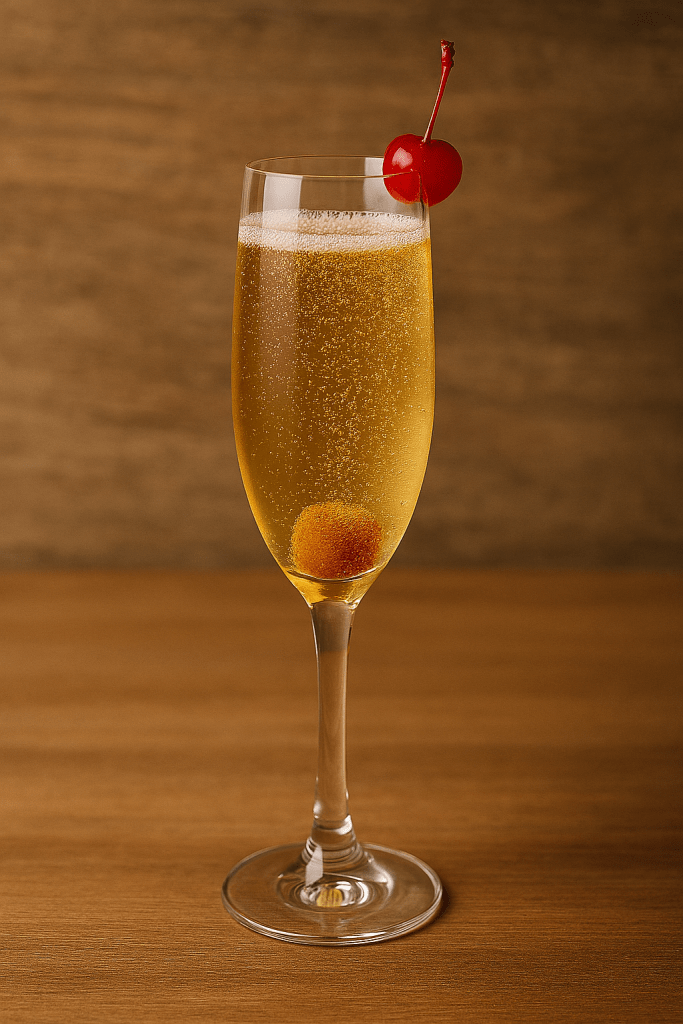
Champagne cocktail (see centre) To a classic champagne flute add 1 brown sugar cube and cover with one measure brandy. Add a tiny dash of angostura, and top up with champagne. Decorate with a cherry and serve. Tip: Have a tissue nearby in case the wine bubbles over Estimated preparation time : 40 seconds

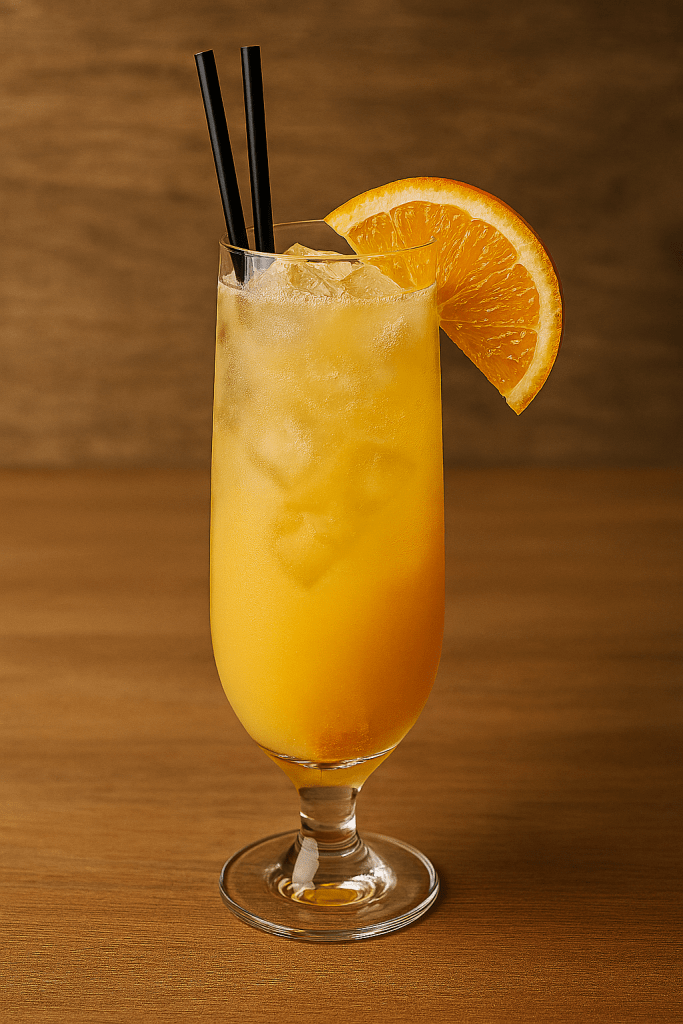
Harvey Wallbanger (see right above) Put plenty of ice in a tall glass and add 1 measure of vodka. and a half measure of Galliano. Top up with fresh orange juice and stir. A slice of orange will decorate, You will need a two straws. Estimated preparation time : one minute

And our Non alcoholic for the drivers: A delicious fruit punch. We are nothing here if not responsible, and know that good people never drive with alcohol in their system. What’s more there’s almost no preparation time with this one, as you can buy/prepare most of the ingredients the day before. All you do is add 750 ml of fresh orange juice, 750 ml cranberry juice, 400 ml of pineapple juice to a large punchbowl. Keep it in the fridge for an hour or two before serving. When ready to go, add lots of ice sparkling water and slices of colourful fruits like oranges. lemons and pineapples. You can adjust the amounts to serve as many or few people as you like. We know it’s tasty, because we have experienced more than one non sober guest ask for their own serving of this stuff, just adding a little gin or vodka to get the right Christmas spirit.

We hope the day goes well.

#christmas day #holidays #parties #cocktails

Our recipes inspired by one of our most treasured possessions: The Ultimate Cocktail Book, published by Paul Hamlyn in 2003, and which we still use today!

Why taxes are good for you #4: health and safety, guvnor

Ever since our earliest youth, Budget Day in the UK has always been accompanied by a chorus of cantankerous moaning “They’re putting a penny on me beer! He’s puttin’ tuppence onner packet o’ fags!” Spurred on as ever by a less than objective nor benevolent right-wing media, this was taken as firm evidence of a creeping Communist plot, designed to strike at the very foundations of British Manhood. But they paid; then many died of cancer or other hideous diseases. For the evidence they chose to ignore was overwhelming:  such taxes were good for their health. A 50% rise on tobacco tax leads to substantial declines in smoking, with all the falls in things like lung disease, cardiovascular disease and the many other ills associated with the widespread consumption of the drug nicotine. Regular readers will not be surprised to learn the same is true of alcohol taxes. The literature is vast, but we hope that the  studies which we have included will give you a starting point.[1] [2]  And add : will future societies discover the same truth with regard to sweet foods and drinks?

What is true for the particular turns out to true for the general. You don’t have to read this blog for long before coming across the names of Richard Wilkinson and Kate Pickett and their seminal work The Spirit Level.[3]  Taxes, they admit  create more equal societies. And more equal societies experience a truly amazing number of health benefits when compared to less equal ones. Obesity, childhood health, life expectancy, reductions in crime-all have been the subject of careful longitudinal and randomised studies which confirm the thesis of their book. Which advances in turn lead to more money available for better health care services, leading to less obesity, better child development……no, we’ll leave it there.  You know what a virtuous cycle looks like. .Again, our references barely scrape the surface of what’s available[4] [5]. But we’ll trust you’ll do a little digging yourselves rather than take our word for all of this

Which leaves it hard to write a concluding paragraph when those conclusions are so obvious both to intelligent readers and patriots. For what can be more patriotic than to promote the health and well being of the society in which we are grounded?  But. as we saw in the last blog, patriotism comes at a cash price, and you need an economy to pay for it, And in the next blog in this series we will learn that without a government and the taxes it collects, you will not have an economy at all. Don’t miss it.

[1] The Case for Health Taxes Masood AhmedMinouche Shafik  World Health Organisation

[2]  Estimating the effect of transitioning to a strength-based alcohol tax system on alcohol consumption and health outcomes: a modelling study of tax reform in England – The Lancet Public Health The Lancet

[3] Richard Wilkinson and Kate Pickett The Spirit Level Penguin 2009 updated 2024

[4]A UK wealth tax for better health | The BMJ

[5]Does income inequality cause health and social problems? Oseph Rowntree foundation

Friday Night Danger: The Long Island Iced Tea

And so, gentle readers, after five years of writing about cocktails we come to the one we have always tried to avoid. The Long Island Iced Tea. Why? Because it is so seditiously powerful, the one after which you will be incapable of anything else. Tasting your food . Engaging in serious conversation about Natural Philosophy or the Liberal Arts. Or even asking the waiter the way to the John. And believe us, once you have scanned the recipe(see below, see link) you will see why.

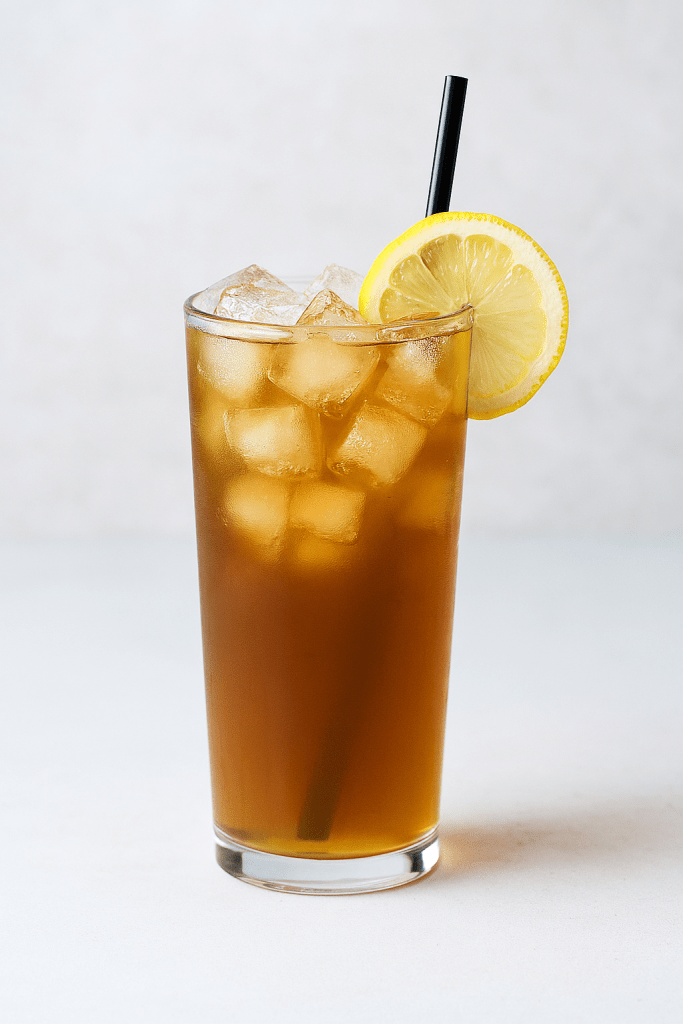
According to that excellent website The Cocktail Society, the Long Island Iced Tea evolved in te United States as a way to conceal the drinking of illicit hootch during Prohibition. “Make it look like Iced Tea,” was the rationale, “the Feds will never spot it for a ringer”. The Society gives a recipe, so we won’t cut across their know-how. But merely to list the ingredients from our own favourite recipe will demonstrate the potential head splitting power of this famous drink. They include 5 alcoholic ingredients; gin, vodka, white rum, tequila and Cointreau. Toppers up include ice, lemon juice and sugar syrup and above all cola, which gives it that iced tea look. And as sharper eyed readers will have already noted, there is no tea in it. Because that’s the whole point

As the Society observes , some smaller cocktails such as martinis may come with a higher alcohol content. But its the sheer volume of the LIIT which enables it to deliver such an enormous punch. And so we say: enjoy, but with caution. Do not attempt to i operate heavy machinery, drive nor attempt to make love any time after, as the results will be inevitably tragic. We had one at lunch yesterday and we are still recovering. Be glad we got this far.

[1]https://cocktail-society.com/recipes/long-island-iced-tea/

Friday Night: More in praise of Gin and Tonic

If there’s one common theme to this blog, it’s probably Gin, often accompanied by its old sparring partner , tonic water. That seems to be the case judging by a recent trawl through the archives, in desperate hope of reheating some old ideas for new posts. (LSS 4 9 20;13 2 24 et al ) Which is why we were pleasantly surprised to come across this article by Luke Chafer of the Mail, hymning the praises of the old tincture according to a new tune. If you’ve got to drink alcohol, declares Luke, this tipple is a lot less bad for you than many others.[1] That is, if you do it responsibly, as we always have, and not getting drunk. So here’s a few G and T questions and answers, based on Luke’s amiable article. Just think-it might be you gentle reader, and a pal or two, in a cocktail bar in one of the better hotels off of Park Lane as dausk falls over the London skyline

So-who invented the G and T anyway?

Back in the 19th Century, Britain’s Royal Navy was looking to get the drug quinine into its sailors, as the stuff was meant to have anti-malarial properties. It was too bitter to drink on its own (“tonic water”) so Her Majesty’s Admiralty had the brainwave of mixing it up with sugar .lime and gin-and hey presto, a new jewel sparkled in the crown of human achievement

So is it safe to drink?

No. No alcohol is safe. But, quoting his experts like a good journalist Luke adduces

It is about making sensible choices. If you are swapping five pints of beer for G&T’s then that is a good decision, because it has fewer calories and will not cause bloating,’ says Ms Lohia, [a leading nutritionist whom Luke consulted

Where can I find out more about variations and recipes?

We would strongly recommend searching the back catalogue of this blog, Learning Science and Society, and go from there

Does quinine really cure Malaria?

Weeeeelllll……………according to Luke you need rather a lot of it :

……theoretically, to protect against malaria, someone would need to drink 14 standard gin and tonics every eight hours, which is the equivalent of a week’s consumption of alcohol according to the NHS.

I see. Not a good idea. But surely those juniper berries they make the stuff from are pretty good for anti oxidants or something like that?

See above, Once again Luke has done his homework He finds:

However experts say that there is not enough juniper in a modern bottle—or shot—of gin to give any health benefits.

Our advice? Drink it moderately Drink it for fun, with your mates.. Stop quickly. In which case it will be one of the best moderate alcohol drinks you can get.

[1]https://www.dailymail.co.uk/health/article-15288483/Make-double-science-gin-tonic-one-healthiest-alcoholic-drinks.html

#gin #tonic #cocktails #pub #bar #quinine

Friday Night Feast: Sangria

“We’ve just got back from Spain” To those growing up as a child in 1960s London, especially in poorer working class districts, those words rang with magical prestige. Few of us had even been on an aeroplane, let alone to somewhere as warm, as sunnily sandy, and as downright distant as Spain. If you were lucky enough to have a holiday at all it would be a week in a Victorian boarding house in some windswept grey town like Blackpool or Bognor Regis. But these lucky people brought back tales of modern hotels with receptions, swimming pools ,and bars, just like the ones in James Bond films. And the artefacts! Curious little black bulls in hollow plastic. Dolls in exotic flamenco costumes, arms frozen in some eternal paso doble. And funny china jars with a picture of Minorca on them, drinking cups to match. Which, they proudly informed us, were all for the drinking of Sangria. A taste for it was born; and we think it still remains one of the best parts of an Iberian holiday today (you can get it in Portugal too)

The aim is to make it with lots of ice, so that beads of dew form on the outside and trickle down in the hot Spanish night to the sounds of a flamenco guitar(these days it’s more likely to be Rosalia or Aitana; but no somos nadie as they say in that country) After all the ice, there as many variations on the theme as there are bars in Benidorm. This BBC recipe produces an out come as good as any which we have tried down the years. [1] 3 parts of a good full red wine such as one from the Duero or Rioja, one part of orange juice and two of lemonade will get you over the line. After which you can add the sorts of fruits you want, though it being Spain and all that, oranges and lemons seem almost statutory. A little twiglet of mint will give the whole things a most Pimms like ambience, and the scaling up possibilities for two to fifty drinkers are manifest.

The word sangria of course comes from the Spanish word sangre, or blood, as anyone who has holidayed in somewhere like Magaluf or Torremolinos will recognise at once: a reference to the deep red colour of the wine. There are records of something like it in eighteenth century Spain and Portugal. Though the Romans had been experimenting with similar wine punches long before. Don’t accept ones made with rose or white. they are poor imitations , avoided by locals and experienced costa hands alike And so, even though the nights are drawing in we raise a metaphorical copa of the stuff to you all gentle readers, and hope it evokes memories of happy sunny holidays. Thanks again for all your comments, ideas and other general feedback.

[1]https://www.bbc.co.uk/food/recipes/sangria_93847

#Spain #Portugal #sangria #wine #holiday #costa

Two good news blogs: #2 The next pandemic is on BBC2

One thing we are quite proud of at this blog is that we have tried to warn you, gentle readers, of the several dreadful dangers that will confront you if you are not careful. Well aware of your tendency to find creative new ways to hate the neighbours wherever possible, we have, like faithful retainers, quietly sought to adduce the presence of other mortal perils. (LSS passim) Including massive volcanic eruptions, crashing asteroids, polar magnetic flips, toxic pollutants and climate change, which may also be lurking in wait. Nowhere have we been more assiduous than in adverting the threat of new pandemics to follow the COVID -19 epidemic. We have examined possible candidates such as antibiotic resistant bacteria, various viruses, and even fungi. We even speculated, following the work of the great Professor Harper, if such pandemics could lead our own society to share the dreadful fate of the once proud Roman civilisation which preceded us [1]

How gratifying then, when a man of learning and ability far greater than our own covers so much of the same ground, as Dr Chris van Tulleken does for BBC2 [2] In Disease X: Hunting the Next Pandemic. This polymathic Professor of Infectious Diseases at UCL makes a veritable tour de force of the worlds hotspots of deadly virus potential. Taking in such tragic examples as the Nipah virus which still represents a mortal peril in regions of Southern Asia [3] and of course considers the avian flu H5N1, a real old favourite of this blog. Its full of heartbreaking scenes, scarily secure suits and laboratories, and some really intelligent doctors and scientists talking knowledgeably, using reason instead of wild emotional overreaction.

And it may surprise you to learn that Dr van Tulleken ends the show on a cautious note of hope. We doubt that he is a regular reader of our blog. But he touts one of the same themes we have been pushing in the last year or so: using AI to design and synthesise new molecules-antibiotics, vaccines, what have you-to stay ahead of the genetic permutations and combinations thrown up in the organisms that are trying to make a meal of us . If there is hope, it lies in science and reasoned investigation. As certain Presidents of the United States of America should take note.

{1] Kyle Harper The Fate of Rome Princeton University Press 2018

[2] https://www.bbc.co.uk/iplayer/episode/m002jy6q/disease-x-hunting-the-next-pandemic

[3]https://en.wikipedia.org/wiki/1998%E2%80%931999_Malaysia_Nipah_virus_outbreak

[4]https://en.wikipedia.org/wiki/Influenza_A_virus_subtype_H5N1

#avian flu #pandemic #health #medicine #virus