Heroes of Learning: Svante Pääbo

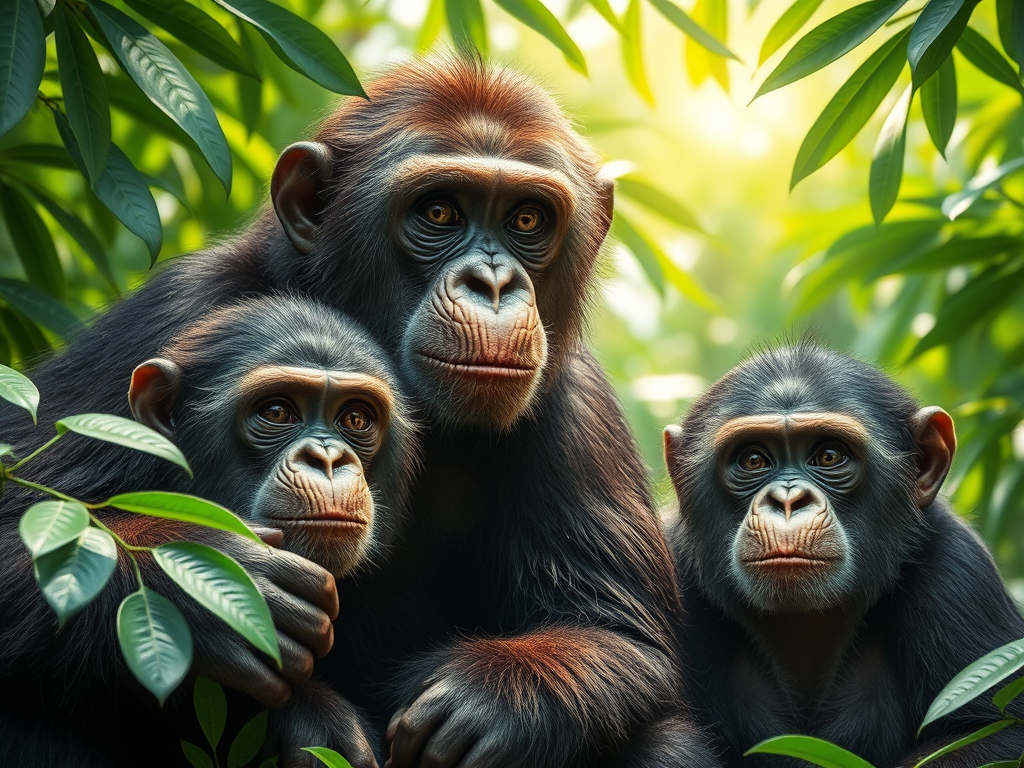
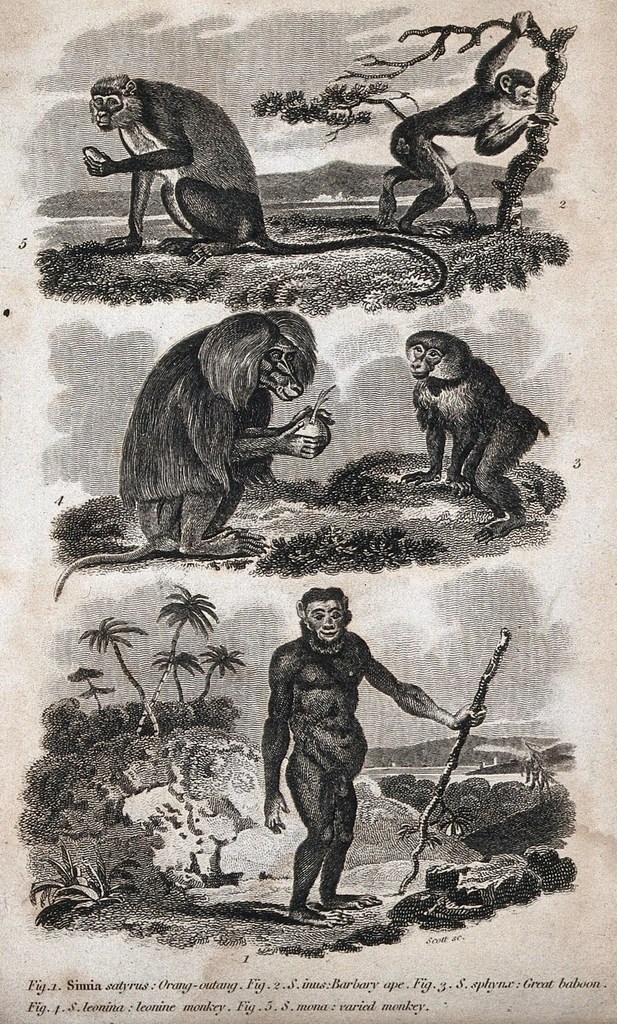
It’s hard to remember how different human evolution was before Svante Pääbo and his transformative discoveries in genetics. There were some bones, but they were bit few and fragmentary. People argued interminably over them like so many medieval nominalists and realists. There were tools, and heroic studies of the scratches thereon. People spent lifetimes following various primates in and out of the rain forest: but it is hard to say whether a chimpanzee is really like a human ancestor, or a baboon is : or is not.

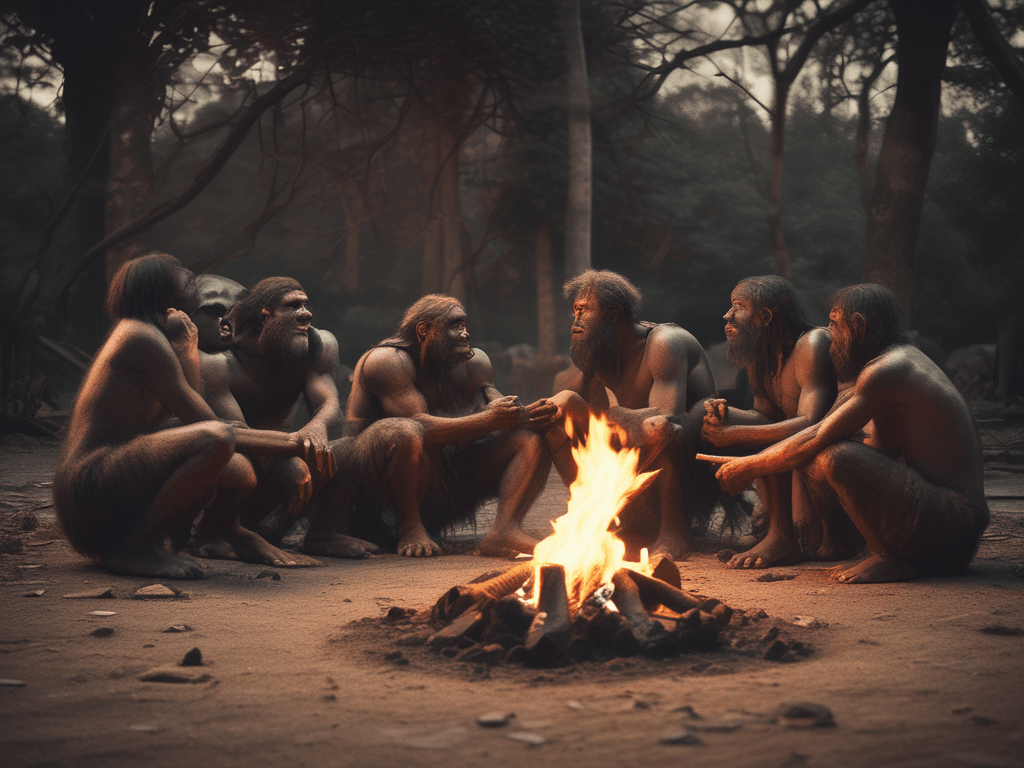
Then in 1997 at the Max Planck Institute in Leipzig, Svante Paabo announced a breakthrough: the actual DNA from inside the mitochondrion of a real (dead) neanderthal. For the very first time here was something tangible, data rich, and available for statistical scrutiny. Now we knew who we were, and who they were. As if that were not enough, in 2009 his team announced a whole Neanderthal genome. Then came immortality: on the floor of a cave in distant Siberia came a tiny bone which Pääbo showed to be a third type of human: the Denisovans. The utter. twisted, anastomosing complexity of the modern human story became clear: and with it the implication that it had always been thus. Giving him the Nobel Prize in 2022 must have been the easiest decision since that monkey in 2001: a space odyssey thought a horse skull might be a good place to land a good thwack.

But the real significance of Svante Pääbo lies deeper. It’s in the observable phenomenon that every so often some genius comes along and turns a field upside down. That every debate, however heated and angry, will one day become futile as more gets found out. It’s like that in all sciences, and a good many non sciences too. The biggest mistake any of us can make is to think we have all the answers. Thanks Svante Pääbo for showing there’s always something new around every corner.

[1]https://en.wikipedia.org/wiki/Svante_P%C3%A4%C3%A4bo

#genome #dna #human #neanderthal #anthropology #evolution science

Human Evolution: More muddle in the middle?

Taking time out as ever from more serious matters, we return to our old playground of human evolution. And not just for R and R, important as that is. Also, because the methods and pronouncements of its scholars are important guides to how we should all approach any complicated and potentially controversial subject.

Until recently the origin of our own species seemed fairly clear cut. It emerged from a pack of other big-brained contenders (think Denisovans and Neanderthals among others) starting around 250 000 years ago, in Africa, and clearing the rest of the field no later than 35000 years BP. However recent work by Professor Chris Stringer of London’s prestigious Natural History Museum and colleagues have now cast this into doubt. It is even possible that the line leading to Homo sapiens may have started to go its own way before 1000 000 years BP. You can read why in these takes from Jonathan Chadwick of the Mail here [1] or a slightly extended version in the museums own PR piece here [2] It all goes back to 1990 and the discovery of a rather squashed skull called Yunxian 2 which was attributed to Homo erectus: a perfectly reasonable decision at the time. But using advanced new reconstruction techniques Stringer and his colleagues assert

……… Yunxian 2 displays a unique combination of primitive and more advanced traits. These include a large, squat braincase and a more projecting lower face, similar to Homo erectus. At the same time, derived features in the face and rear of the braincase, as well as a larger brain capacity, are closer to later species such as Homo longi (‘Dragon Man’) and Homo sapiens.

We have been following this game for for nearly six decades: so what do we think? First Chris Stringer is a fine scholar whom we have always admired. Secondly, we welcome all attempts to re evaluate data and set it in new contexts: that way real learning occurs. Our caveat is more with practice . Always and again in human evolution, new fossils found are baptised with confident new binomial Latin names in the great Linnean tradition. Then vast conclusions are drawn, which, in our experience, are substantially revised some years later. This has led not only to the muddle in the middle to which the articles allude. There are plenty more early on the story, and more than one much later on. We think the first clearing step should be to talk less about species, and more about gene frequencies populations. and ways of life. These clearly cluster at points of excavation, such as Afar, Java or Atapuerca to name but a few. But each point, however iconic, is represented by relatively few bones. There are enormous gaps in space and time between each, into which genes and populations must have been flowing all the time. Is it not possible that there has only been one human line all along, and that many of the variations are likely due to factors such as ecology, climate or isolation? The real answer is to dig, dig and dig again.

[1]https://www.dailymail.co.uk/sciencetech/article-15132633/skull-pushes-origins-400-000-years.html

[2]https://www.nhm.ac.uk/press-office/press-releases/analysis-of-reconstructed-ancient-skull-pushes-back-our-origins-.html

#paleoanthropology #human evolution #clade #species #Homo sapiens #China

How life evolved long ago is absolutely relevant today

Long suffering readers of this blog will recall our occasional sallies into the remote past. Like some latter day Doug McClure we occasionally take you into a world stuffed with dinosaurs, ape men and pterodactyls, to the detriment of more relevant stuff on antibiotics or the US Ten Year Bond. And so, although we were privately raving about this piece below called How did life get multicellular? from Nature Briefing, we thought we ‘d spare you from our private obsessions about things that took place between 800 -600 million years ago.

Until a chance encounter with one of more intelligent friends in the car park at our Spanish Conversation group produced the most inspiring thought. “All those Choanoflagellates. protometazoans. Filasterea. whatever, have to do several things if they are to succeed in living together. To glue up to each other. To signal little messages. To co-ordinate the cycles of cell division. Just like cancer cells have to, in fact. And then it hit us. These funny little organisms are the perfect way to model the behaviour of cancer cells. Not just the molecular and genetic mechanisms, but also the Information and Complexity models we must build to understand them: a cancer cell is a typical metazoan cell gone wrong.

Which confirmed a very old principle of this blog. All research however abstruse it may seem, will have a pay off somewhere one day. If it doesn’t benefit the economy, it will make us live longer; sometimes it may do both. These researchers are not just having fun on the edge of time: they may be contributing directly to the study of a disease which will kill half of us. There’s a thought for anyone who wants to cut university budgets or meddle with the findings of scientists.

To play out we shall first post the Nature Briefing paragraph. If you can get past that we’ve some supporting evidence for our basic proposition. We hope both will inform

Across all forms of life, the move from being single-celled to multicellular seems to have happened dozens of times — for animals, though, the jump was one-and-done. The unique cocktail of environmental and genetic factors that helped animal ancestors make that jump still eludes our understanding. To investigate, researchers are focussing on unicellular organisms that ‘dabble’ in multicellularity, occasionally forming colonies of many cells. By studying these organisms as they flit between the two states, scientists are hoping to illuminate how multicellularity stuck in animals — and what sparked the single successful event that gave rise to the animal kingdom.Nature | 11 min read

ASTRACT BECOMES APPLIED

This work discusses how cancer disrupts the gene regulatory networks (GRNs) that evolved to coordinate multicellular life. These networks balance genes inherited from unicellular ancestors (handling basics like metabolism and division) with newer multicellular genes (handling coordination, differentiation, and tissue integrity). https://genomebiology.biomedcentral.com/articles/10.1186/s13059-024-03247-1

and this how somatic mutations in early metazoan genes specifically disrupt the regulatory links between unicellular and multicellular gene networks. The result? Tumours behave like rogue unicellular entities, ignoring the cooperative rules of multicellularity. Some of these disrupted genes even correlate with drug response, hinting at therapeutic relevance

thanks to R Muggridge

https://elifesciences.org/articles/40947

#cancer #evolution #multicellularity #medicine #health #choanoflagellates

Heroes of Antibiotics: Liam Shaw and his Dangerous Miracle

Today, gentle readers, we combine two of the favourites topos of this blog: Heroes of Learning and Antibiotics research latest. For Liam Shaw is a mighty contributor in both fields. Who is he? Well here is a brief summary of his life ant times from Penguin Books, the publishers of his book Dangerous Miracle: (which of course we urge you to rush out and buy) [1]

Liam Shaw is a biologist researching the evolution and spread of antibiotic resistance. For the past four years he has been a Wellcome funded research fellow at the University of Oxford, and he is also currently an honorary research fellow at the University of Bristol.
His writing has appeared in the London Review of Books, Morning Star, and Private Eye. Dangerous Miracle is his first book
.

That’s quite a CV for a very learned man, and we take all he says most seriously indeed. So seriously in fact that we direct your earnest attention to his further thoughts laid out in this admirable article which he has just penned for the Guardian[2] For Liam has a key insight: antibiotics are like fossil fuels. They are OK in themselves: they may even bring great benefits to the comfort and quality of our lives. But both have fallen into the hands of a group of reckless, short term, pleasure seeking, greedy, violent hominins that call themselves Homo sapiens ( a laughable act of vanity) with all the disastrous consequences we face today. Rather wickedly, he points out the hypocrisy of rich nations, who have benefitted so abundantly from a surplus of both fossil fuels and antibiotics now earnestly entreating the poorer nations of the world to be good chaps and cut down on their use. Nice one!

We at LSS still think there is room for hope on the antibiotics question, as out recent blogs have hinted. If the situation has indeed improved since we started, much is due to the work of Liam, Professor Sally Davies and others whose tireless research and campaigning has done so much to slow the decline and possibly turn us around. But we can see no reason to slack up yet, gentle readers. Neither should you.

[1]https://www.penguin.co.uk/books/455232/dangerous-miracle-by-shaw-liam/9781847927545

[2] https://www.theguardian.com/books/2025/aug/17/why-antibiotics-are-like-fossil-fuels

#microbial antibiotic resistance #medicine #health #microbiology #fossil fuels #global warming #pandemic

Genetics: a whole new perspective on human evolution?

Every so often it pays to look at the same problem from a completely different perspective. For the past 57 years or so we have been collecting and grading reports of human fossil bones and old tools the way that cricket fans collect the records of every game their team has played. But today, with the help of one or two of our redoubtable AI chums, we present a whole new perspective on the old story. Much of it is locked in our genes and has been uncovered by the amazingly intelligent efforts of genetics researchers.

Their discoveries are so extensive that there is too much for a tiny blog: so we’ve summarised the findings below. But look at the timing of the mutation in the famous FOXP-2 gene, and the human species which were running around at the time. True humans fall naturally into two groups. One one side, big -brained essentially modern forms : Homo heidelbergensis, Denisovans, Neanderthals and Homo sapiens. On the other? Poor old Homo erectus, significantly smaller-brained and with a much more exiguous technological and cultural life. In this light, the mutation is almost eerily coincident.

Of course the time lines of the mutations are a bit open ended; but the picture from the fossils is a bit vague too. What really impresses us is the way that, give or take an Ice Age or two, the geneticists provide independent validation of the fossil finders’ picture overall. And there’s an even deeper lesson. The same truth can be seen in two completely different ways, Like those night sky apps you can get which can show the same firmament through visual light, x-rays, microwave or radio waves; whichever you choose. Next time you argue with someone ask yourself and them: are we really talking about two different things? There’s a cognitive advance for the ages.

all based on peer reviewed or reputable pre pubs sources (microsoft assistant)

Time (Million Years Ago)Key Genetic MutationHominins Present
~6 MYAARHGAP11B (linked to brain expansion)Sahelanthropus tchadensis (early bipedal ape-like species)
~4.4 MYAChanges in genes affecting bipedalismArdipithecus ramidus (early upright walker)
~3.3 MYASRGAP2C (enhanced neuron connectivity)Australopithecus afarensis (Lucy and her relatives)
~2.4 MYAMYH16 (jaw muscle reduction, allowing brain growth)Early Homo habilis (first tool users)
~2 MYASCN9A (pain sensitivity mutation)Homo erectus (first hominin to leave Africa)
~700,000 YAFOXP2 (language-related gene)Homo heidelbergensis (ancestor of Neanderthals and modern humans)
~900,000 – 4.5 MYAChromosome 2 fusion (reduced chromosome count from 48 to 46)Various early Homo species
~300,000 YAMicrocephalin & ASPM (brain development genes)Early Homo sapiens (our direct ancestors)

#genteics #paleontology #tools #fossils #anthropology #human evolution

Evolution is happening right now in South Korea

We tend to think of Evolution as something happening over millions of years. First, all those trilobites and early fish swimming in the warm Devonian seas. Then early newts and scorpions slithering out onto land, followed by dinosaurs and pterosaurs dodging the cycads; and finally those desperate battles between humans and mammoths in the frozen wastes of the tundra. Millions of years-billions if you look at things like bacteria and red algae.

But evolution isn’t like that. The change of one species into another is a by product some something much smaller, local and more rapid. It is about the environment selecting a gene here, now, for one small purpose. Read this from Nature Briefing, No Diver is an island

A tradition of diving on the South Korean island of Jeju might have influenced the genomes of all of the islanders. The Haenyeo — meaning ‘women of the sea’ — have been cold-water diving year-round and without any breathing apparatus for centuries. A genetic analysis revealed that gene variants associated with reduced blood pressure, cold water tolerance and red blood cell count — which is related to oxygen-carrying capacity — are more common in people from Jeju, regardless of whether they dive themselves, than in other South Koreans.CNN | 7 min read
Reference: Cell Reports paper

In other words, good old fashioned Darwin-Mendel natural selection of the central DNA of the organism. Because one gene variant conveys a selective advantage which the other allele doesn’t. Textbook case: on single genetic change will transform a bacterium into an antibiotic-resistant organism, with profound consequences millions. Of course, if you have enough of these over time, you might eventually transform a tabby into a tiger, or a dinosaur into a bird. But those are second order consequences.Recent discoveries have made our understanding a little more complicated. We have to factor in epigenetics (the great Nessa Carey is good guide [1] ) and even the possibility of some environmental feedback into the genome, to which we have alluded here sometimes(LSS passim)

Every so often we come across some fool, usually a pub bore or right wing columnist, who loudly declaims” I don’t believe in evolution-why would a fish want to transform itself into a salamander?” Here is your answer. The majestic old Darwinian model still functions, Right at the heart of one of the most modern countries in the world.[2]

[1]https://en.wikipedia.org/wiki/Nessa_Carey

[2]https://en.wikipedia.org/wiki/Haenyeo

#natural selection #evolution #epigenetics #darwin #mendel #dna #gene #south korea

Is human evolution a mess? Depends how you look at it

When we were young, we believed in a Story. First there was Australopithecus, a toolless, speechless, walking chimp. He begat a brave pioneer called Homo erectus, a handy sort of chap who at least had decent looking tools and invented fire. He begat two sons: a hairy, primitive savage one called Neanderthal Man, who deservedly came to a sticky end. And a tall, cool handsome one which called itself Homo sapiens (“the wise man”), in one of the most outrageous acts of vanity and self-delusion in history.

The truth turned out to be far more complicated. Even looking at the story of the last 500 000 years , when everyone was about as modern as you can get. First Neanderthals have been getting steadily cleverer for the last forty years or so. They probably had language, clothes and y even art, goddammit. Along came another relative, the Denisovans who were similarly equipped. And then came the geneticists lead by the inimitable Professor Paabo, whose discoveries have upended everything , blurred every category and wiped every line. Latest instalment in this trope comes from the discoveries of the learned Professor Cousins of Cambridge University which we channel both from Jonathan Chadwick of the Mail[1] and for those with a little more time, the original paper itself [2] The story of the last million years or so is not of some heroic hero on a quest for self-improvement. But bunches of largely helpless bipeds pushed hither and thither by the vagaries of climate and geology, splitting, meeting and breeding; spawning a mishmash of different types which their distant descendants come along and label with important- sounding names. And we think we see a pattern in all this.

Firstly :you know a lot less than you think you do. We have been tracking human evolution for nearly sixty years now, so we can be fairly confident about that statement. Secondly: there is always something buried out there which is going to upend everything you know; so stay cautious. Thirdly: someone in another field is going to park their intellectual tanks on your lawn sooner or later, reducing your omniscient learning to at most part of things, not the whole of it. And finally:-human evolution makes a pretty good paradigm for all other learning. Not just hard sciences, not just social sciences but also things like history and economics. Beware of anyone who knows the answers, because they are not telling the truth.

[1]https://www.dailymail.co.uk/sciencetech/article-14508089/Scientists-hidden-chapter-human-evolution.html

[2]https://www.nature.com/articles/s41588-025-02117-1

#homo sapiens #dna #genetics #neanderthal #anthropology #science #knowledge #evolution

Out of Africa #2: Upsetting the Apple Cart

Fans of this blog will recall our long standing reservations about the various Out-of-Africa hypotheses which crowd the field of human paleontology. We’ve mentioned our doubts about the earlier one before (LSS 18 5 23). To be fair, the second one, involving modern Homo sapiens has stood up rather better, in view of all the archaeological, linguistic and genetic evidence which supports it.[1] [2] All of which is no reason not to be glad when someone comes along and upsets the apple cart. Today that someone is Professor Huan Shi, whose work is more than admirably reported on by Matthew Phelan for the Mail. [3]

The jumping -off point for Professor Shi is the Dali skull from Shaanxi province. Not only is it very old (260 000 BCE) for something which displays a lot of modern traits; it’s also a very long way from Africa. He goes on to suggest genetic similarities between early H sapiens in Europe and those in East Asia, distancing both from African centred populations. Finally he rests on the (slightly controversial) theory of Maximum Genetic Diversity, which suggests ancestral populations will exhibit a lower diversity, while derived ones will go higher.

Out thoughts? Since China rejoined the community of civilised nations after 1976 they have made some wonderful contributions to paleontology; so treat this with respect. However: there are even older fossils in parts of Africa, such as Jebel Irhoud at 315 000 BCE, which have modern features.. And all the all the models of linguistic complexity suggest the most complicated phoneme patterns are in African languages, and the least out in the Pacific islands, almost the last places we reached in our wanderings. What if both sides are asking the wrong question?After all, a thousand years is a long time for a powerful top predator. Such a species spreading at only ten miles a year would cover the whole landmasses of Africa and Eurasia in that time. Add a few thousand more and maybe the odd climate fluctuation and instead you would have a population endlessly marching, cross breeding and throwing up all sorts of variations. Of which a few fragments found hundreds of thousands of years later will give only the most cursory understanding. What if our species never began at all but has just carried on evolving, and always will?

[1]https://en.wikipedia.org/wiki/Recent_African_origin_of_modern_humans

[2]https://www.nature.com/articles/srep36645

[3]https://www.dailymail.co.uk/sciencetech/article-14236961/Scientist-challenges-Africa-theory-human-evolution.html

human evolution #china #homo sapiens #out of africa #lingiustics #genetics #microbiology

A whole herd of hominins. But how different are they really?

Fans of human evolution have more to contend with than the followers of any football team. For every one of the competitions they’re in ( Champions League, La Liga, Copa del Rey, whatever) We have six new skulls and four new DNA analyses every week. Or so it seems, and just about every one leads to a new species. Or so that seems too..

Proof of this comes from two new articles we have for you today. William Hunter of The Daily Mail (despite all their other deficiencies, a great Science Desk) waxes lyrical on recent discoveries in China [1] which suggests a fourth late-to modern population of hominins who lived alongside Homo sapiens, Neanderthals and Denisovans about 100 000 years ago. But how different were they-and how different were the other three? Our thoughts on that one below. Meanwhile Nature Briefings offers us this, An Ancient Encounter Frozen in Time

Some 1.5 million years ago, two ancient hominin species crossed paths on a lake shore in Kenya. Their footprints in the mud were frozen in time and lay undiscovered until 2021. Now, analysis of the impressions reveals that they belonged to Homo erectus, a forebear of modern humans, and the more distant relative Paranthropus boisei. The two individuals walked through the lake area within hours or days of each other — leaving the first direct record of different archaic hominin species coexisting in the same place.Nature | 5 min read
Reference: Science paper

No one would take away from the dedication and professional work of the team who made this discovery. It’s just that, with so many different hominin species hurrying about, and so few with mobile phones with which to record each other, can we really be sure who planted their feet in that long ago bed of sand?

Which leads us to recall the case of the Red Deer Cave people. Who, until recently, were a bit of a mystery in the human story. They looked very archaic and odd. But they dated very recently (maybe about 14000 years BCE) They were in the right place at the right time, Could they, might they, be real Denisovans, maybe, huh? To which recent DNA analysis gave the resounding answer: no, they were fully and completely 100% human. If they were alive today you’d have to give them a vote, a credit card and a driving licence. They couldn’t be worse than some other users of the road. All of which leads us to the following conclusions

1 Keep digging in China (look what they did for dinosaur research)

2 Let’s stand one step back from all claims and remember what happened to some of them in the past

3 What if the whole business of species labelling is missing the point, and there’s really only been one human line for three million years, with startling local changes in gene frequencies due to ecological pressures and tiny population sizes?

Only we can say that, because we don’t belong to any institution. Occasionally, that’s a freedom worth having.

[1]https://www.dailymail.co.uk/sciencetech/article-14152203/big-head-people-lost-species.html

[2]https://en.wikipedia.org/wiki/Red_Deer_Cave_people

#human evolution #paleoanthropology #dna #hominin #china #africa #paranthropus

A quick round up: Plastic Pollution just got worse, Computers just got faster…and who were the Denisovans?

a few stories that caught our eye

Plastic pollution just got worse Remember those old movies where hard-pressed producers stared combining other movies? Think Godzilla and King Kong or Jesse James and Frankenstein’s daughter. The results were nearly always worse than the original. Well, it’s the same in the ocean PFAs do quite a bit of damage, So do microplastics, all things considered. But when you consider the two together, as Tom Perkins does in this Guardian article, you are in for a whole lot more trouble.

https://www.theguardian.com/environment/2024/nov/25/pfas-microplastics-toxic

Quantum Computers just got faster Just when someone comes up with the-best-thing-ever-yet, someone else supersedes it. Remember CRISPR-Cas-9 and Base pair editing? Well now it looks as if AI may be going the same way. Read this:Giant Quantum Computers built from Light, in Nature Briefings

By the end of 2027, researchers at the private quantum-computing firm PsiQuantum aim to be using light in silicon chips to build a giant, programmable quantum computer. That ambitious goal is far ahead of major rivals such as Google and IBM. PsiQuantum researchers say they hope to also show that such a computer can run commercially useful programmes. The company has raised US$1 billion but has shown relatively little compared to its competitors, leaving some scientists worried it’s promising more than it can deliver.Nature | 13 min read

Who were the Denisovans anyway? One of the most intriguing puzzles in paleontology is the nature of the Denisovans, that mysterious third cousin of the modern human family. Since their discovery through the truly remarkable achievements of Professor Paabo and his teams, their details remain sketchy. A few scraps of bone, some DNA, and a few artefacts. So-hats off Linda Ongaro of The Conversation who pulls together what is known now, in November 2024. We are sure that she shares our wish that one day this excellent article will have been superseded.

https://theconversation.com/their-dna-survives-in-diverse-populations-across-the-world-but-who-were-the-denisovans-244441?utm_medium=email&utm_campaign=Latest%

#dna #pollution #microplastics #PFA #denisovan #quantum computer