
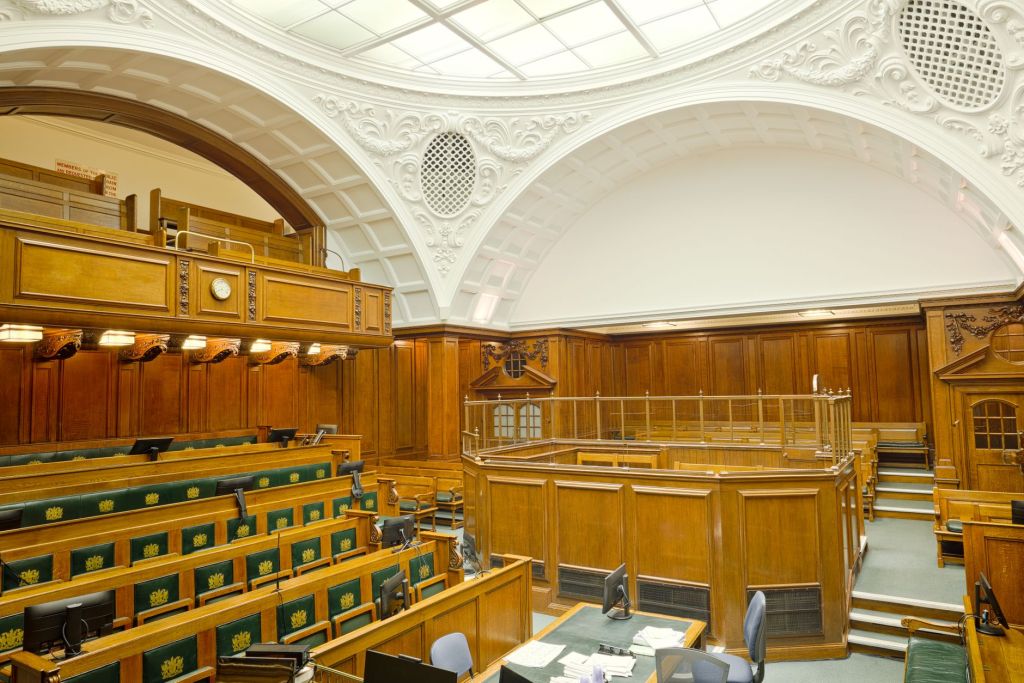

A Common Law for the World? Henry 11 Part One: the idea

When Henry II became King of England in 1154 he faced a situation of almost insuperable difficulty. The country had been wrecked by 19 years of violent civil war (think Sudan or Congo for modern parallels) The warring baronial armies had not gone away. How could law and order be restored when the country was a network of local loyalties? A patchwork of legal jurisdictions-Shire courts, Hundreds, Manorial courts, even Church courts with their own law, seemed to govern every aspect of life.  Yet Henry and his jurists came up with a solution, as much by feeling their way toward it as by grand design. It was called Common Law, and it eventually resulted in a new legal system for a new sort of country, which  came to claim more loyalty than the local ones  that that had gone before

So what is Common Law? And how does it differ from top-down Statute Law proclaimed, for example by Emperors like Justinian or Napoleon?  Common Law grew from judicial decisions. Judges settled individual cases; later judges followed the precedents. Over time a body of law emerged that no one person had designed, yet everyone could increasingly rely upon.

Henry was taking a radical step.  In the Middle Ages most Kings and other rulers dictated their Laws and expected obedience, enforcing them with armed force where necessary. Henry certainly did this: but he also saw his duty to enforce the new Common Law as well. He was no philosopher king. But he understood something important: if everyone in England was subject to the same law, prosperity and order would follow. It was a bold idea. The difficult part was making it real. In the next part of the series we shall see how this remarkable man accomplished that.

[1] Code of Justinian – Wikipedia

[2] Napoleonic Code – Wikipedia

#justinian #napoleon #statute law #common law #trade #finance # justice #cutom #history #society

A Common Law for the World? Part one of a new series

We’ve done quite a few blogs on a possible World Government (LSS passim) And one of the commonest objections we receive is “Nice idea, mate-but how’s it  meant to actually work? And our interlocutors rightly point to a very substantial problem. The existing world is chock full of codes, laws, guidelines ethical systems and regulations. Some are national, some religious, some political in origin, often with wildly different interpretations of what is right and wrong. Moreover, all address a very real need: “we want to make our laws that govern us, here, now for ourselves” It is one of the most powerful human instincts: certainly one of the neuralgic driving forces in History and has always existed. As have tribes, nations and religious sects. And oddly enough that is what gave us hope. Because History shows there is at least one way to bring different groups of people together and persuade them to work for their mutual benefit, under a shared system of law.

It’s understandable that people living in some distant province made resent the imposition of law codes made up for them in a remote, snooty imperial capital. Sometimes these laws may be just and rational: but even then, they may not meet the needs and wants of locals. And at other times the law codes may be crass, insensitive and oppressive indeed. But there is another method to create a common legal system which people may accept over large areas. Even when they believe themselves to be very different in language, nation and ethnic affiliation. It is called Common Law. And in this series, we shall be examining it to see if it could be the solution to the central problem of a World Government: how to get everyone to agree to a common system of Justice, even when they start with very different ideas as to what that Justice may be.

We’ll look at what we mean by Common Law. And how a Medieval King called Henry II used it to unite the fractured war-torn regions of England into a successful united kingdom which has persisted until today We’ll see if we can make any modern tries at the lessons he and his judges learned. If anyone else is trying this in practice now, in 2026.  And above all how codes of law can be created gradually and by consent. Above all, we are not doing this out of starry eyed idealism, nor do we believe in a Better Society. We are too old and two Whiggish to place much faith in improvements in human nature. But we do think the way we live now would be both safer and more convenient if there were less barriers to trade, less cause for murderous warfare and above all the deep and stable capital markets which a single world trading system would bring.  We’ll start with the life and times of Henry II, King of England, Duke of Normandy and Aquitaine, and Count of Anjou Maine and Touraine. Quite a job description- and we will find out how he did it.

[1]Henry II of England – Wikipedia

#law #world government  #henryII   #codified Law  #common law #history #trade #commerce #statute #england #middle ages #Roman law

Would you visit Sussex without a porpoise?

One of the many advantages of our mighty office block is its proximity East Croydon Station. A short saunter puts the tired Senior Executive ( junior staff have work to do) on a train which will, in only a few minutes, whisk him from all the towering skyscrapers, crowded tenements and tiresome colleagues, transporting him rapidly into the beautiful county of Sussex. With all its rolling hills, lively cities, quaint villages, castles and pleasant coastal towns.  For example, the sea front at Worthing has been compared to that of Nice in France-although admittedly only by people who have never been to Nice.

But the best thing of all about Sussex is its thriving ecosystem of websites, newspapers and magazines at every level: village, neighbourhood, county -which not only cover all aspects of local life but acts as a thriving hub for the forces of economics and commerce. Among the best and brightest is Sussex Local, a widely distributed website and glossy colour magazine which covers both community events plus stories of wider national potential such as science or conservation. Riffling through its pages we came across this story (alright, we wrote it, but that’s beside the point) of a a brave and erudite scientist called Thea Taylor who has devoted her working life to the care and preservation of the large cetaceans which still inhabit the English Channel That’s right, porpoises, dolphins and sometimes even larger beasts are not just hanging on, they’re trying to come back into the  waters of one of the busiest shipping lanes in the world(it’s still open, folks) Dodging super tankers, evading trawlers, and jumping to the delight of excursionists and more serious yachtspersons alike.  They still represent a genuine large wild megafauna in easy access of great cities like Brighton and London.   But to keep them that way, Thea needs your help. You could start by reading the scintillating article we have published. [1] Or could you find a way to help Thea and the Sussex Dolphin Project directly? If you save the creatures in Sussex, you’ll help to save them everywhere.

[1]https://sussexlocal.net/back-issues-categories/2026/

[2] Sussex Dolphin Project

#dolphin #english channel #porpoise #brighton #consevation #ecology #nature #oceans

Friday Night Feast of Fun: Traditional Fish and Chips

Now that Britain has suddenly become popular in certain quarters, we thought we’d kick off the Friday Night Feast of Fun with a nod to our good old national standby. Fish, fried in batter at colossal temperatures, accompanied by equally fried chunky potato chips. Best served from a local takeaway that specialises in this dish alone-and eaten very hot. The range of fishes allowed is actually rather small-cod, haddock, plaice and a type of small shark called rock salmon by us locals. Extras are little more than pickled onions and tomato ketchup, although some purists cavil even at this, asseverating that it detracts from the true gourmand experience

But how “British” is it really? Research indicates that fried fish in batter originated among London’s original Jewish immigrants, who came mainly from Spain and Portugal in the sixteenth century. Other Jewish immigrants, whose days were spent working incredibly hard in sweatshops, combined it with fried potatoes(out of Peru via Belgium) around the middle of the 19th Century. So like our Royal Family or Premier League teams, it’s actually a bit of a melange of rather non Anglo-Saxon influences.

And what best to drink with this delicacy? Like everything else, it depends on who you are eating it with, and, this being England, their social class. Here are a few suggestions:

Stout A very dark beer brewed from roasted barley, its strong creamy flavour can partner a flaky haddock like nothing else. Guinness is the perfect exemplar, but WE remember an ancient brand called Mackeson– has anyone seen it lately?

Brown Ale Often favoured by persons from the North East of England, where the fishing industry was huge until about 2016, this has a flavour all of its own. But be warned; we once laid some on a Japanese lady of some education and she hated it. An acquired taste, perhaps.

Traditional Lager Yes, the cool bright foamy yellow stuff, the Poor Man’s Champagne. The brands we favour in these islands include Kronenburg, Red Stripe, Stella Artois(often known as “Nelson Mandela” around the outskirts of London) This is what we would use to partner our cod: no wonder they placed us on a strict diet. (no pun intended)

Domain j Jacques Girard Pernand Vergelesses Burgundy Posher guests may still wish to partner their fish dish with a white wine, darling. At £30 a bottle from Waitrose they had better drink it slowly. But we thought we had better put a good one in, because: you never really know who might turn up, do you?

Have a good weekend

#fish and chips #great britain #lager #beer #takeaway #wine