Offshore wind: a rare success for the Tories

Bertrand Russell always counselled : “don’t be so keen to diss the other guy. Much of the time you will be less right, and he less wrong, than you imagine.” That is the rough gist of what he said and we have alluded to it before in these pages. Nowhere have we seen the doctrine better echoed than in an article by Professor Rebecca Willis (Guardian 20 June 2024).[1]For when historians come to write the history of the Government first elected in 2010, they will do well to consult her piece.

Professor Willis is clear: the UK is the number two superpower in turbine energy generation. Second only in fact to the Peoples’ Republic of China, a somewhat larger political entity. How was this done? Rebecca tells us:

growth in offshore wind can be traced back to a 2014 decision to establish a new support mechanism for low-carbon generation. ……..;.;. it guarantees a set price for units of electricity. If the market price falls below the set price, the generator receives a top-up payment. If the market price rises above the set price, the generator pays back the difference.

It essentially stabilises the market and provides certainty for power generators, making it worth their while to invest for the long term. As a result of this and similar policies, the cost of offshore wind in Europe has fallen by 60% over the past decade, to become a cheap source of electricity.

They had a plan. They aligned it with economics. The result was not only a boost for manufacturing, but a strategic success , as was shown when Russia invaded Ukraine in 2022 and gas prices skyrocketed. But even this far sighted achievement was badly compromised, as Rebecca explains:

But then Tory politicians began to listen to siren voices from a small but powerful anti-net-zero lobby, funded by dark money from fossil-fuel companies

Now certain oily politicians are pushing back on net zero itself, as if ignoring reality will somehow make it all more bearable. And they are full of venom to towards those who disagree. Our view at LSS is that of Russell. You can’t like everyone; but try to be polite. You never know from what corner salvation is going to come. Even the Conservative Party.

[1]https://www.theguardian.com/commentisfree/article/2024/jun/20/tories-green-legacy-labour-government-climate-green-energy-uk-offshore-wind

#wind turbines #oil money #net zero #renewables #climate change #global warming
Will multicoloured hydrogen save the world?

When we were young, hydrogen came in one colour-and you couldn’t see it. It was a just a load of bubbles the Teacher made in the chemistry lab. Fast forward fifty years, and it seems to come in a baffling spectrum of colours. There’s Green, pink, grey, gold, blue, black, brown and turquoise. [1] This handy guide from the National Grid will take you further. They’re all different industry nicknames where the stuff comes from. Just to confuse matters, different people seem to use the same nicknames to mean different things. But underneath all this lies one simple truth-hydrogen gas could represent a useful path to a sustainable future, and still enjoy what might pass for a tolerable lifestyle.

For reasons of space, we’ll concentrate on one exciting sounding candidate which insiders dub Gold hydrogen. The redoubtably named International Electrotechnical Commission waxes rather lyrical about it here [2] It’s a reputable outfit, and there are some good links for those with the coffee time to delve a little further. But-all that glistens is not gold, as Shakespeare once memorably observed. Writing in The Conversation, David Waltham produces a thoughtful balance sheet of the pros and cons of Gold Hydrogen (bewilderingly, his definition of it is a bit different to the IEC’s) He is far from anti; but this well-expressed caveat is well worth bearing in mind

The big question, though, is how seriously to take gold hydrogen. Will it turn out to be an over-hyped distraction of very limited utility? Or will it provide a pain-free path into a low-carbon future? The truth probably lies between these extremes, but only time (and further research) will tell us.

Well said Professor Waltham. That’s how LSS thinks. On just about everything.

[1]https://www.nationalgrid.com/stories/energy-explained/hydrogen-colour-spectrum#:~:text=Green%20hydrogen%2C%20blue%20hydrogen%2C%20brown%20hydrogen

[2]https://www.iec.ch/blog/could-white-and-gold-hydrogen-be-clean-fuel-options#:~:text=By%20contrast%20white%20hydrogen%20refers,conventional%20ways%20of%2

[3]https://theconversation.com/gold-hydrogen-natural-deposits-are-turning-up-all-over-the-world-but-how-useful-is-it-in-our-move-away-from-fossil-fuels-220230

#hydrogen fuel #fuel cell #green hydrogen #gold hydrogen #sustainable #global warming #climate change

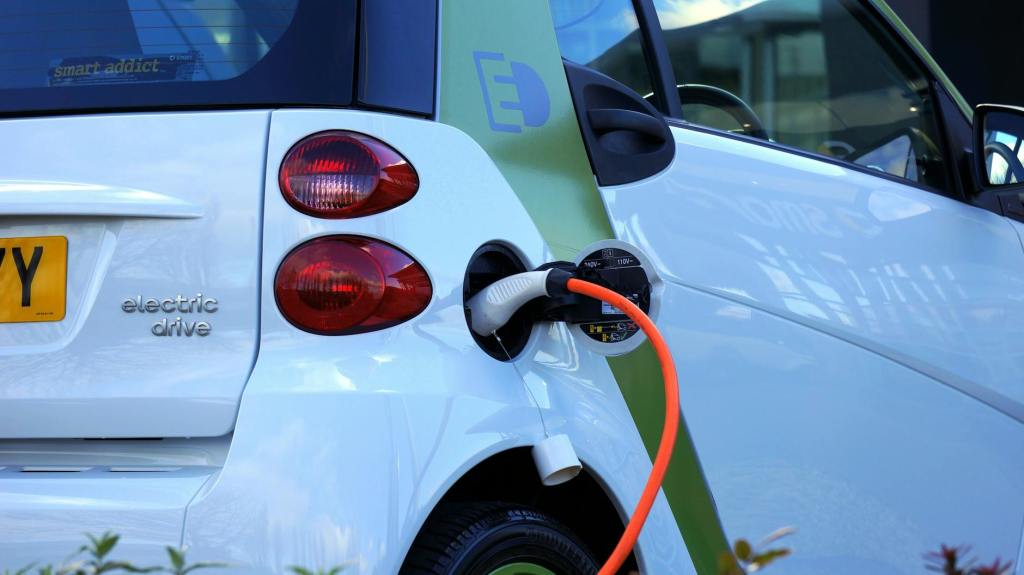
Electric Cars: A vault to the future, or just a current fad?

“Just because something appears in the Daily Mail,” observed George Orwell,”does not automatically mean it’s a lie.” Astute readers will know how, having lost the argument on carbon emissions, climate deniers spend their time sniping and snarking at every new technological advance. Remember all those hecatombs of pigeons supposedly murdered by marine wind farms? Which is not to say that we at LSS dismiss every criticism, every reasoned argument, about how we get to a sustainable world safely, with the minimum possible collateral damage. There’s a debate to be had, especially when it is mooted in the august pages of the New Scientist [1].

One of the troubles with electric vehicles (EVs) is the kind of unpleasant things like lithium (and cobalt) you need to mine to make the batteries, And, as this piece by New Scientist photographer Tom Hagen shows, the local consequences of doing so can be frightful. This is Chile; but you’d find something like it similar production sites across the world. And some pretty dire working conditions, especially in places like Africa. At which point despair seems a very understandable reaction. Surely the cost of making these new EVs, and powering up the grids to run them, makes the whole enterprise futile?

The despair trap is a product of oversimplification; “if a thing is not 100% good, it must be bad. Gotcha!” runs the thinking. In the real world, lasting solutions are a mosaic set of compromises and trade offs, as every engineer knows. On balance, the environmental benefits of using electric vehicles are already in excess of the costs.[2] And this is before the dreadful health impacts of nitrate and particle emissions from our archaic old fleet of combustion vehicles[3] is taken into account (LSS passim).[3] Compared to the world we lived in 10 or 20 years ago, we’re actually rather cheered to live in a world where someone is actually doing something. However imperfect, it’s better than sliding blindly down the ramp to destruction, which is what they did in the Good Old Days.

With thanks to Gary Herbert

[1]https://www.newscientist.com/article/mg25333710-200-lithium-fields-beautiful-from-the-air-trouble-on-the-ground/

[2]https://climate.mit.edu/ask-mit/are-electric-vehicles-definitely-better-climate-gas-powered-cars

[3]https://www.niehs.nih.gov/health/topics/agents/air-pollution

#pollution #electric vehicles #new scientist #lithium #cobalt #particulates #nitrates #batteries

Will the Millwall Molecule finally give us clean energy?

“Nobody likes us, we don’t care!” UK football fans will recognise the chant as the calling card of the fans of Millwall FC, who rejoice in their reputation as the hardest of hard nuts, feared by the followers of all other clubs. Which is a funny way to start a blog on nuclear fusion, most of whose exponents tend to be, to put it politely- in a very different place on the intellectual spectrum. But read on, gentle reader, read on.

LSS has always had a thing about nuclear fusion, that process whereby clashing hydrogen atoms should mimic the processes in the heart of the Sun, and thereby afford limitless supplies of clean, cheap energy. And recently, our early suspicions of all the money and effort thrown in over the last 70 years have been tempered by genuine reports of progress in the shape of short ignitions (LSS passim) OK, you’ve got the plasma nice and hot. But how do you hold there long enough to be any use. According to Darren Orf of Popular Mechanics, the answer is to use Tungsten. The South Korean KSTAR team have thrown away the carbon in their containment vessels and replaced it with this toughest, hardest of metals, normally used in things like light bulb filaments and the best knives. Now it will take its place at the cutting edge (another joke like that and you’re fired-ed) of what could be the most important research and development project on our planet this century.

Alright, Tungsten is an atom, not a molecule. Technically. But it’s hard, mate, as they say in South London. And thanks to it, we are ready to cast aside our earlier reservations and for the first time since about 1973, embrace hope.

thanks to P Seymour for this story

[1]https://www.popularmechanics.com/science/energy/a46278296/south-korea-artificial-sun-fusion/

#tungsten #wolfram #nuclear fusion #plasma