Identity Protective Cognition. Will this be the real cause of human extinction?

Have you ever stood in a pub and listened to a group of men talking? Are they really exchanging information? Trying to learn, to incorporate new facts and modify their opinions? Or do they just stand there, declaiming little nuggets of information, signalling their belonging to the group, and their status in it? We think its about 6% the former and 94% the latter. If that is the case, the implications for how people think, the very way they use and incorporate facts are disturbing indeed.

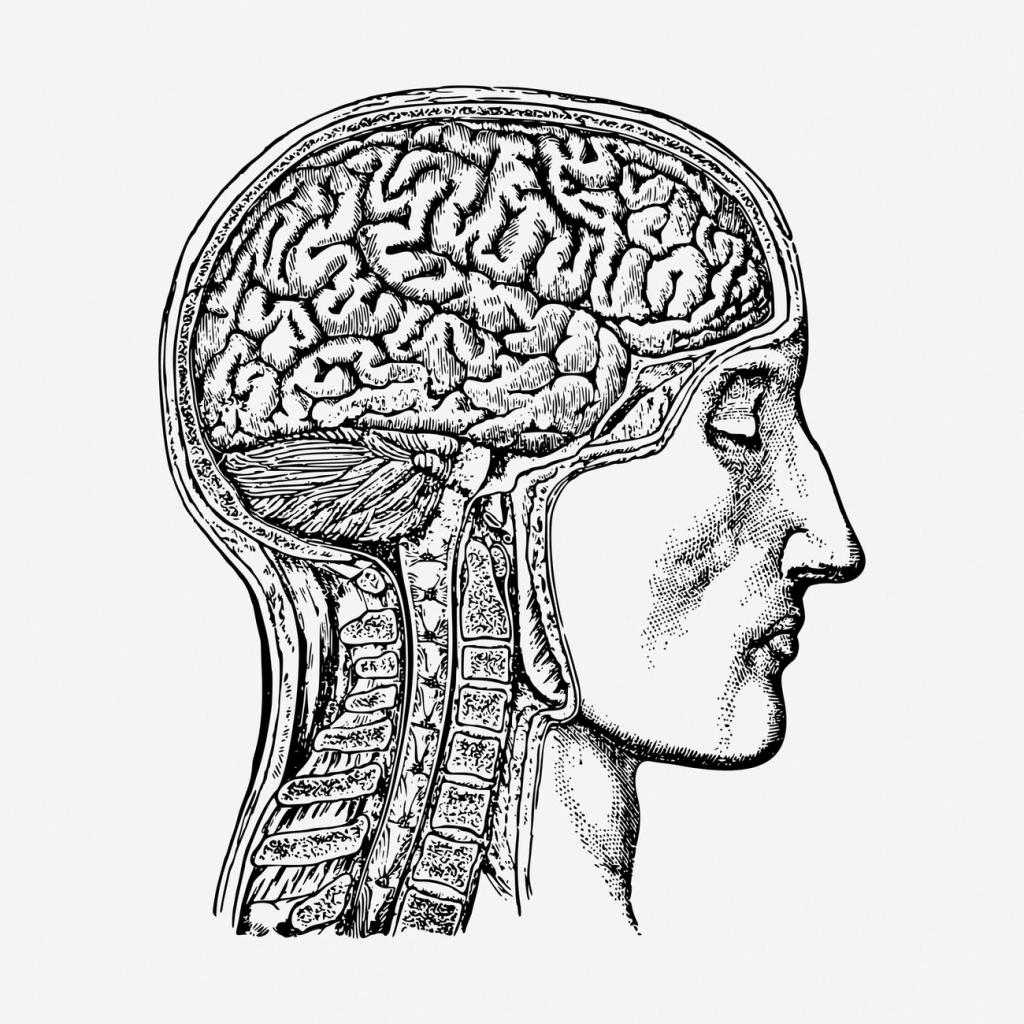
Dan Kahan[1] [2] and Brendan Nyhan[3] suggest this is exactly what happen in most peoples minds, most of the time. They think that considerations like pride and group loyalty far outweigh the effects of evidence and logical process. Our space is limited; but we hope the extensive bibliographies below will convince readers of the essential value of their insights, “If I admit I am wrong, then I have lost face” is where most people come from. And suddenly we see: This terror of looking weak, of jeopardising social status, lies behind so many of the mysteries we have struggled with here for five years now. Why does emotion seem to always triumph over reason? Why do objective facts, on things like Climate Change or vaccination, so utterly fail to change preconceived views? How indeed have issues of pure science become mired in questions of group identity and gender role?

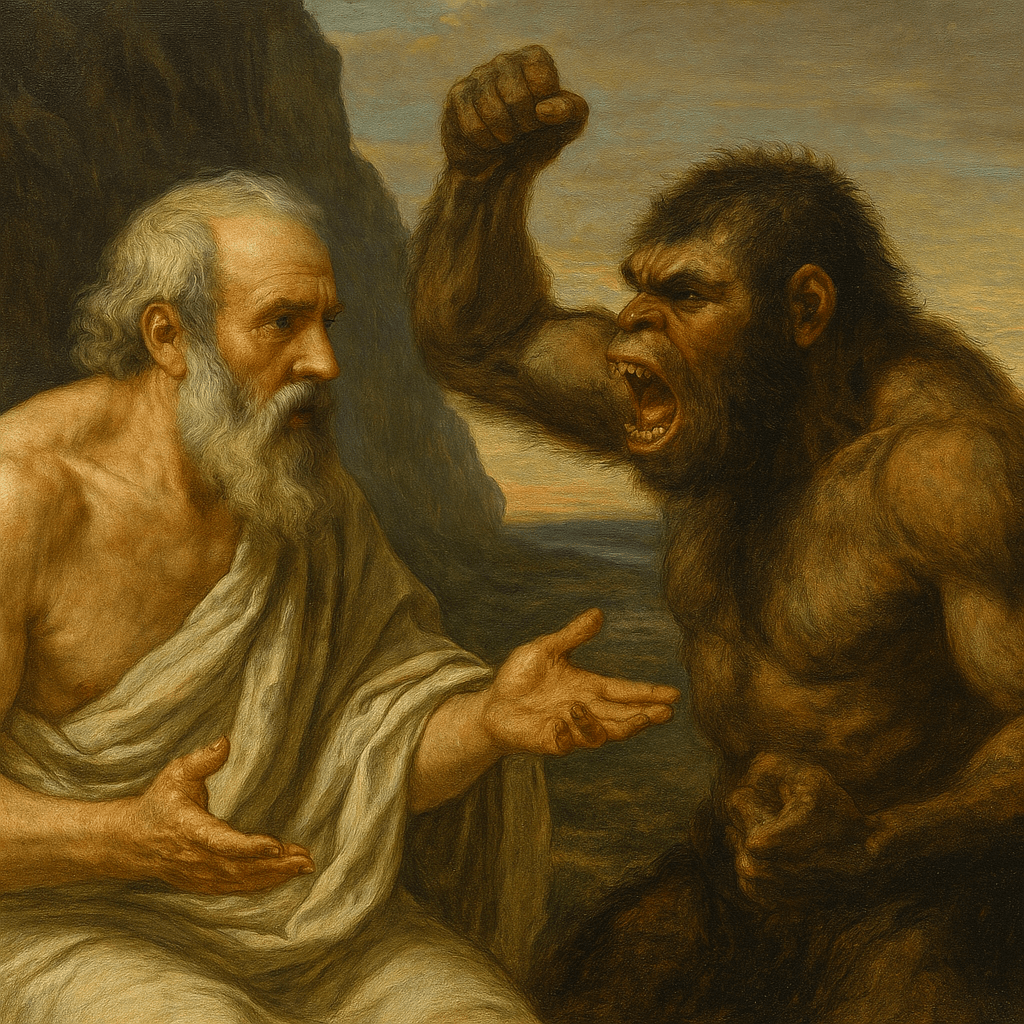
Veteran readers will recall our long-held belief that reason and evidence are the principal survival adaptations of this species. We can never be as strong as bears, nor swim as well as whales. It was these qualities of intelligence that allowed a small weak ape to survive, and prevail. There have been times when these qualities did indeed seem to dominate, briefly. And other times when these qualities were almost extinguished by barbaric ignorance and brutality. Somehow, reason survived and recovered, and even went on to brief triumphs in eras such as the Renaissance or the Enlightenment. The difference now is that the threats such as Climate Change or pollution are existential. If not addressed, this species will become extinct. Yet the very people who might solve these problems-scientists, lawyers, independent journalists- are becoming fewer. Their voices drowned, their budgets starved by the hysteria of the mob and its angry leaders. If humanity is to survive, intelligent people must find ways to first protect themselves, and then prevail once more. But how, and if we have enough time, are complete unknowns,

Kahan, Dan M.; Peters, Ellen; Dawson, Ellen; Slovic, Paul. “Motivated Numeracy and Enlightened Self-Government.” Behavioral and Brain Sciences 38 (2017): e56.

Kahan, Dan M.; Braman, Donald; Gastil, John; Slovic, Paul; Mertz, C.K. “Culture and Identity-Protective Cognition: Explaining the White Male Effect in Risk Perception.” Journal of Empirical Legal Studies 4, no. 3 (2007): 465–505.

Nyhan, Brendan. “When Corrections Fail: The Persistence of Political Misperceptions.” Political Behavior 32, no. 2 (2010): 303–330.

#reason #education #psychology #science #learning

Weekly Round Up: Eternal Life, China takes over, Russian Problems and a dialogue of the deaf. What a lot to think about!

We couldn’t help noticing these thought provoking tropes!

The Brain that Lived for Ever According to The Guardian, eternal life may be just around the corner. Dr Ariel Zeleznikow-Johnson is hoping to extract our brains and preserve them, in order that future generations will revive them and help us to live forever. Assuming that is, that they can bothered-who needs a clapped-out 21st century brain when you have quantum computing wired into your own? Perhaps John Agar and the Brain from Planet Arous were on to something after all. https://www.theguardian.com/science/2024/dec/01/with-brain-preservation-nobody-has-to-die-meet-the-neuroscientist-who-believes-life-could-be-eternal

If America Stumbles, will China take over? If America really does pull out of the Climate change agreements, any claim to moral leadership and soft power will have been vitiated. Forever. It will give the Peoples Republic of China the right to step up to the plate and lead the world to safety. Who can blame the rest of us if we follow? Here’s Justin Rowlatt for the BBC https://www.bbc.co.uk/news/articles/c3rx2drd8x8o

Russia’s best week turns sour Election of Donald Trump, more advances on the battlefield, free nations losing heart: what’s not to like for Russia’s Vladimir Putin? Except that his Syrian outpost is cracking and his economy is slowly going down the tubes, as this article from The Conversation makes clear. Like Britain in the 1940s he has sold out hope of future growth for the sake of victory here and now. In effect, his empire is really just a satellite of China. But maybe that’s a good thing for the rest of us-see above . https://theconversation.com/russian-rouble-collapse-exposes-deep-problems-in-the-countrys-economy-244869?utm_medium=email&utm_campaign=Latest%20from%20The%20Conversati

Why don’t they listen to scientists? A running theme of this blog is that the world never seems to notice the work and methods of science(except when it needs vaccines in a hurry) There’s no easy answer, if the popular mind deals in emotion and stories, and the scientific one in reason and evidence. Nature Briefings offers this thoughtful discourse Why we’re not solving more with Science

A Nature global survey finds that most specialists are unhappy with systems that provide science advice to policymakers. Eighty per cent said their country’s science-advice system was either poor or patchy, and 70% said that governments are not routinely using such advice. Nature’s survey — which took place before the US election in November — together with more than 20 interviews, reveals where some of the biggest obstacles to science advice lie. Eighty per cent of respondents thought policymakers lack sufficient understanding of science — but 73% said that researchers don’t understand how policy works. “It’s a constant tension between the scientifically illiterate and the politically clueless,” says policy specialist Paul Dufour.Nature | 15 min read

Well that’s it for this week. We don’t profess any religion here, but we are fans of 17th century English, brought up on the resonances of Shakespeare and Milton and the King James Bible. Which is why we have chosen this cadent little homily from their version of Proverbs 12 3 to send you away

Happy is the man that findeth wisdom and the man that getteth understanding/ for the merchandise of it is better than the merchandise of silver and the gain thereof than fine gold/she is more precious than rubies and the the things thou canst desire are not to be compared unto her

(it applies to women, too)

#china #america #climate change #neurology #the brain from planet arous #russia #vladimir putin #reason #emotion #evidence