Did St John predict the Fall of the Roman Empire 300 years ahead?

One thing we’ve always admired at this blog is someone whose predictions come true. Over the years we have praised seers as diverse as Edmund Burke, Gillian Tett, John Maynard Keynes and Rachel Carson, among others.(LSS passim) And one thing they all had in common: they called it before it happened which is not bad prophetting. To which illustrious company we would now like to add St John the Divine, the Patmos bloke, whose Revelations not only bookends to the whole Bible, it has generated no end of controversy and interpretation ever since.

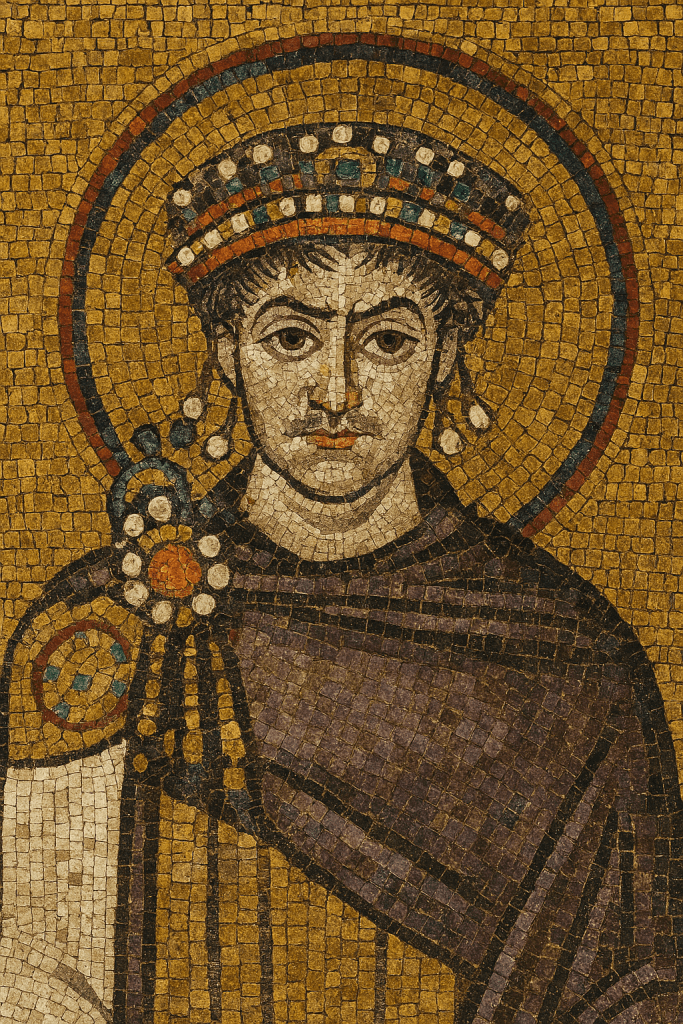
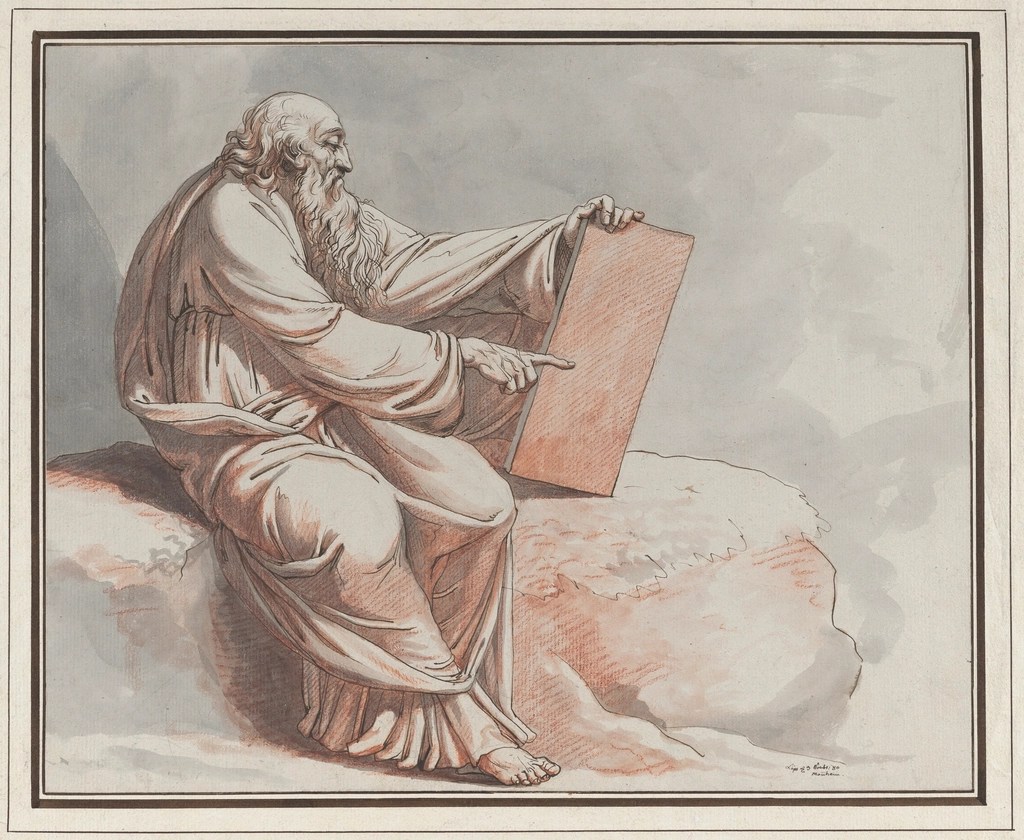
Now we freely admit that St John doesn’t come across as a congenial fellow. A bit irascible and censorious, you might say. Not the sort of chap you’d invite round to your next dinner party to show off your latest bottle of Waitrose Claret. We suspect he even had a huge beard(always a warning sign) and the sort of scowl which instantly disapproved of conversations about holiday homes on Greek islands. But just pay attention to two of the things he wrote, around 95 AD while sojourning on one of them:

For all nations have drunk of the wine of the wrath of her fornication… and the merchants of the earth are waxed rich through the abundance of her delicacies.” (Revelation 18 3)

Now follow it up with this little bon mot

Come out of her, my people, that ye be not partakers of her sins, and that ye receive not of her plagues.” (Revelation 18 4)

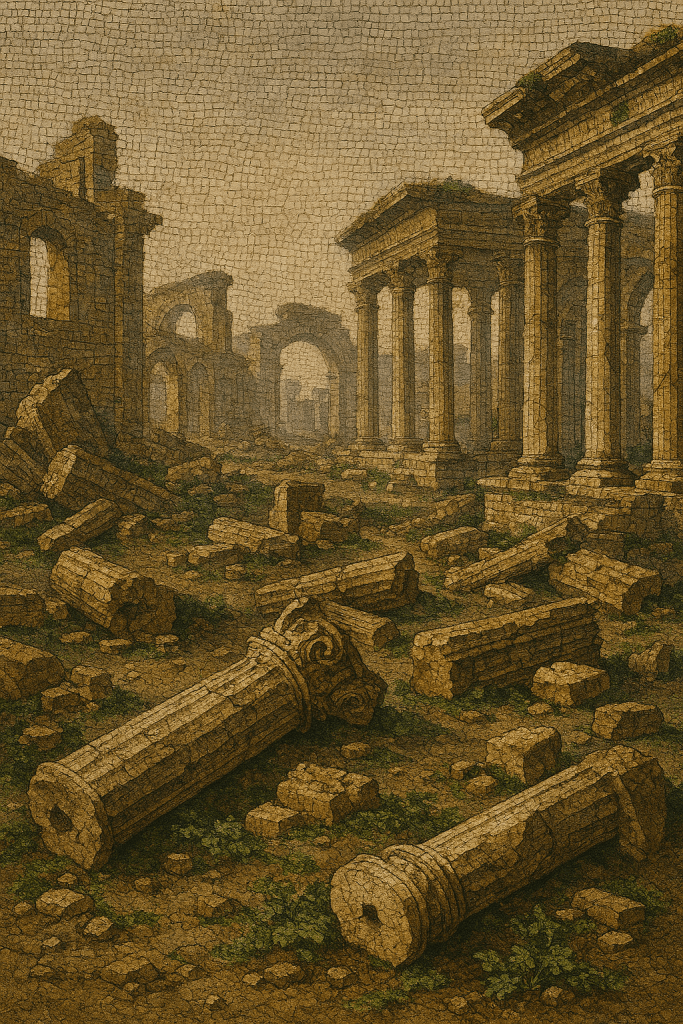
All written when the Roman Empire was at its most prosperous and powerful height. Which leads us to the works of two authors who have explained two of the greatest mysteries which have ever bedevilled our minds: why was Rome(Republic and Empire) so successful? And if so, why did it so undeniably fail, around about 400 AD? The first of these answers was provided by the great Professor RH Davis in his immortal History of Medieval Europe [1] It was the genius of Rome to unite all the peoples of the Mediterranean into a single trading block, in which therefore peace and prosperity flourished by the standards of the time. Hence all those parties of which St John so heartily disapproved. And the second was Professor Kyle Harper who so convincingly demonstrated that much of Rome’s Fall was due to terrible plagues, such as the Antonine and Cyprian which entered the Empire and spread so well because of the efficient trade networks it had engendered. Two strikes, and Rome was out.

So how did a miserable old git, sitting alone in his shack while the rest of the island partied, get it so right? Was he a diva at economics? Epidemiology? Was he just lucky? Or could it be, was it just possible he had it from Someone who knew for sure-and whispered in his ear? we leave you to judge.

[1] Davis, R.H.C. A History of Medieval Europe: From Constantine to Saint Louis. London: Longman, 1970.2nd edition Longman1989 see especially pp 3-7

[2] Harper, Kyle. The Fate of Rome: Climate, Disease, and the End of an Empire. Princeton: Princeton University Press, 2017.

#St John the Divine #Revelations #prophecy #Roman Empire #History #epidemiology #climate change #economics

When a culture turns away from science, its decline begins

Fans of the old Jacob Bronowski TV series The Ascent of Man will recall a key episode. In the early seventeenth century the Catholic Church decided to persecute aspiring scientist Galileo Galilei. In 1633 the Inquisition even put him on trial for having discovered that the Earth goes round the Sun. Using the threat of torture, they forced him to deny this simple reality. Bronowski’s take on all this was to assert that this was the key step which sent the Catholic part of Europe (hitherto the dominant bit) into decline. Scientists and scholars fled to the more tolerant environment of Protestant Europe, whose economies benefitted accordingly. The few Catholic thinkers of note remaining (Descartes and Pascal spring to mind) But they were like the last rays of a setting sun, before darkness and superstition suffocated all.

A one off? Special pleading? History suggests otherwise. From about the 8th Century to the 13th of the Christian Calendar (apologies to Islamic readers, but let it do for now) the Islamic world was dominant not only in trade and war, it was supreme in all the skills of learning and science. Thinkers such as Al Khwarizmi, Ibn Sina (known as Avicenna in western lands) and Al Birani made contributions to human learning which will last forever. Yet, starting about the middle of the twelfth century CE there was a slow but steady trend away from reason and science towards deeper religious orthodoxy as Hilel Ofek explains in his essay Why the Arab World rejected Science [1] Slowly the northern nations began to close the gap and eventually move ahead. Nearer our own time Corelli Barnett showed how Britains decline began as abstract studies of things like Latin and Greek came to dominate the Universities, while subjects like science and engineering were accorded second rate status. [2] [3] The values of a well entrenched landed aristocracy won out over the more plebian instincts of the middle class . With long term disastrous consequences for Britain’s place in the world

And the relevance of all this? Across the western world, there is now a strong, growing and incredibly well-funded movement against science and objective evidence. [4]It’s felt in policy debates on economic questions, university funding, on vaccines, and above all in the swirling brawls around climate science and global warming. The temptation is to put all this down to the ebbs and flows of political debate. But that is to miss the point. Questions of science are not political. They are not open to understanding by the mental tools developed for political and religious debate. A nation, a whole culture is being continually weighed in the balance, and can fall at any time. Is this now happening in the so called “advanced ” western nations.

[1]https://www.thenewatlantis.com/publications/why-the-arabic-world-turned-away-from-science

[2]Corelli Barnett The Collapse of British Power 1972

[3[ Corelli Barnett The Audit of War 1986

[4]https://www.theguardian.com/commentisfree/2025/mar/20/kemi-badenoch-net-zero-brexit-right-clima

#science #global warming #climate change #reason #history #christianity #islaam #british empire

No, Trump is being perfectly rational. That is is the real problem

A lot of abuse has been hurled at US President Donald Trump in recent days, particularly by those who have been inconvenienced by has actions. He has been accused of baseness of character, of capriciousness, of lacking moral fibre. But before we rush to judgement, let’s look at his action through the eyes of history. And a pattern emerges: he is taking the classic decisions made by an empire in decline, one that realises it can no longer be strong everywhere and therefore tries to husband its resources.

The first signs of decline in the British Empire were the need to concentrate its hitherto hegemonic naval forces in the North Sea and hand the security of its eastern possessions to an alliance with Japan. But the more telling historical parallel is with mighty Rome. From the fourth century onwards, Emperors like Constantine I and Julian realised they no longer had the men or the money to hold whole areas with regular Roman troops. Instead they handed over responsibility to foederati: barbarian tribes who marched under their own kings. In theory they were loyal allies of the Emperor, defending outlying provinces, But they spoke their own language, fought their own way and lived under their own rules. Where they were stationed Rome existed in name only. And that not for long.

Now Trump seeks to hand over defence of Ukraine to European allies. The American machine can no longer support the burdens it once carried with ease, and must choose its most dangerous enemy against which to concentrate. No, Donald Trump is not mad, nor disloyal. We think he and his advisers have looked into the books of the American Empire, and have found some very bad things indeed. They are trying to act accordingly, in order to slow its decline . Perhaps they will be temporarily successful, perhaps not. But decline is the result of long term historical forces, and once underway cannot be stopped. The rest of us, particularly former provincials in the Empire, once basked in the luxuriance of its protection. Now we must look to our own safety. Urgently.

#USA #China #donald trump #roman empire #history #geopolitics #NATO #europe

The article we have attached contains everything you need to know(almost)

The Fall of the Roman Empire and the rise of Christianity are the two dominant events in Western Civilisation. For they form the framework of our entire intellectual approach to belief, to art. to science and to politics and society. The doings of Gregory the Great, Charlemagne, St Francis Xavier, Napoleon, the Founding Fathers of the USA, and many others were all entirely conceived and framed in that meta-narrative, The Renaissance, Enlightenment, and Christianisation of vast areas were due to those who still avidly studied Greek and Latin, or spoke daughter languages such as French, Spanish and Portuguese. How did the Roman Empire transform so quickly? And then collapse?

Dr Jonathan Kennedy[1] thinks he has the answer. Following closely the work of Professor Kyle Harper, a scholar we have often cited in these pages (LSS 13 5 24,24 6 21 10 3 21) he sees the plague of Cyprian of the mid third century as the key tipping-point. There had been a terrible plague before: the Antonine one of the late second century, but somehow, like a groggy fighter getting up off the canvas, the Empire had recovered. This time was different. This was the time that the Old Gods failed. They lost the people’s hearts forever to a new God, who, until then had not been doing notably well. And anyone with even a casual acquaintance with Roman History will tell you, the whole feel of the Empire changed in those fifty crucial years. A citizen of Alexander Severus(d 235) inhabited a world of temples, philosophers, the agora and open towns in a vast trading network, which would have been recognisable to Cicero, or even Plato. A subject of Diocletian(reigned 284-305) saw a world of Churches, walled towns, command economies: the Middle Ages in the bud. The Plague of Cyprian sits right across these years, although Professor Harper also cites climate change, as old LSS buffs know well.[3]

So- most of what you need to know? Well, yes, today more than ever. Once again a society that imagined itself to be prosperous and enlightened sees its very foundations threatened, The old open trade routes are rapidly giving way to protectionism. Massive climate change hovers in the wings. We have already had one pandemic, and it almost wrecked our economies. Others threaten. As we write these words news comes that avian flu has once again jumped the species barrier, wiping out a valuable collection of rare cats in the State of Washington in the USA.[2] If not this influenza, there will be others. Is our world about to be transformed again, forever?

[1]https://www.theguardian.com/commentisfree/2024/dec/25/birth-jesus-plague-roman-empire-christianity

[2]https://www.bbc.co.uk/news/articles/clyvx4d1n4vo

[3] Kyle Harper The Fate of Rome Princeton University Press 2018

#plague of cyprian #christianity #roman empire #pandemic #economics #society

How an old History Book still has very real lessons for today

It’s funny how some books suddenly explain something you’ve puzzled all your life. One of our obsessions was always “What was the Roman Empire all about? And why did it fall?” And we ploughed our way through everything from Gibbon to Asimov’s Foundation series. Until we came across RH Davis A History of Medieval Europe”[1]. Suddenly, things began to fall into place.

Before the Industrial Revolution, it was far cheaper to transport goods by water than by land. The achievement of Rome was to be the culminating power that united the whole Mediterranean Basin into a single, prosperous trading area. Where cities could flourish, ideas spread and production be subdivided to the most efficient source. And to do it all with the minimum effort. This was partly by religious tolerance: before Christianity, all beliefs and none were accorded equal status. But it was also done by Law. As Davis explains

“…….[The Romans] knew that all the Mediterranean peoples had a common interest in the commerce of their sea…….they believed that all men had by nature an instinctive knowledge of what was right and what was wrong…and that it was possible to frame laws in accordance with the standard of nature. They distinguished between custom, which was of local significance and law, which appertained to justice and was of universal significance …...

But the barbarians who entered the Empire did not quite see things that way. Most of them-Goths, Burgundians , and so on, came to enjoy, not destroy. But:

barbarian invaders claimed that their own laws were were particular to themselves, since they were not founded ..on reason, but on the dictates of their divine ancestors….[the Roman Empire] was… cracked by the determination of barbarian invaders to prefer the law of their ancestors to the law of reason, since that preference implied the superiority of loyalty to one’s race over loyalty to the civilised world. It was shattered when traders lost the freedom of the sea. When that happened , the greater part of Europe reverted to an agricultural economy, in which there was no place for the cities that made men civilised” (all quotes pp 4-6)

Today, after a brief period of globalisation, we live in an age of retreat. In most places, people are reverting into ethnic or religious tribes. There are cries to tear down even the few international laws we have, which might have done some thing to keep the peace. Now, there is a very respectable argument to say this is in accordance with the most basic instincts of human nature. And so it might be. But Davis tells us very clearly what the price must be if we now follow this that course. The Dark Ages.

[1] RHC Davis A History of Medieval Europe from Constantine to St Louis Longman 1988

#RHC Davis #Middle ages #medieval #trade #henri #pirenne #dark ages #antiquity #economics