Is Globalisation over? Steve Schifferes worries what comes next

Recently the residents of the Canadian State of Ontario irritated US President Donald Trump by running a series of TV ads showing former President Ronald Reagan disparaging trade tariffs,. Why would such hero of the global Right have taken such a heterodox view? The answer is that Reagan thought that free trade was the best way to distribute prosperity as widely as possible. Under the hegemonic power of the United States of America of course. And he had good evidence for this belief, as Steve Schifferes makes clear in this article for the Conversation.

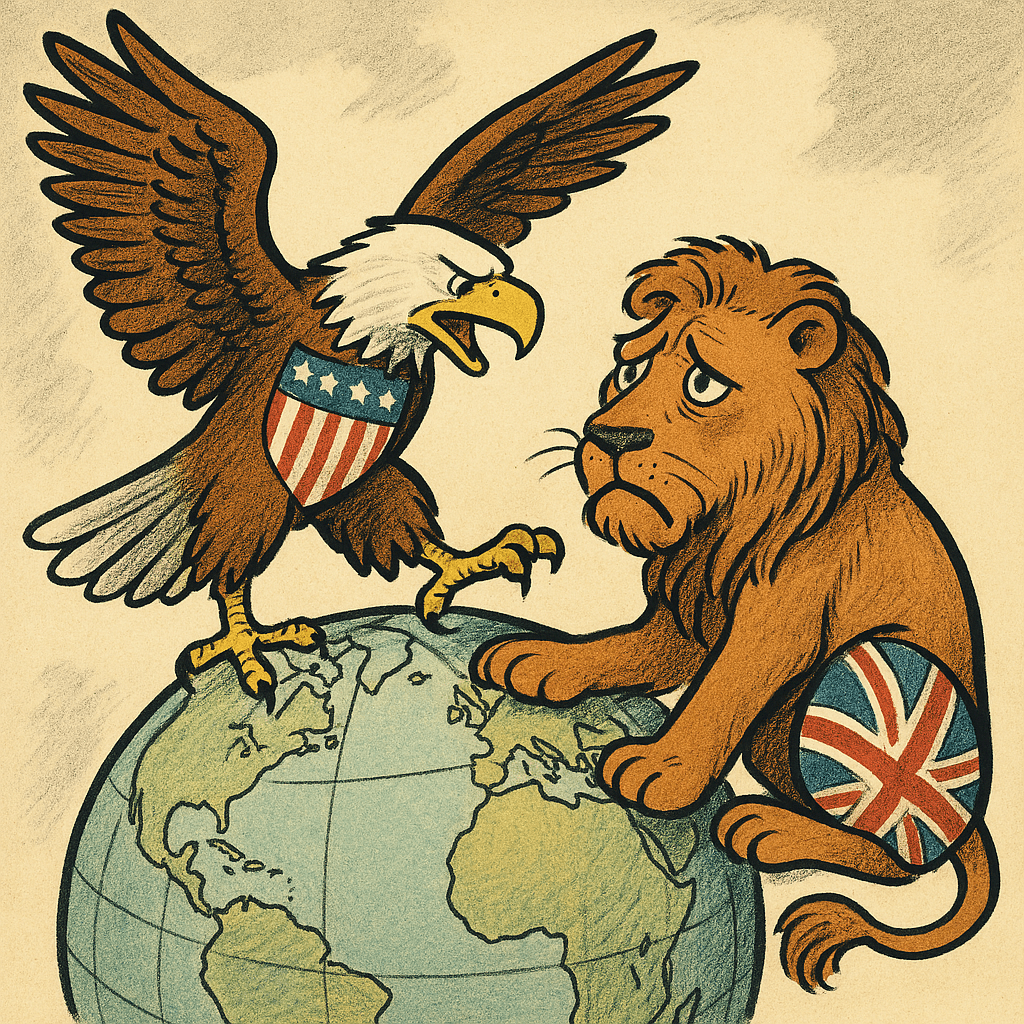
Schifferes is such a good writer. His sentences are always short and to the point, He keeps away from jargon. Which clarity allows him to range over the last 400 years or so of history tracking the rise and fall of the various powers-China, France, The Netherlands, Britain the USA all of whom aspired to the hegemonic position in world affairs. In the first of two such called The Rise and Fall of Globalisation: the battle to be top dog he comes to one overarching conclusion. Things go better, and the world grows when there is one such dog. The period of British dominance , roughly 1815-1914 was marked by ever closer union of world markets and ever greater flows of capital and people. The American hegemon, roughly lasting from 1944 to 2016 was a second such example. The great problem for the world was that, as Britain stepped down in 1918, the USA did not step up to the plate. Leading to two decades of deep economic and international stability that culminated in the most destructive war in History. This one we shall urge you to read, gentle readers. It not only describes, it explains.

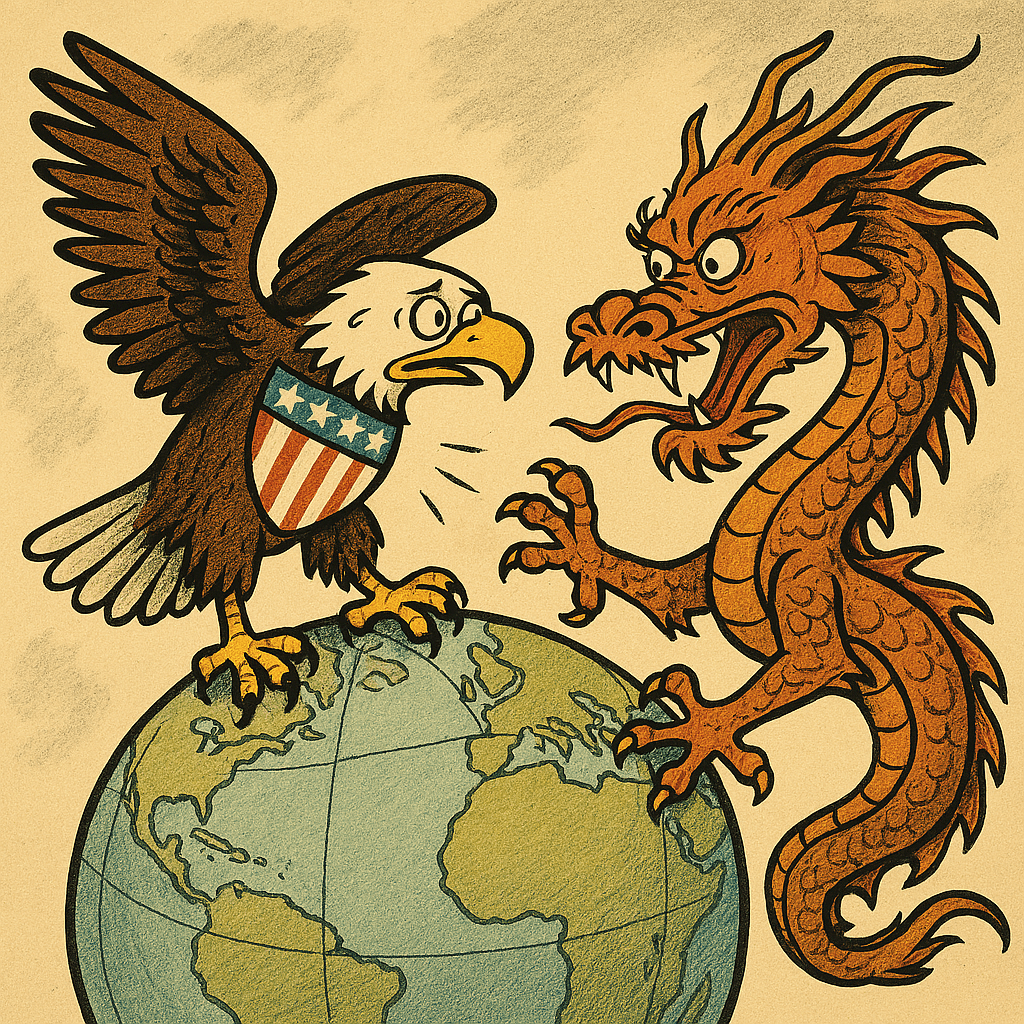
And now? Populists everywhere not only proclaim that globalisation is dead, they actively seek to undermine it wherever possible. Tariffs, restrictions on free movement of goods and people, hostility to learning and science-all indicate the flow of history is one way. Yet populist nationalists can point to one overarching weakness in the globalists argument. The whole system when it worked, depended on the successful nationalism of one nation,the hegemonic power. Their nationalism was a good thing. From which many concluded “if nationalism is a good thing, we want some of it too.” So as the hegemon declines, as America now does precipitously, they will assert their own nationalisms more and more. World war Three anyone?

[1]https://theconversation.com/the-rise-and-fall-of-globalisation-the-battle-to-be-top-dog-267910

#steve sciffereres #history #economics #trade #USA #war #globalisation

Heroes of Learning: Alexandra David-Neel

Today we celebrate the life, travels and accomplishments of Alexandra David-Neel (1868-1969) who died tragically young, one month short of her 101st birthday. Yet in that time managed to pack in as varied a CV as anyone ever has. Explorer, feminist, writer, mystic, opera singer, anarchist and first westerner to enter the forbidden city of Lhasa. [1]

Her exposure to the world started early when her father took her to visit the memorial to the recently executed Communards in1871. Whether this troubled her we cannot say. But her teenage years were certainly feisty. By the age of 18 she had clocked up travels to England Switzerland and Spain, on the way encountering controversial characters like Madame Blavatsky and getting herself enrolled in the 30th degree of Scottish Freemasonry.By 1899 she had written her first books and converted to Buddhism. But it was only as the curtains lifted on the twentieth century that she really got going. The next 46 years read like a whirlwind of adventure which would leave Indiana Jones green with envy. She got out East by becoming a successful opera singer in what was then called Indo China. After that her perambulations included vast stretches of India, Sikkim(where she lived as an anchorite in a cave) China, Mongolia, Tibet (hence the Lhasa episode), interspersed with marriage and a peaceful interludes in Digne-les-Bains in Provence.

It was here she finally retired for last decades of her life, . as the burden of her exertions caught up with her. It is interesting to recall that this quintessential nineteenth century explorer actually died after Neil Armstrong had placed his famous first step on the Moon. But we guess that she must have approved. We hope our links will tell you more about this energetic, learned and above all courageous woman. A beacon of learning indeed in dark times.

[1]https://en.wikipedia.org/wiki/Alexandra_David-N%C3%A9el

[2]https://avauntmagazine.com/alexandra-david-neel

#tibet #buddhism #lhasa #dalai lama #provence #china #sikkim #neil armstrong

1st September 2025: the day world history changed forever(you did notice, didn’t you?)

Today, or yesterday (it’s all a bit muddled what with time zones, deadlines and so on) world history changed forever. Because the two biggest powers on the planet have started to come together. Making Asia potentially one huge zone of economic co operation. the true centre of economic and political power in the world. Yes, Mr Xi and Mr Modhi have started to talk about the joint efforts of 1.416 billion Chinese and 1.464 billion Indians. all increasingly prosperous and tech hungry. All of which trumps the 347 million Americans who so recently seemed to have the world game so utterly in their hands(anyone remember George W Bush?)

Ah, critics might say- but look at the GDP figures. America at $30.51 trillion is still comfortably ahead of both its enemies combined($23.4 trillion) But a Briton in 1900 could have pointed to similar figures which showed how rich they still were, ignoring the growth potential of rivals like the USA and Germany. And ominously, the current USA is in a bad position here, with 1.9% against China’s 4.0 % and India’s 6.9% The conclusion is obvious; the USA is fast on the way to becoming a regional, local power. It’s days of strutting the world like a colossus are over, or very nearly so.

And how has this come about? There have been long term trends of course. Growing inequality. political polarisation and corruption of its legal system have been in evidence since 2000 at least. The Iraq war of 2003 was an epic blunder and the crash of 2008 fatally undermined the rationale of the American order. But until recently America still represented an open democratic country Rational independent institutions. inalienable Rights , Something worth fighting for, both for its own people and for its allies. But now those allies are humiliated . [2] Others, not allies but still potential partners, alienated by irrational and erratically applied tariffs, rush to form their own blocs and trading systems. It was easy to believe that Mr Trump and his policies made sense at least from the point of view of their own country. Now the damage is not only deep, it is permanent. Welcome to a new world order.

[1]https://www.bbc.co.uk/news/articles/cp37e8kw3lwo

[2]https://www.independent.co.uk/news/world/americas/us-politics/trump-tariff-ass-kissing-nrcc-hannibal-b2729968.html

#china #india #usa #donald trump #narendra modi #Xi Jinping #geopolitics

Is all the money in the world running out?

Is the United States of America about to go bust, the way that previous empires like Spain and Britain did? Critics point to astronomical levels of government debt ( it’s now a whopping 123% of GDP) and ballooning trade deficits. Exactly the opposite to the US position just over one hundred years ago when it elbowed aside Great Britain to make Uncle Sam the dominant world player. “Ah”, counter the critics” if you have the world’s reserve currency you can issue as much debt as you like. And the fact that America has independent institutions makes its bonds the safest bet in the world for foreign investors”. So-no problem then? Perhaps. The trouble with debt is that it’s OK until it isn’t. As interest rates start to rise (as they have been doing for some time) the rising costs crowd out all sorts of fiscal flexibility. Especially on crucial issues like defence, health and education. As for the United States much vaunted institutions- recent events have put their independence in very great doubt indeed. [1]

But before we heap all the opprobrium on poor old America, don’t forget everyone else is doing it too, Japan is running debt at an eye watering 250% of GDP: while in France things are so bad , there are even rumours that they are flirting with an IMF bailout[2] If stalwarts such as they are in such deep trouble, what hope for less prosperous nations? The answer, chillingly, is not much. According to a report by Schroders [3] the levels of sovereign debt around the world are so high that they represent a real risk to future investment, growth and healthy trade. In effect the repayments will come to stifle most normal economic activity. Though the authors are careful not to go quite this far, what worries us is that if this activity slows, then there may be a real risk that many nation states may become structurally unable to ever repay their debt. If sovereign bond markets cease to function there is no real stable credit, In effect. all the money in the world has run out. The political, social and military consequences of that would be interesting indeed.

[1]https://edition.cnn.com/2025/08/29/economy/trump-fed-turkey-argentina

[2]https://www.theguardian.com/world/2025/aug/27/france-on-the-brink-political-crisis-economic-francois-bayrou

[3]https://www.schroders.com/en-gb/uk/institutional/insights/sovereign-debt-dynamics-the-alarming-backdrop-to-rising-geopolitical-risk/

#sovereign debt #USA #japan #france #economics #finance

Is Donald Trump A socialist? It’s really about tariffs

A few months ago we published a little blog(LSS 7 4 25) in which we wryly suggested that the policies of Donald Trump. especially on trade tariffs, more resembled those of socialists like Tony Benn than those of classic right wingers like Ronald Reagan. Our aim was less with ideology and more with practical matters: will the tariffs work? We even pointed out that, with advances in automated techniques like AI, it was pretty unlikely that huge numbers of jobs would be created in manufacturing, even if the tariffs really did change the pattern of trade in the way Mr Trump desires.

It’s view shared by professional economists of some standing, as this article by Steven Greenhouse for the Guardian points out. For example Ann Harrison of UC Berkeley, not only shares our thoughts on the automation thing. She also points out that to be successful, tariffs need steady application over decades. Trump’s wildly erratic “they’re on. they’re off” approach seriously impedes investment planning. And how long has he got anyway? Would a successor-perhaps JD Vance or a younger member of the Trump dynasty-have the same approach? While Michael Strain of the impeccably right wing American Enterprise Institute worries that all these tariffs will simply raise costs for most US manufacturers – a serious own goal if ever there was one. The various experts raise other questions too. Will the so called pledges of investment from other nations really materialise? Will the tariffs create an archaic automobile industry based on petrol, hopelessly unable to sell a single unit to a world which has long since moved on to electric? Frankly, are tariffs high enough to achieve their stated purpose(yes, that surprised us too) But all of these are laid out in Steven’s excellent article.

Tariffs are like many things. Sometimes they’re good and sometimes they’re not. If they were all good, then every nation would set them at 100%. If they were all bad, they would have been abolished long ago. The real mistake is to implement a good idea with insufficient care and attention. Now that really does resemble many socialist regimes of the past.

[1] https://www.theguardian.com/us-news/2025/aug/18/trumps-tariffs-manufacturing-resurgence-jobs

#donald trump #socialism #capita;ism #tariifs #trade #economics #american enterprise institute

The best time to be alive: Candidate #1 Tang Dynasty China

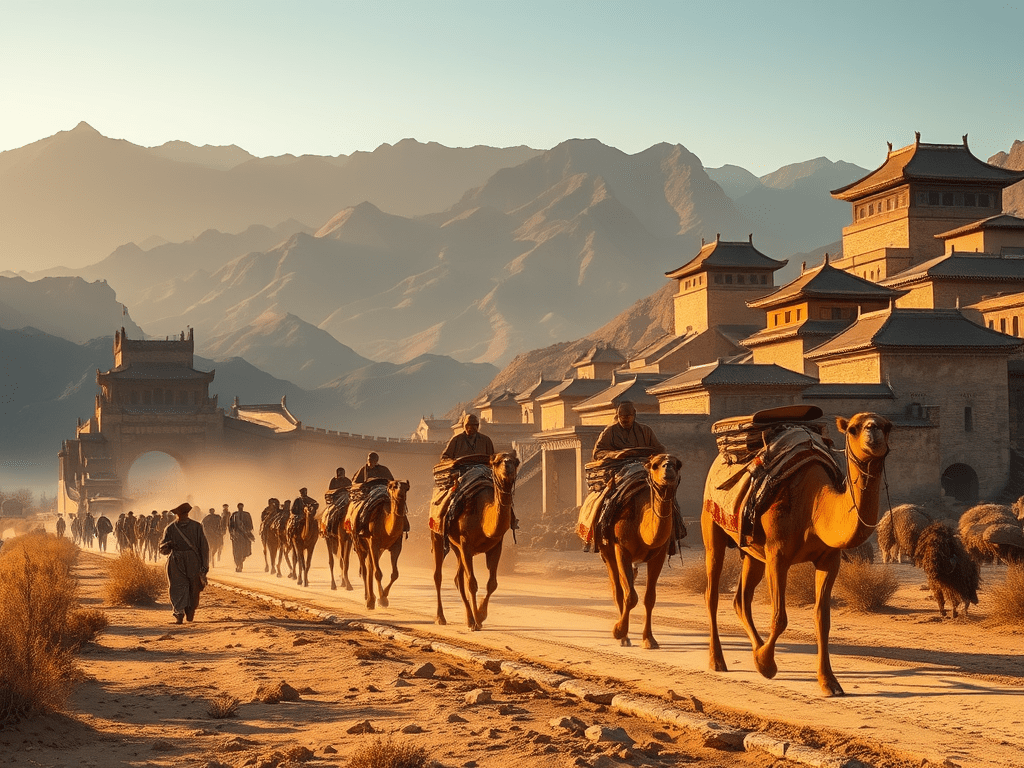
Imagine you lived in the greatest city in the world. Its streets are bustling with merchants who buy and sell goods from every known country, and many more that lie beyond the limits of knowledge. Such was Chang’an, (now Xi’an) capital and chief entrepot of China’s Tang dynasty (618-903 CE)[1][ With nearly a million residents and over 100 ethnic communities, it was more Babel than Beijing. Zoroastrian fire temples stood beside Buddhist pagodas and Nestorian churches; street food fused Middle Eastern spices with Chinese noodles. Foreign diplomats rubbed shoulders with camel-driving traders from Samarkand. The city was so tolerant and worldly that speaking Turkic or Persian on the street raised no eyebrows. Poets such as Li Bai and Du Fu flourished , as did artists such as Han Gan and Zhang Yuan. There were far reaching technological advances such as wood block printing and all presided over by relatively benign Emperors backed by a professional and highly educated Civil Service.

We’ve picked the Tang because it illustrates the essential doctrines of the great Professor RH Davis who knew that it was trade that made cities, and cities which make humans civilised. He was writing about Europe. Yet Chang’an under the Tang was one example of what humans can achieve when they try. No wonder the modern Chinese feel they need take no lessons from westerners in how to run a civilisation. The Silk Road was essentially a Chinese invention. It was, and maybe still is, the greatest trading system in the world.

It all ended in tears of course, as did many of the other examples we shall consider in this series. The Lushan rebellion of 755-763 inflicted economic and human wounds so deep that the dynasty never fully recovered. And obviously there have been many advances in technical knowledge and in things like medicine, since the Tang fell. But if you wanted to give an example of when the ordinary Joe, people like you and me, could step from their house and feel a glad confident good morning, Tang China is a very good place to start.

[1]https://en.wikipedia.org/wiki/Tang_dynasty

[2] RHC Davis: A History of Medieval Europe from Constantine to St Louis 2nd edition Longman 1988

#china #Tang dynasty #trade #silk road #civil service #history

G7 v BRICS: is this how the sides will line up for World War Three?

We know we started out as a science based blog, mainly devoted to the encouragement of more research into antibiotics. If our brief has widened a little, it is because we cannot ignore the wider world around us. If that world decides to spend more on weapons of mass destruction, and less on antibiotic research, it impinges directly on us and our readers. Which is why this pair of articles from the Guardian caught our eye. They strongly suggest that the sides for the next world war are lining up. And the outcome is by no means certain.

On the one hand are the G7 group of countries, led by the USA.[1] Thirty years ago they had the game in their hands. Immensely rich, accounting for an enormous slice of the global pie, their triumph over the Communist bloc had seemed to set them apart . They were the world’s bankers, the world’s policemen, the world’s shop keepers. Since when, hubris seemed to set in and it has been downhill all the way. Iraq, financial crash, tariffs, Brexit…………These words are shorthand, metanymies if you will, for a deep moral rot that is grounded in an almost childlike reverence for the supremacy of financial markets and the sorts of people who work in them. Now as the admirable Joseph Stiglitz and his colleagues observe, the once mighty G7 is in danger of being little more than a front organisation for the interests of large American multinationals. A position sure to alienate many around the world.

Among the alienated are a group which starting out as the BRICS (Brazil, Russia, India, China and South Africa)[2] has expanded to include rising stars such as Indonesia. It may not be morally perfect either(its stance on Ukraine, and the fact that many members are autocracies cannot be overlooked). But its members are united on one thing: they are tired of the whims and policy lurches of the US, particularly under such a nakedly self-serving President as the current one. They are ready to have done with the traditional instruments of US domination such as the Reserve Dollar. And they are developing the economic resources to make these ambitions feasible.

History has two lessons. The decline of one hegemonic power and the rise of another is usually a signal of impending war. Another is the formation of alliance blocks; as one small event triggers a chain reaction of consequences. Think Europe 1914 as the case example for both. And don’t expect the supply of antibiotics to go up any time soon.

[1]https://www.theguardian.com/business/2025/jul/02/the-g7-has-once-again-put-multinationals-profits-over-the-interests-of-people?CMP=Share_iOSApp_Other

[2]https://www.theguardian.com/commentisfree/2025/jul/13/the-guardian-view-on-brics-growing-up-a-new-bloc-seeks-autonomy-and-eyes-a-post-western-order?CMP=Share_iOSAp

#G7 #BRICS #China #USA #IMF #dollar #geopolitics #brasil #russia #indonesia

Gold is King!: Did we actually get something right?

Last October (LSS 26 10 24) we published a fanciful piece which purported to come from June 2025. In it, we suggested that US President Donald Trump had raised tariffs to 60% on China and 20% on the rest of the world. (nah, impossible-ed)The resulting disquiet in the bond markets general loss of confidence in US assets and a fall in the dollar, seriously affected its status as the world’s reserve currency. In such circumstances we couldn’t in all honesty see any alternative to gold as the de facto reserve, with all the obvious disadvantages that brings. You will forgive us a modest cough, gentle readers, if we suggest that our little blog, for all it got wrong, seems oddly prescient if you fast forward( or back) to April 2025, a full month ahead of our crystal ball gazing!

Because the recent IMF report [1] suggests the very dangers to which we so modestly adverted you. are now real. Of course, the IMF is not perfect; it too will have its biases and unconscious assumptions like everyone else. But it is compiled by some of the sharpest and most knowledgeable financial minds on the planet, which is why their arguments should be at least engaged with respect. Which is why one aspect highlighted by the Guardian among others [2] has caused us particular disquiet. The writer points out that in the panic after COVID 19 got going back in March 2020, and the famous “dash for cash” it was only the Fed rescuing the US Treasury that prevented a total rout. However:

The real concern here is not technical dysfunction in treasury markets or the mechanics of the Fed, which are the bedrock of the global financial system. It’s about the politicisation of the monetary-fiscal nexus under a Trumpian regime that is fundamentally hostile to the norms of liberal-democratic governance. When even the dollar is no longer a safe haven, what – or who – can be?

There are signs already that gloom can be overdone. As we write these words, Mr Trump and his acolytes appear to be signalling a weakening of their stand on China. While his latest stance on Ukraine suggests bets on his resolve on any issue may be misplaced. In which case the world may breathe a little more easily. Stocks rose yesterday: and gold has fallen back, a little. We are not economic experts nor financial advisors. But as humble citizens with an eye for History we have to at least ask: how long can the dollar, and US Treasuries stay on top of this sort of thing goes on?

[1]https://www.imf.org/en/Publications/WEO/Issues/2025/04/22/world-economic-outlook-april-2025

[2] https://www.theguardian.com/commentisfree/2025/apr/22/the-guardian-view-on-the-imfs-warning-donald-trump-could-cost-the-world-a-trillion-dollars

#donald trump #USA #china #IMF #world trade #gold #bonds #equities #economics

Friday Night: A low Tariff Manhattan

This week Wall Street and its famous financial markets seem to be the centre of the world, don’t they? Just like in 1929 and 2008, for example. So where is Wall Street? We looked on the interweb and found it was in a place called Manhattan, which is in America, which is famous for having leaders of genius. So we thought we would celebrate this fact by bringing you a reprise of that famous drink, The Manhattan. Despite the connotations, how American is it really? Let’s assemble one and find out.

The real beauty of making a Manhattan is its simplicity : a child could do it, just like calculating tariffs. But as no responsible adult would ever let a child do either, we’ll accept you are making this yourself.  And if you do, you will find it is divided into two parts. A good patriotic all-American part. And a bad part, which requires Foreigners.

Ice Generally speaking, 100% Made in America. Not only does this attract no tariffs, but its production supply and distribution are all by American workers, thus creating any number of well-paid posts of employment. No nasty foreigner can ever threaten American Ice. If all  the stuff in the Rocky Mountains melts due to global warming,  they can just invade Greenland to get some more. 4 or 5 cubes for the average Manhattan, by the way,

Bourbon  As far as we know this too is made in America. Originally it was called whisky, which was made in somewhere evil and foreign called Scotland (although some of the golf courses are OK) And therefore quite rightly attracts a tariff . But if it is made in America there is no tariff at all, and the more Americans drink of it  the more colossal will be the numbers of high paying  jobs for American workers created thereby. Oh yeah, 3-4 measures will do.

Vermouth Now we come to the Bad Part. Because Vermouth (often branded with funny sounding names like Martini or Cinzano) come from Italy! Not only has nothing good, like science, art, literature, cooking  or architecture ever come from that country: behind the smiling mask of friendship, they are ready to have their way with American trade, American pizza, who knows, maybe even American ladies, the lotharios! No wonder it  now attracts huge tariffs! But since vermouth has been floating around Manhattans ever since that island became the financial capital of the world, you’ll just have to put up with it.  One measure of the red stuff should not put too much pressure on US Treasuries,

Mixing Get an American Worker to put each of the above components one by one into an American cocktail glass, made from American glass, as they will taste better. Make the American Worker stir them. He/she/they may now add a tariff-free American Cocktail cherry, on a stick made from good American Sequoia trees,  creating even more well paid secure American jobs. That done, you may drink your Manhattan. Only one, of course. And think of all the American jobs you have created thereby , which should compensate for those lost by the current slight adjustments in the Stock markets just over the road.

#donald trump #manhattan #stock market #bond market #economic crisis #Wall Street

Towards a World Government: Will Donald Trump be the First Emperor?

A few weeks ago we posted a series of blogs (LSS 8 1 25 et seq) wherein we speculated about the pros and cons of a hypothetical World Government. If you do things like that, you need to look seriously at the possible candidates. And it looks as if the first one has come along. It is Donald J Trump, erstwhile 45th President, and now 47th President of the United States of America, A man who according to his own lights is as antipathetical to the idea of international cooperation and world government as you can get. But read on gentle reader.

Because there’s a theory doing the rounds which suggests that, whatever his ostensible aims, this is what he will achieve. It goes something like this. The early weeks of the Trump administration have been marked by falling financial markets and wild swings of tariff policy that have engendered a widespread sense of chaos and unease. An angst which is entirely inimical to the interests of the United States and its wealthier classes. But really it is all part of a Cunning Plan. Eventually things get so bad that The Donald calls all interested parties to a huge meeting at his palace at Mar-a- Lago. There he makes the following offer. First all willing parties revalue their currencies upwards against the dollar. Secondly they cash in all current US Treasury bonds in return for 100 year securities, which yield no interest whatsoever. In return the willing receive military protection and no tariffs, Anyone else had better look out. The 1985 Plaza accords on steroids, you might say. Except this time, all financial power and military power accrues back to the USA which becomes, de facto, the world government. We have channelled the excellent Roge Karma of the Atlantic (via Apple News) for today’s link; [1] But many thinkers, including the learned Gillian Tett of the FT have been floating this since January (she gets namechecked in this one)

The trouble with Cunning Plans is that they don’t always work. There are several problems with this one, starting with the Plaza accords. When they were signed, it was by a small group of rich nations who held a common enemy(the Soviet Union) President Reagan had carefully nurtured good, respectful relations with his allies. The current administration, whatever its reasons, works by bullying, blustering and threats. Not ways to engender co-operation and consent. Secondly there are now large and proud players, such as India and China who are rapidly evolving their own interests. Why should they throw away these futures on a scheme designed to benefit the United States? But the final sinkers are the very nature of the United States and its 45th/47th President. Hisory shows that they are not a reliable military protector, as any South Vietnamese, Afghan or Ukrainian will tell you. And if Mr Trump is so keen to weaken the dollar, why does he come out so strongly in its defence as the world reserve currency, as Mr Karma so astutely points out? Someone in Washington clearly knows the value of this reserve status, and the mortal peril which its loss represents to US power. Such inconsistency invites no confidence whatsover.

Our verdict? America really did have the game in its hands between 1989 and 2003, when it was thrown away in the sands of Iraq. Trump is like the Byzantine Emperor Justinian,(527-565 CE) setting out re conquer lost dominions. Wishing ends without sufficiently weighing the means. If there is to be a World Government, it won’t be like this.

[1]https://www.theatlantic.com/economy/archive/2025/03/qanon-tariffs/682144/

#world government #donald trump #plaza accords #justinian #economics #politics #history