Broaden your mind with these two great brain stories from Nature Briefing

We believe that research into the human brain is the flip side of research into Artificial Intelligence. As the two will one day coincide, the more we know about both the better. So when Nature Briefing, that go-to Record for all things new and scientific, puts out not one but two (two, folks!) stories on the human brain, we felt it our solemn duty to bring you them both.

We have always believed that scaring people into doing things is counter-productive in the long term. Our worse fears are confirmed by this piece called Stress stops the Brain Joining the dots.

Acute stress makes it difficult to connect memories of past experiences with fresh information — a process crucial for making deductions. This could explain why people struggle to show insight under pressure. During psychological tests that involved making links between indirectly related pictures, brain imaging showed altered activity in the hippocampi of people who had been through a stressful mock interview compared with those of people who’d had to complete a simpler task, which suggests that their brains hadn’t inferred connections between the images as strongly.

Nature | 5 min read

Reference: Science Advances paper

Every epoch casts reality in its own image The Victorians though that everything in the world worked like a steam engine. Around 1910 they thought all was electric circuits. And Cold war people put us all down as computers. Every picture of the brain is an analogue, an attempt only as this piece The Brian is no machine makes clear.

In The Brain, In Theory, neuroscientist Romain Brette makes the case to move away from the predominant model of the brain, which treats the organ like a computer. Brette argues that engineering metaphors are often vague and misleading, and attempts to breathe life back into brain science by focusing on the study of the nervous system on biology. “Brette’s take-down of the field’s dominant theoretical frameworks is systematic,” writes neuroscientist Àlex Gómez-Marín in his review. “The book is intense and intricate. One can get lost in it, but it is worth the adventure.”

Nature | 7 min read

So our advice is study both of the above with close attention, gentle reader. It’s a no-brainer!

#neuroscience #artificial intelligence #biology #IT  #nervous system #logic #stress

Neural Maps show American Science at its best. But for how much longer?

If you want to explore the potential of a vast unknown region, first make a map of it. This why many of the finest minds from the sixteenth to the nineteenth century were cartographers. The human brain, with its astronomical numbers of circuits and connections, is our century’s equivalent of an unknown continent. Where the prizes( in medical research, pharmaceuticals and lucrative spin off disciplines) will go to those who have the best idea of the layout of the territory they are exploring. Which is why it came as no surprise to find that a multi-university team of American researchers have emerged as some of the foremost neurological cartographers of the year

Hannah Devlin of the Guardian reports the work of the teams from Baylor College, The Allen Institute and Princeton who have combined different techniques to create a 3-D circuit diagram of the neurons in a mouse brain. Now, there are some riders to note: this is only a tiny portion of the brain, comprising 84 000 neurons, half a billion synapses and about 5.4 km of the neuronal equivalent of wiring. Tiny numbers compared to the colossal sizes of a human brain, or that of an elephant or a dolphin. But it’s a start. Hannah quotes experts who honestly compare this work to the human genome project around the turn of the century. We need not remind readers as intelligent as ours of all the potential which that unlocked.

So: American researchers at the cutting edge. Princeton. Big research teams. “Yawn,” they said in the newsroom, “Where’s the story?” Well the story lies in the context of the consistent cuts in science funding by a certain Donald J Trump and his Administration. [2] It’s not just the money, it’s the attacks on the confidence and independence of the institutions themselves which stunt the development of a healthy research sector. And ultimately kill the goose which has laid so many eggs.(please-no more cliches!-ed) From the 1930s onwards America thrived by taking in the best researchers, and letting them work at what they excelled. Every science magazine you picked up, every episode of the old Horizon series on BBC, had an American somewhere in it. They even got to the Moon. Now there is a real danger that all that talent, all that potential will flow elsewhere. So far the EU and UK have not really go their act together. But they are waking up to the opportunity. Perhaps the first whole-brain maps will be made in Cambridge. The English one, that is.

with thanks to J Read

[1]https://www.theguardian.com/science/2025/apr/09/us-scientists-create-most-comprehensive-circuit-diagram-of-mammalian-brain

[2] https://www.scientificamerican.com/article/trump-administration-attacks-on-science-trigger-backlash-from-researchers/

#neurology #princeton #research #donald j trump #science #biology #brain

Faith v Reason: Look at the results

We have two stories today, which if taken together, nicely illustrate the difference between Scientific Reason and Blind Faith.

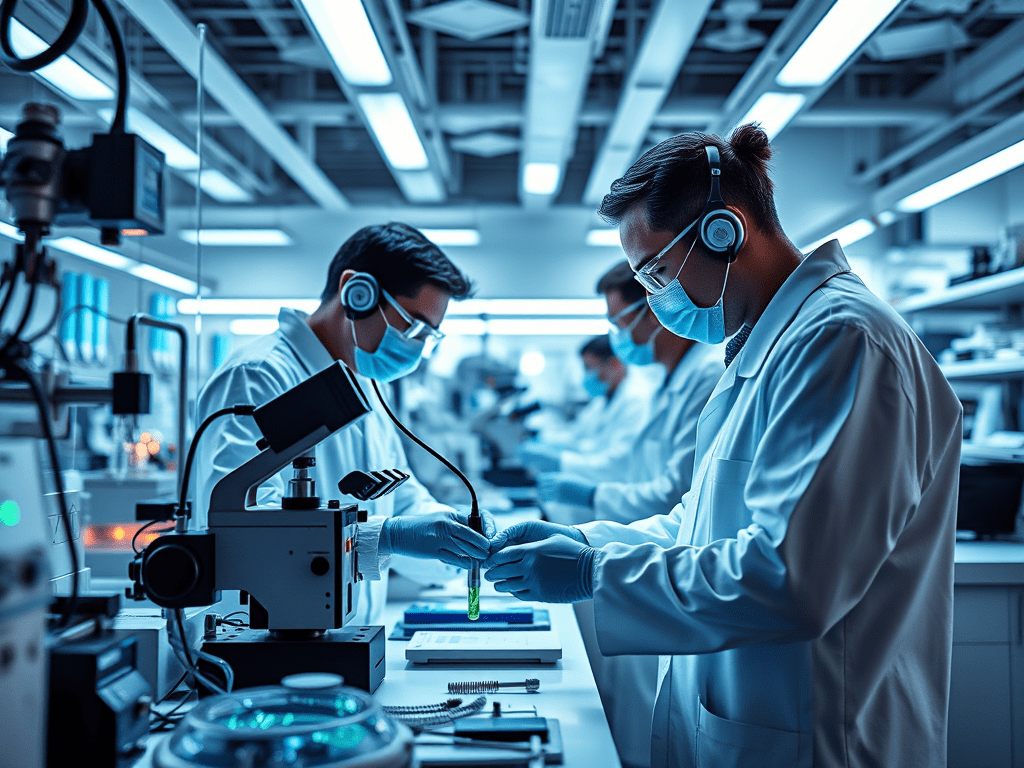
CAR-T Therapy against Multiple sclerosis When we were young , Multiple Sclerosis was a dread disease, Slowly , understanding and therapies have evolved, and now as Nature Briefings explains, a powerful new method using the exciting new CAR-T system looks almost ready for large trials.

And we know how they did it The researchers looked at evidence. They designed and ran experiments . They discarded theories that the evidence showed was wrong. And eventually they came up with this, Engineered Cells for Multiple Sclerosis

The first US trials of CAR T cells to treat multiple sclerosis (MS) have started. These engineered cells could reset the malfunctioning immune system, halting the brain damage that defines MS. “I don’t want to get ahead of myself, but there’s a prospect here for a one-and-done therapy,” says neurologist Jeffrey Dunn, who is running a trial for Kyverna, a US biotech company. Safety is a concern because CAR T treatments can cause brain toxicity, which can result in confusion, seizures and death.Nature | 5 min read

Alabama Theocracy Over in the USA, the Faith-Based Folks of the Alabama Supreme Court have just outlawed IVF. You can read the full story from Robert Reich here [1] but a little of their motivation may be gleaned from the following

In a concurring opinion in last week’s Alabama supreme court decision, Alabama’s chief justice, Tom Parker, invoked the prophet Jeremiah, Genesis and the writings of 16th- and 17th-century theologians.

Today IVF….tomorrow.? Slowly, the tentacles of the Theocrats will close around every laboratory in the USA, banning this, forbidding that, until the US slips so far behind it can never catch up. It was by the Seventeenth Century trial of Galileo that the Catholic Church ensured its own eclipse by ensuring that thinkers fled to the Protestant lands of the north. Hitler found the same, ensuring that the best Jewish scientists fled to Allied countries, delivering their brains to his eventual defeat. That’s what happens when you discard evidence which the theory says is wrong.

Someone once observed that Knowledge and Belief are two different things. It can be hard to choose, we know. But if you need a little help, it may be worth looking at the outcomes of your choice. We can’t see the supreme court of Alabama coming up with a cure for disease any time soon. Nor will the Ayatollahs of Iran. But we hope the above evidence may help you, gentle reader, to support those who might.

[1] https://www.theguardian.com/commentisfree/2024/feb/23/republicans-american-theocracy

#religion #theocracy #christian nationalism #iran #science #empiricism #science