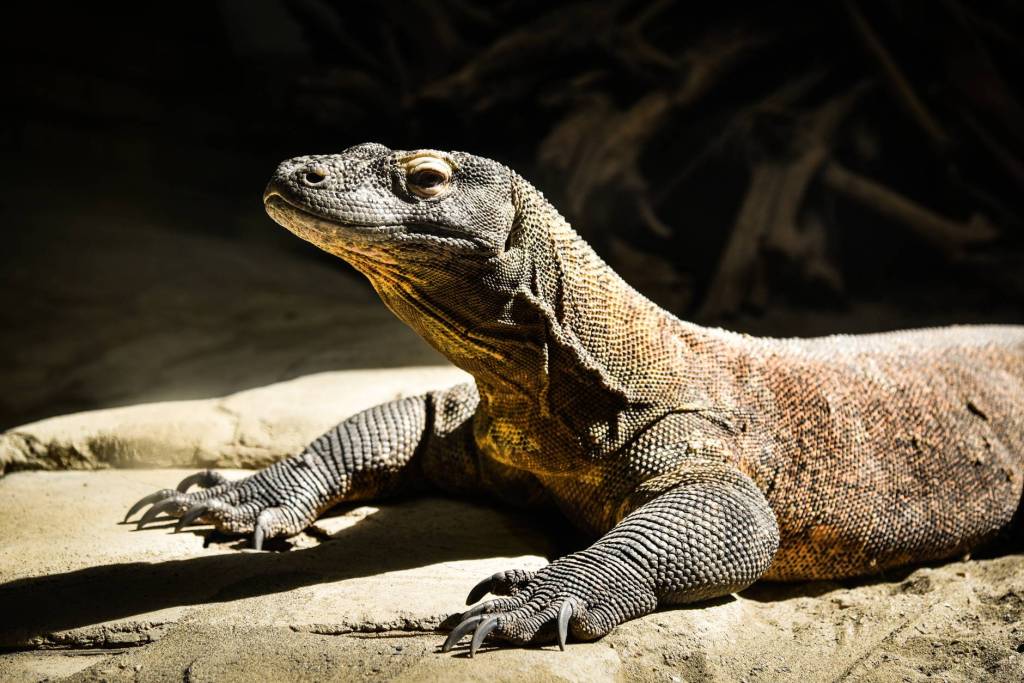

A few years ago we published a blog (LSS 27 10 20;6 9 21) wherein we hymned the praises of the Komodo dragon (Varanus komodoensis). Specifically, because these scary monitors could be a source of new antibiotics. Why might that be? Because they spend their lives feeding on filthy, rotting carrion and should therefore be all dead by now.
So why do carrion eaters (wolves flies, vultures are but some of the many types of animals that come to mind) not only survive, but thrive in their chosen niche? One which to us seems a little unpleasant and down market. According to Tim Cushnie, Darren Sexton and Vijitra Luang-In of the Conversation, these intrepid beasts have each developed a range of techniques to avoid bacterial infections which must be thriving on their dinners. What interests us most on this blog their chemical defences. They seemed to have evolved pathogen recognition and destruction systems which are far in advance of their carnivorous and herbivorous relatives. The authors cite several classes of compound which seem to ripe for exploration. And indeed are being explored by researchers in Germany, China and the US.[2]
And the moral of the story? Firstly, do not despise carrion feeders. They are Nature’s clean-up squad. Secondly, there must be hundreds of other plants and animals in nature which may have equally useful contents. So, if you tear down nature to build a car park you will probably have lost something. Finally, if used our Universities to train up a few more Biologists and a few less accountants, we are all going to be much, much richer.
[2]https://www.tandfonline.com/doi/full/10.1080/07388551.2024.2389175
scavenger #carrion #komodo dragon #immunology #bacteria #antibiotic



 Learning, Science and Society