
Identity Protective Cognition. Will this be the real cause of human extinction?

Have you ever stood in a pub and listened to a group of men talking? Are they really exchanging information? Trying to learn, to incorporate new facts and modify their opinions? Or do they just stand there, declaiming little nuggets of information, signalling their belonging to the group, and their status in it? We think its about 6% the former and 94% the latter. If that is the case, the implications for how people think, the very way they use and incorporate facts are disturbing indeed.

Dan Kahan[1] [2] and Brendan Nyhan[3] suggest this is exactly what happen in most peoples minds, most of the time. They think that considerations like pride and group loyalty far outweigh the effects of evidence and logical process. Our space is limited; but we hope the extensive bibliographies below will convince readers of the essential value of their insights, “If I admit I am wrong, then I have lost face” is where most people come from. And suddenly we see: This terror of looking weak, of jeopardising social status, lies behind so many of the mysteries we have struggled with here for five years now. Why does emotion seem to always triumph over reason? Why do objective facts, on things like Climate Change or vaccination, so utterly fail to change preconceived views? How indeed have issues of pure science become mired in questions of group identity and gender role?

Veteran readers will recall our long-held belief that reason and evidence are the principal survival adaptations of this species. We can never be as strong as bears, nor swim as well as whales. It was these qualities of intelligence that allowed a small weak ape to survive, and prevail. There have been times when these qualities did indeed seem to dominate, briefly. And other times when these qualities were almost extinguished by barbaric ignorance and brutality. Somehow, reason survived and recovered, and even went on to brief triumphs in eras such as the Renaissance or the Enlightenment. The difference now is that the threats such as Climate Change or pollution are existential. If not addressed, this species will become extinct. Yet the very people who might solve these problems-scientists, lawyers, independent journalists- are becoming fewer. Their voices drowned, their budgets starved by the hysteria of the mob and its angry leaders. If humanity is to survive, intelligent people must find ways to first protect themselves, and then prevail once more. But how, and if we have enough time, are complete unknowns,

Kahan, Dan M.; Peters, Ellen; Dawson, Ellen; Slovic, Paul. “Motivated Numeracy and Enlightened Self-Government.” Behavioral and Brain Sciences 38 (2017): e56.

Kahan, Dan M.; Braman, Donald; Gastil, John; Slovic, Paul; Mertz, C.K. “Culture and Identity-Protective Cognition: Explaining the White Male Effect in Risk Perception.” Journal of Empirical Legal Studies 4, no. 3 (2007): 465–505.

Nyhan, Brendan. “When Corrections Fail: The Persistence of Political Misperceptions.” Political Behavior 32, no. 2 (2010): 303–330.

#reason #education #psychology #science #learning

Did St John predict the Fall of the Roman Empire 300 years ahead?

One thing we’ve always admired at this blog is someone whose predictions come true. Over the years we have praised seers as diverse as Edmund Burke, Gillian Tett, John Maynard Keynes and Rachel Carson, among others.(LSS passim) And one thing they all had in common: they called it before it happened which is not bad prophetting. To which illustrious company we would now like to add St John the Divine, the Patmos bloke, whose Revelations not only bookends to the whole Bible, it has generated no end of controversy and interpretation ever since.

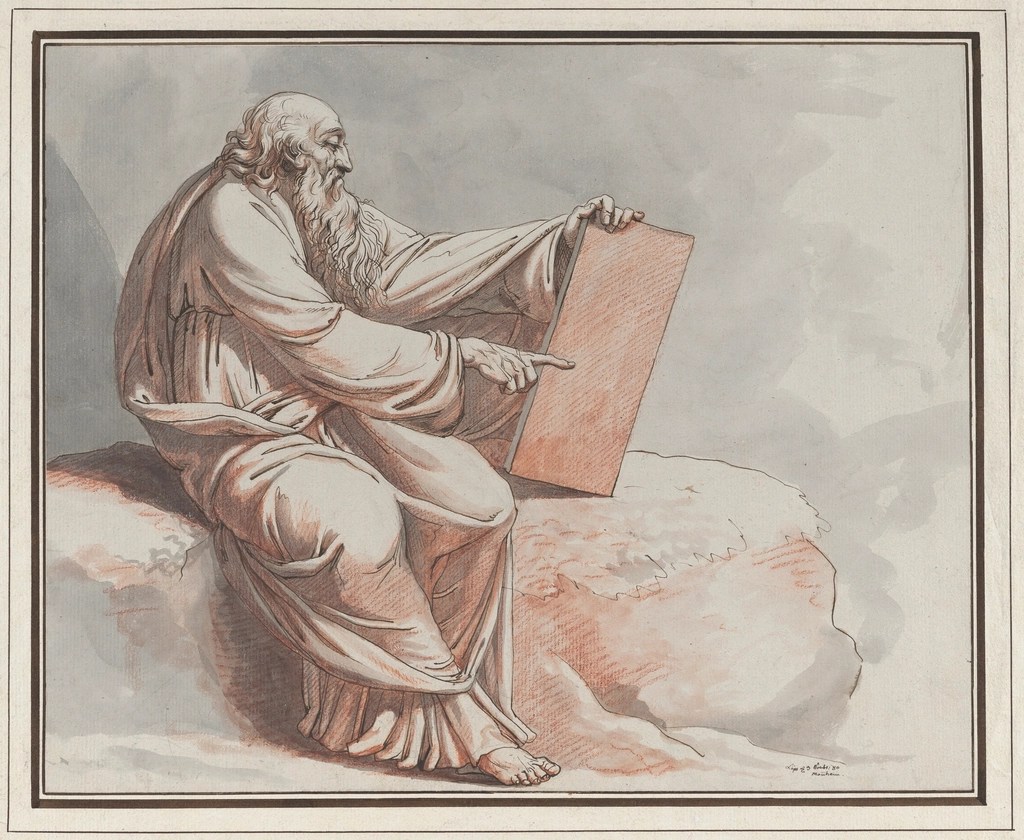
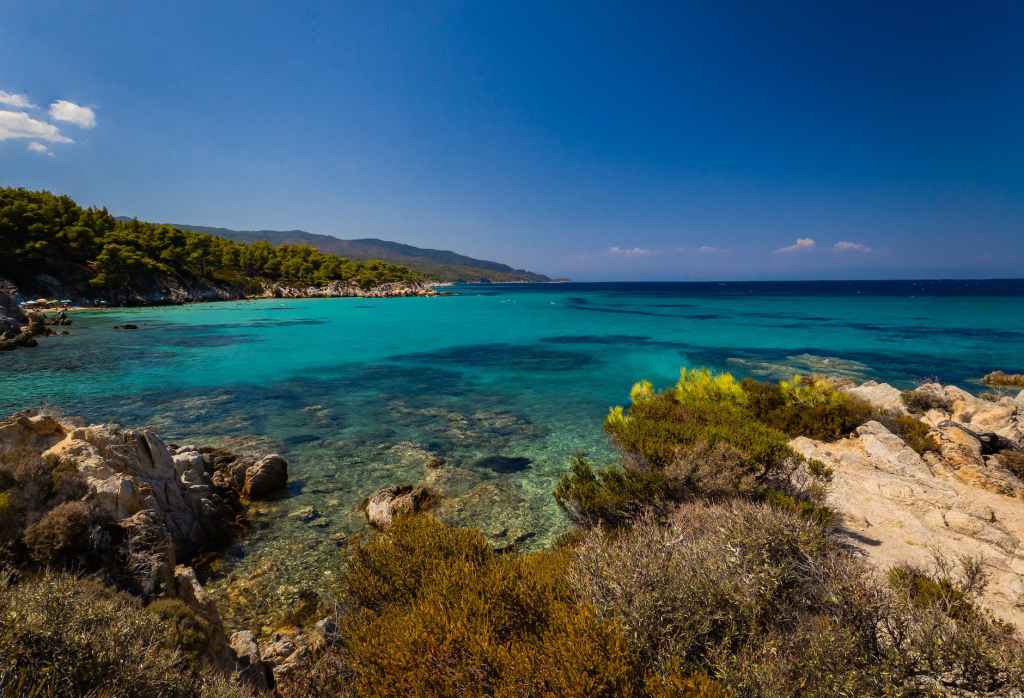
Now we freely admit that St John doesn’t come across as a congenial fellow. A bit irascible and censorious, you might say. Not the sort of chap you’d invite round to your next dinner party to show off your latest bottle of Waitrose Claret. We suspect he even had a huge beard(always a warning sign) and the sort of scowl which instantly disapproved of conversations about holiday homes on Greek islands. But just pay attention to two of the things he wrote, around 95 AD while sojourning on one of them:

For all nations have drunk of the wine of the wrath of her fornication… and the merchants of the earth are waxed rich through the abundance of her delicacies.” (Revelation 18 3)

Now follow it up with this little bon mot

Come out of her, my people, that ye be not partakers of her sins, and that ye receive not of her plagues.” (Revelation 18 4)

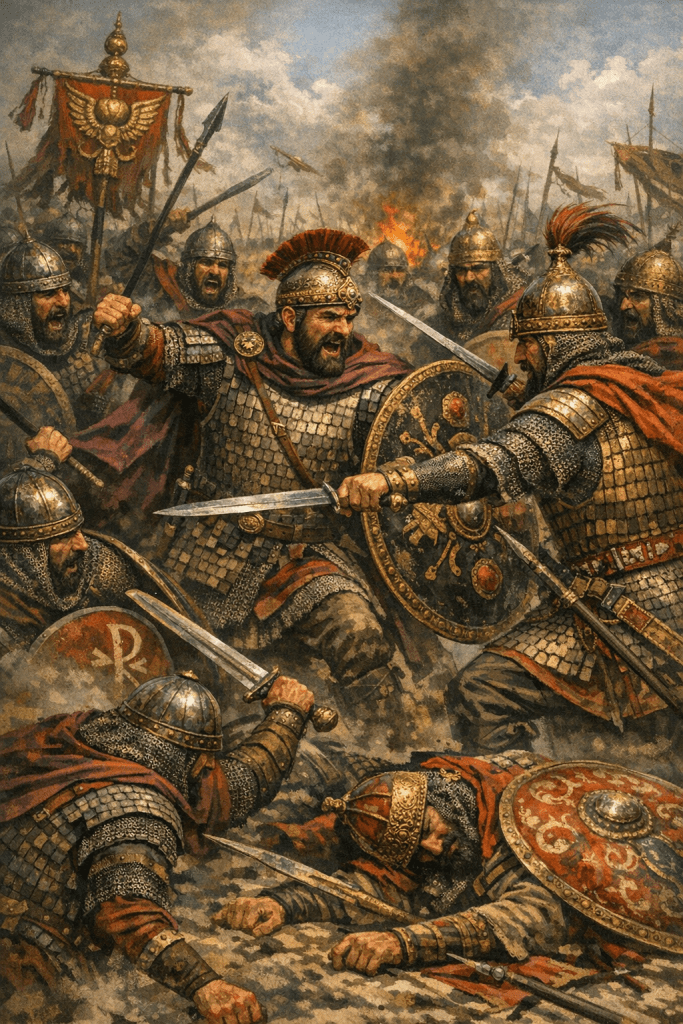
All written when the Roman Empire was at its most prosperous and powerful height. Which leads us to the works of two authors who have explained two of the greatest mysteries which have ever bedevilled our minds: why was Rome(Republic and Empire) so successful? And if so, why did it so undeniably fail, around about 400 AD? The first of these answers was provided by the great Professor RH Davis in his immortal History of Medieval Europe [1] It was the genius of Rome to unite all the peoples of the Mediterranean into a single trading block, in which therefore peace and prosperity flourished by the standards of the time. Hence all those parties of which St John so heartily disapproved. And the second was Professor Kyle Harper who so convincingly demonstrated that much of Rome’s Fall was due to terrible plagues, such as the Antonine and Cyprian which entered the Empire and spread so well because of the efficient trade networks it had engendered. Two strikes, and Rome was out.

So how did a miserable old git, sitting alone in his shack while the rest of the island partied, get it so right? Was he a diva at economics? Epidemiology? Was he just lucky? Or could it be, was it just possible he had it from Someone who knew for sure-and whispered in his ear? we leave you to judge.

[1] Davis, R.H.C. A History of Medieval Europe: From Constantine to Saint Louis. London: Longman, 1970.2nd edition Longman1989 see especially pp 3-7

[2] Harper, Kyle. The Fate of Rome: Climate, Disease, and the End of an Empire. Princeton: Princeton University Press, 2017.

#St John the Divine #Revelations #prophecy #Roman Empire #History #epidemiology #climate change #economics

Three fascinating examples of scientific detective work

We have three stories for you this morning. Not only because the stories themselves are intriguing. But because they illustrate the scientific method at its best. Persistence. Careful collection of the data, Thoughtful analysis. And above all this” Extraordinary claims require extraordinary evidence.” It’s from the first of today’s features. But it runs like a thread through all of them, and much else that is done by scientists, and all true scholars everywhere. It is of course the antithesis of the claims of conspiracy theorists, hucksters and plain incompetents everywhere.

Floods in the Mediterranean We’ve known the idea that the Mediterranean Sea was once a hot dry basin, a sort of desert land. Until one fine day about five million years ago when a truly humungous great flood burst through the Straits of Gibraltar, turning the whole, thing into that vast lake suitable for swimming, sailing and other watersports which it remains to this day. The proponents of the theory, Daniel Garcia Castellanos and Paul Carling were careful to say this Zanclean Flood was just that, a theory, Until recently they found that the alignment of hills in Sicily. plus the way that rocks of the right age were lying around there, confirmed it nicely. Detective work worthy of Comissario Montalbano, that island’s most famous son!

Awesome Jaw About 20 years ago, a large ugly looking jaw was dredged up off the coast of Taiwan. No one knew exactly how old it was or how it fitted into the jigsaw of human evolution. Now some incredibly skilful work extracting and analysing proteins from it have revealed it to belong to a Denisovan, that intriguing third branch of modern humanity Here’s Nature Briefing: Mysterious Taiwan Fossil is Denisovan

A fossilized jawbone discovered more than 20 years ago belonged to an ancient group of humans called Denisovans. Named Penghu 1, the jawbone was dredged up by fishing crews 25 kilometres off the west coast of Taiwan. The confirmation that the bone belonged to a Denisovan — the result of more than two years of work to extract ancient proteins from the fossil — expands the known geographical range of the group, from colder, high-altitude regions to warmer climates.Nature | 5 min read
Reference: Science paper

Standoffish Saharans Moving forward from the dawn of humanity to the dawn of agriculture, Chris Melore of the Mail has an intriguing story about the ancient proto-Neolithic populations of North Africa. Careful molecular detective work has revealed that they tended to keep themselves isolated from the population flows across the rest of the world which were happening about 7000 years BP. And this has quite profound implications for how agriculture and herding must have spread. One school has always held that Neolithic techniques were carried as cultural tropes by tribes who migrated out of the fertile crescent (a bit like the way particular European customs and technologies were carried to North America) The other school always held that local people came up with these ideas for themselves, perhaps with a bit of help from conversations with early travellers and traders. This evidence of isolated North Africans invented stock breeding and grazing economies independently is a definite plus for the second school and its ways.

https://www.dailymail.co.uk/sciencetech/article-14600327/Newly-mummies-reveal-new-human-ancestor-broke-humanity-thousands-years-ago.html

Careful thoughts, provisional conclusions. This is what we are all about here, and we hope you are too. Perhaps more people could be like this, if they had been given a fairer life. It is a thought we will pursue in the next blog

#neolithic #paleolithic #geology #agriculture #denisovan ##dna #protein

What is Truth? Professor David Spiegelhalter has some answers

“What is Truth?” Pilate is reputed to have asked Jesus at the latter’s trial in long-ago Jerusalem. Yet it is a question of neuralgic importance today. For we live in an era of angry competing claims, where everyone asserts that their particular fact-set is equal to anyone else’s. Opinions are simply hurled against each other, like children throwing stones. No learning, no judgement is possible at all. How can we, that tiny group of intelligent people who must somehow carry Civilisation forward find some sieve to winnow truth from opinion? Professor David Spiegelhalter may have some answers.

Spiegelhalter is a statistician. Fans of Covid-19 may recall him popping up on telly a lot during that pandemic. Look out for him during the next one. Yet his list of criteria (derived from the work of Bradford-Hill and Doll) may be applied to any scientific hypothesis. as a first step to get sort out wheat from chaff. . We decided to apply it to global warming today, so here goes:

Direct Evidence

1 The effect is so great that it cannot be explained by any random variable: The planet is undeniably heating up fast and this has become statistically significant

2 There is a close causal proximity between cause and effect We’ve been pumping out enormous quantities of fossil fuel gases since about 1840

3 The “dose” causes a response and it is reversible This comes from medical science, but if the “dose” is waste gas, then compare the fossil fuel emission pattern curve with that of temperature That it is indeed from coal, oil etc is demonstrated the well-known changes in C12 C13 and C14 ratios in the atmosphere

Evidence of mechanism

4 There is a plausible mechanism, explicable from known science, which explains the effect Carbon dioxide and methane are known to trap heat. Quite a lot of it.

Parallel Evidence

5 The effect fits in with what we know from other studies Consider what has happened in the atmospheres of Mars and Venus by comparison to Earth.

6 The same effect is found when the study is repeated Many peer reviewed papers have validated the early evidence; none have found against.

7 The effect is observable in very different studies and phenomena Studies as diverse as ice core samples, temperature measurements in oceans, land and atmosphere and the rising intensity of weather patterns only confirm the predictions of the first discoveries

The above list could be applied to any study of economics, social science, marketing or politics as well as the hard sciences, In fact Bradford Hill and Doll derived it from their pioneering work on the link between cigarettes and cancer. Any fairground huckster or well-funded corporate journalist can make claims. We hope the above will help you, gentle reader, to be a little more confident as to the veracity of those.

[1] Spiegelhalter, D: The Art Of Statistics Penguin 2019

#truth #science #global warming #statistics #evidence #reason #cancer #climate change #jesus #pontius pilate