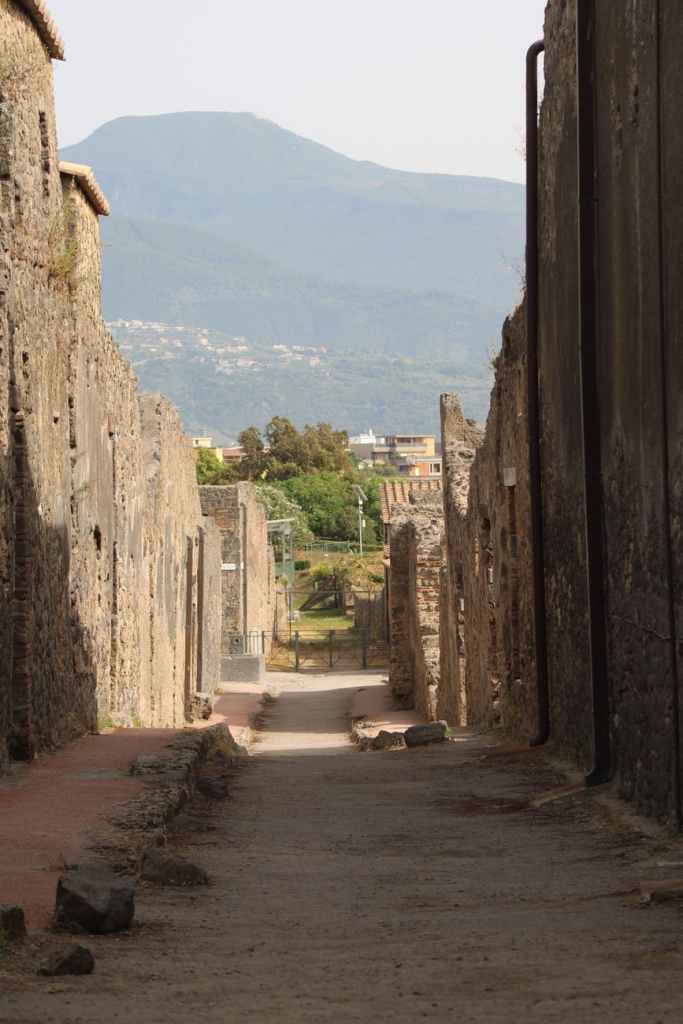
Academia has its Robbers Caves too, you know

Here at LSS we’re always praising the learned. Exalting the scientists, doctors and philosophers who would unleash a trouble-free prosperous world, if only we were given the chance. Instead all those nasty hypermacho builders, farmers, football supporters and military types have imprisoned us in a hopeless nihilistic trap of warring tribes which we called The Robbers; Cave(LSS 1 4 2025)

There may be some truth in it. But before we hand over the world to a bunch of Professors and nerdy Civil Servants, let’s flag down a large black cab and ask it for a journey to the Reality Hilton Hotel. Because, we ask-are all these brainy types so immune from Robberscavism, to coin a phrase? Anyone like us who has followed Arts, Sciences and Letters for fifty years or so will notice at once how its practitioners have a tendency to divide themselves into warring camps, like so many followers of certain East London Football teams. Back in the Middle Ages there were the Nominalists versus the Realists. In economics you get Behaviouralists going toe to toe with the Rational Choice Theory crowd, while Linguistics seems to have more warring schools than practitioners. It’s the same for us fans of the Neolithic revolution, where opinion is hopelessly divided too. One lot asseverate that the Neolithic way of life was carried out from the fertile crescent by a single contiguous culture, who replaced(exterminated?) those unfortunate hunter-gatherers who got in the way. Their opponents counter that farming, sheep herding and all those Neolithicky -type things were learned, picked up by enthusiastic locals from traders and traders and adopted with the enthusiasm reserved for certain types of computers and mobile devices in our own age. And the truth? According to studies by the learned Drs Javier Rivas and Alfredo Cortell, writing in the Conversation, [1] it was a bit of both. At one place, at one time the incomers seem to have bludgeoned in and extirpated the natives, as the English did in Tasmania. Elsewhere the locals seem to have picked up the new hoes, made better ones and then jolly well got on with life down on the farm.

And the moral in all this? For practical people, especially those who hand out grants and bursaries, always take one step back. Sometimes you have to make decisions(think of Courts and Forensic Scientists here) But the real joy of learning isn’t in constructing theories and and then fighting to impose them on everyone else. It’s in the journey of discovery itself: gathering the facts, weighing the evidence and above all talking with the people you meet on the way. The ancient virtues of humility and suspended judgement are the most settled and non controversial of all.

[1]https://theconversation.com/how-human-connections-shaped-the-spread-of-farming-among-ancient-communities-254852?utm_medium=email&utm_campaign=Late

#learning #science #neolithic #academic controversy #tribalism #robbers cave experiment #whig
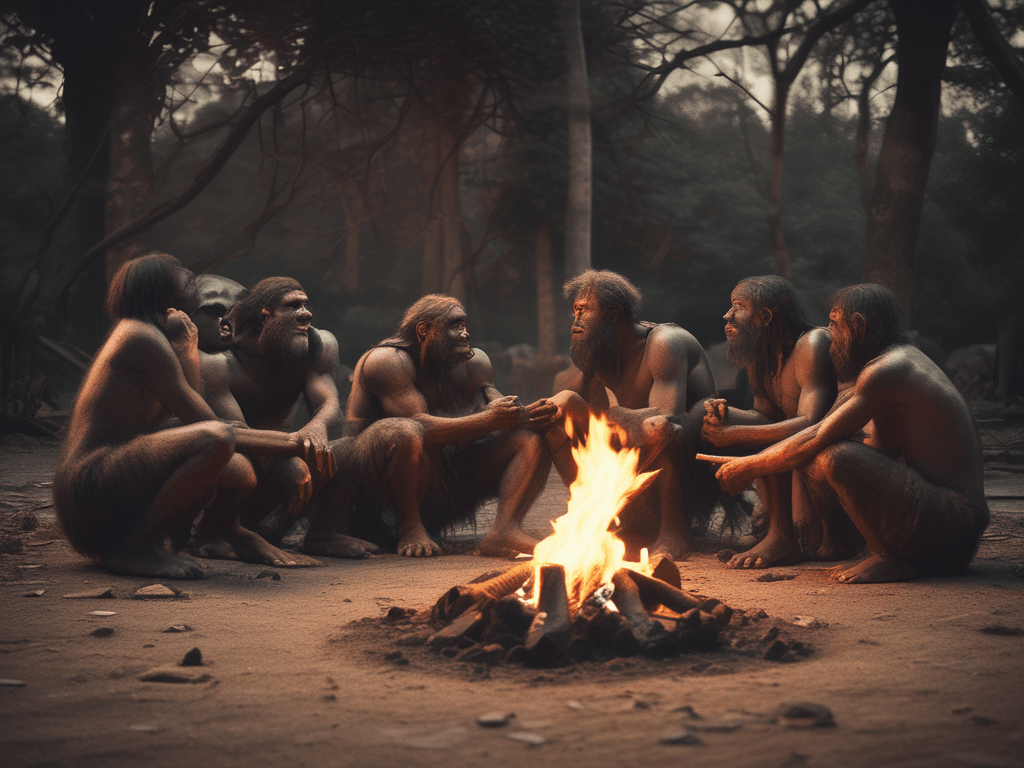
Six insoluble mysteries which may end us all

Occasionally we come across websites with lurid titles like “10 UNSOLVED MYSTERIES TO GIVE YOU THE HEEBIE JEEBIES!” And it’s all to do with odd bits of old stone or dodgy claims about flying crockery. Which made us think of a few everyday mysteries about Homo sapiens which are enough to give anyone the aforesaid Heebies, with a few jeebies thrown in for good measure. Because if we do not develop the cognitive capacity to solve them, we could well be heading for the biological equivalent of the junkyard,

(1) Where is the line between the individual and society? Countries that go too far towards prizing the State end up economically stagnant, as the society is captured by a small self-serving elite who grab all the resources. (Think USSR or Venezuela) On the other hand societies with no idea of the common good, where untaxed individuals run around doing what they like, not only end up without worthwhile armies or roads. They also get captured by an elite, this time billionaires, with almost identical outcome to the deluded Commies. No one has resolved this tension in any stable way.

(2) Emotion utterly dominates reason. All the technological and scientific advances that make life worth living (you really wanna give up soap, huh?) are formed in the reasoning part of the brain. Yet most people are driven by deep tides of emotion welling up from the subconscious. These rarely lead to anything profitable, and are the principal causes of most of the obsessions, addictions and generational hatreds which form such an immense drag on progress. Why is logic so weak and blind passion so strong?

(3) The drive to divide into hostile groups We often allude to this one; think football supporters and the Robbers Cave experiment. The American writer James Baldwin saw identity as a serious trap, denying us our own better nature. It may take all the AI in the world to solve this one

(4) The constant need for persecution of others, particularly the weak or disabled. Anyone still deluded about “the moral superiority of the oppressed” could learn from what happens to disabled neighbours in cheap housing estates, and how the noble proletarians make their lives utter hell. Why does everyone want justice, but only for themselves?

(5) The local and the trivial Why do so many people spend so much time learning about the lives of celebrities in tacky media outlets, when they would profit much more from reading magazines like The Economist or Science?

(6) An utter inability to change minds Most people are really rather deft and clever about what is around them; the hierarchies around their neighbours, families, jobs, and so on. But most of what they learned about bigger things like science or society was laid down decades ago. And the habits of mind formed in youth seem impossible to change, even when the survival need to do so becomes clear. This may ultimately be the most dangerous mystery of them all.

No species, however successful it seems at its peak, can long survive the competition from a better-adapted one. Our predecessor Homo erectus had evolved into top predator, and colonised three continents. Before it was utterly outclassed by the more intelligent Homo sapiens in its various subspecies. A newer, more intelligent form of human, perhaps incorporating elements from artificial intelligence and genetic engineering should be able to solve the above cognitive problems with ease. If that happens, there will be little enough space for the predecessor, and no motive to preserve us either.

#climate change #learning #cognition #human evolution #unsolved mysteries

When AI met Archaeology

There’s nothing like a breakthrough, when a long delayed problem that no one could crack, suddenly yields to fresh thought. And opens the door to a vast potential new field of learning. Which is why this news from Nature Briefings has been such fun to read in itself, as well as digging into its juicy link article , which, by the way, is eminently readable. Essay on Pleasure revealed in Ancient Scroll

Student researchers have used machine learning to read text hidden inside charred, unopenable scrolls from the ancient Roman city of Herculaneum. The newly revealed passages discuss sources of pleasure including music, the colour purple and the taste of capers. The team trained an algorithm on tiny differences in texture where the ink had been, based on three-dimensional computed tomography scans of the scrolls.Nature | 7 min read

The point for us is this bringing together of two highly disparate disciplines. If archaeologists had said ”please give us enormous sums to crack the problem of the Herculaneum scrolls” someone would, very politely, have told them to go take a walk. And we take a safe guess that the principal interests of AI folk are directed towards finance, pharmaceuticals and physics. It’s when the two are brought together, serendipitously, that we see this marvellous synergy, this sum becoming worth infinitely more than its parts.

And what synergy! For all the many learned books which have been written about it, our knowledge of the Ancient World is actually rather limited. Even authors like Plato and Eratosthenes have only survived in a few, fragmentary texts. The same is true of many early Christian writings. There is only one fragment of the New Testament from before 150 AD, and its tiny. [1]The new CT technique could potentially decipher thousands of fragmentary or badly preserved texts. As our database suddenly grows, we may well find some startling new insights. Or old LSS doctrine that research money spent in one field will pay off in many seems to be vindicated once again. Time for a very smug cup of coffee. No biscuits.

[1]https://en.wikipedia.org/wiki/List_of_New_Testament_papyri

#archaeology #CT #AI #scrolls #herculaneum #greeks #romans #christians #jews