More startling news on psychiatric disorders-and we think it’s even better than last time

It is our honest opinion, patient readers, that the terrible problem of psychiatric disorder is on the point of being understood. On the same level that is, as illnesses such as measles, salmonella poisoning or scurvy. We think we know why, as we will explain below. But first to the work which gives us this hope, following as it does on our recent blog Psychiatric Disorders: is this a game changing moment? (LSS 18 12 2025)

Writing for the Guardian, David Shariatmadari reviews The Divided Mind by Edward Bullmore, a profoundly learned man who has devoted his life to investigating and alleviating the sufferings of those afflicted by mental disorders. It is a sweeping book, magisterially covering the disputes between the warring schools of thought and the decades of honest but often misguided attempts to effect cures and diagnoses. Too much to cover here, but we implore you to read the review, if not the book itself [1] [2] But, in a nutshell, it was this passage that truly excited us

(shariatmadari notes the remarkable process in understanding diseases like TB),then :

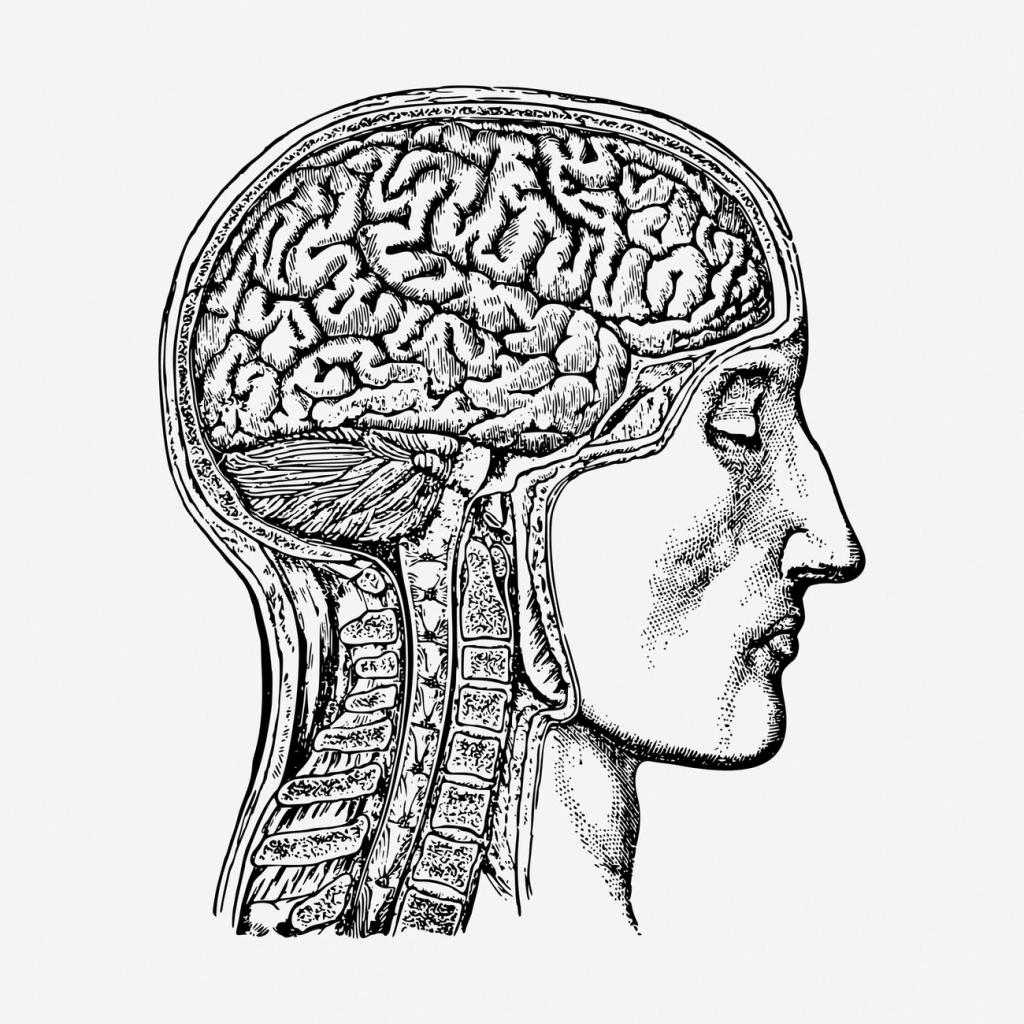
Schizophrenia may finally be on the cusp of that transformation – something truly momentous, given the puzzle this strange and brutal disease has posed for so long. As Bullmore carefully explains, advances in scanning, maths, genomics and immunology have piled up to give us a clearer understanding of the illness. It is probably caused by the abnormal development of brain networks in childhood and adolescence; this, the evidence suggests, happens under the influence of immune dysfunction, and the cause of that is variation in a broad range of genes, interacting in particular ways with the environment. Triggers can include infections, abuse, social stress or drug use.

And now for why we are so hopeful. We genuinely think that the work of Bullmore, and the scholars covered in the last blog, suggest that at last a new paradigm has formed. It has only been possible because of advances in disciplines like Immunology, complexity theory, genetics and catastrophe theory, and the technologies to support the vast data sets which this new learning requires. And with them should come the key concepts of robust diagnosis, risk factor, causal mechanism and, please, God-lasting ameliorations. We stress again that we do not belittle the heroic efforts of past investigators, who did not have the tools now available. New paradigms never make the old ones wrong. But they suddenly solve the problems the last one could not, and open the way to new lines of discovery which the old one could never have predicted. Einstein did not refute Newton, he simply went beyond. And it was the same for thinkers like Darwin, Kepler and Planck. It is our honest opinion that another such paradigm shift has arrived, gentle readers, We hope it will make the life of the world better too,

[1]https://www.theguardian.com/books/2025/dec/17/the-divided-mind-by-edward-bullmore-review-do-we-now-know-what-causes-schizophrenia?CMP=Share_iOSAp

[2]The Divided Mind: A New Way of Thinking About Mental Health by Edward Bullmore is published by New River (£20). To support the Guardian buy a copy at guardianbookshop.com. Delivery charges may apply.

#psychiatric disorder #health #immunology #genetics #complexity #disease #medicine

Psychiatric Disorders: Is this discovery a game-changing moment?

Why can we not do more to address psychiatric disorders? We have always regretted the lack of a robust model which links biological cause to behaviour (LSS 11 5 22;14 9 24 et al) Without this treatment can never achieve the same efficacy as it has for thousands of “physical” disorders such as infectious diseases, cancers or deficiency diseases.

Today It is our earnest hope that all this may be about to change. Read this Hidden links between psychiatric condition from Nature Briefing

DNA data from more than one million people suggests that the genetic risk factors linked to many psychiatric conditions fall into five clusters that cut across current diagnostic boundaries. For example, attention deficit hyperactivity disorder and autism, which are classified as separate conditions, both fall into the neurodevelopmental category. The findings hint that the fact that people tend to be diagnosed with multiple disorders at once is a reflection of shared underlying biology, and could help to create a more biologically based way of understanding psychiatric conditions.

Nature | 5 min read
Reference: Nature paper

If this work can be confirmed and extended, then it offers a tantalising possibility: this particular observable gene cluster is associated with this set of behaviours. And not another set of behaviours, which turn have their own identifiable gene cluster. Simple. Robust. Falsifiable. Empirical.  What’s more, the clusters seem to make a curious rule-of-thumb sense.  One for neurodevelopmental disorders such as ASD and ADHD. The second for internalising disorders such as anxiety, depression and so on. A third for compulsive ones like OCD and anorexia. A fourth for psychotic ones such as bipolar and schizophrenia   And a fifth for substance abuse disorders. Simply put , each cluster may have particular underlying neurological architecture. In which case the underlying mechanism may be discerned; and treatment found.

Now for the caveats. First of all, it’s early days and we need to see how the work holds up against existing diagnostic frameworks. Secondly, only a fool would rule out epigenetic and environmental contributions to psychiatric malfunction. As for the thought of any treatments based on the new findings-well, they have to be decades away if possible at all,.

And yet….to end on a personal note. Nothing is sadder, nothing so moves us as seeing yet another lost soul, another hopeless cry for help, in the face of a victim pf psychiatric disorder. And to know the terrible sufferings imposed upon themselves, their families, carers and the professionals who come up against them, which includes anyone from emergency service workers to housing professionals. And to know that nothing can be done, despite the whole of modern science and learning. But now, just maybe, we have a real game changer on our hands, There is something to pray for this Christmas.

#psychiatric disorders #mental health #medicine #neurology #health #society

Mental Illness: Real hope at last?

Why is there no “cause and effect” model of mental disorders and problems? it’s a problem that has intrigued us for more than fifty years; and has more than once been lamented on these pages. Despite the heroic endeavours of thousands of hard working researchers and scholars, we seem little nearer tangible, reproducible solutions.

Until this week when we came across an article by Anthea Rowan of the New Scientist which honestly made our hair stand up.[1] Initially the article is about OCD.(obsessive-compulsive disorder) But in it, for the first time, we have come across what may be real hints of what is going on at a neurological and molecular level in the unfortunate victims of many mental abnormalities. And from that emerges the first possibility of real and lasting cures for their suffering.

We won’t steal Andrea’s thunder (you’ll need a paywall jump if you use the link), But we will try to summarise some of her salient points, and urge you to read further.

It’s the genes Get this quote from her:

“…half of the risk of developing OCD is down to our genes..[a study]…examined genomes of nearly 40000 people with OCD and identified 15 genetic signatures associated with the conditio including ones for proteins that influence brain function and development ….one of the signatures…. was associated with genes for the major histocompatibility complex(MHC)[2] ….a region of DNA that plays an important role in the immune system and has also been linked to other mental health conditions such as schizophrenia and bipolar disorder “(our bold)

It’s in the immune system

“…….a case in point is two related conditions called PANS and PANDAs in which children can suddenly develop OCD symptoms anxiety or tics seemingly in response to an infection….”

It’s in the gut

“… a team at Shanghai Jiao Tong University….transplanted faecal gut microbiota from humans with OCD into mice. Two weeks later the mice began to exhibit repetitive behaviours and signs of anxiety..….

Why are we so excited? Because here at last are three tangible, well defined pathways for research. Each contains definable, repeatable units like molecules, tissues and nerve ganglia. No more hard to prove social theories or endlessly debated diagnoses. Instead a chance to start again from the bottom up. And maybe find a pattern of molecular-level abnormalities which can be identified, defined and remedied in a controlled and repeatable manner. The research will be long. Cures are still very far away. But the right paths have now been identified. And that is some cause for hope.

[1]https://www.newscientist.com/article/mg26335082-600-a-fresh-understanding-of-ocd-is-opening-routes-to-new-treatments/

[2]https://en.wikipedia.org/wiki/Major_histocompatibility_comple

#mental illness #OCD #personality disorder #MHC #infection #immunology #infection #health #medicine

No-Sky Post Traumatic Stress Disorder. We interview A. Doctor

Following media speculation about No Sky Post Traumatic Stress Disorder, a new syndrome sweeping the nation, LSS is proud to present this exclusive interview with Ann Doctor

LSS Is there really such a syndrome as No Sky Post Traumatic Stress Disorder  (NSPTSD)?

AD Yes,  NSPTSD is a  new syndrome , but it’s very real nonetheless.

LSS What causes it? And what are the symptoms?

AD It happens when an otherwise healthy child is deprived of Sky TV in their formative years. It causes many tragic symptoms. A desire to stand out in the rain for long periods. A phobia about meeting important world leaders causing the sufferer to rush back to England to do an  interview in ITV.  To ignore obvious cues, such as the word “TITANIC” in the background, or hoping to rev things up by hanging around deserted motor car racing tracks in Northamptonshire. And otherwise make all kinds of gaffes, mistakes, blunders and unforced errors.

LSS is there any cure?

AD Generally we advise sufferers to collect as much money as they can and depart to a warm place, such as California, as soon as possible. And never, ever come back.

© Ann Doctor 2024

Could your gut microbiome be making you anxious?

We always like intriguing new stories about health and biology here. That’s why we’ve showcased this item from Peter Hess of the Mail, Do you have Social Anxiety? Scientists Find the Condition lives in your gut. Peter reports some results from University College, Cork. Essentially, scientists there have transferred gut material from people with Social Anxiety to mice. And found that they have thereby induced significant changes in the nervous systems of those creatures: specifically, making them more prone to anxiety and fear [1]

The work is undoubtedly interesting, and it’s good journalism to write it up Especially when it’s one of our old tropes, in this case the relationship between the the digestive system and the nervous system (LSS 9 3 23 and passim). Is it the answer to all our woes? It’s too early to say.

Essentially, journalists report two types of science story. Definitive ones, which answer all the questions and close the subject down. Or intriguing ones on early research which opens a subject up and sets the questions for future researchers. It’s our gut feeling that this work belongs in the second category. For one thing, the numbers are small (12 people and 72 mice, if our maths is anywhere near correct) Good start, but we’d like to see replication across much larger numbers. And what is Social Anxiety Disorder anyhow? Psychiatric conditions are notoriously hard to define exactly. Could there be other causes of anxiety, such as war service or growing up with violent parents? They need to be controlled for.

It’s good work in an intriguing area, and we hope these researchers are given more time and money to pursue it. But we still wait and see for definitive conclusions.

[1]https://www.dailymail.co.uk/sciencetech/article-13156095/social-anxiety-gut-scientists-treatment.html

[2]https://www.bbc.co.uk/news/health-46986709

#diestive system #nervous system #health #anxiety