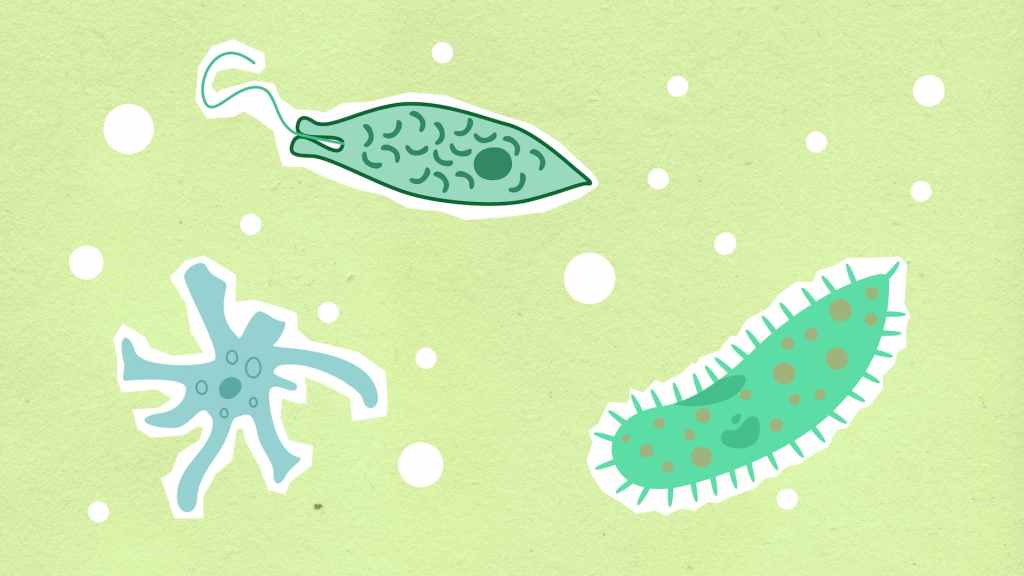
Microbes might be the best carbon catchers of all time

OK, we have spent the past four years urging you to hunt down those pesky little microbes with every antibiotic you can lay your hand on. Now we’re going to tell you microbes are just wonderful. When it comes to saving us from Global Warming that is Read this piece called Microbes against climate catastrophe from Nature Briefings

In a call to action published simultaneously across 14 journals today, microbiologist Raquel Peixoto and colleagues demand that the world “harness the power of microbiology” to safeguard the planet. From the enhancement of carbon sequestration to the cultivation of biofuels, there are a multitude of microbe-based solutions to climate problems, say the authors — but these are not being rolled out effectively at scale. It’s time to cut through the red tape, they argue, and gather a global task force to help test, fund and deploy the best of these microbiome technologies.Nature Microbiology (and 13 other journals) | 5 min read

When we ran this one through the editorial board, we agreed we could not be accused of mixed messaging. Antibiotics are in the medicines file. Carbon capture is in environment. They are two completely separate disconnected entities, like the utterances of certain well-known US politicians and the observable truth. But: are they? After we finished the meeting, and before putting quill to parchment, as t’were, we went for an uneasy walk with our conscience. Up and down the bleak streets of Croydon. Past Fairfield Halls. Something was niggling at the back of our mind. In the Porter for a quick three or four pints. What was it about antibiotics? Round the shopping centre. Something extra about antibiotics. Back past fairfield Halls. People were starting to look Then it hit us! All these excess antibiotics, running off farms and so on may actually be damaging the very microbes which we need to save us. Read this extract of an abstract if you don’t believe us, from the accomplished Professors Yaozong Cui, Yanhong Li Lihao Zhang and Nan Ziao Environmental behaviour and impact of antibiotics [1]

Antibiotics are widely used to treat or prevent human and animal diseases, as well as to promote the growth of animals in livestock breeding and aquaculture. As a type of antibacterial drugs, antibiotics have been widely applied in human/animal disease prevention, disease treatment, animal husbandry and aquaculture, etc. A majority of antibiotics introduced into human/animal cannot be utilized directly, leading to the result that more than 85% antibiotics were discharged into the environment. Once antibiotics enter the ecosystems, they could influence the evolution of the community structure, which according affect the ecological function of aquatic environment. Correspondingly, antibiotic resistant bacteria (ARB) have been found, which is threatening ecological safety and human health. 

Perhaps the best take on this is from the world-weary Professor Peixoto. We need-and urgently- a very deep understanding of how we live and manage the whole microbiological biome. But where do our rulers spend our money?

[1]https://www.atlantis-press.com/proceedings/iceesd-17/25875046

#global warming #climate change #biofuels #carbon capture #microbiology

Progress on antimicrobial resistance-it’s not all about new drugs

We’ve been in the habit of making clarion calls for new research on anti-microbial drugs here for donkey’s years now. Even reported, where we could, on promising new results. Progress has been slow, we admit. But if you lift your head up and look at the bigger picture, there’s quite a lot of stuff we could be doing to ward off the fateful day when every bacterium becomes resistant. And once again, it’s that excellent website Nature Briefings which suggests some simple, common sense steps people can take now to keep them safe. Particularly in poorer countries, where the stupidities of the world economic order have combined to make cash a little tight. They’ve put up two blocks today, with links, and they’re well worth a read.

HOW TO SAVE MILLIONS OF LIVES Last week, we learnt that more than 39 million people could die from antibiotic-resistant infections by 2050. But it doesn’t have to be that way, argues epidemiologist Ramanan Laxminarayan — if we make sure that people in low- and middle-income countries get the appropriate antibiotics they need. “Even a fairly modest global investment — in the range of hundreds of millions of US dollars — to help prevent bacterial infections and improve access to relatively inexpensive antibiotics could avert millions of deaths,” he writes.Nature | 5 min read
Reference: The Lancet report

STRAIGHTFORWARD SOLUTIONS TO AMR Better sanitation, improved infection control practices at health-care facilities and increased vaccination are among the solutions proposed by four specialists — from Bangladesh, Brazil, Nigeria and the Middle East — who spoke to Nature ahead of a United Nations meeting on antimicrobial resistance (AMR). For example, microbiologist Iruka Okeke says that access to clean water and toilets in Nigeria could reduce gastric infections and AMR simultaneously, yielding an estimated return of US$5 or more for every $1 spent.Nature | 10 min read

We always like it when brisk, cheap solutions, using existing ideas and technology make a real difference. We hope you do too, gentle readers.

#antibiotics #drug resistant micro-organisms #health #sanitation #clean water

Resistance -it’s not just bacteria, it’s evolution in action

Old hands on the LSS blog may be forgiven for thinking antibiotic resistance is all about bacteria, and that it all goes in in hospital with lots of medical folk in white coats and humming machines that do funny things with graphs, and all that sort of thing.

Well, it’s about a lot more than that. It isn’t just bacteria that are resistant to our drugs. Down on the farm, there’s a whole class of creatures called Playtyhelminths (aka flatworms) that can do untold damage to sheep, for example. For years their ravages have been controlled by drugs. Now theses pesky creatures are showing strong resistance to these drugs, And to make matters worse, these drugs are getting into nature from the sheep pastures, and starting to wreak havoc there. It’s a lose-lose situation. And we, that is to say humanity, are the losers.[1]

Why is this happening? It’s Natural Selection in action. The flatworms in the sheep guts are animals like any other. Expose them to a threat, (antagonistic drugs) and most will die. But a very few will carry resistant genes, thrown up by random mutation. They and their offspring will survive, and multiply. Mightily. Just like all those bacteria do with the drugs we send against them. The point is resistance is just an evolutionary response. It will happen everywhere at all times. The trick is to stay ahead of it. And the way to do that is to spend a little more on science and research labs. To plan to educate more people with the scientific habit of mind, where we suspend judgement and become open to evidence. And listen a little less to the kind of unreasoning. emotion driven story telling that pollutes so much of the Information Sphere. Some hope.

CREDIT We got this story by watching an episode of the popular BBC television programme Countryfile. [2] Not quite our normal cup of tea, you might think? Well, its amazing how their light, cheerful style gives you an in to some much deeper issues. Worth the odd watch, we say.

[1]https://www.nature.com/articles/s41467-024-45027-2

[2]https://www.bbc.co.uk/programmes/m002398g

#flatworms #sheep #agriculture #platyhelminths #antibiotic resistance

Antibiotic Resistance: Acute danger for the old

As if the threat from cancer, dementia and heart disease wasn’t enough, the world’s older inhabitants face a new danger. It’s our old friend antibiotic resistance-and it’s growing fast. That’s according to Kat Lay of the Guardian,[1] who has produced a fascinating review of the work of the Global Research on Antimicrobial Resistance Project.[2.3} They looked at data from 204 countries from 1990 to 2021, and have projected their findings forwards into the 2050s.

Young people will suffer from the problem it’s true. But their overall death rate from infections has been falling, partly from the success of things like improved hygiene and vaccination problems. It’s among the elderly that the situation gets bleak. Their death rates from antibiotic resistant organisms have skyrocketed by 80% over the last three decades. The authors estiamte by 2050 this demographic will be suffering 1.3 million deaths per year directly from resistant organism infections. And the resistance will be implicated, at least in part in a further 8.2 million annual deaths. Readers of LSS will observe, wearily, that every one of them will be avoidable.

So, what to say after all these years of blogging? After reporting on the work of so many fine researchers, and thanking so many fine journalists like Kat, and all her colleagues who labour tirelessly to keep this problem on the public eye? The fact that people are more aware of all this than when we started back in ’15 is something. And there have been signs of progress, as we have sometimes noted here. Keep people aware, readers. If you see a journalist who has raised it, try to find a way to thank them. Keep giving money to the charities who are trying to do something about it.[4] And, as with many things-don’t stop hoping

[1]https://www.theguardian.com/global-development/2024/sep/16/health-superbugs-antimicrobial-resistance-amr-39m-deaths-infections-bacteria-gram-study

[2]https://www.thelancet.com/journals/lancet/article/PIIS0140-6736(24)01867-1/fulltext

[3]https://www.tropicalmedicine.ox.ac.uk/gram

[4]https://www.antibioticresearch.org.uk/

#antibiotic resistance #medicine #health #hospital #2050

Antibiotic Resistance: Here’s an ill wind that blows no good

Just when you thought we were finally getting a handle on antibiotic resistant microbes, Damien Carrington of the Guardian[1] reveals a whole new, and rather surprising new danger. Antibiotic resistant organisms are not only thriving in agriculture, they are being blown across the planet by the winds. Ready to drop into an ecosystem near you. And start to spread their mischief once again.

That at least seems to be the conclusion of the versatile Professor Rodó and his colleagues at the Barcelona Institute for Global Health. Sampling the low air wind patterns (0.97-3.05km) between North China and Japan they found that potentially pathogenic, antibiotic-resistant organisms were blowing up to 2000 km downwind. And landed perfectly capable of reproducing at the other end. To make matters worse, the samples included organisms such as E Coli and Clostridium difficile, no strangers to these pages.

Why are we worried? Well, frankly we didn’t see this coming. Although given the massive misuse of antibiotics in intensive farming, maybe we should have done. And, if this is the situation between advanced countries like China and Japan, what must be happening in less fortunate regions of the world? One thing is clear. Antibiotic resistance joins global warming and mass migration as one of those problems which no country will ever solve on its own. Remeber that next time you hear them banging on in the bar of the Dog and Duck.

[1]https://www.theguardian.com/science/article/2024/sep/09/pathogenic-microbes-carried-vast-distances-by-winds

[2]https://www.pnas.org/doi/10.1073/pnas.2404191121

#weather #antibiotic resistance #farming #china #japan #prevailing wind #global warming

New test leads to real progress on antibiotic prescriptions

One of the scourges of modern medicine is the over-prescription of antibiotics. The more they are used, the more chances are made for target organisms to develop resistance. ( as well as other bacteria that live alongside them) Hence the current crisis. Everyone agrees we should be saving our last antibiotics for when they are really, really needed, not just throwing them at every random infection presented in the Doctor’s surgery on a rainy Monday morning.

A typical example is infections of the urinary tract, as James Gallagher explains for the BBC. [1] It’s never easy to know whether one of these is bacterial or viral. And currently it can take three days to find out. Yet the risk of an untreated bacterial infection is so high, the consequences so grave, that Doctors have to prescribe antibiotics, just in case. Of course, if it turns out to be viral. the antibiotics are useless, and the risk of adding more resistant bacteria to the ecosystem has just been ratcheted up again.. If only there was a way of cutting diagnostic time!

Well some Swedish researchers seem to have done just that. Their new test seems to have cut the time to answer the question “is this an antibiotic-treatable infection?” down to 45 minutes. James waxes lyrical, with the aid of some excellent graphics. Even more encouraging, the system is now being marketed by a pioneering firm called Sysmex Astrego [2] which suggests a strongly robust, repeatable test which could be rolled out in the millions. Billions, even? There’s lots of good news here, and we hope that all involved enjoy their Longitude Prize. If anyone deserves a little celebration, it is surely they.

[1]https://www.bbc.co.uk/news/articles/crggj9led0no

[2]https://www.sysmex-astrego.se/

#antibiotic resistance #medicine #bacteria fungi virus #superbug

AI and antibiotics-another good news story

We have always hoped that AI would do for antibiotics what it has already done for protein design. (LSS 1 12 20; 26 3 23) Now there is a real possibility that these hopes may come true. Eric Berger of the Guardian covers a truly remarkable set of research by Professor de la Fuente and his team at the University pf Pennsylvania. [1] They have used an algorithm to mine vast sets of data to sieve out any compounds with potential anti microbial properties. As any reader will know, it would have taken years, if not decades, if they had just used teams of scientists in labs. Click on to Eric’s article, its very easy on the eye. But we’ll leave you with these thoughts:

Is this a game changer? Potentially, yes. It could allow the construction of a vast library of potential antibiotic compounds. The real problem of the last forty years has been, not just the steady failure of existing antibiotics, but the lack of a stream of potential replacements as resistance builds up. But we see a deeper lesson, good for all science. There is nothing so cooperative, so international, as a library or a database. Its contents cut across divisions of nationality, race, class, time even. If we are to survive the antibiotics crisis, and many other looming threats, we will need this approach more. Something to think about when some journalist or politician turns a group of people into “others”. Maybe we can learn something from them, instead.

[1]https://www.theguardian.com/society/article/2024/jun/05/ai-antibiotic-resistance

#antibiotics #AI #microbiology #research #database

Nicola Davis leads the way on antibiotics journalism

One of our stated purposes at LSS is to scan the media feeds, both news and scientific, to bring you the best possible stories on the continuing crisis caused by antibiotic resistant micro-organisms. That’s superbugs in short. And one journalist whose work we have featured time and again is the indefatigable Nicola Davis who writes for the Guardian. Well today she has done it again, in an intriguing new take. It’s going to take quite some time before new drugs can be tested and made ready. Meanwhile people are starting to die, in quite large numbers. What can we do? [1]

Well, quite a lot according to Nicola. Like a good journalist, she starts by reprising how truly awful the current situation is. The figures are eyewatering. To take 2019 as a good pre COVID baseline, antibiotic resistant microorganisms were implicated in 4.95 million deaths, with a definite attribution possible in 1.27 million cases. So are we just going to wait, to sit around and wring our hands until new antibiotics come along? No, quite a lot is possible in the meantime, Citing the work of Professor Laxminarayan of Princeton, she writes:

……………AMR-associated deaths in LMICs could be cut by 18%, equivalent to about 750,000 a year, through three key steps……..The team team suggests an estimated 247,800 deaths are preventable through universal access to clean water and improved sanitation and hygiene, while 337,000 deaths could be prevented through better infection prevention and control in healthcare settings…….Another 181,500 deaths are preventable by means of childhood vaccinations,

But Nicola’s article, and the link she provides to The Lancet, are far more detailed [2]

An our thoughts? After so many years bashing you on your heads, gentle readers, we see actual grounds for optimism First journalists like Nicola are getting on to this.( See also MD of Private Eye and Stacey Liberatore of the Mail) Secondly, there’s nothing so likely to wither effort as the thought that we are powerless. Beyond hope. Passive. And as this article shows, nothing could be further from the truth.

[1]https://www.theguardian.com/society/article/2024/may/23/huge-number-of-deaths-linked-to-superbugs-can-be-avoided-say-experts

[2]https://www.thelancet.com/series/antibiotic-resistance

#superbugs #antibiotic resistance #pandemic #health #vaccination #sanitation #preventive medicine #nicola davis #md private eye #stacey liberatore

Antibiotics: Why Keynes was good for your health

article of the week

Long, long ago, back in the 1940s, there was a set of beliefs called Keynesianism. It prized economic growth over financial targets and general welfare over the accumulation of vast quantities of lucre. Its prizing of State intervention and higher taxes won the Second World War, and led to thirty years of prosperity and technological advance. But it had its critics. And they had all the money, and therefore all the newspapers. Poor old Keynes was doomed.

Among the advances of those years of public-private partnership there were many advances. Computers and IT, semiconductors, aviation, space technology….but one has been forgotten. It was these years that Ernst Chain and others were able to take the discoveries of Alexander Fleming and turn them into the first generation of mass antibiotics. It was a revolution in health care. And, it has to be said a great reduction in human suffering. Yet enter the Free market Fundamentalists in 1979, and antibiotic development fell by the way. Why? There’s no money in it. And slowly resistance crept back, slowly at first until today, when we balance on the edge of another great pandemic.

But there is hope. Today Nature Briefings reveals that, by throwing out the profit motive, two exciting new antimicrobial drugs have been developed. Allow us to scrap this from Nature

Successful trials of two new antimicrobial drugs — zoliflodacin for drug-resistant gonorrhoea and an antifungal, fosravuconazole — were conducted by non-profit organizations that were founded specifically to bring such drugs to the market. Most legacy pharmaceutical firms have withdrawn from the field, and many of the small biotechnology companies that picked up the torch have gone bankrupt. These two latest achievements suggest that non-profits could help to solve the problem of drug access, while fending off the rise of drug-resistant microbes, which contribute to almost five million deaths per year.Nature | 10 min read

Now, there is a link there to a superb article by Maryn McKenna, which we honestly think you should read as well. But nothing so sums up the belief of this blog so fully. Wealth is about so many more things than just money.

#antibiotics #jm keynes #research #science #economics

How to really help Antibiotics Research UK for just one hour a week

We often talk about the Charity Antibiotics Research UK on this blog.[1] Since 2015, they have been doing invaluable work. Not only have they pointed to the need for new antibiotics. They have also tried to fund research. But they do a lot more than that.

Now, many people think “Disease-Diagnosis-Antibiotic-Cured-bosh!” is the way it works. That’s the ideal of course, and in many cases, it’s true. But all too often people have long term chronic conditions. [2] Such poor souls need all kinds of advice on treatments, health care, contacts-and sometimes just someone to talk to. And that is where antibiotic research UK’s brilliant patient support services comes in. If it’s done properly, it will eke out the effectiveness of our dwindling supplies of antibiotics, and , who knows, have support networks in place if new ones are developed. And now, gentle reader, is where YOU come in. To quote their appeal

We’re currently seeking volunteers to review the information we provide, whether it’s directly from our website or in response to enquiries. We’re looking for two types of reviewers:

  • Lay reviewers: Individuals without a healthcare background who can assess whether our articles are easy to understand and digest.
  • Expert reviewers: Professionals with a background in science or health who can provide insights into the accuracy and comprehensiveness of our content.

Come on, it’s not as if we’re asking you to climb Mount Kanchenjunga backwards, or swim the English Channel while dressed as the Red Queen from Alice Through the Looking Glass, is it? We bet a few of you reading this are retired after a successful career and are now sratching round for something useful to do. Could this be it?

[1]www.antibioticresearch.org.uk

[2]patient.support@antibioticresearch.org.uk

#antibiotics #patient care #medicine #health #hospital #nurse #doctor #bacteria #infection #chronic