
The Best time to be alive: The University of Paris in the Middle Ages

Paris. Everyone knows what that word means, even though most people have never been there. Style. Sophistication. Fashion. Learning. Power. Money. A place to be, a box that must be ticked. How did one more city in northern Europe get ahead of all its peers? What is the secret of Brand Paris?

We think the answer lies in the foundation of the University of Paris. Starting as an adjunct to the Cathedral school before 1100, it gradually expanded into a powerhouse of teaching which began to attract the best minds from all over the world. It drew the patronage of magnates such as King Phillipe Augustus and Pope Innocent 111, who recognised the value of cultural capital and soft power. While the roll call of alumni from the earliest time to the present includes such names as Peter Abelard, St Francis Xavier, John Calvin, Marie Curie, Louis de Broglie, Emmanuelle Charpentier, Simone de Beauvoir and Yann Le Cun. This was where it was at, to coin a phrase: and the network of hotels cafes, art studios, bookshops and spin-off enterprises simply grew around in a multiplying effect that would gladden the heart of any fan of Keynesian economics. (For the curious the Sorbonne started as one college of the University, but expanded so much that its name became metanymic for the whole thing)

It was one of the earliest Universities in Europe, and even today its successor institutions remain among the best. But if you had been a student there, perhaps of Abelard, you would have known yourself at the start of something big, new and world changing, that was going to last the ages. But let’s close when our own original thought When they set it up, the costs must have seemed rather large, the incomings rather small. No doubt the same argument was advanced against the Pyramids in Egypt or the monuments in Rome. But they have paid for themselves over and over again in tourist revenue alone ever since. As its greatest alumnus of all, St Thomas Aquinas said

Sicut enim maius est illuminare quam lucere solum, ita maius est contemplata aliis tradere quam solum contemplari.”

“Just as it is better to illuminate than merely to shine, so it is better to pass on what one has contemplated than merely to contemplate.”

And we agree.

#france #middle ages #university of paris# #sorbonne #philosophy #learning

LSS at 5:A blog of all our blogs

It’s funny, we’ve been doing this blog for more than five years now. And in response to growing numbers of readers and requests, we thought it might be time to provide a round up, not of the week, but of our whole outpourings which might be interesting to those who seem to have been trawling avidly through our archives of late.

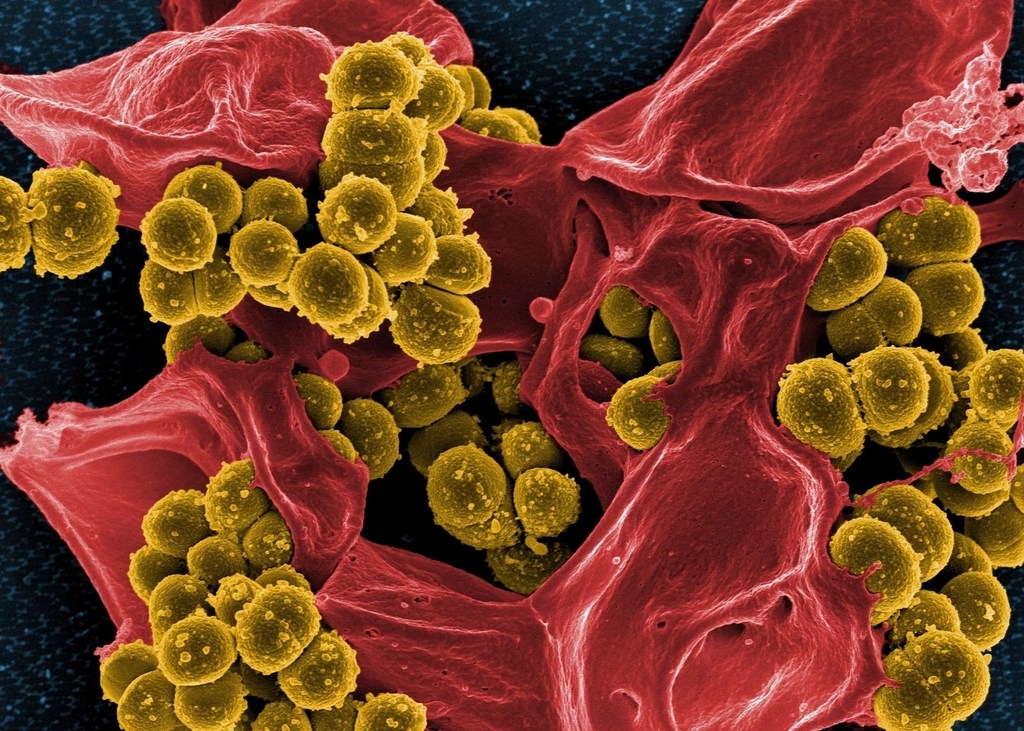
It all started back in 2020, around the time of the great COVID-19 epidemic. Our initial aim was to raise awareness of the problem of antibiotic resistance in microbes, and the health dangers that posed. The idea was a short three paragraph hit the sort of thing that informed readers could take in over a quick coffee, while giving them a few links and references if they wanted to follow up. Just to keep it interesting, we started throwing in other topics on other areas of science. And these widened to include economics, social issues like women’s safety, and of course our regular Friday cocktail night, which certain readers still recall fondly.

Antibiotics and associated matters have remained well represented. We have looked for untapped sources in nature, even including the unlikely Komodo Dragon( LSS 3 5 21) the evolutionary arms race between bacteria and antibiotics which humans have been forced to join(LSS 8 6 23) and all sorts of new discoveries and techniques including AI (LSS 6 6 24) Being who we are, and untied to the constraints of any institution, we were quick to suggest that bacteriophages might be a useful adjunct to the general theme of overcoming resistant bacteria(LSS 17 3 22, 10 9 25 et al) Ever mindful that lack of antibiotics might not be the only catastrophe waiting we have provided handy little guides to what might happen if the magnetic poles flip, sea levels rise and even more endocrine disruptors are poured out from our factories. Other scientific tropes like evolution get a look in too. We enjoyed posing you a few puzzles on things like Homo naledi (LSS 4 4 21) the tools of Socotra (LSS 17 6 22) and even the possibility of Denisovan Fine Art( LSS 9 8 23) But these last were mainly for entertainment.

Our general theme has, we think been broad but consistent. The scientific method, of gathering objective evidence and analysing it by the rules of logic are the most reliable manner to fashion a passingly decent way of life. To this end you will have noticed is praise all kinds of people from journalists like Larry Elliott and Simon Kuper to more general thinkers like John Rawls, EO Wilson and Carl Sagan. We have tried to keep away from obvious stars like Darwin, Einstein, Bach, Keynes and the others as these thinkers speak for themselves. Instead we have tried to put forward slightly overlooked figures such as Ada Lovelace, Peter Ramus or Cassiodorus. Our Heroes of Learning feature is the place to look for those.

But above all we thank you, our readers, contributors and researchers for all their good companionship. All those who posts likes, shares and comments-it shows someone out there is interested. We wish all of you well with your various blogs, careers, lives and families. As Gore Vidal observed , it is the top one or two percent who carry knowledge through and pass it from generation to generation. And you are in it.

#antibiotic resistance #bacteriophages #environment #pollution #economics #history #evolution #science #reason #cocktails

Life on Mars? Some of us have been here before

News that the latest findings from the Mars Perseverance mission may have detected the best evidence yet of life on our neighbouring planet should provide a flurry of media attention in the next few days. it’s always good for disinterested science to get a little coverage. And we take our hats firmly off to the ingenious scientists, technicians and engineers who set up these missions and study their results with such assiduity. That said, dare we inject just a tiny note of caution into these heady proceedings? We think it’s what our readers have come to expect.

First to the results themselves, Which we admit are intriguing {1] Writing in The Conversation, Sean McMahon not only gives us a really clear exposition, he has ample links to the papers you’ll need if you wish to go further. Essentially, while exploring the Cheyava Falls region of Mars, Perseverance has found strong evidence of redox reactions, the very essence of life itself. What’s more the nature of the rocks and the visual clues, a scatter of pale spots associated with organic matter, strongly resemble similar patterns created by certain living processes here on earth. Slam dunk, get out the old David Bowie records? We would still urge caution.

Firstly because we,ve been here before. Twice actually. Older readers will recall the excitement generated by the Viking missions in 1976. [2] Two of the on board detectors, the Labelled Release and the Pyrolitic Release reported positive. However the crucial GCMS did not. And despite heroic efforts to reinterpret this data, such as the ones involving perchlorates, the Viking results must remain inconclusive in any rational. evidence based system of thought. Then there was the famous Allan Hills 84001 meteorite in 1996, which contained intriguing visual and chemical hints of microorganisms. Once again other explanations were possible. And the general consensus was the scientific equivalent of a hung jury. Quite right too, we think

And secondly because final proof will not be known until NASA and the ESA can whack up the ginger and the money for a Mars Sample Return mission. Which so far hasn’t really got beyond the talked-about stage. So Perseverance sits on Mars containing 30 tubes ready for collection, including the enigmatic Cheyvara Falls samples. Back on earth people speculate, bicker and wonder when the next war will begin. Until something happens to break this impasse, we say-don’t get out ahead of your data.

[1]https://theconversation.com/signs-of-ancient-life-may-have-been-found-in-martian-rock-new-study-264960?utm_medium=email&utm_campaign=Latest%20from%20The%20Conversation%20fo

[2] https://en.wikipedia.org/wiki/Viking_program

[3]https://en.wikipedia.org/wiki/Allan_Hills_84001

#mars #astrobiology #microorganisms #evolution #life #NASA #ESA #perseverence

Bacteriophages saved the life of this woman with cystic fibrosis

In 2023 Irene Nevado lay in hospital with little hope of anything much. She had been born with Cystic fibrosis. At he age of 8 she had contracted a persistent infection of Pseudomonas aeruginosa, which had filled her lungs with fluid, making them unusable. The bacterium was antibiotic resistant. And from that day on her life was filled with misery. All sorts of things were tried,: drugs, different antibiotics, even a lung transplant All to no avail. By 2023 she had come to the end of her road.

At this point Biologist Pilar Domingo-Calap enters the story( as told by the brilliant Nuño Domínguez of El País. For Pilar is an expert in phage therapy. She had been working closely with a team at the Centre for phage therapy at Yale in the USA. Together they had evolved a bacteriophage designed to attack and destroy exactly the strain of Pseudomonas which was plaguing Irene. They put her under ten days of treatment. The result? She now walks talks and leads as busy a normal active life as any human could wish for. She even does 4000m swims to raise money for cystic fibrosis charities. Bacteriophages saved the day.

We’ve often sang their praises here. And Nuño’s article is a brilliant summary of the current state of play, with lots of juicy links to big players, latest developments and so on. A go to for any one interested, although if you don’t speak Spanish you will need your AI translator. All in all it confirms the line we have always taken. Bacteriophage therapy is going to be a vital second method if we are to overcome antibiotic resistant microorganisms. Will you, dear readers, permit us a modest instant of self-congratulation?

[1]https://elpais.com/ciencia/2025-09-10/los-fagos-salvan-a-irene-que-recibio-y-rechazo-cuatro-pulmones-trasplantados.html

#bacteriophages #antibiotic resistant microorganisms #medicine #health #cystic fibrosis

CRISPR gallops ahead (article contains a warning for xenophobes)

Warning: this article may make uncomfortable reading for xenophobes everywhere)

Progress in CRISPR-Cas-9 (Clustered Regularly Interspaced Short Palindromic Repeats)[1] and the associated enzyme is getting faster and faster. We started reporting on this truly innovative technique in 2020 and regular readers will recall updates ever since. Only four years ago it still felt a bit theoretical. But now radical applications are coming thick and fast Read this from Nature Briefing CRISPR horses spark debate reporting on the rather recondite world of polo pony breeding

the horses pictured above{*} are the first of their species to have been created with the help of the CRISPR–Cas9 gene-editing technique. They are clones of the prize-winning steed Polo Pureza, with a tweak to myostatin — a gene involved in regulating muscle development — that is designed to quicken their pace. Critics say that genetic manipulation has no place among polo’s traditional breeding practices — it has already been banned by some of the sport’s governing bodies. But a zoo of CRISPR-edited animals, from cows to sheep, is gaining acceptance in agriculture.Nature | 5 min read

{*} sorry LSS readers-we can’t show this-ed

In one sense there’s nothing new here. Humans have been modifying the genetics of plant and animal species since the dawn of the Neolithic. CRISPR and other base editing techniques have simply speeded the whole process up by making specific, designed changes and crucial nodes in the subject organism’s development. There is every reason to suppose that any number of new modifications to animals(and crop plants such as wheat) will be developed in the next few years. Some may even enable us the preserve the integrity of food supplies despite the ravages of things like plastics pollution and global warming. Also, as we have also reported here, gene editing is beginning to show real applications in medical fields such as sickle cell disease and certain cancer therapies. All of which leads us to an intriguing thought.

If ponies may be so easily modified, why not humans? One could start small by just modifying athletes and other small groups. Yet eventually the techniques could become ubiquitous in our species. Hang on-our species? Because the genetic differences between beings consisting entirely of CRISPR modified genes and the rest of us would then be far, far greater than those currently existing between our different races and ethnic groups. Are xenophobes everywhere already wasting their own time?

[1]https://www.yourgenome.org/theme/what-is-crispr-cas9/

#CRISPR Cas 9 #base pair #medicine #biotechnology #sickle cell #agriculture #stock breeding

Driving drives Dementia

Cars, don’t you love them? They cost a lot of money, they run people over, they allow cities to sprawl out over the countryside. Now comes evidence that the pollution that they cause, along with many other sources of pollution it has to be said, may be causing a special form of dementia called Lewy Body Dementia. [1] Ian Sample of the Guardian reports on a massive study of 56.5 million patients carried out by Dr Xiaobo Mao of Johns Hopkins University in the United States. The team found that fine particulate matter called PM2.5 (LSS passim) caused proteins in the brain to form toxic clumps which slowly destroy nerve function leading to cognitive decline characterised by to memory loss, poor attention spans, visual hallucinations and sleep disturbance. The team went further and found the deadly particles induced similar symptoms in mice, confirming their evidence from population studies in humans .

When we did out background research for this article we were quickly overwhelmed by the amount of available evidence. This report [2] by the UK Government waxes lyrical on the different types of air pollutants-particulates, NO2 SO3, ammonia. and many more.. as well as the many symptoms the pollution causes in the human body. And this from the Alzheimers Society [3] puts the ball in the polluters’ court when it comes to neurodegenerative diseases particularly. We weren’t ever going to fit all that in paragraph two of a three paragraph blog, so we won’t try

What we will do instead is ask where does all this pollution comes from. Cars? Sort of. Factories? In a way. But the real source is a set of misguided economic policies which value growth numbers above all else. You have to have more growth than your neighbours or younare not reaklly worth anything at all. There must be more new cars, new washing machines new mobile phones, bright new shiny anythings, so that we can create a frantic cycle of production and consumption to prove how rich and clever and successful we are. But is the definition of the good life really to drive an overpriced automobile over concrete flyovers for a few years, followed by a long cognitive decline into dementia, really such a good life? Answers please-we’d love to hear them.

[1]https://www.theguardian.com/environment/2025/sep/04/fine-particulate-air-pollution-trigger-forms-dementia-study-lewy-body

[2]https://www.gov.uk/government/publications/health-matters-air-pollution/health-matters-air-pollution

[3]https://www.alzheimers.org.uk/about-dementia/managing-the-risk-of-dementia/reduce-your-risk-of-dementia/air-pollution

#automobiles #pollution #dementia #health # neurology

Heroes of Learning: Alexandra David-Neel

Today we celebrate the life, travels and accomplishments of Alexandra David-Neel (1868-1969) who died tragically young, one month short of her 101st birthday. Yet in that time managed to pack in as varied a CV as anyone ever has. Explorer, feminist, writer, mystic, opera singer, anarchist and first westerner to enter the forbidden city of Lhasa. [1]

Her exposure to the world started early when her father took her to visit the memorial to the recently executed Communards in1871. Whether this troubled her we cannot say. But her teenage years were certainly feisty. By the age of 18 she had clocked up travels to England Switzerland and Spain, on the way encountering controversial characters like Madame Blavatsky and getting herself enrolled in the 30th degree of Scottish Freemasonry.By 1899 she had written her first books and converted to Buddhism. But it was only as the curtains lifted on the twentieth century that she really got going. The next 46 years read like a whirlwind of adventure which would leave Indiana Jones green with envy. She got out East by becoming a successful opera singer in what was then called Indo China. After that her perambulations included vast stretches of India, Sikkim(where she lived as an anchorite in a cave) China, Mongolia, Tibet (hence the Lhasa episode), interspersed with marriage and a peaceful interludes in Digne-les-Bains in Provence.

It was here she finally retired for last decades of her life, . as the burden of her exertions caught up with her. It is interesting to recall that this quintessential nineteenth century explorer actually died after Neil Armstrong had placed his famous first step on the Moon. But we guess that she must have approved. We hope our links will tell you more about this energetic, learned and above all courageous woman. A beacon of learning indeed in dark times.

[1]https://en.wikipedia.org/wiki/Alexandra_David-N%C3%A9el

[2]https://avauntmagazine.com/alexandra-david-neel

#tibet #buddhism #lhasa #dalai lama #provence #china #sikkim #neil armstrong

The Best time to have been alive #4: Al-Andalus

Des kand meu Cidello venid/ton bona al-bishaara /com ray de shol yeshed/fi waad al-hiraaara*

When my Lord Cidello comes, what good news! He shines like a ray of sun on Guadalajara

When someone suggested we tackle Muslim Cordoba at its peak (roughly, the Emirate and Caliphate, 750 -1031 AD  in the western calendar), we were unprepared for the cornucopia of historical  riches that awaited. But, as both frequent holidaymakers in the Iberian peninsula, and speaking a smattering of Spanish at least, here goes anyway.

The story starts with Abd al-Rahman I, the “Falcon ” who fled a purge in Baghdad  and founded the Emirate of Córdoba in 756. His survival story—crossing the Euphrates, losing his brother, and arriving in al-Andalus as a lone prince—is cinematic. He united fractious Muslim territories and laid the groundwork for a multicultural society. Córdoba became a haven for Muslims, Christians, and Jews, with Arabic, Berber, Romance, and Hebrew spoken in its markets and courts. The Great Mosque (Mezquita), begun under his reign, symbolized this fusion—its horseshoe arches and layered aesthetics echoing both Damascus and Iberia

Under Abd al-Rahman III, who declared the Caliphate in 929, Córdoba reached its zenith. The city boasted paved streets, public baths, and over 400,000 catalogued books in al-Hakam II’s library. Irrigation systems turned Andalusian soil into a breadbasket, exporting silk from Toledo, leather from Córdoba, and steel from Damascus- Scholars like Ibn Masarra and later Ibn Hazm flourished, while Jewish thinkers such as Hasdai ibn Shaprut advised the Caliph and translated medical texts. The court at Madinat al-Zahra shimmered with diplomatic prestige, hosting envoys from Byzantium and the Holy Roman Empire.

But all golden ages come to end. After the fall of the last strongman, Al Manzor, the Caliphate quickly declined into petty little kingdoms called taifas, each jealously guarding its privileges and rights. Easy prey indeed for the larger Christian states to the north. Yet the legacy of convivencia—coexistence—echoed through European Renaissance thought. Andalusia wasn’t just a place, but a possibility. A cultural experiment in coexistence, beauty, and intellectual ferment[2] which  makes it a contender for one of history’s “best times to be alive.”

[1] Al-Andalus – Wikipedia

[2] The Ornament Of The World by Maria Rosa Menocal | Waterstones

*Yehuda Halevi  celebrating Yosef ibn Ferrusiel   in a kharja ending a muwashshah c 1100 AD

* Kharja attached to a muwashshah attributed to Yehuda Halevi c 1095 AD

 #al-Andalus #islaam #abd-al-rahman #Cordoba #Caliphate #Emirate #Spain #Portugal #Arabic

The Slippery Slope fallacy: the one we’ve never got on with

“Don’t throw that rubbish there! Put it in the bin like you’re supposed to!” Many years ago we lived on a pleasant private estate in West London with trimmed lawns, walkways, security, a residents association, all those sorts of things. The only problem was some of the residents, who were either too lazy or felt culturally compelled to throw their domestic rubbish down by the rubbish chutes instead of putting in properly, as we, the decent majority did. This bad practice spread, being quickly copied across the estate and soon we all had a widespread problem with flies, rodents and an ugly disfigurement of our pristine areas. It’s called the slippery slope. Another example is when the office agrees to step out for a single drink and, three hours later, the entire company ends up blind drunk ,broke and embracing each other with varying declarations of love. Everyone copies bad behaviour, because they feel entitled, or are missing out. And so crime, disorder, drugs and violence spread quickly through communities, reducing everyone to common beggary.

And that raises a bigger problem for us here at LSS. For years we have proudly touted our Enlightenment, Whig, rational, call them what you will credentials like a badge of honour. Central to our purpose, hardened readers will recall, is the practice of reason and logic. Avidly do we follow websites like your logical fallacy which are stuffed with every classic example you could wish for: post hoc propter hoc, texas sharpshooter, all shining beacons of clear thought each one of them.. Standing out like a dead rat in a melon souffle is the slippery slope, of which the authors state

Allowing to happen will cause Z to happen: therefore we should ban A now!

Yes, we see the error. The slippery slope is a fallacy for it allows one to jump to conclusions without checking each intervening link from A to Z for both logic and empirical fact. Its the classic howler of someone like a Daily Mail columnist, carried away on tides of hysteria and dread. The trouble is: it’s how humans really behave. It’s the way most of them are.

So our problem with the slippery slope mirrors a more general problem. Reason, learning, and all the the qualities which we prize are not always good guides to how society works. (Try a Friday night out in Croydon if you don’t believe us) Yet the values we espouse are the only ones which will ensure not only the good life but also human survival in the long term. The problem we now have is how do we form a critical mass to allow those values to prevail?

[1]https://yourlogicalfallacyis.com/

#logic #fallacy #reason #slippery slope #enlightenment

1st September 2025: the day world history changed forever(you did notice, didn’t you?)

Today, or yesterday (it’s all a bit muddled what with time zones, deadlines and so on) world history changed forever. Because the two biggest powers on the planet have started to come together. Making Asia potentially one huge zone of economic co operation. the true centre of economic and political power in the world. Yes, Mr Xi and Mr Modhi have started to talk about the joint efforts of 1.416 billion Chinese and 1.464 billion Indians. all increasingly prosperous and tech hungry. All of which trumps the 347 million Americans who so recently seemed to have the world game so utterly in their hands(anyone remember George W Bush?)

Ah, critics might say- but look at the GDP figures. America at $30.51 trillion is still comfortably ahead of both its enemies combined($23.4 trillion) But a Briton in 1900 could have pointed to similar figures which showed how rich they still were, ignoring the growth potential of rivals like the USA and Germany. And ominously, the current USA is in a bad position here, with 1.9% against China’s 4.0 % and India’s 6.9% The conclusion is obvious; the USA is fast on the way to becoming a regional, local power. It’s days of strutting the world like a colossus are over, or very nearly so.

And how has this come about? There have been long term trends of course. Growing inequality. political polarisation and corruption of its legal system have been in evidence since 2000 at least. The Iraq war of 2003 was an epic blunder and the crash of 2008 fatally undermined the rationale of the American order. But until recently America still represented an open democratic country Rational independent institutions. inalienable Rights , Something worth fighting for, both for its own people and for its allies. But now those allies are humiliated . [2] Others, not allies but still potential partners, alienated by irrational and erratically applied tariffs, rush to form their own blocs and trading systems. It was easy to believe that Mr Trump and his policies made sense at least from the point of view of their own country. Now the damage is not only deep, it is permanent. Welcome to a new world order.

[1]https://www.bbc.co.uk/news/articles/cp37e8kw3lwo

[2]https://www.independent.co.uk/news/world/americas/us-politics/trump-tariff-ass-kissing-nrcc-hannibal-b2729968.html

#china #india #usa #donald trump #narendra modi #Xi Jinping #geopolitics