Heroes of Learning: Leonardo Pisano(Fibonacci)

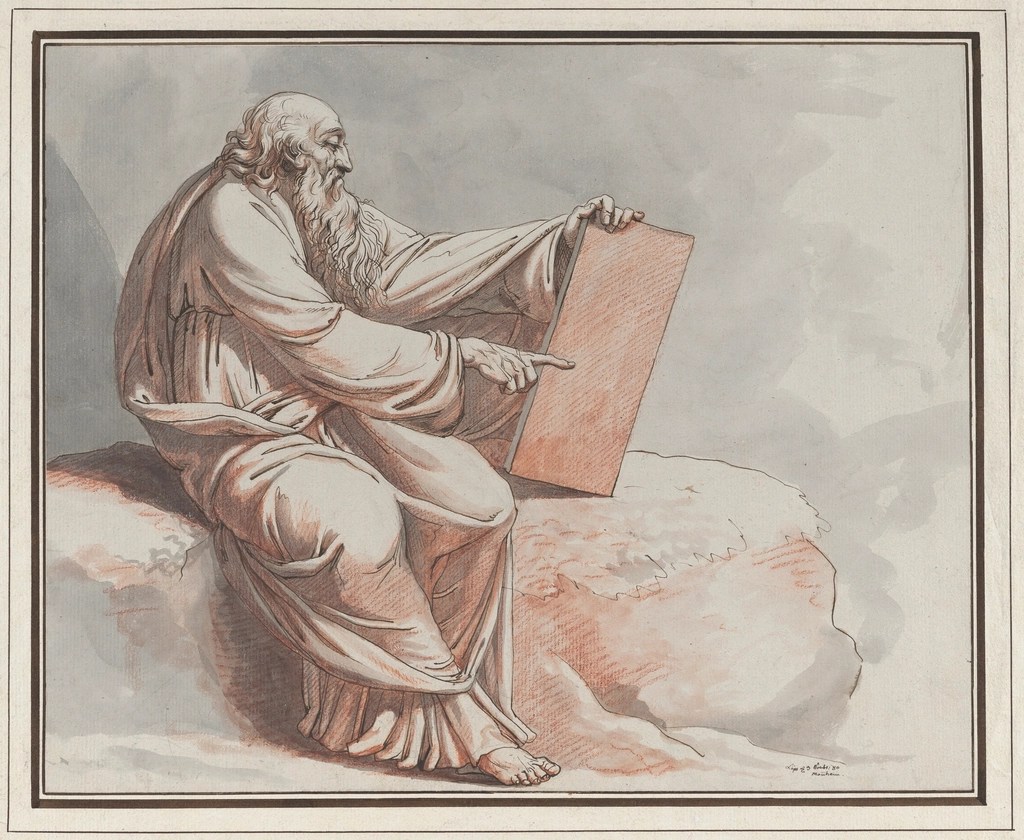
Have you ever looked at the strange spiral in a broccoli floret and wondered how it got like that? Or hundreds of other things in nature from the shapes of waves on the beach to the arrangements of artichoke leaves? The answer to all this and much more was discovered by Leonardo Pisano, better known to the modern world as Fibonnaci.(C1170 AD-c 1245) [1] [2]

A bright lad from Pisa in Italy, his big break came when his father took him on a business trip to Bugia in what is now called Tunisia. Father and son met an Arab mathematician (the Islamic world was still far ahead in science and technology) who kindly showed them the amazing new numbering system which they had learned in turn from the Hindus. The young Leo realised at once that this strange numerical system of 0, 1 2-9 was utterly superior to the cumbersome Roman system of letters( V X MCXCCVL, etc) On his return to Italy he published the Liber Abaci, whose short 27 or so chapters are one of the most significant books in the canon of western learning. Not only did it update all and sundry on the new number system. Not only was it full of useful applications for this system. Above all it promulgated an intriguing new sequence of numbers which goes 0,1, 1, 2, 3, 5, 8, 13…..to infinity. Each number in the sequence is formed by adding the two before. Dividing one by its predecessor quickly gets to the Golden ratio, which artists and architects have been using as on of the most aesthetically pleasing constructions for centuries.

We have alluded here before to odd mathematical structures such as pi and Eulers number: which show up again and again in nature: Fibonacci’s sequence is another of them. We have no idea why, but then: nor does anyone else. But the real significance of Fibonacci was his timing. For the first time, and after a long sleep, Western Europe was starting to make original contributions in natural sciences. And it did it by borrowing humbly from other more learned cultures. A lesson we should not forget today.

[1] https://en.wikipedia.org/wiki/Fibonacci

[2]https://www.bbc.co.uk/bitesize/articles/zm3rdnb

#fibonacci #mathematics #middle ages ##tunisia #india #biology #architecture

Human Evolution: More muddle in the middle?

Taking time out as ever from more serious matters, we return to our old playground of human evolution. And not just for R and R, important as that is. Also, because the methods and pronouncements of its scholars are important guides to how we should all approach any complicated and potentially controversial subject.

Until recently the origin of our own species seemed fairly clear cut. It emerged from a pack of other big-brained contenders (think Denisovans and Neanderthals among others) starting around 250 000 years ago, in Africa, and clearing the rest of the field no later than 35000 years BP. However recent work by Professor Chris Stringer of London’s prestigious Natural History Museum and colleagues have now cast this into doubt. It is even possible that the line leading to Homo sapiens may have started to go its own way before 1000 000 years BP. You can read why in these takes from Jonathan Chadwick of the Mail here [1] or a slightly extended version in the museums own PR piece here [2] It all goes back to 1990 and the discovery of a rather squashed skull called Yunxian 2 which was attributed to Homo erectus: a perfectly reasonable decision at the time. But using advanced new reconstruction techniques Stringer and his colleagues assert

……… Yunxian 2 displays a unique combination of primitive and more advanced traits. These include a large, squat braincase and a more projecting lower face, similar to Homo erectus. At the same time, derived features in the face and rear of the braincase, as well as a larger brain capacity, are closer to later species such as Homo longi (‘Dragon Man’) and Homo sapiens.

We have been following this game for for nearly six decades: so what do we think? First Chris Stringer is a fine scholar whom we have always admired. Secondly, we welcome all attempts to re evaluate data and set it in new contexts: that way real learning occurs. Our caveat is more with practice . Always and again in human evolution, new fossils found are baptised with confident new binomial Latin names in the great Linnean tradition. Then vast conclusions are drawn, which, in our experience, are substantially revised some years later. This has led not only to the muddle in the middle to which the articles allude. There are plenty more early on the story, and more than one much later on. We think the first clearing step should be to talk less about species, and more about gene frequencies populations. and ways of life. These clearly cluster at points of excavation, such as Afar, Java or Atapuerca to name but a few. But each point, however iconic, is represented by relatively few bones. There are enormous gaps in space and time between each, into which genes and populations must have been flowing all the time. Is it not possible that there has only been one human line all along, and that many of the variations are likely due to factors such as ecology, climate or isolation? The real answer is to dig, dig and dig again.

[1]https://www.dailymail.co.uk/sciencetech/article-15132633/skull-pushes-origins-400-000-years.html

[2]https://www.nhm.ac.uk/press-office/press-releases/analysis-of-reconstructed-ancient-skull-pushes-back-our-origins-.html

#paleoanthropology #human evolution #clade #species #Homo sapiens #China

Stock markets: a crash waiting to happen?

Predictions of imminent and terrible stock market crashes are as cheap and common as chewing gum. That’s why we wouldn’t take them seriously at all if they didn’t really happen sometimes. With dreadful consequences, like the ones of 1929 and 2007-2008 for example. And so when an expert as prescient as Larry Elliott of the Guardian offers a warning, we have to sit up and take notice. [1]

Elliott builds his case carefully, first noting that the chances of the next crash increase the further we move away from the last one. He points to slowing US job creation, rising unemployment and inflation as signs of underlying problems, while the stock market continues soaring away to record levels. We at LSS might have taken even that in our stride were there not so many worrying parallels with the situation in 1929 just before the Wall Street Crash. That summer the economy was starting to show signs of downswing too, while the markets reached giddy new heights Then, as now wealth was concentrated in relatively few hands, making the rich responsible for a disproportionate amount of consumer spending. As Elliott points out

30% of the wealth of Americans[is] accounted for by shares. Since share ownership is concentrated among the better-off, the US economy is relying on the Wall Street boom continuing, and for the rich to carry on spending their gains.

If they stop, the downturn will be very sharp indeed; as it was in 1929.

And this is where our take on Elliott’s article becomes slightly disquieting. He rightly notes that American policy is sharply divided over what to do. Jerome Powell and the Federal Reserve want to leave interest rates where they are, to bear down upon inflation. As President Trump rightly adduces, this could bring down the Stock Market at any time. However, although the President’s idea of cutting interest rates might preserve the equity boom a little longer, it risks dangerous problems with Bond markets as inflation takes hold. For US Treasuries are not just bits of paper. They are still the prime benchmarks for setting lending and borrowing rates around the world. If foreigners lose confidence in US Treasuries, their own bond and equity markets will fall too, In turn dragging Wall Street into the crash the President so badly fears. Damned if you do; damned if you don’t. We do not envy him his choices.

[1]https://www.theguardian.com/commentisfree/2025/sep/25/us-stock-market-trump-wall-street-financial-crisis-federal-reserve

#economics #finance #shares #bonds #wall street crash #markets #depression

Two good news blogs: #2 The next pandemic is on BBC2

One thing we are quite proud of at this blog is that we have tried to warn you, gentle readers, of the several dreadful dangers that will confront you if you are not careful. Well aware of your tendency to find creative new ways to hate the neighbours wherever possible, we have, like faithful retainers, quietly sought to adduce the presence of other mortal perils. (LSS passim) Including massive volcanic eruptions, crashing asteroids, polar magnetic flips, toxic pollutants and climate change, which may also be lurking in wait. Nowhere have we been more assiduous than in adverting the threat of new pandemics to follow the COVID -19 epidemic. We have examined possible candidates such as antibiotic resistant bacteria, various viruses, and even fungi. We even speculated, following the work of the great Professor Harper, if such pandemics could lead our own society to share the dreadful fate of the once proud Roman civilisation which preceded us [1]

How gratifying then, when a man of learning and ability far greater than our own covers so much of the same ground, as Dr Chris van Tulleken does for BBC2 [2] In Disease X: Hunting the Next Pandemic. This polymathic Professor of Infectious Diseases at UCL makes a veritable tour de force of the worlds hotspots of deadly virus potential. Taking in such tragic examples as the Nipah virus which still represents a mortal peril in regions of Southern Asia [3] and of course considers the avian flu H5N1, a real old favourite of this blog. Its full of heartbreaking scenes, scarily secure suits and laboratories, and some really intelligent doctors and scientists talking knowledgeably, using reason instead of wild emotional overreaction.

And it may surprise you to learn that Dr van Tulleken ends the show on a cautious note of hope. We doubt that he is a regular reader of our blog. But he touts one of the same themes we have been pushing in the last year or so: using AI to design and synthesise new molecules-antibiotics, vaccines, what have you-to stay ahead of the genetic permutations and combinations thrown up in the organisms that are trying to make a meal of us . If there is hope, it lies in science and reasoned investigation. As certain Presidents of the United States of America should take note.

{1] Kyle Harper The Fate of Rome Princeton University Press 2018

[2] https://www.bbc.co.uk/iplayer/episode/m002jy6q/disease-x-hunting-the-next-pandemic

[3]https://en.wikipedia.org/wiki/1998%E2%80%931999_Malaysia_Nipah_virus_outbreak

[4]https://en.wikipedia.org/wiki/Influenza_A_virus_subtype_H5N1

#avian flu #pandemic #health #medicine #virus

Two good news blogs:#1 AI designer phages against antibiotic resistance

Its not often we bring you unabashed good news, gentle readers. Nor moreover, blow our own trumpet. But the following from Nature Briefing AI Helps design E. coli killing viruses not only unites so many of the themes we push here-(AI molecular design, multidisciplinary studies, bacteriophages etc etc)-that we think that the advance it represents it makes this one of our more significant blogs in months.

Using artificial intelligence (AI), researchers have designed novel viruses capable of killing strains of Escherichia coli. The team used the DNA of a simple bacteriophage called ΦX174 to guide AI models to generate viral genomes with the specific function of infecting antibiotic-resistant strains of E. coli. Researchers used the model’s suggested sequences to select 302 viable phages. When put to the test, 16 of these phages could infect E. coli, and combinations of them could kill three strains of the bacterium, a feat the original ΦX174 couldn’t pull off.Nature | 5 min read
Reference: bioRxiv preprint (not peer reviewed)

its certainly worth clicking on the Nature article and even the Preprint, which has a surprisingly well written summary

Old hands to this blog will recall our long standing worries about this organism. Normally Escherichia coli (named after the ingenious Dr Theodor Escherich) is a fine upstanding member of the microbiological community, being common in nature and a doyenne of experimental departments in microbiological schools. But certain strains of it are developing a profound resistance to our best antibiotics including piperacillin/tazobactam combinations. Which could have made it a very False Friend indeed. But now it seems that Dr King and his team have got ahead of the game.

Note the careful language, full admissions that peer review awaits, and generally understated claims that mark the true signs of trustworthy scholarship. How different from some situations where leaders of great nations go before the cameras and make huge unsubstantiated claims about phenomena of which they have no certain knowledge, But when you choose to believe only what you want to believe, fate has a nasty way of catching up eventually. Wait for the next blog and we’ll tell you more .

#E.coli #bacteriophages #AI #designer biochemistry #antibiotic resistance #microbiology #medicine #health

Why Net Zero threatens a wonderful land-that was

Kingston on Thames, Surrey, England. Spring 1962. A brand new Ford Zodiac pushes out from a brand-new house on a brand-new estate to begin a Sunday outing down to the south coast. Mum, Dad and their two kids on the back seat pass rows of new houses, all like theirs, all lived in by people like them. With cars like theirs at the fronts. This is Macmillan’s England, and people have never had it so good. Even, for the first time, the working classes. As the last new estates around Chessington drop behind and the real country begins at Box Hill, someone puts on the car radio. Listen! It’s the Shadows Wonderful Land,: and here, today, its dreamy tones are true. For as they head south on the A24 (soon to be massively widened) the temples of all this wonderful modernity are still visible in the brave new petrol stations and car showrooms sprouting across the sleepy countryside.  The car has made people profoundly mobile and independent. People talk about them endlessly. Buy them, sell them Discuss performance. Your car is a badge of who you are, where you have arrived at, especially if you are a man. As our travellers pull into Worthing for a welcome ice cream they have indeed crossed a wonderful land.

This is the  brave new world still remembered as the base line by the two children in the back of the Zodiac. Fast forward  2025 and they are well into their seventh decade.  But they still remember the promise of those years with aching nostalgia. Their own lives, minus the usual vicissitudes of marital, family and work problems, have been tolerable enough: prosperous even, as their waistlines testify. But outside the narrow world of work and golf club, there have been disturbing changes. First crack in the wall came with the 1973 oil crisis, which demonstrated their country’s humiliating dependence on foreign oil. Tax cuts and North Sea Oil brought a brief sugar rush of prosperity: but now the world is a dark distrustful place hopelessly split between rich and poor where nothing ever works and everything is broken, from roads to trains to hospitals. Foreigners just keep coming and coming and coming. Above all the USA, their great patron and  guarantor of all their security, is rapidly losing its ability to prosper and protect.

Now add something worse. All those grandchildren they sent off to University have come home to tell them that everything they believed in was wrong. That burning oil warms the planet to disastrous levels. [1] That vehicle emissions are a massive cause of mental and physical health disorders.[2] So are the plastics made from oils in abundance , which now pollute every imaginable stretch of sea air and land.[3] That, therefore, the whole cult of buying cars, comparing them, fiddling with them and collecting them turns out to have been as  deluded as say smoking tobacco ,drinking alcohol or keeping slaves.  That in effect, their whole lives have been a bit of a mistake That they now, with so little time left to enjoy , must give it all up.

It’s a big ask. Especially when incredibly rich industries run incredibly well funded political and media  campaigns to tell these same baby boomers that they not only can go on burning fossil fuels, they really ought to- must. Because only that way lies the road to a better yesterday when the world was young. And straight. And white. Here is the challenge facing all of us who call ourselves progressive or educated . We have no idea if we shall succeed We know we will need swimming lessons if we do not,

[1] Burning of fossil fuels – Understanding Global Change

[2] Air pollution and health risks due to vehicle traffic – PMC

[3] 5 Harmful Effects of Plastic on Human Health

(See also LSS 9 4 24;26 9 24; 20 9 25)

Hidden Dangers: The Conversation on PFCs

Today we unashamedly and wholeheartedly turn over our blog to a straight lift from The Conversation. And an excellent article from Professor Patrick Byrne of Liverpool John Moore University. Who has devoted his life’s work and formidable intelligence to tracking the sources of PFCs in the River Mersey (the one the Beatles grew up near)[1]

For those who want to come up to speed here are two paragraphs from Patrick’s article

Per- and polyfluoroalkyl substances (PFAS), more commonly known as “forever chemicals”, are a large family of human-made chemicals found in everyday products like food packagingwater-repellent clothes and fire-fighting foams. They are valued for their ability to resist very high temperatures and to repel water and oil, but these same properties make them extremely persistent.

Once released, some PFAS could take thousands of years to break down. They accumulate in the environment, build up – with different compounds accumulating at different rates – inside the bodies of wildlife and people, and have been associated with harms to health. The most studied types have been linked to cancers, hormone disruption and immune system problems.

And one elegaic, personal thought.Back in the 1960s when those same Beatles were growing up, the world was a different place. All those plastics and chemicals, now in Patrick’s rubbish dumps seemed part of a bright, dynamic new landscape of progress: a brave new world. There can indeed be progress, But be very careful how you go about it

#plastics #endocrine disruptors # PFCs #pollution #environment #toxins

More on undiscovered antibiotics in Nature

A few years ago we published a couple of blogs suggesting that the saliva of  Komodo dragons (Varanus komodoensis) might be a possible place to look for new sources of antibiotic compounds. (LSS 27 10 20; 6 9 21) Poor dragons! It now seems that their tantalising resistance to infection may be due to other factors than miraculous antimicrobial molecules. But at least it got us thinking:  might there yet be some useful aids to our antibiotic quest lurking out there, undiscovered?

The antimicrobial potential of some plants is quite well known. Garlic(Allium Sativum) turmeric Curcuma longa)and the tea tree(Malaleuca alternifolia) are classic examples. Best estimates suggest there are between 250 000 and 500 000 species of plant on out planet. Provided not too many are destroyed to make way for shopping malls, there may be hope of some more undiscovered potential among our leafy friends. [1] Turning to animals, our first candidate is the Matablele Ant (Megaponera analis)  They not only produce antibiotics from their metapleural glands,(what they?-ed) but they also diagnose infected wounds in their nestmates and apply targeted treatment. Their secretions contain over 50 antimicrobial compounds, some effective against Pseudomonas aeruginosa, a notorious human pathogen When Matabele ants are wounded, their cuticular hydrocarbon profile changes, signalling infection. Nestmates detect this and apply antibiotic secretions from their thoracic glands. This is the first known example of non-human creatures performing sophisticated medical wound care [2]. Other animals  such as frogs, insects, and marine life produce antimicrobial peptides (AMPs) as part of their innate immunity. These AMPs are being studied for their ability to combat resistant bacteria. And, if we were betting men, we might take a small punt on Sarcotoxin 1A and anti microbial peptide found in the saliva of flesh flies belonging, unsurprisingly, to the genus Sarcophaga [3]

Educated readers will recall how Alice met a Cheshire Cat in a wood. After imparting some words of wisdom, it vanished. But its smile remained. [4] So with our LSS dragon: it may be gone, but the smile of hope which it gave us lingers on.

[1] Plant Products as Antimicrobial Agents – PMC

[2] Ants produce life-saving antibiotics for treating infected wounds

[3] https://en.wikipedia.org/wiki/Sarcotoxin#:~:text=The%20proteins%20are%20present%20in

[4] Lewis Carroll Alice in Wonderland Chapter 6

#antibiotic molecules #ecology #habitat destruction #health #medicine #microbiology #tea tree #sarcotoxin

Mirror Organisms: the ultimate bioweapon?

Anyone who got beyond basic school science will recall the frustrating new level of complexity when the teacher first told you about stereoisometry. You recall-all biomolecules starting with the slightly complicated upwards really have two identical forms, left hand and right hand. Amino acids, proteins you name it. And life can only work with one. All amino acids in living things on this planet have left handed amino acids and right handed sugars. Of course living systems could work the other way round, It just has happened yet on this planet. Until now. Read this Debate heats up over mirror life from Nature Briefing

At a meeting this week in the United Kingdom, scientists are deliberating whether to restrict research that could eventually enable ‘mirror life’ — synthetic cells built from molecules that are mirror images of those found in the natural world. “Pretty much everybody agrees” that mirror-image cells would be “a bad thing”, says synthetic biologist John Glass. Such a cell might proliferate uncontrollably in the body or spread unchecked through the environment, because the body’s enzymes and immune system might not as readily recognize right-handed amino acids or left-handed DNA. But there are disagreements about where to set limits on research — the ability to evade degradation could also make such molecules useful as therapeutic drugs.Nature | 7 min read
Read more: Life scientist Ting Zhu, whose work explores various mirror-image molecular processes, considers how to bridge divergent views on such research. (Nature | 11 min read)

Unfortunately its the down size that worries us here, Not only the uncontrolled spread alluded to by the learned scientists above. But, as the world falls into the grip of authoritarian dictators and ever more powerful plutocrats, the potential these tools give them to get rid of surplus and redundant sections of humanity. Forever.

#isomers #biochemistry #bioweapons

If all the wealth in the world were shared out, what would happen?

Many decades ago, we often used to hear the argument “if all the money in the country were shared out, everyone would only get 20p” A tiny sum, which could not make any difference to daily life. This was the UK in 1973, Perhaps it was true then, there. Is it true of the world as a whole today?

The statement itself is a cognitive howler: because it equates wealth with money, carefully avoiding the inclusion of all the goods, capital infrastructure(IT systems, railways, etc.) and productive resources such as factories that make up the wealth of the world, which is best expressed as GDP. When we set out to find what that was, the best estimate was from the World Bank,[1] who put it at $105 trillion in 2023. Now, the population of the world is around 8 billion (8×10⁹) people. What would happen if we found a way to share that GDP among all of them? The answer is: everyone ends up with an an income of $13 125 a year. Which surprised us greatly. Instead of being insignificant, its actually quite a lot. Let us explain why.

That same world bank defines four categories of national income by GDP. Low: $1 135 or less. Lower Middle: $1 136-$4 465. Upper Middle: $4 466- $13 845. High: $13 846 and anything above. There is enough wealth in the world to raise everyone almost to the level of high income countries, certainly to the very top of the middle range.

Now there may be very good reasons why this cannot be done. Some are practical. Some are moral. But if it were done, what difference might it make to such issues as mass migration, educational attainment, and the overall level of demand in the world economy? Let alone health, security and basic nutrition. Just a thought.

[1]https://ourworldindata.org/grapher/gdp-worldbank

#wealth #GDP per capita #economics #inequality #migration #health #geography #economics