The Teacher’s mistake-and why it could doom us all

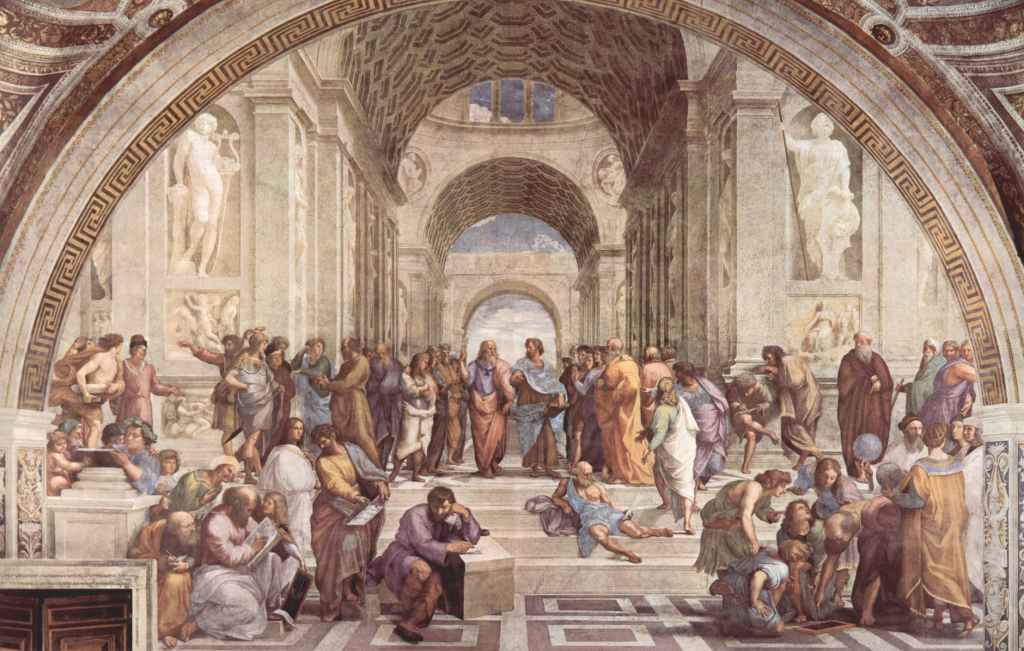
Most errors stem from unconscious habits of the mind—ways of thinking picked up in work, education, family and public bar.  Teachers and lecturers are not exempt. Their lives largely consist in imparting  information to the ignorant, then correcting its assimilation through marking essays and test papers. As their students readily  comply, driven by ambition, cupidity  or fear  of ambitious parents, the teacher concludes that learning has occurred, and approves his own methods accordingly.

But the world outside the groves of academé is a very different place. Violent, short term and full of festering resentments such as class, race and the bitter memories of forced attendance at the knees of some pedagogue for whom they entertained neither liking nor respect. Here decisions are based on quick instinct, not measured reflection. Judgements depend upon on habit, emotion, and identity, not fact and logic.  So when the educated set out blithely  to explain complex issues such as climate change, interethnic tensions, or  pandemics  they expect the same compliance, the same reverence, as they received in school. Forgetting that most minds have long since been locked against reason, and barred to the entry of all but the smallest facts. Why else is it so hard to convince people to give up smoking, gambling, or drinking? A second’s reason revealed the harm: and the educated repeated the admonitions for decades, until partial success was achieved. Now we begin to understand the terrible fate of Cassandra, doomed to be forever right, and forever unheard.

Unless the educated-among whom we include the followers of this humble blog, gentle readers- can learn to adjust this fatal psychic flaw, the world will continue to slide towards climate catastrophe, pandemic disaster, and war. Oh, we almost forgot-your former pupils now have nuclear weapons

#climate change #global warming #pandemic #antibiotic resistance #tribalism

Eight New Carbon Capture sites for UK? Here’s hope indeed

We’ve had our differences with the Daily Mail down the years, but on climate change: well, they’re having a good war. Despite the prejudices of a section of their readers, they find ways to drill the message home. This is a crisis. And here are some ways it might be coped with. In this spirit the well-informed Jonathan Chadwick covers a new UK initiative to capture CO2 and store it underground as carbonates in old volcanic rocks, with which these islands are well-endowed. James’ story is breezily written, and packed with good facts: so we will urge you to click on the link [1] to enjoy it for yourself.

But can we, dare we, steal a little credit for ourselves from James’ article? Because one of the names he checks in his piece is Climeworks, that marvellous pioneering out fit of carbon capturers we mentioned ourselves(LSS 4 6 20; 9 3 23) Now, we can all debate the ways of dealing with climate change, and what changes we need to make in our lifestyles or in our technologies. But all of us are basically in agreement. Rational thought and an ability to accept facts suggest there really is a problem That puts many of us on the same side.

[1]https://www.dailymail.co.uk/sciencetech/article-15298571/climate-crisis-eight-sites-CO2-stone.html

#climate change #global warming #carbon capture

Why taxes are good for you: part #1 of a new series

Next to the arrival of immigrant persons, nothing so exercises the anger of our old friend Dave Watford and his mates at the Dog and Duck as the imposition of taxes. All taxes. Any taxes. Death duties, sales taxes, income taxes……the mere mention of the “t ” word is enough to unleash paroxysms of indignant wrath. As we have heard it so many times we think we can give a fair summary of their case, which goes like this

I’ll tell you what’s wrong with this country, mate —taxes. I work hard, and they just take it. For what? So some bloke in a suit can sit in an office pushing paper? I don’t see any of it. Roads are still full of ‘oles, the(expletive deleted) NHS is on life suppawt, and don’t get me started on foreign aid. They say it pays for schools an ‘ospitals—well I haven’t been in school for 40 years and I haven’t seen a(expletive deleted) doctor since ’98. Why should I pay for stuff I don’t use? And all these entrepreneurs, they’re the ones wots creating jobs. Government just gets in the way. If they cut taxes, we’d all be better off. More money in our pockets, less wasted on(expletive deleted) bureaucracy.

Dave, despite the obvious logical fallacies in your arguments. we respect you! We know you and your kind work hard and on the whole put in more than you take out. We know how your lives are centred on family and community, and that the world can seem a harsh, bewildering place. But can we, dare we, just take a short time to offer the counter-intuitive case? Just because every argument by its nature always carries a counter point.

For we believe that taxes and their imposition do more than pay for armies, police and courts (which they do). We believe they do more than generate economic growth (and we will show that they do indeed) That they create more stable societies-and we have strong evidence for that. But what we really believe is that the idea of taxes lies at the very beginnings of Civilisation, and are what made it possible to rise above the level of stone age farmers and grangers. It’s that profound. In the next few weeks we shall be running a series of blogs which explore these themes. If only for the sake of balance. In the meantime compare Finland (top tax rate 57.65%, rigidly enforced) with Chad (top tax rate 30%, barely enforced), and answer these questions:

1 Which has GDP per capita of a $53 189 and b which $1420?

2 which of the two boasts a universal healthcare, free education, strong infrastructure, low corruption. and which b Fragile institutions, limited public services, poor infrastructure, high corruption.?

3 Which of the two do you think has Higher life expectancy, lower infant mortality, combined with top global rankings in happiness and education?

ANSWERS TO QUIZ

1 a Finland b Chad

2 a Finland b Chad

3 Finland

#economics #tax #infrastructure #growth #GDP wealth creation

Friday Night: More in praise of Gin and Tonic

If there’s one common theme to this blog, it’s probably Gin, often accompanied by its old sparring partner , tonic water. That seems to be the case judging by a recent trawl through the archives, in desperate hope of reheating some old ideas for new posts. (LSS 4 9 20;13 2 24 et al ) Which is why we were pleasantly surprised to come across this article by Luke Chafer of the Mail, hymning the praises of the old tincture according to a new tune. If you’ve got to drink alcohol, declares Luke, this tipple is a lot less bad for you than many others.[1] That is, if you do it responsibly, as we always have, and not getting drunk. So here’s a few G and T questions and answers, based on Luke’s amiable article. Just think-it might be you gentle reader, and a pal or two, in a cocktail bar in one of the better hotels off of Park Lane as dausk falls over the London skyline

So-who invented the G and T anyway?

Back in the 19th Century, Britain’s Royal Navy was looking to get the drug quinine into its sailors, as the stuff was meant to have anti-malarial properties. It was too bitter to drink on its own (“tonic water”) so Her Majesty’s Admiralty had the brainwave of mixing it up with sugar .lime and gin-and hey presto, a new jewel sparkled in the crown of human achievement

So is it safe to drink?

No. No alcohol is safe. But, quoting his experts like a good journalist Luke adduces

It is about making sensible choices. If you are swapping five pints of beer for G&T’s then that is a good decision, because it has fewer calories and will not cause bloating,’ says Ms Lohia, [a leading nutritionist whom Luke consulted

Where can I find out more about variations and recipes?

We would strongly recommend searching the back catalogue of this blog, Learning Science and Society, and go from there

Does quinine really cure Malaria?

Weeeeelllll……………according to Luke you need rather a lot of it :

……theoretically, to protect against malaria, someone would need to drink 14 standard gin and tonics every eight hours, which is the equivalent of a week’s consumption of alcohol according to the NHS.

I see. Not a good idea. But surely those juniper berries they make the stuff from are pretty good for anti oxidants or something like that?

See above, Once again Luke has done his homework He finds:

However experts say that there is not enough juniper in a modern bottle—or shot—of gin to give any health benefits.

Our advice? Drink it moderately Drink it for fun, with your mates.. Stop quickly. In which case it will be one of the best moderate alcohol drinks you can get.

[1]https://www.dailymail.co.uk/health/article-15288483/Make-double-science-gin-tonic-one-healthiest-alcoholic-drinks.html

#gin #tonic #cocktails #pub #bar #quinine

Depressing Diptych for November #2:Falling vaccine rates

As the sun sets on the Americas, politically and economically, a new and insidious trend is only going to add to their problems. Read this from the ineffable Nature Briefing: Canada loses measles elimination status

Canada no longer holds measles elimination status after experiencing a cross-country outbreak that has persisted for more than 12 months. By default, this means that the entire Americas region has also lost its status. Infections took hold in undervaccinated Mennonite communities where the COVID-19 pandemic eroded already-shaky trust in the healthcare system — a shared source of recent measles outbreaks in the United States. The number of new cases is going down, but the loss is “a giant wake-up call that we have gaps in our public health infrastructure”, says physician-scientist Isaac Bogoch.CBC | 6 min read

If only it were just them! But it’s now a world-wide trend. According to a recent report by the WHO,[1] Measles cases rose to 10.3 million in 2023, a 20% increase from 2022, with outbreaks intensifying into 2024 and 2025. No less than 138 countries reported measles cases in the past year, with 61 facing large or disruptive outbreaks—the highest since 2019. Meningitis and diphtheria (horrid afflictions) are also re-emerging, particularly in regions with strained health systems and declining immunization coverage. And the causes? Funding cuts and humanitarian crises for one thing Access barriers, especially in marginalized communities, for another  But the prime one, and most baffling to us, is our old bugbear: Misinformation and vaccine hesitancy, A fact well illustrated by a similar  study from Europe which showed that vaccine hesitancy among adolescents and parents ranges from 12% to over 30%. We invite you to research more, gentle readers.

And so combining with the previous part of our Dreary Depressing Diptych of dispatches (that’s enough D’s-ed) we get a truly dismal picture of this species which has the barefaced cheek to call itself “sapiens.” If an tiger came to you an announced it was was giving up its stripes, you would counsel “don’t do it-if you throw away your principle evolutionary advantage, you will get no dinner!” Similarly if a spider monkey were to forego the use of its tail, or a real spider its web. But humanity seems determined to forego the use of its principal evolutionary advantage, its brain. Palaeontology will record what comes next.

[1]https://www.who.int/news/item/24-04-2025-increases-in-vaccine-preventable-disease-outbreaks-threaten-years-of-progress–warn-who–unicef–gavi

#vaccine #measles #diptheria #medicine #health #childhood disease

Antibiotic Resistance Rising: Part one of our Depressing Diptych for November

Five years of writing this blog, ten years of campaigning. But antibiotic resistance is still on the rise as this article by the indefatigable Hannah Devlin of the Guardian makes all too clear.[1] According to the UK Health Security Agency deaths due to antibiotic resistance went up by 17% in England in 2024 alone.[2] And England is not an outlier: investigations by our Fact Checking Department , Research Unit and and Data Team all showed comparable metrics for other G7 counties(sorry, no time to look wider!)

As might be expected from a fine journalist who has covered this topic so extensively, Hannah’s article is a cornucopia of useful statistics, data points and links. As for the England’s particular glitch, she offers this intriguing possible cause: an increase in private prescriptions following cuts to antibiotic prescriptions within the NHS. Time will tell on that one.

But all too depressingly believable in any case. In pubs, in shops in cafes, we hear the same dreary old reprise: “I’ve got flu and that (unprintable) (unprintable) of a Doctor wouldn’t give me an antibiotic!” An utter misunderstanding of causes, effects and consequence which leads to an ever-rising demand for antibiotics and consequently, an ever-rising rate of resistance mutations in the target organisms. Combine that with the disgraceful misuse of antibiotics in the farming industry, in order to produce megatons of unnecessary meat, and you can imagine a world in ten or twenty years’ time where there are no antibiotics as such at all. It’s not the antibiotics themselves, it’s not the bacteria, its the fact that so many people think they can ignore the findings of science -until it’s too late. It’s a theme we’ll return to in the next part of our Depressing Diptych for this November. Stay on line, it’s coming up.

[1]https://www.theguardian.com/society/2025/nov/13/deaths-linked-to-antibiotic-resistant-superbugs-rose-17-in-england-in-2024

[2]https://www.gov.uk/government/organisations/uk-health-security-agency

#microbial antibiotic resistance #health #medicine #prescriptions #NHS #farming

Mobile Crisis Construction: LSS corrects an error(but all ina good cause!)

Gentle readers, we have a confession. Yesterday in our otherwise impeccable blog about Mobile Crisis Construction, that admirable charity that does so much to help victims of wars and other catastrophes, we inadvertently misunderstood a detail of their production process. Today we had the honour of a message from Nic Matich, their Founder and Director, who wrote

Please note that there is no “Oven”. This makes our technology work anywhere in the world. Nothing but a generator is needed.

First of all, Sorry to Nic and all the team. Secondly-well it does show we get read all around the world(they are based in Australia). Thirdly-we’ve just bunged them a tenner to say sorry-any chance any of you out there could do the same? Their website and donation page may be accessed below [1]

[1]https://www.crisisconstruction.com/about-us/

#construction #war #reconstruction #building #refugee

Mobile Crisis Construction-a truly ingenious solution to an age-old problem

Have you ever wondered what happens at a disaster scene or a battlefield after the cameras are turned off and the media circus has rolled on elsewhere? Do all those mounds of rubble and broken buildings suddenly disappear? Do all those dreadfully traumatised survivors go home to a nice cup of tea? You know as well as we do that the physical damage of war can take years, decades sometimes, to clear up. Which means a lot of people could be homeless or living in primitive tents and shanties for a very, very long time.

Until now. Because our researchers, bless them have come across a truly remarkable charity called Mobile Crisis Construction.[1] Who saw the need to provide solid, decent and healthy homes for all these pitiful victims as soon as possible. And what struck us here at LSS, humble researchers and Senior Management alike, was the astute simplicity with which they have gone about it. “You’ve got all that debris at the site”, they reasoned” all that broken brick, glass, etc. That’s not rubbish, that’s a raw material, mate!” So the first thing they do is move in a special mill which crushes it all up into a useable powder. Next the powder is put into a special oven and baked, on site, into bricks. Not just any bricks but ones with special grooves and sticky out bits on them so that anyone can run up a decent wall-after a bit of training of course. Their website is a trove of impressive statistics but here’s one for starters: they estimate that they can knock out enough bricks to create one school, or five large houses in a week[2]

Now gentle readers, we guess you have already spotted the true genius in their idea. No more supply chains! No more lorries carrying all those materials, skilled labourers and all the bureaucracy and red tape that goes with it. Instead, they take the factories to the site. You know we love inspired new solutions to ancient problems here (LSS passim). But this surely has to be one of the simplest and best so far? We wish this new venture every success and we hope you will too. Because all the suffering people of the world deserve something better.

[1]https://www.crisisconstruction.com/about-us/

[2]https://crisisconstruction.org/solutions/rapid-response-construction/

#war #refugees #construction #aid #housing #bricks #building #emergency

Heroes of Learning: Svante Pääbo

It’s hard to remember how different human evolution was before Svante Pääbo and his transformative discoveries in genetics. There were some bones, but they were bit few and fragmentary. People argued interminably over them like so many medieval nominalists and realists. There were tools, and heroic studies of the scratches thereon. People spent lifetimes following various primates in and out of the rain forest: but it is hard to say whether a chimpanzee is really like a human ancestor, or a baboon is : or is not.

Then in 1997 at the Max Planck Institute in Leipzig, Svante Paabo announced a breakthrough: the actual DNA from inside the mitochondrion of a real (dead) neanderthal. For the very first time here was something tangible, data rich, and available for statistical scrutiny. Now we knew who we were, and who they were. As if that were not enough, in 2009 his team announced a whole Neanderthal genome. Then came immortality: on the floor of a cave in distant Siberia came a tiny bone which Pääbo showed to be a third type of human: the Denisovans. The utter. twisted, anastomosing complexity of the modern human story became clear: and with it the implication that it had always been thus. Giving him the Nobel Prize in 2022 must have been the easiest decision since that monkey in 2001: a space odyssey thought a horse skull might be a good place to land a good thwack.

But the real significance of Svante Pääbo lies deeper. It’s in the observable phenomenon that every so often some genius comes along and turns a field upside down. That every debate, however heated and angry, will one day become futile as more gets found out. It’s like that in all sciences, and a good many non sciences too. The biggest mistake any of us can make is to think we have all the answers. Thanks Svante Pääbo for showing there’s always something new around every corner.

[1]https://en.wikipedia.org/wiki/Svante_P%C3%A4%C3%A4bo

#genome #dna #human #neanderthal #anthropology #evolution science

Fear, despair and loathing as the last drops of 20th Century Politics drain away

If ever there was a journalist whom we have learned to take seriously, it is John Harris of the Guardian. He it was, along with film-maker John Domokos , who first went round the people in the heartlands of Britain in the 2010s. And thereby revealed the depths of bewilderment, rage and despair that now lurk ubiquitously just below the surface of our national life. “Anywhere but Westminster” they called their work, revealing the deep cleavage between the formal politics of governance and the real feelings of most voters. His article which we riff on for you today, gentle readers is a neuralgically painful contrast between the increasingly empty rituals of the nation’s leaders and an ever more bloody-minded and fractious populace. [1]

Being a thoughtful sort of chap, Harris goes deeper. suggesting that this explains the sudden rise in the fortunes of formerly small parties such as the Greens, Reform, Plaid Cymru and the others. And the agonising decline in the fortunes of those two stalwarts of 20th Century British politics, the Conservative and Labour Parties. He cites the obvious causes- a stagnated economy, changing identities and “the failures of the various administrations that have run the UK since 2008” And this:

The essential point was made a few days before Reeves’s speech by Luke Tryl, the UK director of the thinktank and research organisation More In Common, and someone with an incisive understanding of where we have arrived. “I still don’t think enough people realise how much traditional mainstream politics is in the last chance saloon, in no small part because it can’t be trusted to deliver what it promises,” he said on X. 

Why has every single administration failed to deliver the things people want? Governments in the last century used to deliver quite acceptable levels of health, defence, housing and so on.. Here we move beyond Harris (we never put words in others’ mouths) to our own speculations, touched on in our blog Pity poor Rachel Reeves, LSS 23 10 25, and earlier ones in this vein. Remember how we said every nation state, even the richest, are plagued with such debts and poor economies that they no longer have any room to seriously mitigate the lives of their citizens? That the combined weight of investment capital, expressing its power in things like bond and currency markets, could stymie the efforts of any finance minister? Could it therefore be that the Nation State, which has hitherto served us so successfully, is no longer an effective vehicle to manage the the lives of its citizens? It is a terrifying conjecture: for we have no idea of what may replace it. But one thing we do remember: read everything you can lay your hands on about the collapse of Yugoslavia, and what followed.

[1] https://www.theguardian.com/commentisfree/2025/nov/09/21st-century-politics-labour-tories-turbulence-green-party-reform

#nation #country #politics #governance #finance #currency market #bond market #populism