Read The Daily Star

There! Not quite the sort of headline our regular readers might have expected. Yet its piece today by the admirable Brendan McFadden, [1] is a significant moment in the attempt to save humanity from the self destruction to which it seems to be so recklessly heading. First a little History, which we hope will allow our overseas readers to place this whole mad ramble in a little context.

The Daily Star is a British tabloid newspaper. When it started, back around 1981, we got the impression that it was a cheap copy of The Sun, anxious to steal some of that organ’s readership of-how to put this?-plain, simple folk whose interests were entirely centred on beer, birds and football. We were perhaps wrong, but we paid it little attention; it was the Sun that set the pace, easily outselling all imitators and rivals. We were shamed at the way all the tabloids coarsened and brutalised our national life from the 1980’s onwards. A process that culminated in the phone hacking scandal in the 2010s. We rejoiced as their circulation figures began their present death spiral. We expected nothing from any of them that might advance learning or the sciences.

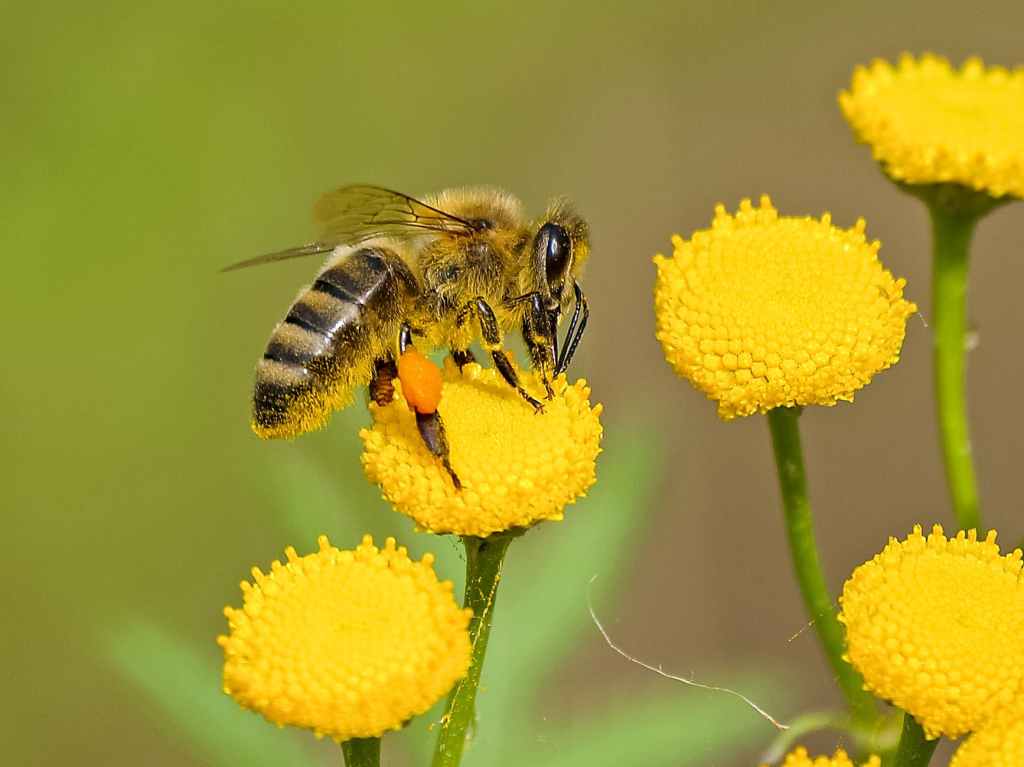
Which is why the Star took us utterly by surprise with its splash on declining bee numbers. You can, and should, read Brendan’s piece. We did something like this a few weeks ago(LSS 1 6 2023) but he does it much better. But it’s not the story itself, it’s the way Brendan has plonked a major ecological issue straight in front of a readership which up to now has been encouraged to ignore, or even actively deny, the doom now hovering over us. This morning, every builder, van driver or taxista who picks up the Star is going to have to think about this. And the reason this makes us love Brendan is simple. Up to now every ecological event you attend is just the same old faces. People with degrees who read The Guardian, well meaning, earnest and straining, but a tiny, tiny fraction of the population. Now, potentially, we may have broken out and are starting to reach the numbers of the population where real change works. Now, gentle readers we beg you. Go out tomorrow and buy a copy of the Star. if only to annoy Rupert Murdoch.

[1] https://www.dailystar.co.uk/news/latest-news/humans-pollinate-crops-paint-brushes-30462849

[2]https://www.bbc.co.uk/news/uk-24894403

#ecology #pollination #bees #food chains
The Conversation’s take on 2001: A Space Odyssey

Worried about intelligent computers who will kill us all? Sometime wonder how we evolved? Want to drink a cocktail on a space hotel? Are aliens out there, and if so are they Goodies or Baddies? Stanley Kubrick and Arthur C Clarke addressed all of these Big Questions before your grandparents were born. We like most blogs, mags and news sites still put this one in our Top Ten. But is it actually the best? Here’s Nathan Abrams for The Conversation.

The Dawn of Language-it’s all about how to write

In 1866 The French National Academy of Sciences banned all discussions on the Origin of Languages. And rightly so, many would argue. As we can never have any tangible evidence of how our ancestors spoke, grunted or gesticulated, the whole matter would remain entirely speculative, and unworthy of the attention of serious minded Natural Philosophers. So if you are going to venture a book on the subject, it had better be pretty good. But The Dawn of Language by Sverker Johannsen does more than that. It our view it is one of those rare pieces that set the ground rules on how to write. Anything. Before we explain why, we’re going to mention the translation by Frank Perry, which has clearly contributed to the rave we’re about to give)

First know your reader: The kind of person who will pick this up will be an intelligent specialist in another field: banking or social work perhaps. Never talk down, and don’t talk up with silly jokes. The author hits the right balance every time.

Second Don’t overload with jargon. Your reader will know relatively little of the arcane terminology of linguistics or paleoanthropology Introduce as few terms as possible, and explain them when you do He does, so we keep wanting more

Third Keep your sentences short: one thought one sentence We learn that this is how our earliest ancestors probably spoke anyway, so why change a good thing?

Fourth You can liven the narrative occasionally with odd anecdotes about your daughter and certain remarkable parrots; but keep them short and utterly relevant at all times

Fifth If you are going to wade into the warring tribes of savagely competing academics, be scrupulously respectful to all sides. Even Noam Chomsky.

Sixth Above all, be humble in the face of all facts; and when speculation is called for, label and mark it carefully as such

We have read few other non fiction works which kept as gripped as well as Dr Johannsen has done. Among the few that came close were the works of Robin Dunbar in the 1990s(he is namechecked here) and we can heartily recommend Johansson as a worthy successor

Marks out of five: 10

Sverker Johansson The Dawn of Language trans Frank Perry Maclehouse Press London 2021

#linguistics #human evolution #grammar #language #paleoanthropology

Some like it hot-but are we at the point of no return ?

July 4th 2023 will be remembered. Not as another US Independence Day, there have been 247 of those. But as another day the overall world temperature reached a new record. The hottest day in History so far. And we are already seeing the consequences of our folly in rising seas, failing harvests, pandemics and mass migrations of people.

So, as anyone who might want a future for the children and grandchildren might speculate, is there any hope at all? Or are we already inside a process of irretrievable ecological collapse? Writing in The Conversation, the admirable Dr Kimberley Reid [1] gives a snapshot of where we are and where we might be going. Kimberley is a savvy thinker. She doesn’t fall prey to a single datum point and brandish it hysterically. Instead she tries to look at the entire range of factors impinging on us in this sweltering early 21st century July. The famous ocean effect El Niño is considered, and factored in. As are aerosols, and changes in wind patterns over the Sahara desert. In fact, if you want a master class in sober, thoughtful reporting, then this is it.

And-are we doomed? Well at the moment, the 1.5 C breach may still be an anomaly, brought about by the above factors. But if it is fixed, say by about 2035, then we are truly in unknown country indeed.

[1]https://theconversation.com/why-are-so-many-climate-records-breaking-all-at-once-209214?utm_medium=email&utm_campaign=Latest%20from%20The%20

#climate change #global warming #climate change

More good news on Bacteriophages

As old LSS hands will know, we’ve always advocated a mixed response to the antibiotics resistance crisis. Certainly, we need new classes of conventional antibiotics. And some of our blogs have reported on the exciting new work that’s being done in that area. But we’ve also had a soft spot for bacteriophages, that rather neglected branch of learning which could yet provide an entire second line of defence for us.

Which is why this latest report from Nature Briefings (see below) is so encouraging. For what Jessica Sacher has done is create a bacteriophage pharmacopeia. A go to collection from which she can supply physicians with what they need on a case by case basis. The viral equivalent of the chemical drugs stores in the pharmacy of a modern hospital. Yes, it’s small start-but don’t forget the old saying about oaks and acorns. We wish her incredibly well.

How to build a phage directory

When patients no longer respond to any antibiotics, phages — bacteria-killing viruses — can sometimes save lives. Microbiologist Jessica Sacher is helping to make this happen. As a co-founder of Phage Directory, she connects physicians looking for phages with those who can produce them at a safe-to-use quality. The directory “post calls or ‘alerts’ for phages against different bacterial strains”, Sacher explains. “We receive one such request a week on average, and 84% of the alerts we have sent out have received a response, such as sharing of phages or directing requestors to labs with the appropriate phage.”Nature | 6 min read

#antibiotics #microbial resistance #bacteria #bacteriophage

300 000 BC: when the Medway was a vast primitive wasteland

300 000 years ago, the Medway Valley in England was not the beautiful place we know today. Instead, it was a vast hostile wasteland inhabited by primitives who were only on the borders of being fully human. Without arts, sciences or the law, their lives must have been nasty, brutish and short. How very different indeed from the modern bustling towns like Rochester, Chatham and Gillingham!

Yet these creatures, perhaps Homo heidelbergensis or late Homo erectus, were already displaying one very advanced feature; high quality manufacturing beyond and above immediate need. Our story comes from the PA via the Guardian, and describes the discovery of a whole cache of early Paleolithic hand axes and other tools[1] in ancient sediments in the river valley

And why are we interested? As astute readers will have noticed, the tools clearly belong to the Acheulean culture, which first appeared over one million years ago, and represents the first human attempt at high quality complicated tool making. They were amazing in their day, and lasted a long, long time at the cutting edge of human technology. But the culture carries one very special feature. Every so often, researchers turn up an axe that is over-engineered, like these big ones from Kent. Why go to all that trouble? No one knows for sure. But, as the article speculates, these “supertools” may have had a special non functional purpose. Perhaps they were proud symbols of the toolmaker’s skill, prestige symbols exchanged between groups as signs of their power and ability. Which in turn raises an economic question. Was the value of the tools dependent on the labour that went to make them? Or their exchange value, such as how many ordinary bits of stone you could exchange for one. It’s a question that has exercised economists for a long time. We never suspected that it went so far back!

[1]https://www.theguardian.com/science/2023/jul/06/giant-handaxes-unearthed-kent#acheulean #medway towns #stone age #paleolithic

Get ready for a really BIG Pandemic

Back at the start of the Covid-19 pandemic, we published a few early blogs suggesting that our current ills might soon be eclipsed by even greater sorrows (LSS 20 4 20 et seq) Among these we listed nuclear war, magnetic flips and astronomical impacts. Now, just to show we’re still on our toes, comes a warning of further impending pandemics of awesome scope. And all the worse for being completely avoidable.

Writing in the Guardian, John Vidal suggests that the evils of habitat destruction and industrial farming are nurturing the potential of a zoonotic plague which will fell us all in hecatombs. [1] It’s not that we want to run a spoiler on John’s piece, which is excellently written, but bits like this are too good to miss:

Pandemics kill far more people and cost economies more than war, but no government or global body at present plans to address the underlying cause of Covid-19 or the question of why outbreaks of major new infectious diseases like HIV/Aids, Ebola, Marburg, avian flu, Sars, Middle East respiratory syndrome (Mers), mpox and Nipah have all emerged in the past 50 years.

There’s nothing new in zoonotic disease. Many common diseases like tuberculosis, smallpox, the common cold, flu and measles have their origins in the Neolithic, when humans first began living in close proximity to vast groups of tightly-packed animals. [2] It’s just that current practice is on such a vast scale, with so little regard for sustainability with with such well-entrenched media and political protection that makes it so much more dangerous. If you have children or grandchildren that you love, read John’s article. And if you think that we didn’t warn you-well he did. [3]

[1]https://www.theguardian.com/commentisfree/2023/jul/04/deadly-pandemic-inevitable-avoid

[2] Porter, Roy Breve Historia de la Medicina Taurus 2003

[3] LSS 9 2 21 Deforestation

#sars #pandemic #covid-19 #virus #bacteria #ecological destruction #factory farming #avian flu

Electricity from air? It’s a volting ambition

It’s funny how research efforts in one area can have surprising spin-offs in others. Techniques to map stars in astronomical images can be reapplied to locate cancer cells in tissue samples. Advances in molecular genetics can end up catching criminals. Now-potentially- such happy accidents may lead to the biggest game-changer of all. Electric power from thin air.

That at least is the promise of this fascinating article by Ned Carter-Miles of The Guardian. [1] Researchers looking into the development of new humidity sensors found that charges were building up in their machines even when they were accidentally switched off. To quote Ned:

Each nanowire was less than one-thousandth the diameter of a human hair, wide enough that an airborne water molecule could enter, but so narrow it would bump around inside the tube. Each bump, the team realised, lent the material a small charge, and as the frequency of bumps increased, one end of the tube became differently charged from the other

As the article makes clear, they seem to have a new type of battery.

Our thoughts? It’ll be nice if they can scale it up. Any sort of green energy on this scale will be a life saver for the whole planet. But, as we write these words at 03.48 am UK time, the Devil whispers a few words in our ear. This article is all about unintended consequences, he says. Is it possible that suddenly removing huge quantities of electrical potential from the clouds could suddenly upset the whole balance of the weather? Be careful what you wish for.

[1] https://www.theguardian.com/science/2023/jul/02/it-was-an-accident-the-scientists-who-have-turned-humid-air-into-renewable-power

#renewables #electricity #atmospheric power #climate #climate change

Weekly Round Up: Voices, Dreams vaccines and much more

Do Octopuses Dream of Electric Sheep? Any pet owner will have observed their cat or dog dreaming during a deep sleep by the family hearth. Now it seems that octopuses, those most intelligent of molluscs, may be doing it too. Daily Mail

https://www.dailymail.co.uk/sciencetech/article-12245989/Octopuses-DREAM-just-like-humans-experts-say.html

Deadliest animal When the movie Jaws came out back in 1976, we recall several persons calling for the extermination of sharks. But it’s not sharks, tigers, kodiak bears or cobras-it’s humans who kill everything around them. A depressing thought. BBC

https://www.bbc.co.uk/news/science-environment-66058976

Lowering Consumption For hundreds of years tuberculosis was the dread of working class communities around the world. It was called “consumption” in Victorian England, and it’s associated with poverty, overcrowding and dirt. So we welcome news of a promising new vaccine on the way Nature Briefings

Two major funders — the Bill & Melinda Gates Foundation and Wellcome — have announced that they will pour US$550 million into taking a promising vaccine candidate for tuberculosis through a large clinical trial. If successful, it will be the first tuberculosis vaccine to be commercialized in more than a century. The vaccine aims to tackle latent infections of Mycobacterium tuberculosis in adults. The current BGC vaccine (short for Bacillus Calmette–Guérin) offers limited protection against latent infections, which affect one in four people globally. The phase III trial will recruit 26,000 participants in several countries across Asia and Africa.Nature | 3 min read

Enough of experts We have oft times remarked here, perhaps a little testily, on the denigration of experts by populist politicians and journalists. Here’s a considered opinion about why it happens and what we in the educated community can do to start redressing the balance. The Conversation-and look folks, there’s even a picture of our old bete noire MIchael Gove!

Lost your voice? Everyone will have happy memories of the favourite singer belting out an aria or crooning the school disco with some favourite ditty. But that was long ago- and how come they can’t hit those highs anymore. Here’s a rather nice scientific explanation from The Conversation

Evidence based blogging In pursuit of the above here’s two videos showing how the greats Paul McCartney’s voice varies across the years with two different covers of his popular hit Lady Madonna. See what changes time has wrought!

#singing #octupus #tuberculosis #vaccine #extinction

Before you blame Brexit, read this

We’re often accused of being a little Anglo-centric at LSS. But before being accused of even more navel- gazing, we think that readers around the world might just learn something from the troubles of one small, formerly advanced, little island. The UK.

It’s not looking too good. Terrible inflation (which must play into a sterling crisis sooner or later) growing poverty, abysmal levels of investment, falling trade……..most scary of all, the children now joining our workforce are emerging shorter than their parents, reversing a trend that has been upward since 1945. It’s easy now to blame Brexit for our current woes, a view that is starting to emerge as a consensus both among opinion formers and the public. But we say: wait. Hold your horses. Brexit has been far from helpful: but what if it was really a symptom of a deeper, long term pathology, a national decline which has been in progress for over 120 years now?

Two writers who take this view are Aditya Chakrabortty [1] and Larry Elliott [2] It’s true both writers are bit Left wing cheeky chappies; but their work is always thorough and at least provides a jumping-off point for discussion. Read Aditya for yourself; his pungency is worth it at the very least. It’s Larry( a convinced Leaver in 2016) who concerns us here. Because his analysis dates to 2007, in the palmy days of one Tony Blair and before the dreadful financial crash which exposed us for what we are.

Because the problems of UK PLC go really, really deep. An obsession with lost empire, and the class structures that go with it. An exaltation of the financier, the ad man and the spiv over the steady work of the scientist and engineer. A desperately fissured identity, riven by lines of competing classes, nations and races. An utter misunderstanding of our true place in the world, and the necessary matching of aspiration to available resources. 2007! Get that and get that good.

When we grew up, we knew certain families who had come down in the world. Badly. Daddy may have been a fine fellow, a cheerful companion and good in a fight. But he was always a dreadful businessman, self deluding and too ready to turn to the cards and the booze. UK PLC must first face the facts about itself. Otherwise, like any company in bankruptcy, it will be taken ove. And broken up.

[1] https://www.theguardian.com/commentisfree/2023/jun/23/britain-dorian-gray-economy-tony-blair-george-osborne

[2]https://www.theguardian.com/business/2007/may/14/politics.ukeconomy

#british economy #brexit #economics #decline #finance

for personal reasons this will be the last LSS blog for some time