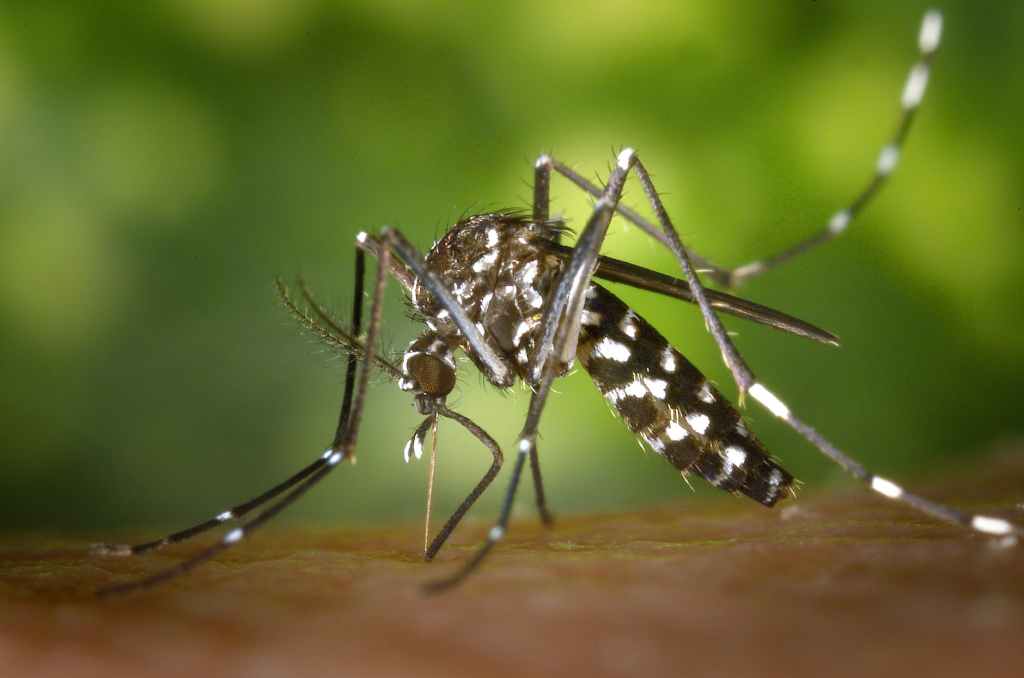
Hats off to Devi Sridhar-and the new Malaria vaccine

“Did he have a good war?” It was a question you heard a lot growing up in 1960s England. It meant someone had passed honourably through the perils of bombs, cold, heat, rations bullets and disease that were the lot of servicemen and women (and many who stayed on the Home Front) in that world crisis. Well, we’d like to update it to ask “did he/she have a good pandemic?” And one person who passes that test with flying colours is Professor Devi Sridhar of Edinburgh University. [1]

Sridhar’s CV is the epitome of the modern Enlightenment woman. She’s also a classic citizen of the world, born of Indian stock in Florida and migrating to Oxford where she took a whole slew of second, third and further postgraduate degrees. before settling as Professor of Global Public Health at the University of Edinburgh. Need we ever do another blog on the importance of educating women? In among all this science, there’s been time for a shipload of journalism and books, from which we have extracted this spookily prescient killer quote, courtesy of Wikipedia

At a 2018 Hay Festival event, Sridhar warned of the risk of infectious disease from animal-to-human transmission travelling to the UK from China, saying “Our biggest health challenges are interconnected.

Now she has a real treat for us, in the shape of this article for The Guardian [2] She thinks the battle for malaria is far closer to being won, due to a cheap, easily produced vaccine called R21. Any of those 1940s warriors whom we referenced in paragraph one, especially those who served in the Far East, knew that malaria was by far the biggest enemy they faced, killing infinitely more of them than the enemy ever did. Since when its plague effect, in terms of both human suffering and economic retardation has been immense. Now there’s progress for you. All in all, a bit more fruitful than murdering each other in the name of ancient texts and artificial lines in dirty, oil stained sand.

[1]https://en.wikipedia.org/wiki/Devi_Sridhar

[2]https://www.theguardian.com/commentisfree/2023/oct/26/malaria-mosquito-vaccine-disease

#professor devi sridhar #malaria #vaccine #public health
Is Russia becoming a satellite state for China?

We don’t like to say: “told you so!” and point triumphantly to our own prescience. But we do recall a little piece we penned not long after the war began(LSS 22 3 22) wherein we suggested the possibility that Russia would become a satellite to China. There’s an irony here. Whatever the rights and wrongs of the Russian and Ukrainian causes, the attempt to bolster the power of the Russian Federation ends in a total loss of political and economic independence!

It’s happened in the past to other powers, and not so long ago. In 1914 Britain was a proud and wholly independent empire. By 1945 it had been reduced to total economic and political subservience to the United States. While its true that the US bailed out the UK with war loans such as Lend Lease, the price extracted in terms of territories and commercial agreements was crippling. The final nail came in 1956 when Britain was stripped of its influence in the Middle East, and America scooped the pot of the world’s oil resources. The loss of the Singapore Naval Base in 1942 had already been the kiss of death for Britain’s eastern empire.

Which is why it is interesting to record eerie parallels with contemporary Russia. Both are from The Conversation. The first[1] by Martin Kaczmarski and Natasha Kurht explains how deep Russia’s dependence on Beijing has become. The second, by Basil Germond, suggests that the great naval base at Sevastopol, a jewel in the crown since Tsarist times, may now be abandoned. [2]

Putin has always hated western countries , and Britain in particular. How ironic if he has lead his own country down the same shameful path to loss of independence and junior status!

[1]https://theconversation.com/putin-and-xi-beijing-belt-and-road-meeting-highlighted-russias-role-as-chinas-junior-partner-216187?

[2]https://theconversation.com/russias-plan-to-relocate-its-black-sea-naval-base-from-crimea-is-priceless-for-ukraines-morale-216381?utm_medium=email&utm

#china #russia #britain #united states #second world war #ukraine war

Herman Bekele proves LSS wrong about youth

We at LSS have never enjoyed a happy relationship with youth. Mention the word-“yoof” as it is properly pronounced- and the images conjured up include skateboarding, graffiti, unlistenable music, gangs, raves, computer games, flimsy fashion, tattoos and people who put their feet on seats. Add the fact that many of them are better than us at University Challenge,* and the fact that we had to helped by a six year old with the water machine in a Spanish hotel recently, and you can sense where our resentment comes from.

Which is why it is so gratifying to learn that one youth, 14 year old Heman Bekele of Annandale , Virginia has turned his back on the culture of vicious dissipation, devoting his hours to learning and the Betterment of Humankind. For Heman has created a new type of soap which may well alleviate the sufferings of those with skin cancer. Deservedly he has been named America’s Top Young Scientist, ahead of a pack of other young geniuses who also represent our best hopes. We’ve two links for you today, one from the inimitable Stacy Liberatore of the Mail, and one from MSN with slightly more detail {1] [2]

What can we at the more reflective and philosophical end of humankind learn from all this? Firstly, don’t write ’em all off-there may be a few good ones in any group of people. Even youths. Secondly, soap is good, and it just got better. Thirdly, and most importantly, those Spanish water dispensers are like mobile phones-make sure there’s someone young around when you get into trouble.

[1]https://www.dailymail.co.uk/sciencetech/article-12663163/virginia-student-wins-americas-young-scientist-competition-soap-treats-skin-cancer.html

[2]https://www.msn.com/en-us/health/other/14-year-old-prodigy-invents-revolutionary-cancer-fighting-soap/ar-AA1iGU5c

*Monday Night BBC2 20.30 UK time

Not so Noble Nobels? The Astronomer Royal gets Right of Reply

A couple of weeks ago we started our coverage of this year’s Nobel Prize awards, bigging them up as we do every year. One or two readers of the more thoughtful sort have certainly questioned our approach. There’s no room here to include all of their thoughts. But we recently came across an article which provides an interesting counterfactual, a right of reply if you will, to our “Let us Now Praise Famous Men” approach, and admirably addresses those readers’ points. But before that, a declaration of interest.

The piece, by Astronomer Royal Martin Rees, was not commissioned by us. In fact, it’s one of our usual hyperlinks to The Guardian.[1][2] It may even be (perish the thought) that Baron Rees, of Ludlow, OMFRSHonFREngFMedSciFRASHonFInstP, as his mates call him, is not a regular reader of LSS. And that the Editor of the Guardian isn’t either. So we beg our readers to be under no illusions that Baron Rees of Ludlow, OMFRSHonFREngFMedSciFRASHonFInstP, as the boys down the Dog and Duck call him, is one of our actual mates or solicited contributors.

But the Astronomer Royal is the Astronomer Royal, and when he pronounces, we listen His basic point is a simple one: science is a team effort. How can they give a gong to one or two people, when there were probably collaborative groups of more than a hundred persons involved in churning out the prize discovery? Isn’t time to think about a better way of handing out the backslaps, when all the chips are counted, and all the ships are in?

Good point, Baron Rees, of Ludlow, OMFRSHonFREngFMedSciFRASHonFInstP, and a fair riposte to us here at LSS.

[1]https://www.theguardian.com/commentisfree/2023/oct/12/nobel-winners-science-prizes-innovation-martin-rees-astronomer-royal

[2]https://en.wikipedia.org/wiki/Martin_Rees

#nobel prizes #science #research #collaboration

Nobels #2:it’s Scientists who create wealth, not fund managers

As biologists Drew Weissman and Katalin Kariko were awarded their Nobel Prize this week, another story was playing across UK media. For at the Conservative Party Conference in Manchester, a curious little woman called Liz Truss popped up to harangue delegates about how massive tax cuts would fuel the spirit of entrepreneurship, lubricate the animal spirits of the hedge fund managers, and generally produce economic growth. At first we struggled to identify who Truss was, but it seems she may have fleetingly been Prime Minister or something. But we think her prescription mistaken, however often rehearsed in any number of well-funded lobby groups. Because she is missing the point.

Let’s go back to 2020 and remember how COVID-19 was sweeping through the world, claiming tens of thousands of lives and causing immense economic damage. [1] It’s hard to be precise, but $11 trillion might be a good first estimate. What gave us hope? The development of vaccines. What brought the epidemic under control? The development of vaccines, especially the mRNA ones which Weissman and Kariko did so much to create.[2] Once again, how much money did they save for the world? And how much did they generate by getting the economy moving again?

The mistake is to confuse money with wealth. People like hedge fund managers, bond traders are rather good at moving around money that already exists, arbitraging tiny profits here, selling bonds there. But did they contribute anything to ending the pandemic? To take the argument one stage further, the biggest leap in human wealth was the Industrial Revolution of the late 18th century. It wasn’t the money men who did it. It was the pioneering work of early engineers and scientists like Watt and Priestly who made the key discoveries, and manufacturers like Boulton who put them into action. It is breakthroughs in Science and Technology that create the step changes in wealth. The activities of testosterone driven alpha males like The Wolf of Wall Street are peripheral at best, and often downright obstructive. We need less trading floors. And to pay for more Universities. And the recognition that taxes as investment are a good thing.

[1]https://www.weforum.org/agenda/2020/10/economic-cost-covid-global-preparedness-monitoring-board/

[2]https://www.theguardian.com/science/2023/oct/02/scientists-whose-work-enabled-mrna-covid-vaccine-win-nobel-prize-for-medicine-katalin-kariko-drew-weiss

#nobel prize #mRNA #vaccine #Covid-19 #The Wolf of Wall Street #wealth

The Noble Nobels are on us once again: #1

It’s October, and as the autumn leaves come tumbling down(that’s enough lyrics-ed) we find ourselves hailing the greatest prizes on the planet-the Nobels.

First up is Phisiology or Medicine. If ever one was well deserved, this was it. The fact thta we have started finally wriggled free of COVID-19 (sort of) is largely down to these two: Katalin Kariko and Drew Weissman. We’ve posted the story and links from Nature Briefings. But it’s scary to think that Kariko almost left biosciences in the 1990s, when mRNA was a poor Cinderella and all the clever money was on DNA. So before we get too sniffy about Sun readers, let’s remember that educated people can make mistakes too.

The Nobel Prize in Physiology or Medicine has been awarded to biochemist Katalin Karikó and immunologist Drew Weissman for discoveries that enabled the development of messenger RNA (mRNA) vaccines against COVID-19. The vaccines have been administered more than 13 billion times, saved millions of lives and prevented severe illness in millions of people. Karikó and Weissman discovered a way to deliver mRNA into cells without triggering an unwanted immune response: by swapping one type of molecule, uridine, in the genetic material with a similar one called pseudouridine.

In 2021, in this newsletter, Nature Chief Magazine Editor Helen Pearson recommended a profile of Karikó in The New York Times. “First for showing how the spectacularly fast production of COVID-19 vaccines actually rests on decades of meticulous basic research into mRNA, and second for highlighting the difficulty that many scientists face when moving precariously from one temporary position to another to pursue the bench research they love.”

Later that year, Karikó and Weissman won one of the most lucrative awards in science: the US$3-million Breakthrough Prize. Karikó recalled the scepticism surrounding her work in the 1990s that led to numerous grant-proposal and paper rejections (including the 2005 paper for which she is now being recognized), and forced her to take a demotion and a pay cut.Nature | 5 min read
Read more: After COVID-19 success, mRNA vaccine developers turn their eyes to cancer, HIV, malaria, influenza and more 
(Nature Medicine | 11 min read, from 2021)
Reference: Immunity paper (from 2005)

#mRNA #medicine #phisiology #covid-19 # SARS

Tribes and Self Censorship: Chimamanda Ngozi Adichie

To see with fresh eyes! The story of the outsider who comes to town is almost as old as literature itself. So Americanah (2013) [1] by Chiamandah Ngozi Adichie was one more heir to an honourable tradition. Its story of a young Nigerian woman who does not discover her blackness until she migrates to the United States is edifying in many senses.

So what’s she doing in what is generally meant to be a blog about the Sciences? Well, it’s she, like us, is amazed by the phenomenon of tribalism. You know why by now, O readers: it’s hatreds, its waste of time, above all its misplaced budgets, are holding back solutions to things like antibiotic research, which we’d like to see solved.

Now in this interview with estimable Atlantic [2] she riffs at length on this trope. We won’t spoil the interview, which we highly recommend. But get this killer quote:

And Ayad Akhtar, who’s this writer I really admire, says that there’s a moral stridency in the way that we respond to speech, and that there’s something punitive about it. I think it’s true. I think people are afraid and self-censor. The single story—they then impose it on themselves.

Adichie is a Friend of the Open Mind. And that includes all of us-scholars, scientists, teachers, entrepreneurs journalists and above all creative writers. And all the readers and contributors to this blog.

we thank Mr Peter Seymour for this blog

[1] Chimanda Ngozi Adichie Americanah Alfred Knopf 2013

[2] https://www.theatlantic.com/books/archive/2023/10/chimamanda-ngozi-adichie-atlantic-festival-freedom-creativity/675513/?utm_source=apple_news

#nigeria #united states #tribalism #empiricism #race

Once Democracy fails, how long is it your money?

The trend of the 1990s has long since been reversed, and everywhere democracy is in retreat. Strongmen set themselves up above the law in country after country. Even in established states like the United Kingdom, plutocrats are slowly eroding trust in institutions and elections through means such as well-funded TV channels and newspapers. Maybe this is a worldwide phenomenon, a Force of History, if such things exist. But before we surrender to it entirely it’s worth recalling one thing.

Once you put your King, your Caesar, your Fuhrer,above the law, then everything is ultimately his. De jure has ceased to exist; de facto becomes the only rule. Thus, no-one’s title to anything is completely assured. This is already routine in places like the Russian Dictator Putin can sequester the wealth of one rich man to and give it all to those who are currently closer to his favour. Once, Sergei Pugachev was a rich plutocrat who sat at the heart of state power. He incurred Putin’s displeasure; and his wealth in shipyards and coal mines was shared at once among courtiers like Igor Sechin and Ramzan Kadyrov. [1] Yet it is unfair to single out Putin and Russia; the same has been true of Kings and Emperors throughout history.

Nowadays the Populists clamour to throw down the rule of law wherever they can. It is inconvenient to the Will of the People, they allege. [2] In the UK, their current target is the ECHR, a minor institution that is one tiny part of the network in institutions and bodies to which all civilised states belong. Yet it excites the rage and furies of the owned media, and thereby of the nervous and excitable old men who follow them. These old men would do well to remember an old East European folk tale, which goes something like this.

A Man and a Horse were both menaced by a Wolf. The Man said to the Horse “If we make a team, we can defeat him. With your speed and strength, and my brain and spear, we can overcome him. Here, put on this bridle and saddle, and let us ride together to destroy the Wolf.

It worked, and soon the Wolf was dead. The Horse said “now we have achieved our purpose, you may dismount, and remove my bridle and saddle” But the man just laughed, kicked his heels into the Horse’s flank and said “gee up, dobbin!”

How long is your house to be yours?

[1] Catherine Belton Putin’s People Introduction

[2] https://fullfact.org/law/daily-mail-headine-comparison-to-nazis/

#democracy #dictatorship #arbitrary #law

Weekly Round-up: of wines, worms, women-and a moonglow in the sky

Where did wines come from? The answer is several places, as new genetic techniques make clear. This story from Scientific American (via Nature Briefings) points to an origin in the earliest Neolithic, although the first ones were probably table grapes rather than booze grapes.

https://www.scientificamerican.com/article/wines-true-origins-are-finally-revealed/

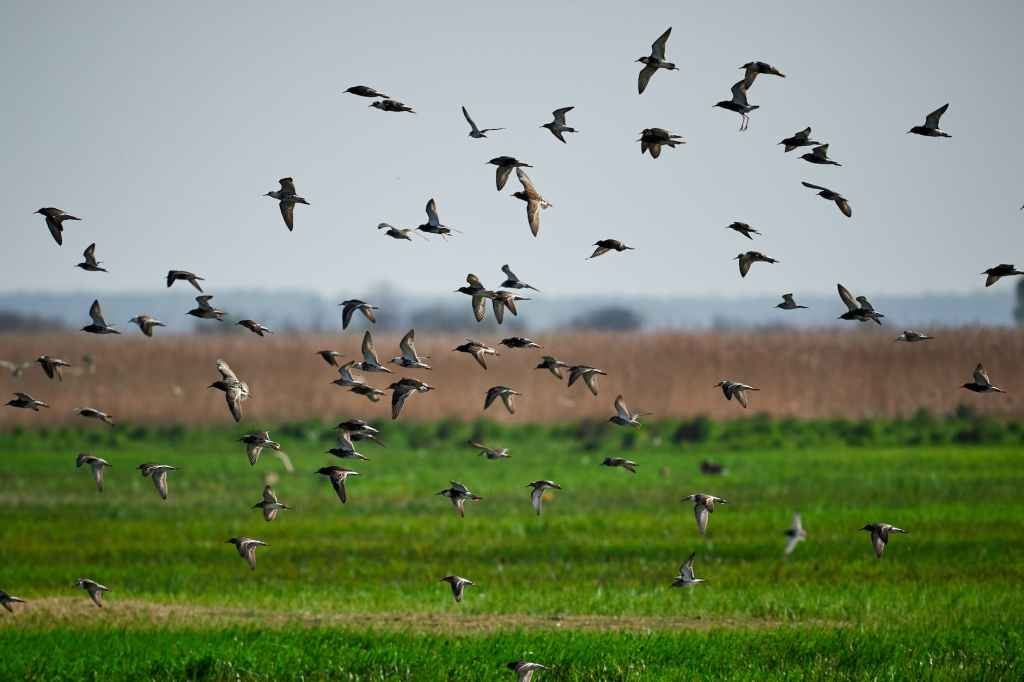
Where are all the birds going? The answer is probably to extinction, if you read this excellent link from the RSPB. Silent spring indeed.

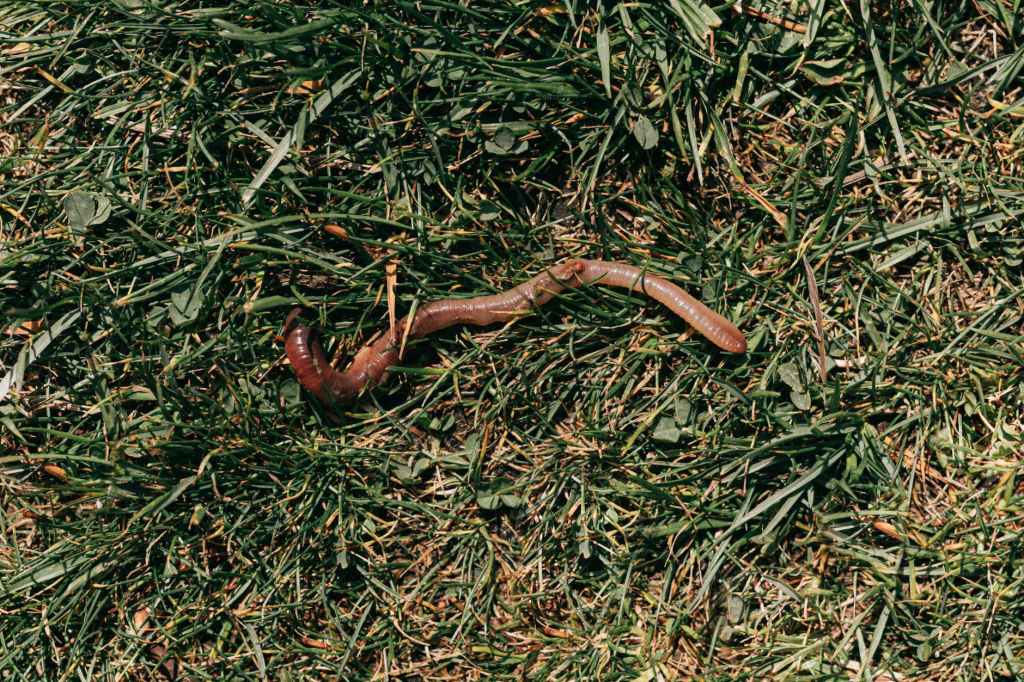
The Diet of Worms Any gardener will know of the amazing work done by our humble earthworm chums-digging, aerating, recycling, to name but a few- but now it seems they are pretty largely responsible for putting the food on our plate. Nature Briefings, Earthworms add big slice of global grain

Earthworms boost crop yields by more than 140 million metric tons annually — equivalent to one slice of bread in every loaf, for wheat alone. The creatures churn and aerate the soil, help the land to hold on to water and release nutrients, and trigger plants to grow and defend themselves against pathogens. Farmers and policymakers should consider ways to make agriculture more worm-friendly, such as by plowing (sic) less often, suggests ecologist Steven Fonte, who led the first-of-its-kind estimate of wormy goodness. “They don’t respond well to tractors chopping them in half,” says Fonte. “Despite popular belief, you don’t get two earthworms.”Science | 5 min read
Reference: Nature Communications paper

Nasty narcissists pick on women Whenever anyone from any political party comes to our door, we treat them with studious respect. They are giving up their time, and doubtlessmuch income so that we have the privilege of living in a democracy. So the news that people so engaged, especially women, fills us with despair at the mindset of people who spend their time churning out narcissistic abuse and petulant threats. Here’s The Conversation

Just Relax! We love this sequence from the Aviator wherein Howard Hughes (Leonardo Di Caprio) and Katherine Hepburn(Cate Blanchett) take a late night tour of the skies of Los Angeles, to the gentle music of Benny Goodman. Five great names in one paragraph!

#extinction #wine #dna #trolls #the aviator

At last! Two new antibiotics stories(warning:they’re not all good)

True to our promise, we’ve got two blogs today. Because this one, thrown up thanks to the work of our assiduous researchers, returns Learning, Science and Society to where it began; an antibiotics blog.

First, the good news: It’s possible that antibiotics could reduce the crippling harm caused by endomentriosis. [1] According to Japanese researchers, a nasty little organism called Fusobacterium may be the guilty party. And a course of common antibiotics like metronidazole may be the answer. Read our link to Thea Jourdan of the Mail. And after you’ve finished: what happens to all those women with endometriosis when the antibiotics run out?

Second, the not so good news According to Emily Stearn, also of the Mail, antibiotic prescriptions may cause mood changes so profound that they could even lead to suicidal thoughts. Apparently a certain Dr Robert Stephenson, a cardiologist with no previous history of mental disorders took a course of ciprofloxacin and then, unfortunately, committed suicide. Our sympathies to those whom he left behind. Now, we are always loathe to infer general conclusions from one data point, however moving. On the other hand, we never imagined such an outcome was even possible. And there does seem to be well-attested evidence that, yes, antibiotics can have effects on the nervous system in some cases [3] So from now on, we’ll watch this space, as they say.

And finally-The Daily Mail. Certain readers, high on the scale of both erudition and emotional enlightenment, have asked us: why do consult articles from that (expletive deleted) publication? To which we reply: we are only following our great Whig mentor, Bertrand Russell. Who strongly counselled obtaining your data from as many sources as possible, and reading even from journals in the enemy camp, You never know who is going to save your life. A bit like antibiotics, really.

[1]https://www.dailymail.co.uk/health/article-12559011/Eye-antibiotics-ease-pain-endometriosis.html

[2] https://www.dailymail.co.uk/health/article-12570531/Warning-suicide-risk-patients-taking-common-antibiotics-following-death-newly-retired-doctor.html

[3] https://www.psychiatrictimes.com/view/psychiatric-adverse-effects-antibiotics

#endometriosis #nervous system #antibiotics #medicine