Resistant Bacteria: now even bleach is beginning to fail

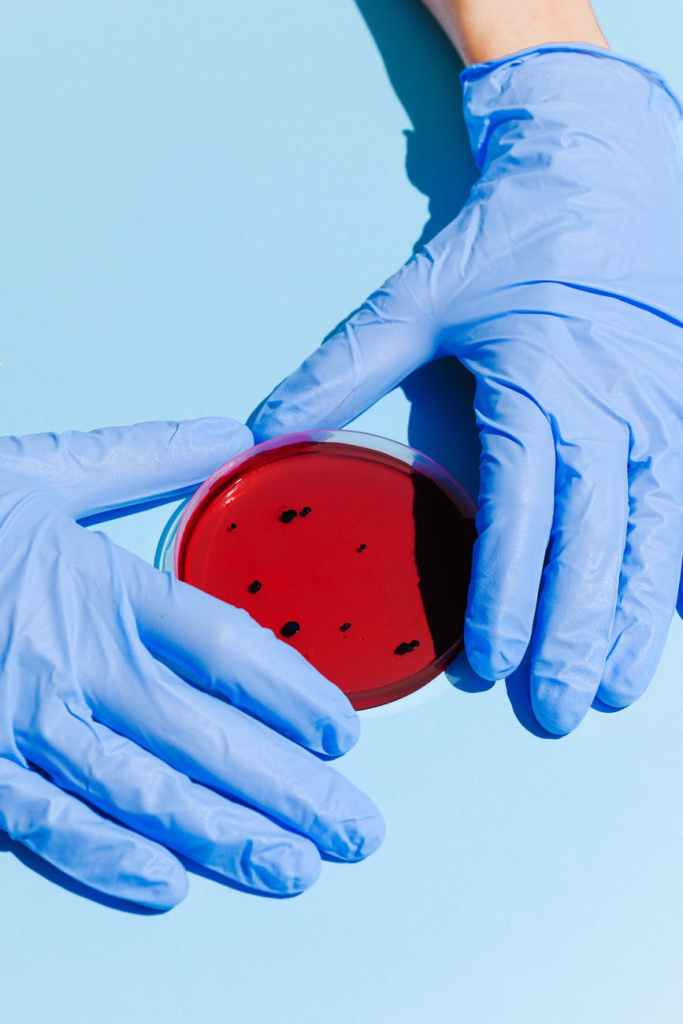
Forget Israel and Palestine. Because there is now a gun pointed at the head of every man, woman and child on the planet. It’s called Clostridium difficile. The clue is in the second part of the name, because according to this chilling sentence the admirable Nicola Davis of the Guardian[1]

Liquid bleach does not kill off a hospital superbug that can cause fatal infections, researchers have found.

Think about that very carefully indeed. Since the age of Pasteur and Semmelweiss, the way we have worked things has been pretty clever. Any bacterium, resistant or not, must first get through a wall of sterilisation and cleanliness before it can reach a human body. And that wall is made up pretty largely of disinfectants like bleaches. If the wall fails an almost infinite number of bacteria will be on us, multiplying fast. Which will give them correspondingly huge opportunities to evolve new forms of resistance. It is unlikely that our present group of antibiotics could hold the line for more than a year or two. After which the mass dying starts. After all if C. difficile can do it, why not every other bacterium? [2] And even the odd fungus?

We frankly admit that we were not expecting this, gentle readers. Around the offices and workshops of LSS, hygiene and cleanliness rules are pretty tight, to say the least. Howard Hughes would have loved it in our little corner of Croydon.. To think it’s all in vain is a bit, well, disconcerting, to say the least. But we take comfort on behalf of all those exobiologists investigating the possibilities of life in Outer Space. It shows that organisms will evolve to surpass any conceivable obstacle, if they get the chance. So that particular research community now has something to cheer. For the time being.

[1]https://www.theguardian.com/science/2023/nov/22/bleach-does-not-tackle-fatal-hospital-superbug-uk-researchers-find

[2]https://en.wikipedia.org/wiki/Clostridioides_difficile_infection

#bleach #disinfectant #hygiene #cleaning #antibiotic resistance #pandemic #clostridium difficile

Wealth and Money are two different things. Ask your local Bank Robber

Imagine you are standing with a suitcase which contains $1000 000 in untraceable notes. That’s quite a lot of change, even by today’s inflationary standards. It can buy a lot. Are you wealthy? It depends.

Now imagine that you have just stolen that money in a successful bank raid, and you are climbing into your getaway car. Firstly, there is the getaway. The Police may well come after you, and in the USA they have guns. If you are wounded, dare you risk going for treatment-or will it give away your identity? Assuming the getaway is successful, for how long will you be looking over your shoulder for the Police and Bank Investigators to take you? As for that million-how much will your co-conspirators, your girlfriend, the local Mr Big of the underworld, need to stay silent? Or will someone else inform? Or will some tiny trace of forensic evidence like firearms residues or DNA one day catch you. Even if you bury the money for your release, how much of that million pays for a year in prison?

Compare that to someone who has just legally withdrawn the equivalent of $20 in an advanced country, perhaps one of the Nordics members of the EU. Ok, they don’t have so much disposable income, as taxes are higher. But no one will steal that money, there are too many police around. If they get sick, they ride on fast, clean public transport to a public hospital where treatment is covered. The streets around are clean, paved and full of things like colleges, parks, museums. And gymnasiums and safe places to eat, because the taxes have paid for for food inspectors.

So here’s a question: who has money? And who is wealthy?

Richard Wilkinson and Kate Pickett The Spirit Level Penguin

Three cheers for Tilos

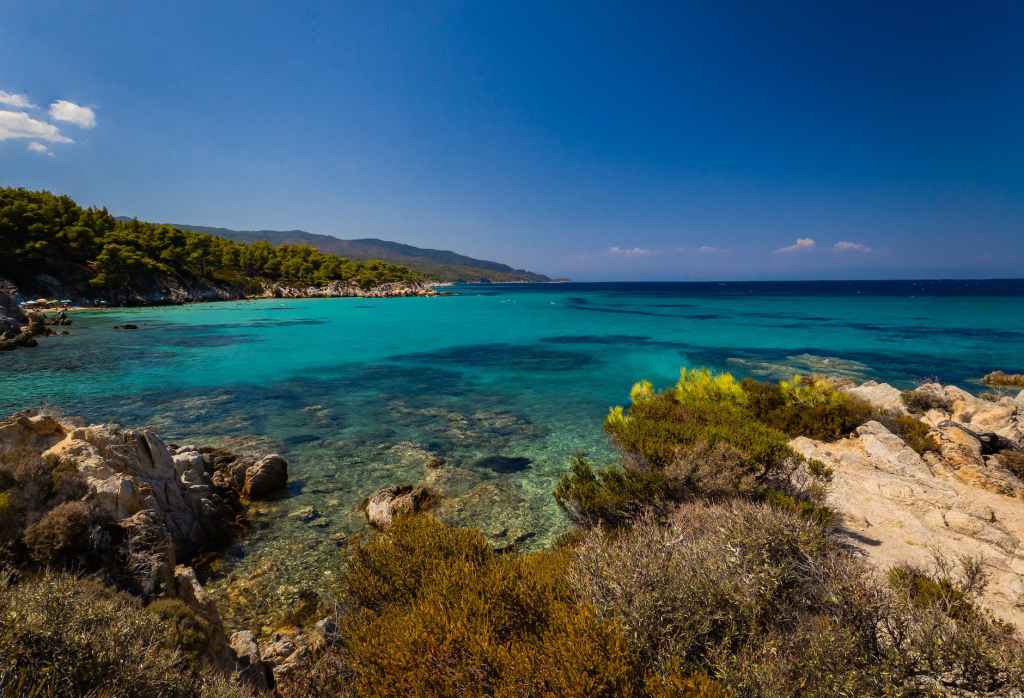
Can we really hope for an economy where nearly everything is recycled? Where waste and pollution are things of the past, like stone axes and Spice Girls? Well, according to Melanie Goldberg of The Big Issue [1] the little Greek Island of Tilos is showing us how.

Through carefully constructed programmes of recycling, they have eliminated all need for a landfill site. Add this to the facts that they have been entirely energy sufficient since 2018. and a nature reserve since the distant 1980s, and you get a picture of real hope for us all.

Why do we say this? Because it demonstrates a vital concept. When you are doing anything new, start small and get proof of concept. Next scale up. And Melanie explains how Abu Dhabi will now try to take a green leaf from Tilos’ book, to see if it works in somewhere much larger. If it does, then something special could happen. Because if seen from anywhere much beyond the Moon(i.e objectively) this planet is only a tiny, self contained community much like Tilos. Thanks to those good people, there is no room for despair and every rerason to hope.

We thank Mr Peter Seymour for this story

[1]https://www.bigissue.com/news/environment/greece-island-tilos-zero-waste/

#recycle #waste #renewables #energy #tilos #abu dhabi

Nature Antibiotics-profound resource for researchers and campaigners

It’s always been our aim for this blog to act as a clearing site for all those interested in antibiotics. Researchers, health care professionals and tireless campaigners who tramp the streets in all weathers gathering monies and raising awareness.

Awareness. Now there’s a word. And nothing will keep all of us more aware than Nature, that exemplar of the most advanced research and thinking. Their page Antibiotics articles from across Nature Portfolio is a pipeline of the very latest research reports from leading scientific journals. You don’t have to read every one. But here is just about everything you do need, carefully curated by some of the finest minds in the business.

Wisdom is worth more than gold, silver and jewels. So said the author of the Proverbs. Here is all the wisdom you need if you have any skin in this game at all

https://www.nature.com/subjects/antibiotic

Heroes of Learning: Thorstein Veblen and Conspicuous Consumption

Some people make things. Some people buy them. Because those things serve their needs. You know, Utility and all that. It’s how the economy works, at least according to the basic textbooks, which haven’t really changed much in over 130 years-unlike many other sciences. Which it is why it is so refreshing to consider the views if Thorstein Veblen (1857-1929)[1] who took a different view of matters, without straying into the sterile wastes of Marxism.

In his seminal work The Theory of the Leisure Classes (1899) he lays out the view that many people buy things simply to signal status. [2] To give an example: the difference between not having a car, and having even a small cheap one is very great indeed. The difference between having a small cheap car and Rolls Royce is very slight in terms of what you can do with it. But the difference in status is colossal. And so enormous quantities of human effort, and many long hours, are poured into competition for goods of high cost but dubious value. To the immense cost of the environment. To those who say “ah but the work was penned in 1899” we say: look through the pages of HTSI in the Financial Times every week. Or stand on the shores at Antibes and gaze upon the baroque display of yachts bobbing on the blue waters.

We have our criticisms of Veblen of course. A 1964 Rolls Royce was experimenting with features such as electric windows and automatic gears which only later became standard for us mere mortals. Only the very rich can take the risk in pioneering new technologies like these, because they can take the hit from the inevitable failures in new R & D. This year’s luxury is next year’s utility, and The Rich have some uses after all. But Veblen was aware of this process. And it does not distract from his central observation that much of what we produce is wasteful frippery. And so Veblen’s insight still has value as a bridge to the future. If we cut our lifestyles a little to save the planet, maybe we haven’t lost so much after all.

[1]https://en.wikipedia.org/wiki/Conspicuous_consumption

[2]https://en.wikipedia.org/wiki/The_Theory_of_the_Leisure_Class

#veblen #conspicuous consumption #conspicuous leisure # #leisure class #economics #utility #waste

Read Less, think more. Good bye weekly round up. Welcome article of the week

Ever feel yourself completely overwhelmed by the flood of information which is reaching you everyday? One senior member of the LSS Editorial Board told us “Every day I get up to the BBC Radio 4. Then there’s the Guardian, the Mail, Nature Briefings, Apple News, the Conversation. El Pais and Radio Nacional (gotta keep up the old Spanish) to hack through. With occasional dips into things like The New European, New Scientist and Private Eye. To say nothing of all my acquaintances. relatives and colleagues bombarding me with their various obsessions and threats of invitations to dinner via things like Facebook, You tube, tik tok what’s app and a dozen other platforms that, in a saner world, would have been left to the young, the poor and the baseball capped”

It was the great Simon Kuper who advised his readers “read less and read better” Think about what you read, too. Apply all those tiresome rules of logic and evidence. Da quod jubis, et jubis quod da as the old Romans used to say. To this end we thought we’d drop our old Weekly round up for a while, as you don’t need yet another “that was good-what was it again? scan feature. Instead we are going to choose, from all the efforts flitting over our screens, a single best piece of the week.

One that makes new connections, tells us thing we truly didn’t know, or solves a problem we’ve been struggling with for years

We hope you like the change.

Article of the week: Oliver Haynes on the gilet jaunes

Every so often you read something and you think “good heavens! That’s answered a lot of questions!” Even better when the are questions you hadn’t even thought to ask. One article which did it for us was Five years on, the world is failing to learn the gilet jaunes’ lesson about class and climate by Oliver Haynes for the Guardian. [1] So instead of out usual round up of the week,* we’re going to devote our Friday slot to this single piece. Here’s why.

For many of us concerned about climate change and pollution, there is one truth that dare not speak its name; It’s a middle class thing. Go on any protest about roads and most of the people in the crowd are graduates. Go to any awareness afternoon in southern England, and its full of educated mums selling eco soaps to Guardian readers. Now we at LSS believe both groups are our people, the brightest and best in the population. But we are a minority. We are still not cutting through. And waiting in the wings are the right wing press and the oil barons, just waiting for their chance when we slip. In England, that chance came with the ULEZ fiasco. In France it was the Gilet Jaunes. Too many of us sneered at these protestors. Perhaps this single quote from Oliver shows how badly we misread them

……Nor is it to say that “the people” don’t want to reach net zero. In my reporting from France, I have met gilets jaunes who care deeply about the environment; they just found that, for them, the end of the month was arriving before the end of the world

And Oliver makes this point in various ways in a short pithy and easy to read article that we strongly urge you to take on.

So, before we sneer, before we feel superior, let’s put ourselves in the shoes of a van driver, a builder or a farmer and ask ourselves how we would feel. Because here, looking right at us is the ultimate way to win the issue forever. if we only play our cards right.

[1] https://www.theguardian.com/commentisfree/2023/nov/17/five-years-gilets-jaunes-class-climate-ulez-london-heat-pumps-germany

#climate change #global warming

Two stories show we are now close to the edge

Gibbon had a remarkable passage describing the behaviour of the Romans in the age of the Emperor Theodosius (d.395 AD), the last to rule over a single undivided and intact Empire. They seemed to sense that within a few years the Empire would divide, the barbarians swarm over the frontiers and the whole structure would collapse. And so they went on a spending spree, squeezing the last drops of comfort and pleasure from a system that was already reaching tipping-point. Sound familiar?

Two stories today raise the shades of Gibbon and Theodosius. The first, from Scott McGrane and Christopher White of the Conversation records how we have just passed through the hottest autumn ever, and the effect it ‘s already having. The second, from Nature Briefings, just says it all. There is now a major US Climate Disaster every three weeks. Is that more than mass shootings?

The fifth US National Climate Assessment has determined that global warming causes US$150 billion in direct damages across the country each year, and the costs are rising. From 2018 to 2022, the country experienced 89 major climate disasters — equivalent to one every three weeks. The country is also falling short on its goal to slash greenhouse-gas emissions. There are signs of hope: alongside the report, the government announced more than $6 billion in funding for infrastructure, clean energy and climate resilience. “This is not about curling up in a corner in despair,” says climate economist Rachel Cleetus. “There are very concrete steps we can take to cut our emissions and to promote climate resilience.”Nature | 6 min read
Reference: Fifth National Climate Assessment

[1]https://theconversation.com/this-is-the-worlds-hottest-autumn-on-record-and-its-impacting-the-climate-system-and-human-society-216931

Antibiotics: What’s the state of play, anyway?

Leave aside all our reports on new antibiotics for now, and our incessant appeals for money. One thing we haven’t really covered is: what is the state of antibiotic matters on the ground, in an actual real live population? Well, wiser minds than ours have answered that call. One of them is Nicola Davis of the Guardian [1] whose piece Antibiotic Resistant Infections rise in England is a tour de force of careful science journalism. It gives a snapshot of one representative country (UK) at one time (last five years) But it could stand in for many. We won’t steal Nicola’s thunder, you should read this for yourself. But it’s good idea of how the whole antibiotics thing is playing out beyond the world of laboratory and newsroom.

Covid had an effect severe antibiotic resistant infections are down compared with 2018, but both cases and deaths are rising again as we slowly come back to normal

Things ain’t too good About 20% of blood infections are now antibiotic resistant

Resistance is rising Following the lead of the UK Health Security Agency[2][3] Nicola singles out two organisms which are evolving fast : Klebsiella pneumoniae and our old chum E. coli.

It’s not just bacteria Think about this:

…….. there have also been increases in other types of antimicrobial-resistant infections, with a 23.2% increase in bloodstream infections caused by a type of fungus called candida between 2019 and 2022. Such infections had been falling before the pandemic

There’s much, much more. But Nicola’s meaning is plain. Antibiotics new and old, as well as the other techniques we sometimes cover must in the last resort function in the context of public health. And the key to that is education, not scientific research.

[1]https://www.theguardian.com/society/2023/nov/15/antibiotic-resistant-infections-rise-in-england-but-still-below-pre-covid-levels

[2]https://www.gov.uk/government/news/antibiotic-resistant-infections-and-associated-deaths-increase

[3] https://www.gov.uk/government/organisations/uk-health-security-agency

#bacteria #fungus #antibiotic resistance #microbes #public health

World Antibiotics Awareness Week: here’s how to help

The reason we started this blog, and the Facebook presence that preceded it, hasn’t gone away. There are still not enough new antibiotics in preparation to meet the growing threat of microbial resistance. The reasons-misuses, over-prescription, abuses in farming, to name but a few-are well-known to readers of this blog. And you know by know what the consequences will be.

Fortunately, the world is far more aware of this problem than it was in 2015. A World Antibiotic Awareness Week(18-24 November) has been launched, and we hope you will try to find ways to help in your country, wherever that might be. One useful jumping off point might be the site of Antibiotic Research UK [1]. This marvellous organisation, originally founded by the great Professor Colin Garner, was an early pioneer both in raising awareness and starting to look for solutions. So here we shamelessly lift some ideas from their site. We hope they might be of use.

1 Go Blue This one is in partnership with the World Health Organisation. You could wear blue clothes, plug it on your screensaver or on your media feeds-even get your colleagues to do the same. Here’s the ideas link:

2 Bake some cakes We scraped this straight from their page. Good ideas, though

Take inspiration from the students at Strathclyde University and University of Glasgow who have set up their own AMR Societies and will be holding bake sales and themed lectures to raise money. While the UCL School of Pharmacy Society will be helping with an educational stand in the Great Ormond Street Hospital canteen………….

3 Visit their website via this link

 Our website hosts a range of downloadable resources including a fundraising pack with lots of fantastic ideas and tips

4 Donate. They have already kicked off some great research projects. And the more you give, the bigger and better shall these become! So, go on, especially UK readers. Here’s your chance to make a real difference to future generations.

What’ stopping you?

[1]https://www.antibioticresearch.org.uk

#health #medicine #antibiotics #pandemic