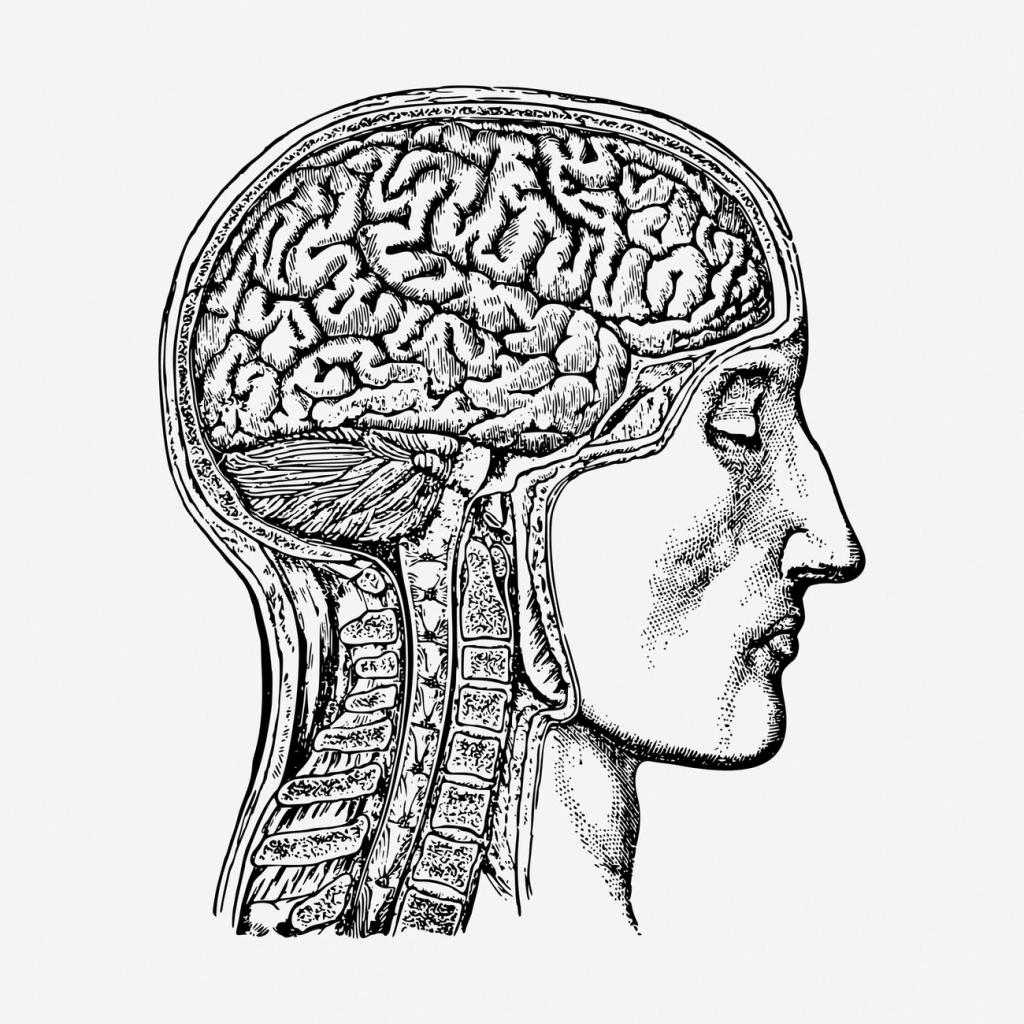
The Renaissance brought us massive advances in learning. In Art, the Humanities, in Science and Trade, to name but a few. It also brought us a massive upswing in Sexually Transmitted Diseases. In Europe, Syphilis seems to have started among the troops of Charles VIII of France, who were besieging Naples in 1494. And spread like a forest fire in a drought thereafter. Gonorrhoea seems to have got its big break in the region of Les Clapiers in Paris around the middle of the sixteenth century. [1] Anyway, this wonderful link to Wikipedia will tell you all you want to know.
And STDs certainly haven’t gone away. In both the US and the UK, rates of syphilis have been rising drastically, as this article from the astute Jonathan Neal of the Daily Mail makes clear.[2] But instead of wringing his hands, Jonathan looks possible responses, and , as all good LSS readers will be cheered to discove , from an antibiotics perspective. As some of you will already know, our chief frontline weapon at the moment is doxycycline. Instead of a long course of post- infection antibiotics, why not hit ’em hard, the morning straight after, with a massive pill of the stuff? So say some experts. But there’s always a catch, as Jonathan points out. As you will have guessed, it’s our old friend antibiotic resistance. Which, according to Jonathan’s experts, is already climbing fast among gonorrhoea patients. So what is to be done?
For us at LSS, the conclusion is clear. All public health problems require a mosaic response. Public education, scientific resources, trained staff and above all someone to co-ordinate everyone else are vital. And in a deeper way , that’s true of a lot of other things. Syphilis, like climate change or migration, knows no nations and no borders. Anyone for a World Government?
It’s one thing to have antibiotics. It’s even better if you can find clever new ways of delivering them so they do even more good to the patient. According to a report by the tireless Grace Wade of New Scientist, Chinese scientists have done exactly that.[1]
Junliang Zhu of Soochow University noticed that layers of mucus in our lung tissues are inhibiting the effective distribution of antibiotics. To overcome this they created nanoparticles from silica, which they coated with an antibiotic called ceftazidime, which they used to treat mice with COPD (Chronic Obstructive Pulmonary Disease). So, what were the results? You had better look at Grace’s article, hadn’t you?
The reason we picked on this was not just because of the antibiotics trope. Widespread COPD is a classic result of having too many vehicles, particularly old fashioned diesel and petrol ones, which fill our air with particulate matter. It’s a major contributor to all kinds of health horrors. Just getting on top of one of them like this will be a major alleviation to millions. It’s so nice once again to see someone thinking outside of the box to do it.
Today we’re devoting our blog to Krill, those humble but immensely prevalent crustaceans which form the basis of immense and vital ocean food chains. [1]They even form the breakfast of the Blue Whale (Balaenoptera musculus), that mighty monarch of the sea. They may even play a role in carbon capture and sequestration [2 see part #9] and now, you’ve guessed it-they are under threat. From that brutal ignorant species that has the vanity to call itself Homo sapiens. Not only are they being massively overfished. But now the melting glaciers and ocean acidification, both caused by global warming, are starting to eat into their numbers at alarming rates. If that goes on happening then the whole ocean ecology will collapse, with incalculable consequences for the stability of human society.
“So-what can I do?” we hear you asking. It’s a perfectly good question. And in the last analysis, only you will know the answer, gentle reader. But here at LSS we know one thing. The days of living the quiet suburban lifestyle at sports ground and shopping mall are over. We’re not saying it wasn’t good while it lasted. But it can’t be sustained any longer, not at least without some major social and technological engineering. Could you at least help one organisation that is trying to do something? What about the WWF, who have supplied one of today’s links? What have you got to lose? Well you know the answer to that.
Photo by Antoni Shkraba on Pexels.comPhoto by Anna Shvets on Pexels.comPhoto by u0410u043bu0435u043au0441u0430u043du0434u0430u0440 u0426u0432u0435u0442u0430u043du043eu0432u0438u045b on Pexels.com
We often talk about the Charity Antibiotics Research UK on this blog.[1] Since 2015, they have been doing invaluable work. Not only have they pointed to the need for new antibiotics. They have also tried to fund research. But they do a lot more than that.
Now, many people think “Disease-Diagnosis-Antibiotic-Cured-bosh!” is the way it works. That’s the ideal of course, and in many cases, it’s true. But all too often people have long term chronic conditions. [2] Such poor souls need all kinds of advice on treatments, health care, contacts-and sometimes just someone to talk to. And that is where antibiotic research UK’s brilliant patient support services comes in. If it’s done properly, it will eke out the effectiveness of our dwindling supplies of antibiotics, and , who knows, have support networks in place if new ones are developed. And now, gentle reader, is where YOU come in. To quote their appeal
We’re currently seeking volunteers to review the information we provide, whether it’s directly from our website or in response to enquiries. We’re looking for two types of reviewers:
Lay reviewers: Individuals without a healthcare background who can assess whether our articles are easy to understand and digest.
Expert reviewers: Professionals with a background in science or health who can provide insights into the accuracy and comprehensiveness of our content.
Come on, it’s not as if we’re asking you to climb Mount Kanchenjunga backwards, or swim the English Channel while dressed as the Red Queen from Alice Through the Looking Glass, is it? We bet a few of you reading this are retired after a successful career and are now sratching round for something useful to do. Could this be it?
According to the American writer Gore Vidal, one must choose between two missions in life. Either to Comfort the Afflicted; or to Afflict the Comfortable. Now, generally speaking, the Daily Mail is normally very much on the side of the Comfortable. Hardly a bunch of Islington Green Remoaner Marxist Liberals, you might say. So when they publish something which might in some way be slightly comfort-afflicting, we know it’s been through a pretty fine toothcomb first. And today we present just such a story by their admirable Jonathan Chadwick called The Real Life Day After Tomorrow. Not only does it speculate that the warming currents of the North Atlantic might collapse, plunging us into a new Ice Age. But there is a chance that it might happen rather soon. [1]
Most people know that the reason that Western Europe is tolerably warm is due to the fact that certain ocean currents move vast quantities of heat up from the warm waters of the Gulf of Mexico to these otherwise benighted shores. Thanks to global warming and melting ice caps, those currents could switch off as early as next year. We cannot hope to improve on the excellent explanations and top notch, easy-to-understand graphics in Jonathan’s article. But we could beg you to look at some of the comments. and the squeals and howls of outrage from those whose weltenschauung is horribly imperilled by Jonathan’s words. Denial, evasion and getting shouty are common psychological defence mechanisms of people who are often uncertain of their own case. Blaming the messenger can be another; although we are all guilty of that.
Perhaps the latter was on display in the case of climate scientist Michael Mann, who, because of his scientific work, became the subject of unpleasant personal attacks from those who objected to his findings. To us it all seems a bit reminiscent of what happened to Galileo in the 1640s. Fortunately Mann has won damages from some of his adversaries , and this may buy back some space for objective debate in some areas of science. We wait to see. Whatever happens, those who prefer to deny, for whatever reason, should remember. Reality, be it economic, physical or logical, will eventually come round to charge a price. The longer you leave it, the higher that price will be.
These days everyone is talking about conspiracy theories and trying to find out who is in the secret conspiracy that controls everything. Some say it is Davos Man, but surely he can’t do it all on his own? Some say it’s the illuminati; others cite a rather boring man called George Soros who looks and sounds like someone at home in the impenetrable back pages of the Financial Times. But today, we at LSS can reveal that the real conspirators are the same they have always been. The Movers and the Shakers, and the Great and the Good. (although some claim to be in more than one of these categories at the same time) It’s about time that the Ordinary Citizen learned more about them. So you can recognise one in the street and, if possible, pointedly ignore them in a hostile way.
A note before we start The Movers and the Shakers, the first two rungs in the career ladder, are not to be confused with the 1960s California Soft Rock band of the same name whose hit single Baby I want your Love was the sound track for a whole generation who passed their golden youth in ancient camper vans on the golden beaches of places like La Jolla and Malibu.
Movers Can easily be recognised because they still inhabit the kind of flats they lived in when they were students, except now they own the flats and rarely wear baseball caps. Because their company/career/practice is in its early stages they still talk to people they knew at University. May even occasionally be seen at places like La Jolla, although the van is massively improved,. Hoping to become a…
Shaker By this time the company/career/practice is doing so well they can afford the all the extra houses/cars/mistresses that reinforce their new status. Do not expect Christmas cards/birthday cards/second wedding invitations from them any more. Quick to exalt the virtues of people like themselves who have made it big, they are longing to be called to a Selection Board in order to join the next stage, commonly known as :
The Great Yes, there are boards and examinations which you have to pass to reach this stage. But the questions are not like those in ordinary exams, such as “which is the largest copper-exporting country in South America?” or “integrate the function y=Cos x3-8 x1/2-4x”. Instead the questions are “are you going to Glyndebourne this year? or “were you at Rupert’s party in the Hamptons? Isn’t Piers Morgan one helluva guy?” One thing to know: the Great would never, ever, even be seen dead on beaches in places like La Jolla, however luxuriously-appointed was the camper van. But their major trouble is that they have spent so much time preparing for their role that they have learned nothing useful which might help them to do it. Which is way they make such a mess of things. And the hours are dreadful; if you are Great, your life is no longer your own. So many of them cannot wait to resign, and go as soon as possible to the last stage:
The Good Once upon a time being the Good was best of all. There were senior roles in things like the Arts Council or even your own 14-part cultural series on BBC2. Nowadays, with all these shopping channels and the internet, such gigs are few and far between. Instead they spend their time running international Institutes which nobody can see the point of. Or writing long newspaper articles which nobody reads, because the author is no longer Prime Minister, and never will be again. Apart from that, they just fret in case those ghastly locals build a caravan site on a hill which overlooks their villa in Tuscany. They have villas in Tuscany because they are far too old for beach life-especially among the heavy waves of La Jolla.
So now you know, you have two choices. You could Rise in Righteous Indignation and overthrow them. But; someone’s got to to do the job, why would you be any better? And do you you really want to give up your old camper van, with its digitally remastered tracks like Baby I want your love, just to fly to Davos and endure a string quartet?
No, we thought not.
#george soros #illuminati #conspirators #davos man #the great and the good #movers and shakers #malibu #la jolla
We know Friday Night Cocktails got dropped a few months ago (on orders from the top). But that won’t stop us from bringing you searing, cutting edge journalism when we think a story is much in the public interest that it must be broken. Even if it upsets The Great and the Good, the Powerful, and the Establishment, assuming that members of any of these groups read LSS. So, anyway, such was the case with the French 75 which we discovered at Cote, Brighton, last Saturday night before dinner.
Now, before you reach for your lawyers: we do note get any money for this. We have no commercial, financial ,commercial nor personal connection with Cote nor any of their staff. But when we, in the company of a companion visited that outlet at the end of a hideously long and dry January, we were more than in the mood for a little pick-me-up. And so it proved. Naturally we have adapted the details a bit, as we soon found ourselves a bit hazy about their precise nature. But the following will suffice:
The beauty of the French 75 is its simplicity. Refreshing simplicity, that fruity, slight sour quality we always look for in a great cocktail. Take a simple champagne flute; add a small quantity of sugar. Now add 1/2 measure of lemon juice and one measure of white gin. Cover all with cold white bubbly- Champagne, Cremont, Prosecco or cava, any of these will do. Top off with a slice of lemon peel to add that extra piquancy such ingredients demand. Now sit back and savour.
So, if you are Great, or Good, or Powerful-or just an ordinary Joe like us, here is a recipe which we hope all of you will enjoy. It’s going to be a bust weekend-so goodbye for now.
We cannot tell you how moved we are by all the likes, especially the flurry that have poured in over the last few days. They come from such different places. The United States (where they invented Brooks Brothers), Spain (where they invented tapas) and even the United Kingdom (where they invented apple crumble with custard, although we’re not allowed to touch it any more). And many other countries besides.
All of you with so many different and fascinating websites of your own! Far too many to list here, or cover your range of interests. Which is why it is such a humbling experience to think you actually find time to read ours.
Good luck to you all, please keep reading, please keep your own websites going. And once again, a big, big thanks.
A recent episode of the Channel 4 documentary Twenty-Four Hours in Police Custody produced a gamut of strong reactions.[1] Some cite factors such as “pure evil”, “Sociopathy” and the like. Others blame what they call “proletarian culture” with its supposed emphasis on “swaggering masculinity” and “instant gratification.” None of the above experts have ever defined what those terms mean.
There are indeed some sociopaths and psychopaths out there. Yet in our experience most people are a bundle of conflicting, competing impulses and thoughts. Some of these include aggression and status anxiety. Others include thought, and even compassion. What made this case in Bedfordshire so interesting[2] was that, for a short while, the aggressive instincts of the two convicted murderers were so strong, and lasted sufficiently long, for them to change five lives. Forever. Catastrophically. An ordinary fist-fight in a pub was suddenly escalated by one set of protagonists into double murder. Why?
There is nothing like the feeling of having something now, with the promise of future reward, to caution the wildest impulses. These somethings can be many: a happy emotional relationship, a family, the possession of property. The last, if tied to a long mortgage with the promise of a big pay-out at the end forms a prominent part of the mental architecture of millions. Its presence has dampened the ardour for many a conflict-or sexual adventure. The trouble with Britain since 2010 is that home ownership has gone into steep decline. Mortgages are harder and harder to come by. Where people live with less stake in society, is any surprise they look to other sources for pride? Like their place in the hierarchy? How much “respect” they can obtain(by which they mean fear-for them, the two terms are synonymous) None of this excuses the actions of the murderers in Bedfordshire. But in a fairer society, might such escalations be a bit less common?
There’s nothing like a breakthrough, when a long delayed problem that no one could crack, suddenly yields to fresh thought. And opens the door to a vast potential new field of learning. Which is why this news from Nature Briefings has been such fun to read in itself, as well as digging into its juicy link article , which, by the way, is eminently readable. Essay on Pleasure revealed in Ancient Scroll
Student researchers have used machine learning to read text hidden inside charred, unopenable scrolls from the ancient Roman city of Herculaneum. The newly revealed passages discuss sources of pleasure including music, the colour purple and the taste of capers. The team trained an algorithm on tiny differences in texture where the ink had been, based on three-dimensional computed tomography scans of the scrolls.Nature | 7 min read
The point for us is this bringing together of two highly disparate disciplines. If archaeologists had said ”please give us enormous sums to crack the problem of the Herculaneum scrolls” someone would, very politely, have told them to go take a walk. And we take a safe guess that the principal interests of AI folk are directed towards finance, pharmaceuticals and physics. It’s when the two are brought together, serendipitously, that we see this marvellous synergy, this sum becoming worth infinitely more than its parts.
And what synergy! For all the many learned books which have been written about it, our knowledge of the Ancient World is actually rather limited. Even authors like Plato and Eratosthenes have only survived in a few, fragmentary texts. The same is true of many early Christian writings. There is only one fragment of the New Testament from before 150 AD, and its tiny. [1]The new CT technique could potentially decipher thousands of fragmentary or badly preserved texts. As our database suddenly grows, we may well find some startling new insights. Or old LSS doctrine that research money spent in one field will pay off in many seems to be vindicated once again. Time for a very smug cup of coffee. No biscuits.