
Antibiotics: Why Keynes was good for your health

article of the week

Long, long ago, back in the 1940s, there was a set of beliefs called Keynesianism. It prized economic growth over financial targets and general welfare over the accumulation of vast quantities of lucre. Its prizing of State intervention and higher taxes won the Second World War, and led to thirty years of prosperity and technological advance. But it had its critics. And they had all the money, and therefore all the newspapers. Poor old Keynes was doomed.

Among the advances of those years of public-private partnership there were many advances. Computers and IT, semiconductors, aviation, space technology….but one has been forgotten. It was these years that Ernst Chain and others were able to take the discoveries of Alexander Fleming and turn them into the first generation of mass antibiotics. It was a revolution in health care. And, it has to be said a great reduction in human suffering. Yet enter the Free market Fundamentalists in 1979, and antibiotic development fell by the way. Why? There’s no money in it. And slowly resistance crept back, slowly at first until today, when we balance on the edge of another great pandemic.

But there is hope. Today Nature Briefings reveals that, by throwing out the profit motive, two exciting new antimicrobial drugs have been developed. Allow us to scrap this from Nature

Successful trials of two new antimicrobial drugs — zoliflodacin for drug-resistant gonorrhoea and an antifungal, fosravuconazole — were conducted by non-profit organizations that were founded specifically to bring such drugs to the market. Most legacy pharmaceutical firms have withdrawn from the field, and many of the small biotechnology companies that picked up the torch have gone bankrupt. These two latest achievements suggest that non-profits could help to solve the problem of drug access, while fending off the rise of drug-resistant microbes, which contribute to almost five million deaths per year.Nature | 10 min read

Now, there is a link there to a superb article by Maryn McKenna, which we honestly think you should read as well. But nothing so sums up the belief of this blog so fully. Wealth is about so many more things than just money.

#antibiotics #jm keynes #research #science #economics

Closing womens’ refuges is economic madness

Violence against defenceless women. You can be against it on many grounds. Cruelty, injustice or the rank cowardice of the bigger, stronger males who inflict it. But have you ever opposed it in the name of economic efficiency? We’ll explain this bit later, dear readers. First. the news item which prompted today’s little trope.

Fresh from previous hamfisted maladminisatrations, our beloved UK Government is due to preside over further budgetary reductions in our local governments and regional councils. And this will have a very dire effect in one area dear to the hearts of LSS readers; those shelters where women absolutely in the last stages of desperation can go to escape the attentions of their violent partners. And, according to Jessica Murray of the Guardian,[1] these centres are about to face what amounts to their final and irretrievable closures, dozens of them. Cruel. Barbaric, even. But is it also bad economics?

One of the surest ways to economic success is to ensure the mental and physical health of the workforce. Starving children make bad learners. So do the traumatised, anxiety ridden wretches who emerge from troubled, violent marriages. If you want a good workforce in twenty years’ time, start investing now. If there is such a thing as a British disease, it is underinvestment, particularly in human capital, in the name of balanced budgets and maintaining an ancient social hierarchy. Historians agree that Britain’s decline began in the late Victorian era, when its undernourished and undereducated workforce could no longer compete with those of advancing rivals. And just to show that nothing has changed, here we go again. save the mothers, educate the children and you might just get a few good workers. But doing things the way the current Government does them will just replicate the cycle again for another generation. And down we go again.

[1]https://www.theguardian.com/society/2024/feb/18/uk-charities-warn-of-devastating-council-cuts-to-womens-services

#jessica murray #domestic violence #domestic abuse #womens refuges

Will multicoloured hydrogen save the world?

When we were young, hydrogen came in one colour-and you couldn’t see it. It was a just a load of bubbles the Teacher made in the chemistry lab. Fast forward fifty years, and it seems to come in a baffling spectrum of colours. There’s Green, pink, grey, gold, blue, black, brown and turquoise. [1] This handy guide from the National Grid will take you further. They’re all different industry nicknames where the stuff comes from. Just to confuse matters, different people seem to use the same nicknames to mean different things. But underneath all this lies one simple truth-hydrogen gas could represent a useful path to a sustainable future, and still enjoy what might pass for a tolerable lifestyle.

For reasons of space, we’ll concentrate on one exciting sounding candidate which insiders dub Gold hydrogen. The redoubtably named International Electrotechnical Commission waxes rather lyrical about it here [2] It’s a reputable outfit, and there are some good links for those with the coffee time to delve a little further. But-all that glistens is not gold, as Shakespeare once memorably observed. Writing in The Conversation, David Waltham produces a thoughtful balance sheet of the pros and cons of Gold Hydrogen (bewilderingly, his definition of it is a bit different to the IEC’s) He is far from anti; but this well-expressed caveat is well worth bearing in mind

The big question, though, is how seriously to take gold hydrogen. Will it turn out to be an over-hyped distraction of very limited utility? Or will it provide a pain-free path into a low-carbon future? The truth probably lies between these extremes, but only time (and further research) will tell us.

Well said Professor Waltham. That’s how LSS thinks. On just about everything.

[1]https://www.nationalgrid.com/stories/energy-explained/hydrogen-colour-spectrum#:~:text=Green%20hydrogen%2C%20blue%20hydrogen%2C%20brown%20hydrogen

[2]https://www.iec.ch/blog/could-white-and-gold-hydrogen-be-clean-fuel-options#:~:text=By%20contrast%20white%20hydrogen%20refers,conventional%20ways%20of%2

[3]https://theconversation.com/gold-hydrogen-natural-deposits-are-turning-up-all-over-the-world-but-how-useful-is-it-in-our-move-away-from-fossil-fuels-220230

#hydrogen fuel #fuel cell #green hydrogen #gold hydrogen #sustainable #global warming #climate change

Faith v Reason: Look at the results

We have two stories today, which if taken together, nicely illustrate the difference between Scientific Reason and Blind Faith.

CAR-T Therapy against Multiple sclerosis When we were young , Multiple Sclerosis was a dread disease, Slowly , understanding and therapies have evolved, and now as Nature Briefings explains, a powerful new method using the exciting new CAR-T system looks almost ready for large trials.

And we know how they did it The researchers looked at evidence. They designed and ran experiments . They discarded theories that the evidence showed was wrong. And eventually they came up with this, Engineered Cells for Multiple Sclerosis

The first US trials of CAR T cells to treat multiple sclerosis (MS) have started. These engineered cells could reset the malfunctioning immune system, halting the brain damage that defines MS. “I don’t want to get ahead of myself, but there’s a prospect here for a one-and-done therapy,” says neurologist Jeffrey Dunn, who is running a trial for Kyverna, a US biotech company. Safety is a concern because CAR T treatments can cause brain toxicity, which can result in confusion, seizures and death.Nature | 5 min read

Alabama Theocracy Over in the USA, the Faith-Based Folks of the Alabama Supreme Court have just outlawed IVF. You can read the full story from Robert Reich here [1] but a little of their motivation may be gleaned from the following

In a concurring opinion in last week’s Alabama supreme court decision, Alabama’s chief justice, Tom Parker, invoked the prophet Jeremiah, Genesis and the writings of 16th- and 17th-century theologians.

Today IVF….tomorrow.? Slowly, the tentacles of the Theocrats will close around every laboratory in the USA, banning this, forbidding that, until the US slips so far behind it can never catch up. It was by the Seventeenth Century trial of Galileo that the Catholic Church ensured its own eclipse by ensuring that thinkers fled to the Protestant lands of the north. Hitler found the same, ensuring that the best Jewish scientists fled to Allied countries, delivering their brains to his eventual defeat. That’s what happens when you discard evidence which the theory says is wrong.

Someone once observed that Knowledge and Belief are two different things. It can be hard to choose, we know. But if you need a little help, it may be worth looking at the outcomes of your choice. We can’t see the supreme court of Alabama coming up with a cure for disease any time soon. Nor will the Ayatollahs of Iran. But we hope the above evidence may help you, gentle reader, to support those who might.

[1] https://www.theguardian.com/commentisfree/2024/feb/23/republicans-american-theocracy

#religion #theocracy #christian nationalism #iran #science #empiricism #science

Out of Darkness-a brave attempt to get Cavemen right

Fans of human evolution have always had a thin time at the movies. Back in the 1960s, the standard fare was stuff like One Million Years BC in which photogenic actresses in exiguous fur bikinis ran the gamut of pterosaurs, tyrannosaurs and beefcake co-stars sporting equally unlikely get ups and attitudes. Entertaining for some, but scientific nonsense. It felt like someone had tried to make Apocalypse Now using the cast and sets of The Sound of Music.

In our view, only two serious movies tried to paint an authentic picture of what everyday life might have been like for our ancestors. 2001: A Space Odyssey(1968) gave us 15 minutes at best of some pretty authentic australopithecines. Quest for Fire (1982) tried to pitch a later time, among the various human types of the late Paleolithic. And that was more or less that. Now some brave new filmmakers have tried again with Out of Darkness, here reviewed by Penny Spikins for The Conversation. We won’t spoil the review, which you should read for yourselves. [1] But we will note that Penny is an expert in the field, so approval from her is approval indeed. And the central idea of the film-who is “us”, and if they’re not, ought we to kill them?” is not without resonance today. So you don’t have to be a big caveman fan per se in order to go along and check this out.

Declaration of interest: at the time of writing, we have not yet seen this movie. But we sure as hell are going to, even if it means going alone. So there.

[1]https://theconversation.com/out-of-darkness-im-an-expert-on-human-origins-heres-how-this-stone-age-thriller-surprised-me-223614?utm_medium=email&utm_campaign=Latest%20from%20The%20Conversation

#science fiction #horror #film #stone age #human origins

250 years of getting politics wrong?

“I tried to reason. But facts and logic just bounce off them, like footballs off of a wall”. That’s been a common complaint in recent year, as political discourse has descended into a series of angry shouting matches, with few even listening to, let along reasoning with, the arguments on the other side. It wasn’t supposed to have been like this. Ever since the Enlightenment, the presumption was that people would act in their own self-interest. And that interest would be largely economic. Well, it was fun while it lasted.

Gropingly, provisionally, a new way in which we might try to understand peoples’ political choices and affiliations is starting to emerge. And that it might be based on trying to understand their deep and persistent emotional states- grief, hope, resentment, even the security of their gender identities, may all be part . Latest to have a go is Derek Thompson for the Atlantic [1](warning- you may have to go over a paywall on this one) Derek bases much of his analysis on the well-received Strangers in Their Own Land by Arlie Russell Hochschild (2016)[2] It was an attempt to look at the psychologies of many Tea party voters, who went on of course to man the Trump movement en masse. But they stand as proxies to angry populist movements the world over now.

What we liked about Derek’s article was its questing, unassuming style. There is no careful logical structure of propositions leading to some triumphant conclusion. The author picks at facts and concepts, trying to shape them. Trying hard to find the words that make the best sense. As anyone does in a new field. One day perhaps, some genius will come along with a new paradigm, explain why we act as we do, and we can all go comfortably back to sleep. Until that day, we are stuck with one another, bewildered, afraid and angry. Which is why Strangers in their Own Land is a very, very good title indeed.

Thanks to P. Seymour

[1] https://www.theatlantic.com/ideas/archive/2020/12/deep-story-trumpism/617498/?utm_source=apple_news Hochschild

[2]https://en.wikipedia.org/wiki/Strangers_in_Their_Own_Land

#trump #populism #elitism #alienation #politics #economics

Electric Cars: A vault to the future, or just a current fad?

“Just because something appears in the Daily Mail,” observed George Orwell,”does not automatically mean it’s a lie.” Astute readers will know how, having lost the argument on carbon emissions, climate deniers spend their time sniping and snarking at every new technological advance. Remember all those hecatombs of pigeons supposedly murdered by marine wind farms? Which is not to say that we at LSS dismiss every criticism, every reasoned argument, about how we get to a sustainable world safely, with the minimum possible collateral damage. There’s a debate to be had, especially when it is mooted in the august pages of the New Scientist [1].

One of the troubles with electric vehicles (EVs) is the kind of unpleasant things like lithium (and cobalt) you need to mine to make the batteries, And, as this piece by New Scientist photographer Tom Hagen shows, the local consequences of doing so can be frightful. This is Chile; but you’d find something like it similar production sites across the world. And some pretty dire working conditions, especially in places like Africa. At which point despair seems a very understandable reaction. Surely the cost of making these new EVs, and powering up the grids to run them, makes the whole enterprise futile?

The despair trap is a product of oversimplification; “if a thing is not 100% good, it must be bad. Gotcha!” runs the thinking. In the real world, lasting solutions are a mosaic set of compromises and trade offs, as every engineer knows. On balance, the environmental benefits of using electric vehicles are already in excess of the costs.[2] And this is before the dreadful health impacts of nitrate and particle emissions from our archaic old fleet of combustion vehicles[3] is taken into account (LSS passim).[3] Compared to the world we lived in 10 or 20 years ago, we’re actually rather cheered to live in a world where someone is actually doing something. However imperfect, it’s better than sliding blindly down the ramp to destruction, which is what they did in the Good Old Days.

With thanks to Gary Herbert

[1]https://www.newscientist.com/article/mg25333710-200-lithium-fields-beautiful-from-the-air-trouble-on-the-ground/

[2]https://climate.mit.edu/ask-mit/are-electric-vehicles-definitely-better-climate-gas-powered-cars

[3]https://www.niehs.nih.gov/health/topics/agents/air-pollution

#pollution #electric vehicles #new scientist #lithium #cobalt #particulates #nitrates #batteries

Sexually Transmitted Diseases-new tools needed

The Renaissance brought us massive advances in learning. In Art, the Humanities, in Science and Trade, to name but a few. It also brought us a massive upswing in Sexually Transmitted Diseases. In Europe, Syphilis seems to have started among the troops of Charles VIII of France, who were besieging Naples in 1494. And spread like a forest fire in a drought thereafter. Gonorrhoea seems to have got its big break in the region of Les Clapiers in Paris around the middle of the sixteenth century. [1] Anyway, this wonderful link to Wikipedia will tell you all you want to know.

And STDs certainly haven’t gone away. In both the US and the UK, rates of syphilis have been rising drastically, as this article from the astute Jonathan Neal of the Daily Mail makes clear.[2] But instead of wringing his hands, Jonathan looks possible responses, and , as all good LSS readers will be cheered to discove , from an antibiotics perspective. As some of you will already know, our chief frontline weapon at the moment is doxycycline. Instead of a long course of post- infection antibiotics, why not hit ’em hard, the morning straight after, with a massive pill of the stuff? So say some experts. But there’s always a catch, as Jonathan points out. As you will have guessed, it’s our old friend antibiotic resistance. Which, according to Jonathan’s experts, is already climbing fast among gonorrhoea patients. So what is to be done?

For us at LSS, the conclusion is clear. All public health problems require a mosaic response. Public education, scientific resources, trained staff and above all someone to co-ordinate everyone else are vital. And in a deeper way , that’s true of a lot of other things. Syphilis, like climate change or migration, knows no nations and no borders. Anyone for a World Government?

[1]https://en.wikipedia.org/wiki/Sexually_transmitted_infection

[2]https://www.dailymail.co.uk/health/article-13095693/This-STI-morning-pill-beat-rising-rates-potentially-life-threatening-syphilis-UK.html

#antibiotics #antibiotic resistance #syphilis #gonorrhoea #STD #public health #jonathan Neal

Nanoparticles target antibiotic delivery

It’s one thing to have antibiotics. It’s even better if you can find clever new ways of delivering them so they do even more good to the patient. According to a report by the tireless Grace Wade of New Scientist, Chinese scientists have done exactly that.[1]

Junliang Zhu of Soochow University noticed that layers of mucus in our lung tissues are inhibiting the effective distribution of antibiotics. To overcome this they created nanoparticles from silica, which they coated with an antibiotic called ceftazidime, which they used to treat mice with COPD (Chronic Obstructive Pulmonary Disease). So, what were the results? You had better look at Grace’s article, hadn’t you?

The reason we picked on this was not just because of the antibiotics trope. Widespread COPD is a classic result of having too many vehicles, particularly old fashioned diesel and petrol ones, which fill our air with particulate matter. It’s a major contributor to all kinds of health horrors. Just getting on top of one of them like this will be a major alleviation to millions. It’s so nice once again to see someone thinking outside of the box to do it.

[1]https://www.newscientist.com/article/2416072-inhalable-nanoparticles-could-help-treat-chronic-lung-disease/#:~:text=So%2C%20Junliang%20Zhu%20at%20Soochow%2

#antibiotics #nanoparticle #Grace Wade #Junliang Zhu #soochow university #COPD

Kill Krill? You’ll pay a bill

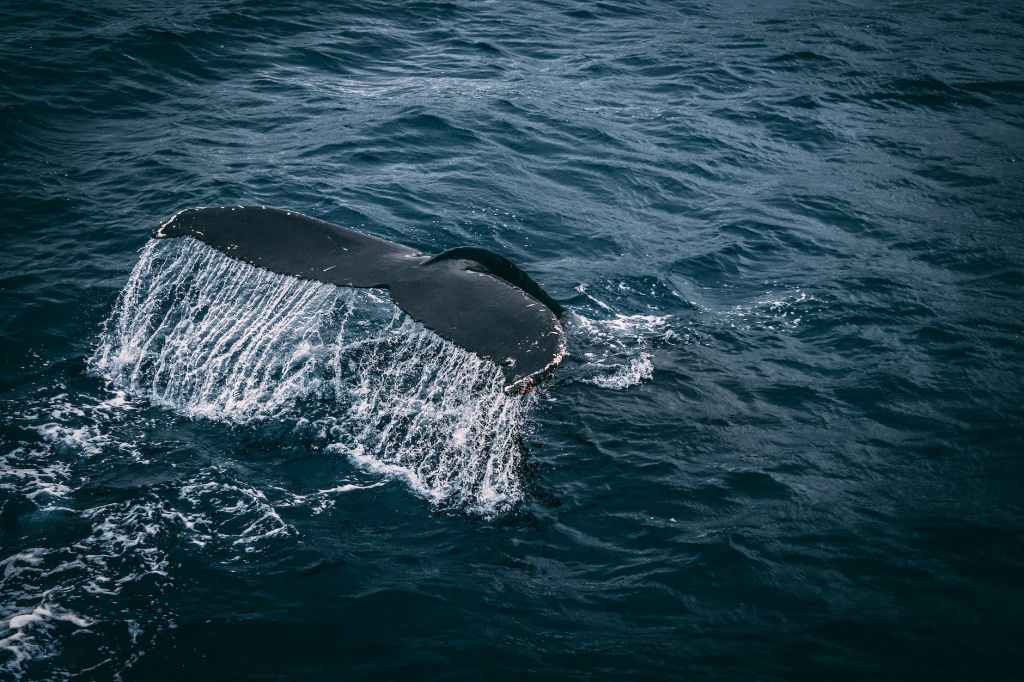
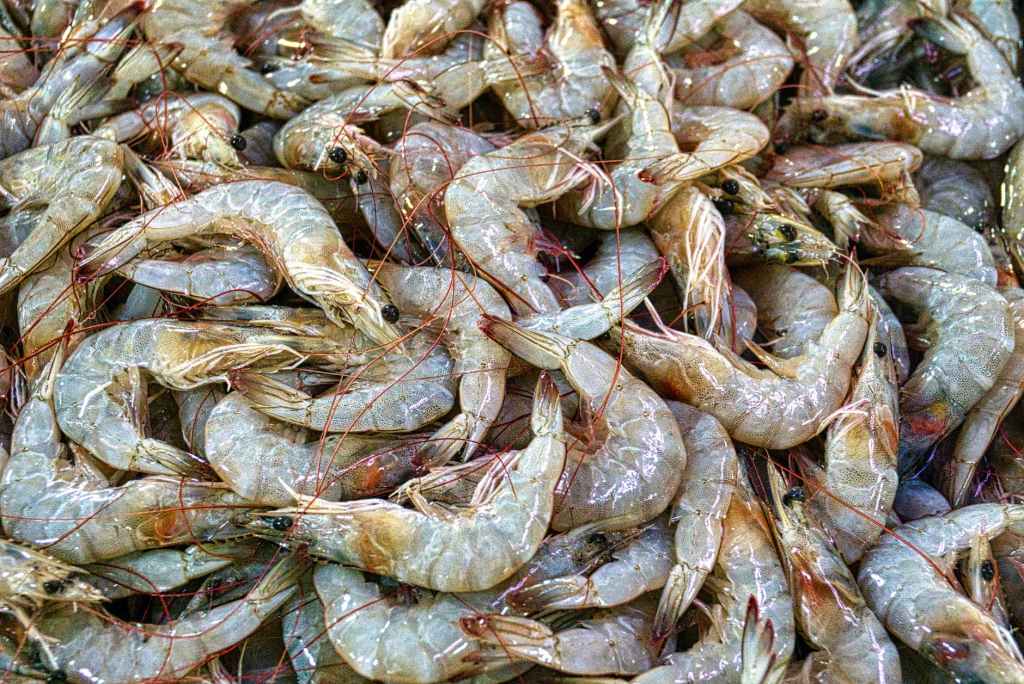
Today we’re devoting our blog to Krill, those humble but immensely prevalent crustaceans which form the basis of immense and vital ocean food chains. [1]They even form the breakfast of the Blue Whale (Balaenoptera musculus), that mighty monarch of the sea. They may even play a role in carbon capture and sequestration [2 see part #9] and now, you’ve guessed it-they are under threat. From that brutal ignorant species that has the vanity to call itself Homo sapiens. Not only are they being massively overfished. But now the melting glaciers and ocean acidification, both caused by global warming, are starting to eat into their numbers at alarming rates. If that goes on happening then the whole ocean ecology will collapse, with incalculable consequences for the stability of human society.

“So-what can I do?” we hear you asking. It’s a perfectly good question. And in the last analysis, only you will know the answer, gentle reader. But here at LSS we know one thing. The days of living the quiet suburban lifestyle at sports ground and shopping mall are over. We’re not saying it wasn’t good while it lasted. But it can’t be sustained any longer, not at least without some major social and technological engineering. Could you at least help one organisation that is trying to do something? What about the WWF, who have supplied one of today’s links? What have you got to lose? Well you know the answer to that.

Thanks to Gary Herbert

[1]https://en.wikipedia.org/wiki/Krill

[2]https://www.wwf.org.uk/learn/fascinating-facts/antarctic-krill#:~:text=They%20are%20under%20threat,interest%20in%20the%20krill%20fishery.

#krill #crustaceans #ocean #food chain #blue whale #climate change #global warming #glacier #ice sheet