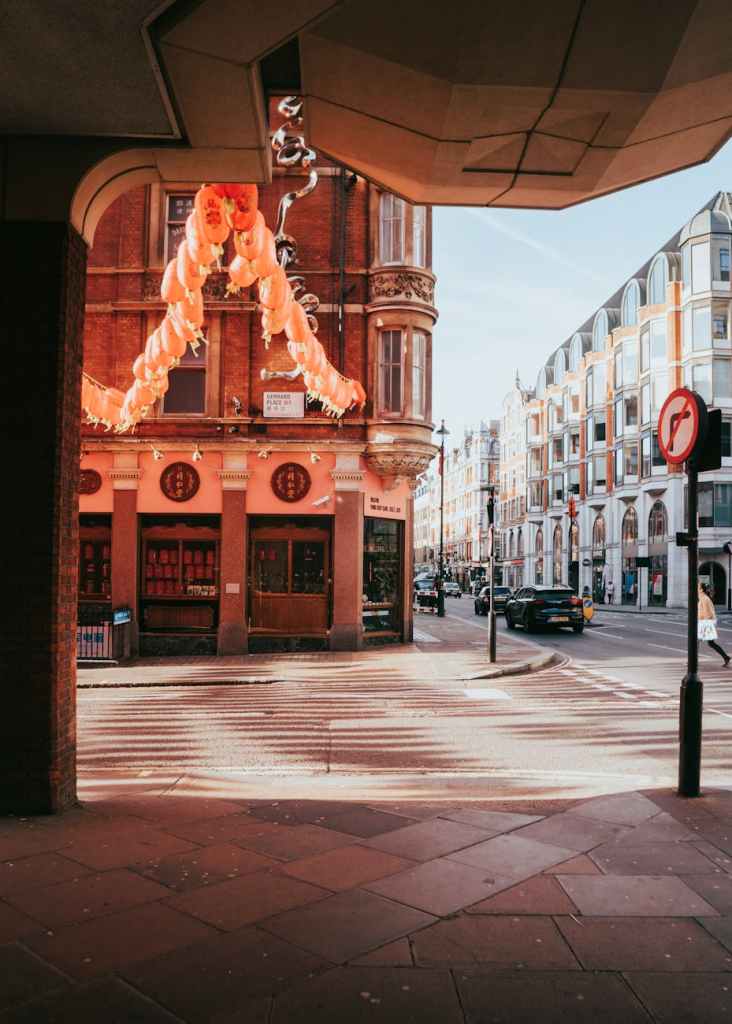
Roman Polanski’s Chinatown: Still Fresh at Fifty

One of the attractions of the Detective genre is the way good writers use it to cast a sly glance at the deep problems of their society. Without all the dreary agitprop served up by leftist directors and their kitchen sinks. It was the achievement of the film noir genre to condense this trope into stylishly attractive packages, that have stood the test of time.

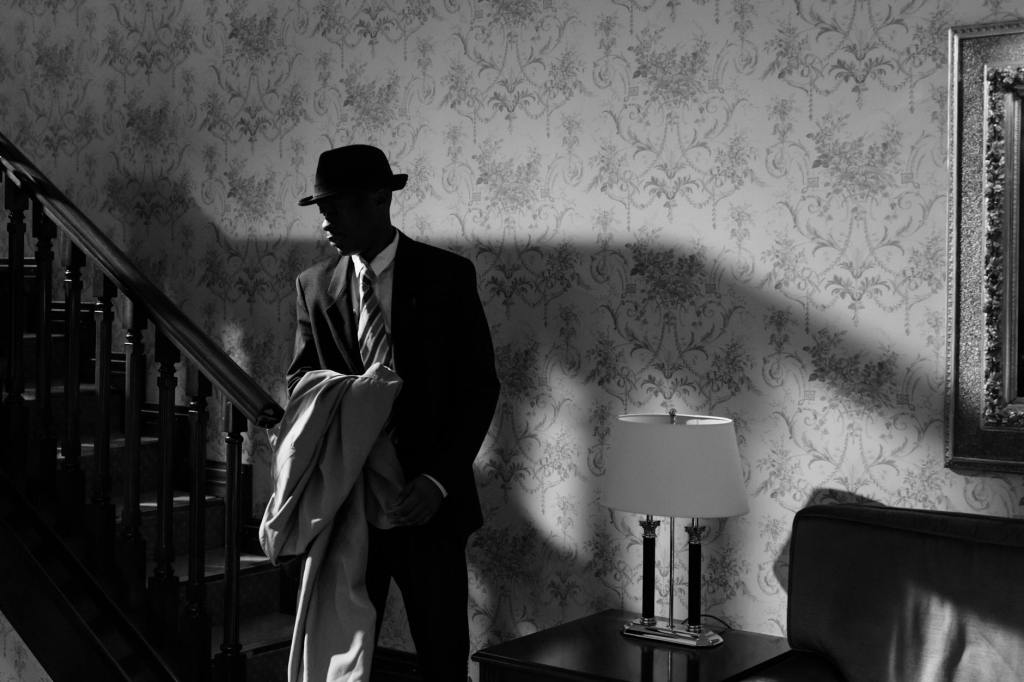
Roman Polanski’s Chinatown(1974) was made after the classic age of the gumshoe(Look! It’s in colour!) But it sports the classic trilby-wearing Private Eye negotiating his way through a 1930s world of glamorous cars, fast women and cocktail lounges.[1] Jake Gittes is a classic Jack Nicholson character-brash, wisecracking, cheerfully unaware of his own faults. Yet he has his integrity to his Craft, which redeems. Cheerfully able to manipulate his subordinates and everyday clients, he stumbles when he runs up against bigger players like Evelyn Mulwray (Faye Dunaway) and a sociopathic dwarf (played by Polanski himself) with a penchant for knife crime. Biggest and Baddest of all is multimillionaire Noah Cross, played by John Huston who comes out from behind the camera to give the performance of a lifetime. Noah is the monster to end all monsters; not only is he madly greedy and a megalomaniac, but it turns out in the final twist that he has actually…….no, we won’t spoil it for younger generation. We had no idea then that such things could occur, and still wonder why they do today.

Above all Chinatown is set against the Los Angeles Water Wars of the 1930s. When a fast growing metropolis was suddenly running short of water, and certain characters thereby saw the opportunity to turn a fast buck. It is a question not without relevance today, particularly for those of us who live in England. How the sudden lurches in power, and the compromises they enforce so ruthlessly are displayed in the last scen, set in the eponymous Chinatown. Where Gittes is finally forced to weigh that last redeeming scrap of professional integrity against survival. But we won’t spoil that bit either.

Note for film buffs and musicologists-we thought the main theme displays a passing resemblance to Holst’s Planets, Jupiter Suite; does anyone have the knowledge to tell us if we’re right or wrong?

[1]https://en.wikipedia.org/wiki/Chinatown_(1974_film)

#detective #film noir #los angeles #chinatown #roman polanski #jack nicholson #faye dunaway #privatisation #public ownership

Widening the Horizon of Knowledge

We know as well as anyone that Europe(both the EU and non-EU bits) and the North America(the United States and other bits) are far from perfect societies. And we know the historic wrongs and mistakes which have plagued our planet’s history. But the mere fact that we can sit here writing critical thoughts should, in the last analysis, be the ultimate vindication of those societies. Consider what civilisations like Iran and Russia do to dissidents, [1] [2]even in third countries. For all their faults, Europe and the US try to make an effort. And nowhere is this more clearly seen in the EU’s Horizon programme, which is now attracting adherents from all around the world. Let Nature Briefings explain

South Korea will join Horizon

South Korea will become the first East Asian country to join the European Union’s €95-billion (US$102-billion) Horizon Europe research-funding programme. The country’s researchers will be eligible to apply for grants from a €53.5 billion pot of funding for research into global challenges in health, energy, climate change and industrial competitiveness. Last year, New Zealand became the first country to ‘associate to’ Horizon Europe, Canada will be signing on later this year, and Singapore and Japan are in preliminary discussions with the European Commission.Science | 4 min read

Despite the seemingly unstoppable rise of populists and dictators, some countries still place their bets on learning and the free flow of information. Facts are facts. The rules of logic are unbreakable. The moon is made of rock, whatever the monster in the Presidential Palace says. And we think there is a chance that prizing honest knowledge above group think may in the long term win out. Because in a free society a kilogram of anything is a kilogram. In somewhere like Russia , a kilogram can be whatever one of Putin’s buddies says it is. If you question it, you will be murdered as an enemy of the state. In such circumstances, how can anyone safely order concrete, buy data or even trust the results of a football match? Such societies will stagnate, as did the USSR and China in the Cultural Revolution.

It’s true that free countries are under threat. We have to circle the wagons. Widening Horizon is one small part of that. But if we win through the world can once again return to uninterrupted technological and social progress. And the Dictators will be the Dinosaurs of the past.

[1]https://www.theguardian.com/media/2024/mar/31/tehran-denies-involvement-in-london-attack-on-tv-presenter

[2]https://www.theguardian.com/world/2023/aug/27/history-killing-how-russia-has-silenced-putins-opponents

#Horizon #EU #USA #science #free trade #markets #dictator #populism #iran

Should we try to cure the British Disease?

This Time No Mistakes by Will Hutton [1]

The literature on Britain’s Decline stretches far back into the 19th Century, when panicked Victorians first perceived the challenge to their hegemony by more efficient upstarts such as Germany and the United States. Authors as divergent as Corelli Barnett and Beatrice and Sidney Webb have all had their say. Will Hutton is something of an old hand by now, as fans of The State We’re in (1992) will recall.

But it’s worth giving Hutton another run over the gallops, if only because he’s so readable. Complex ideas are broken into easily-assimilable parts, and his new ways of looking at old things always keep the reader on their toes. This is no rehash. The gravity of our present situation of soaring poverty, bounding national debt and broken trade partnerships has seen to that. Any reforming Government will face a situation at least as difficult as Attlee’s in 1945, confronting a shattered economy ( for which, read: austerity) and a lost Empire (read: Brexit).

Will there be any chance of a turnaround? Hutton thinks it’s possible. We are less sanguine. “Britain has the misfortune to be run by the British” observed the reviewer of a similar book in 1984. By which he meant the nexus of privately-and Oxbridge-educated clans who go on to populate the leading jobs in law, finance and media. Especially the latter, who use their power ruthlessly to destroy reputations of “enemy” politicians of whatever political party, while shamelessly eliminating any space for objective debate. Since the First World War, the Conservatives have been in power, largely on their own, for 82 years. Majority opposition governments for barely 25. The decline in British power in that time has been both precipitous and undeniable. Can anything really be done?

In the Rise and Fall of Great Powers, Paul Kennedy[3] makes a convincing case that the whole process is inevitable and rather natural. Smaller states like Venice, who “once held the East in thrall” were inevitably eclipsed when larger powers like Spain and France came along. Perhaps the British people, or rather the English, know this, and have consciously turned their back on power. In which case the Conservative policy of managed decline could be the right one after all.

[1]https://www.theguardian.com/books/2024/mar/31/will-hutton-this-time-no-mistakes-extract

[2] Will Hutton: This Time no Mistakes Head of Zeus 2024 (appears 11 April)

[3] Paul Kennedy The Rise and Fall of the Great Powers Random House 1987

#conservatives #labour #liberal #great Britain #england #politics #economics

The Killer in the Lake

It’s a warm sunny day in southern England, the first after a long cold winter. And proud grandparents Brian and Karen are proud to take their only grandson, little Chesney, to a country park. It was where Brian himself played fifty years before. And it’ll give the child’s mother, a hardworking nurse, a break. The water of the lake looks so inviting that little Chesney begs to put on his arm bands and plunge in. Brian, remembering his own happy hours there, agrees. But as the adults watch their grandson splashing happily, little to they realise he has already entered the last painful hours of his short life.

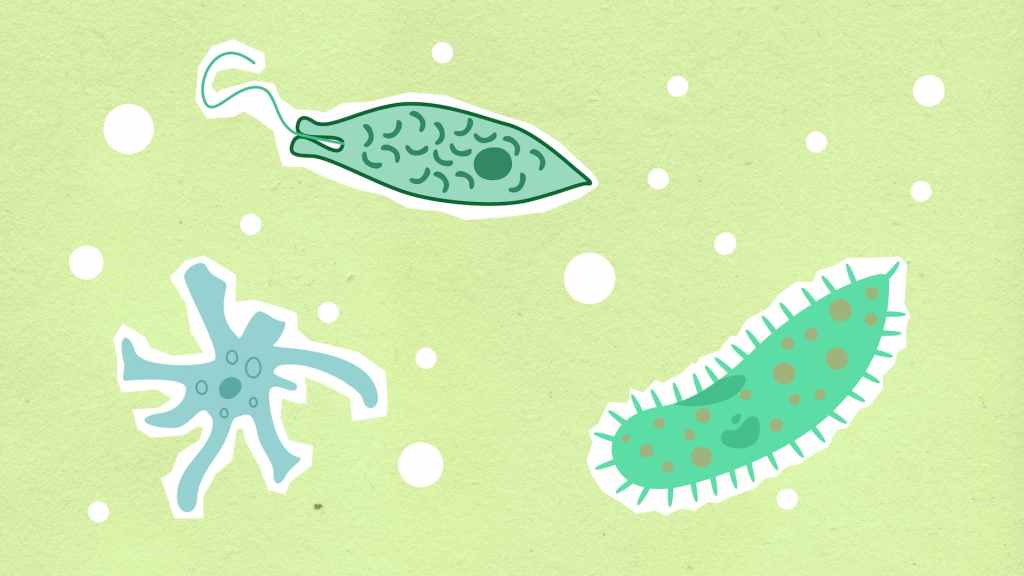
Problems start after they return home. Chesney complains of feeling sick. He becomes listless and starts showing signs of a fever, which rapidly grows worse. The grandparents rush the boy to the local Emergencies section of the nearest hospital. Doctors report that the fever has spread to the little boys brain. It is they say Primary Amoebic Meningoencephalitis, a disease caused by the amoeba Naegleria fowleri. It has entered the boy’s nasal sinuses, and travelled rapidly up to the brain, which it has begun to feed on from the inside outwards. The fatality rate is 97%. There is just time to call the boy’s mother back from her shift before he dies in her arms.

Fanciful? It could become all too common according to this story by Rebecca Whittaker of the Mail.[1] What Brian didn’t know is that the planet has been warming steadily since his younger days , allowing the deadly amoeba to multiply to unprecedented levels in the lake. Now British lakes and rivers are as warm as those of the Southern United States. A paradise for Naegleria.

And what can be done? Well, there is some hope [2] Despite the colossal fatality rate some antibiotics and some steroids seem to ameliorate the disease in some cases. Better Government inspection and testing of lakes and other swimming places could help, although in Britain that seems a unlikely at the moment. Best of all might be to slowdown the breakneck pace of global warming. Good luck with the last one.

the names and family in the first part of this piece are entirely imaginary

[1]https://www.dailymail.co.uk/health/article-13187827/Warning-brain-eating-parasite-99-death-rate-making-way-British-water.html

[2]https://www.cdc.gov/parasites/naegleria/general.html#anchor_91787

#meningitis #naegleria fowleri #water born disease #swimming #pollution #global warming

Our Choice for Easter: JS Bach, St John Passion

You don’t have to follow the Christian eschatology to realise that “easter” has a far deeper meaning which predates the birth of Jesus by millennia. Fans of The Golden Bough will recall that legends of the Reborn- God- in- Spring, are almost universal among people who live and farm across the northern hemisphere, and have been ever since the Neolithic. The sense of renewal after a hard winter, and the hope of fresh beginnings, address something extremely deep in the human psyche.

Bach‘s great Easter oratorios, the St Matthew Passion and the St John Passion speak to this sensibility as well as any work of art we know. Bach wrote the St John Passion in 1724. Like many such works, it was revised and cut many times, not least by the composer himself. The versions we hear now are are result of centuries of study, and of course the early music revival of the 1980s, when period instruments and orchestrations were rediscovered and tried out.

This year we have chosen the St John Passion as, frankly, we are a bit St Matthewed-out. So it is wonderful to try to understand a fresher set of rhythms and harmonies from a master artist, and relate them to Bach’s sense of the universal, creed-jumping essence of this work. Of course, we would not dare to tell you which bits to like, nor why. For one thing, we lack the musical knowledge. But we really liked the opening prologue, Herr, unser Herrscher, and we hope you will too. And meanwhile wish all of you a happy Easter, or whatever you call this break, and hope the world improves as the summer opens before us.

[1]https://en.wikipedia.org/wiki/St_John_Passion

[2]https://www.udiscovermusic.com/classical-features/bach-st-john-passion/

#JS Bach #St John Passion #Easter #Neolithic #belief #christianity #music

Four cheers for the minimum wage

They said it couldn’t be done. It would cause mass job losses and economic melt down. It undermined the morals of the poor. So screeched a whole bevy of right wing “news”papers, magazines and think tanks when Tony Blair’s Government introduced the UK’s minimum wage policy in 1999.[1] We’ll let the excellent Philip Inman of the Guardian give you the details. Our own gloss will be a little more historic.

Scholars scrabbling over the rubble of the Great Crash of 1929 soon discovered one simple, outstanding truth. The boom of the 1920s had held a fatal weakness. Wages stayed low, while tax reforms had ignited an unstable credit and spend boom among the rich. Demand was suppressed, and as the factories filled with unsellable goods, the stocks of the companies that made them were seen to be based on sand. The resulting crash became much worse, for the poor had no reserves to build in the good times to see them through. The message was an is clear to all of us who have managed to move beyond the simple verities of first year undergraduate economics. Helping the poor makes everyone richer.

So to all the pearl-clutchers, and to those who have their own reasons to conveniently believe in free market economics, we would observe this. Study the history of things like minimum wages, working hours directives and the abolition of serfdom. You disparage them not at your own peril, but at everyone’s.

[1]https://www.theguardian.com/society/2024/mar/27/minimum-wage-is-uks-most-successful-economic-policy-in-a-generation

#demand #economics #great depression #wall street crash #jm keynes #minimum wage

The Hidden Dangers #2: Endocrine disruptors

Well! Frankly, when we started this series, we didn’t know much about Endocrine disruptors. We thought we’d run you off a quick blog and disappear off down the pub to spiritually prepare for the Easter holidays. But when we opened up our first clicks, the whole thing was absolutely vast. We felt like that Spanish bloke Nuñez de Balboa who crossed a small ridge and suddenly found himself looking at the Pacific Ocean. So- how to summarise it?

An endocrine disruptor is a chemical which can insinuate itself into the human body in such a way that it interferes with your hormone driven functions. The trouble is that these chemicals have become incorporated into an unimaginably vast array of industrial and production processes. Our Chat GPT 4 gave the following cursory over view of the sorts of things we’re talking about and where they might be found:

  • Atrazine: A commonly used herbicide in crops like corn, sorghum, and sugarcane.
  • Bisphenol A (BPA): Found in plastics, food packaging, and toys.
  • Dioxins: Byproducts of manufacturing processes.
  • Perchlorate: An industrial chemical used in rockets and explosives.
  • Per- and polyfluoroalkyl substances (PFAS): Used in firefighting foam and nonstick coatings.
  • Phthalates: Found in food packaging, cosmetics, and fragrances.
  • Phytoestrogens: Naturally occurring substances with hormone-like activity found in some plants.

If you really want to delve deeper, this report is about as good as it gets, thought you’ll probably need three weeks solid to take it all in [1]

And our take? The real trouble with things like smoking, burning fossil fuels or putting lead into petrol was that the downsides took so long to emerge. That and the fact that many of the residua of past follies are still lying around. The processes we saw above are so deeply woven into the fabric of our civilisation that its hard to say when any useful substitutions can be made, let alone eliminating them from things like the food chain.

[1]https://www.europarl.europa.eu/RegData/etudes/STUD/2019/608866/IPOL_STU(2019)608866_EN.pdf

#endocrine disruptor #hormone #plastic #pollution #health #ecology

Why Easter is a time for understanding- a message from the Board

Once again we share one of our management to staff communiques, which we believe are a model for other companies and organisations

Now, it’s come to our attention that there have been certain ill-disguised whisperings and feelings about the staff leave arrangements for this Easter Bank Holiday weekend. Specifically-how come only the Editorial Board get Thursday afternoon off? The answer is both simple and complicated.

Firstly, the Thursday before Easter (Maundy Thursday) is an ancient time hallowed custom. So someone has to have time off. Obviously it can’t be everybody , as our productivity figures, already low, would just fall through the floor. So the Board got in consultants, who came up with a scheme based on geography, finance and above all peoples’ real needs. And this is how it works out.

Most of you it turns out live within 5 or ten miles of this building. OK, a couple of you trundle in from places like Kingston or Haywards Heath, but its really not too far to get way when the weekend begins, is it? Whereas we on the Board have our holiday homes in amazingly far-flung places. The Cotswolds. Perigord. Even Tuscany. Of course we need that extra time to get to the airport. And what about at the other end, we have to get to that shop in the village, the one that does that marvellous olive bread, and check the wine cellar, or the weekend’s half-gone. Whereas you lot, in some pub in Croydon-well you’re right on top of it as you stumble out of your little flats.

Each of us needs to understand other people and their different needs and pressures. Clearly we on the Board have somewhat different needs to the rest of you. Easter is a time of understanding. And with the annual salary reviews coming up, we hope you will understand once again.

AI-designed Antibodies: Not another medical breakthrough story?

Oh no, not another medical breakthrough story on LSS? What happened to all those cocktails? What about all the economics and evolution stuff we used to get? Yet let us remind you of the words of our Founding Charter,* gentle readers: this started out as an antibiotics website, even more so when it was a post on Facebook. Of course when supplementary techniques like bacteriophages and improved antibodies came along, we welcomed those too. Which is why we have to give this new report from Nature Briefings AI helps design antibodies from scratch, front and centre on today’s blog. When you read this, you will understand why

For the first time, an artificial intelligence (AI) system has helped researchers to design completely new antibodies. Creating new versions of these immune proteins, which can be used as drugs, is usually a lengthy and costly process. An AI algorithm similar to those of the image-generating tools Midjourney and DALL·E was trained on thousands of real-world structures of antibodies attached to their target proteins. It then churned out thousands of new antibodies that recognize certain bacterial, viral or cancer-related targets. Although in laboratory tests only about one in 100 designs worked as hoped, biochemist and study co-author Joseph Watson says that “it feels like quite a landmark moment”.Nature | 4 min read
Reference: bioRxiv preprint (not peer reviewed)

Once again, we are at the start here. It’s still, at proof of concept stage, and awaits peer review. On the other hand, this is genuine landmark moment which people of the future will look back on. And whatever you are doing now as you read this, remember it. You were there on the day it happened.

  • a copy of the founding charter is still visible in the flowerbed round the side near the car park, the bit where all the smokers go. Actually, could we clean it up a bit?

Two amazing stories from genetics that woke us up this morning

One of our great pleasures in life is to stand amazed when someone does something amazingly clever. Especially when you get that feeling that what they did was there, waiting to be done, all along. Which is why we bring you two such stories, all gift wrapped up by the admirable Nature Briefings and BBC, for you to click on at your delight.

A Cure for HIV? Anyone who lived through the 1980s will recall the terrible ravages of the AIDS pandemic, caused of course by the HIV virus. Even if you were lucky enough to be in a low-risk group, we all knew someone or a local community organisation who suffered the ravages. Sad. Sad. Sad. Now that old friend of LSS, CRISPR gene editing may actually offer some hope towards the final elimination of the virus from our genomes. It’s early days yet, as both Michelle Roberts of the BBC and the researchers themselves say. Proof of concept and all that. Good, it’s better to be cautious. But if they can “snip” the HIV virus out of your cells, what else might not be achieved?[1]

Ghost DNA made us brainy Talking of embedded DNA, many a 1980s conversation concerned all that mysterious DNA lying around our genomes that didn’t seem to do anything (no, it was mainly about EastEnders-ed) Was it some of it ancient embedded viruses that attacked our ancestors long ago, in some forgotten Permian Pandemic? Well, get this from Nature Briefings, Virus Helped Brain Evolution

Remnants of an ancient viral infection are essential for producing myelin, a protein that insulates nerve fibres, in most vertebrates. Certain viruses insert DNA into the genetic material of the cells they invade. Sometimes, these insertions become permanent and even aid evolutionary processes. Myelin helps nerves to send electrical signals faster, grow longer and thinner so they can be packed in more efficiently. “As a result of myelin, brains became more complex and vertebrates became more diverse,” says stem-cell biologist and study co-author Robin Franklin.Science News | 6 min read
Reference: Cell paper

The implications are rather profound. The idea of the single autonomous gene line, the pure selfish individual at the core of your biological identity is rather compromised, isn’t it? What if the genetic “you” isn’t just “you,” but is you+some (rather random )free riders, who may or may not be helpful? That Natural Selection is acting on several of you at once. and may force you to cooperate? What price The Selfish Gene now?

[1]https://www.bbc.co.uk/news/health-68609297

#genetics #dna #rna #hiv #aids #myelin #evolution #CRISPR #medicine