Why the Wolf of Wall Street (probably) won’t get prostate cancer

Ejaculation is good for you. That’s the message in a startling article from Daniel Kelly, a senior lecturer in Biochemistry, admirably showcased in the latest edition of the Conversation. [1] According to Daniel, it may even reduce the chances of prostate cancer. Now this is a real problem in men’s health; according to the article, this form of cancer is now the second-most-commonly diagnosed. In men in the UK( a reasonably representative country, gentle readers) it is actually the most commonly diagnosed one. Anything to reduce it has to be a good thing. And how might this be achieved? Well, according to Daniel:

Although the mechanisms are not completely understood, these studies fit with the idea that ejaculation can reduce prostate cancer by decreasing the concentration of toxins and crystal-like structures that can accumulate in the prostate and potentially cause tumours…..Similarly, ejaculation may alter the immune response within the prostate reducing inflammation – a known risk factor for cancer development – or by increasing immune defence against tumour cells…..Alternatively, by reducing psychological tension ejaculation may lower the activity of the nervous system which then prevents certain prostate cells from dividing too rapidly and increasing the chance of them becoming cancerous.

Yes, it’s far from conclusive yet; but that last point reminds us of an intriguing scene from the film The Wolf of Wall Street (2013) in which senior manager Mark Hanna (played by Matthew McConnaghy) is advising rookie broker Jordan Belfort (Leonardo di Capprio) about the perils of stress, and how to deal with them. He sings the praises of conventional remedies, such as cocaine and hookers. But then the conversation turns serious. [2] Hanna enquires if Belfort “jerks off” and if so, the frequency thereof. Disappointed on learning the answer is only three or four times a week, he counsels

Gotta pump those numbers up .Those are rookie numbers in this racket.”

He goes on to provide detailed advice based on his own practice, which those of naive religious or philosophical persuasion may find hard to assimilate But we reproduce the link for you here, dear friends.[2]

Once again, we stress the provisional nature of these findings. We do not know the current state of health of Jordan Belfort, the real Wolf. But isn’t it intriguing to think that the brokers of Wall Street had stumbled onto something really useful for once, if only by accident?

[1]https://theconversation.com/does-ejaculating-often-reduce-your-risk-of-prostate-cancer-228166?utm_medium=email&utm_campaign=Latest%20from%20The%20Conversation%20for%20A

[2]https://www.bing.com/videos/riverview/relatedvideo?q=wolf+of+wall+street+matthew+mcconaughey+scene&mid=49C5DB555170FD1DC29749C5DB555170FD1

#wall street #prostate cancer #jordan belfort #mens health
Why we’re two years into a generational war

In the spring of 1789, Europe was at peace. It looked as if it would be a long one. The American-French victory in the Independence war had restored a rough equality of force between Britain and France, the two world powers, so that neither had obvious motives to attack. Further east, Austria, Russia and Prussia had achieved a rough status quo, or at least, had sufficiently fought each other out. To be frank, China, the Mughals and the Ottomans were ceasing to count. Just as in 1990, the world thought it could look forward to decades of relative peace, trade and prosperity.

Instead, events in France lead to the unfolding of a cataclysmic series of events. Each of them so large that on their own they would have been world-shattering. But in the twenty six years-a generation- from 14th July 1789 to 18th June 1815, they were so many and rapid that they left a world transformed and unrecognizable. Think Revolution, regicides, wars, terror, directory, Napoleon, Trafalgar, Austerlitz, Tilsit, Spain, Russia, Battle of the Nations, Elba, Waterloo all tripping in, one after the other in bewildering succession. *(If not, read Robert Harvey The War of Wars-it’s serious history which, amazingly, feels like a page-turning thriller {1])

We know believe that the events that began on 24th February 2024 with the Russian invasion of Ukraine have unleashed a chain of events which will take years and decades to play out. The two opposed coalitions are too big to easily fail. The issues at stake are too profound to escape the debate of war. As a blog which is read all around the world, you might not want to us to take sides. Yet we have to be honest about where we stand. On the one hand the US, EU and their allies have many grievous faults. The other side-Russia, Iran, China and others, may indeed claim- we stress claim-to represent the relatively disadvantaged. However, we know one thing. We are free to write these words in our country, as we would be equally free to criticise our Government, or our allies. All know that we would not be if we were sitting in one of those countries opposed to us. Our Georgian ancestors, who gave up their comfortable lives to confront a similar peril knew that was the single, irredeemable difference between them and their foes. That is what makes our cause just. And one day, we will prevail.

[1]https://www.amazon.co.uk/War-Wars-Struggle-1789-1815-1793-1815/dp/1845296354

#ukraine #russia #china #usa #EU #canada #uk #australia #iran #peace #war #freedom of speech

More hidden numbers – Or a glimpse of the Mind of God?

A couple of years ago, we published a little blog in which we dared to suggest that the recurrence of certain numbers, such as pi and Euler‘s might hint at deeper universal phenomena that are not yet fully understood.(LSS 14 3 22) So we were more than gratified to come across an intriguing article by Steven Pappas for Live Science which further confirms our suspicions.

A team led by Vaibhev Mohanty at MIT has been trying to answer a simple but profound question. “How many mutations do you need in a genome before it changes the phenotype( i.e. proteins, etc) of the carrying organism? Now, we will confess at this point that our grasp of mathematics is appalling. However:

Scientists have discovered that a key function from a “pure” branch of mathematics can predict how often genetic mutations lead to changes in function. These rules, laid out by the so-called sum-of-digits function, also govern some aspects of protein folding, computer coding and certain magnetic states in physics. 

The report explains, in verbal form, some more about how the team arrived at these conclusions. But for us the key is that the same mathematics applies across several fields of science, as though something much deeper is going on. Well, that’s what we speculate. But we were not the first. As educated readers will recall, Plato speculated that the universe was formed of deep underlying structures, which he termed “forms”. And in his view a single Divine mind had created the universe through these same forms. So we pose this question: have these scientists, and others, had a tiny glimpse of the Mind of God?

[1]https://www.msn.com/en-gb/health/mindandbody/scientists-uncover-hidden-math-that-governs-genetic-mutations/ar-AA1f95OM?ocid=msedgdhp&pc=HCTS&cvid=7d80

[2] https://academic.oup.com/edited-volume/41754/chapter-abstract/354205224?redirectedFrom=fulltext

#genes #proteins #mathematics #plato #theology #mutation

10 unexpected inventions-we loved this from Treehugger site

We at LSS take unashamed pleasure from watching people do clever things. When someone from IT suddenly sorts out all our computer problems. To see a Doctor give a sudden and excellent diagnosis. Or even when a potter suddenly throws and bakes a humble object of surprising beauty. That’s why we make no bones about directing you to this intriguing post from the Treehugger site called Ten Accidental Inventions That Changed The World.[1] Some of the things here are so mundane that we take them for granted. X rays, matches, microwaves, for example. Yet try to imagine life without them. Others , like penicillin(the first real antibiotic) were superb, but we will soon lose this class due to our own greed and folly.

However, there is one theme which we think may link these several discoveries. All were played into a culture, or economy if you will, that was ready to receive them. At least in part. Where the educated and innovated existed in sufficient masses to let the new ideas be taken up and applied. The difference today is that large part of the world is falling into the hands of political dictators and religious and political dogmatists whose chief aim is to oppose new ideas. To whom critical thinking is the work of elitists and guests at the London Dinner Party circuit (what’s that?-ed) Just as the Ancient World declined and sank into the Medieval Period, the rate of new developments declined sharply, while religious dogma became the chief focus of intellectual effort.

Are we starting to go the same way?

https://www.treehugger.com/accidental-inventions-that-changed-the-world-4864131#:~:text=10%20Accidental%20Inventions%20That%20Changed%20the%20World%201,

#inventions #matches #antibiotics #x rays #invention #science #technology

Two stories that hint how we may become a new species

Things aren’t going too well for poor old Homo sapiens. Like a bacterial colony in a petri dish, we are starting to use up our resources fast, and pathological symptoms are appearing. When a species runs up against its ecological limits, it is quickly replaced by better adapted competitors. Two stories from Nature Briefings indicate how things might go. And that we have a way out of this if we are prepared to adapt.

Report Charts machines meteoric rise Better at maths. Better at pattern recognition. Better at reading. Remember that bright kid in the class? Next time you heard of him was twenty years later and he was Chief Executive Officer of a blue chip corporation. Well, that’s the way it is with AI now. .

Artificial intelligence (AI) systems can now nearly match — and sometimes exceed — human performance in tasks such as reading comprehension, image classification and mathematics. “The pace of gain has been startlingly rapid,” says social scientist Nestor Maslej, editor-in-chief of the annual AI Index. The report calls for new benchmarks to assess algorithms’ capabilities and highlights the need for a consensus on what ethical AI models would look like.Nature | 6 min read
Reference: 2024 AI Index report

Milestone Map of Brain Connectivity Yet there may be a chance of survival. First read this

Researchers have mapped the tens of thousands of cells and connections between them in one cubic millimetre of the mouse brain. The project, which took US$100 million and years of effort by more than 100 scientists, is a milestone of ‘connectomics’, which aims to chart the circuits that coordinate the organ’s many functions. Identifying the brain’s architectural principles could one day guide the development of artificial neural networks. Teams are now working on mapping larger areas, although a whole-brain reconstruction “may be a ‘Mars shot’ — it’s really much harder than going to the Moon”, says connectomics pioneer Jeff Lichtman. Nature | 12 min read

The point is that AI and mammal brains have one thing in common. Both depend on networks and the system control architecture that runs them. In theory it should be possible to create beings which fuse AI with biological neurons. This has already begun, in a small way, with things like brain implants and limb attachments which can interface with the nervous system. It is possible to imagine biocyber hybrids with advanced intellectual and physical capacities which are ready for the challenges of the future. It looks as if Homo sapiens itself may no longer be up to it. But the genus Homo will survive, albeit in modified form. Which has happened successfully before. We’ll leave you with some thoughts from the old British Rocker David Bowie, who memorably observed

The earth is a bitch, we’ve finished our news/Homo sapiens have outgrown their use

Which is the exact text of this blog. He just said it better.

#davis bowie #AI #neural networks #future #pollution #global warming # genetic engineering

Larry Elliott on what we might have achieved

Imagine if poverty were finally eliminated. Not only would that solve many of our problems such as uncontrolled migration, habitat destruction and disease. But it would unleash a new cohort of educated scientists, doctors and inventors who would contribute immeasurably to technological progress. And buy the products which they had created. Writing in the Guardian, Larry Elliott explains just how close we might have come [1]

But we didn’t. At the time of writing it looks as the Middle East will tip into another war. There are calls for the abolition of co-operative international bodies like the UN or the ECHR. The possibility of the United States succumbing to another bout of Donald Trump looks a very real possibility. Glaciers melt, sea levels rise, and weather systems fail at a faster and faster pace. One day, historians will crawl over the rubble of the 2020s and ask “how did this age come so close to getting it right-and then go so terribly wrong? And they will cite Larry’s article as exhibit number one.

[1]https://www.theguardian.com/business/2024/apr/14/at-last-g20-showing-how-finance-assault-poverty-lula

#poverty #global warming #war #middle east #UN

Five Problems in the in-Box of a World Government

It’s election time in some of the world’s biggest democracies. This year India, the USA and UK all go the polls, and the EU has just done so (we don’t count the recent sham in Russia) All of these places face immense problems. And we don’t think they can solve them, because the root causes are global, making frontiers out of date. Imagine then, if a Global President were elected this year and took office on 1st January 2025. What would be the top five problems in their in-box?

1 Intractable conflicts. People draw imaginary lines and then fight bloody wars across them. The current conflicts between Russia-and -Ukraine and Israel- and- Palestine are current examples, with no obvious resolution, if the nation state remains the highest form of political organisation. Older readers will recall how the conflicts between Mercia and Wessex dwindled once they were combined into England. It was the same after France and Germany joined the EU. A World Presidency would imply that all these ancient hatreds are in fact futile.

2 Climate Change/Global Warming What happens in the Antarctic, the Amazon Basin and the Great Barrier Reef affects us all equally. The existence of endlessly competing polities, each jockeying for its own advantage may fatally slow efforts to deal with this existential threat. A World Government would rapidly co-ordinate mitigation efforts and resource allocation, and it is likely that this one would indeed soon be a memory.

3 Migration and identity crisis People move from poor areas to richer ones according to the same irrevocable laws that govern the movement of ions in an electric field. Yet the deep crisis of identity this provokes has produced toxic political and intellectual consequences in the richer countries, which make it impossible to transfer resources to the poorer ones. By ordering this done, a World Government would have essentially removed the motivation to migrate at all, thus ending the crisis forever.

4 Pandemics Recent experience has shown that economy-shattering pandemics can spread with lightning speed. And, believe us, Covid-19 was mild compared to some viruses which are waiting in the wings. For some reason, those pesky viruses don’t respect frontiers any more than molecules of carbon dioxide do, suggesting that the whole idea of national solutions may be somewhat out of date.

5 Grasping the Opportunity If humanity is to survive, it would be judicious to give ourselves extra chances. Colonising the Moon or Mars would provide ample second homes, even if our local tribesmen blow this one up with their nuclear weapons. Such a colonisation would be faster, more efficient and more just if all were invited to participate and share in the consequences. A World Government would mean that the undertaking would not only be successful, but that existing squabbles were not exported among the planets.

We know this will be saying the unsayable, especially among certain classes of society. Yet there comes a point when a society is bulging in crises, bursting against the limits which constrain it. It’s our contention that these limits are artificial and self imposed. There can never be a return to the good times of the past. But with thought and effort, they may come again in the future.

#world government #nation state #pandemic #global warming #migration #inequality

On the differences between racism and xenophobia

We still recall our fascination one autumn evening around 2011, at developing media reports of running battles in the streets of East London between followers of the popular Association Football teams West Ham and Millwall. What on earth, we wondered, could these largely homogenous groups of young, poor males find to divide them-so brutally and so effectively? The only possible response came from a wiser acquaintance, who speculated; “the River Thames?”

The tendency of heavily armed hominins to draw lines between them, and fight over the consequences, has long been a source of fascination for this blog.(LSS 2 1 21; 13 4 23, et al).We think that the time and energy so wasted could be better deployed in co-operative pursuits. The development of new medicines or the exploration of space spring to mind. Readers may consider their own ideas at this point. Yet it’s good to see that a wiser scholar has also considered the matter. Thus we present the learning of Dr Karim Bettacche,[1] who makes a fascinating distinction between xenophobia, which is natural, and racism, which is not. In a nutshell he asseverates:

Human beings can be divided into any category imaginable, inevitably resulting in xenophobia.

We love it, gentle readers when a single thought suddenly knits together the observations of so many . Think again of Orwell‘s two minutes’ hate from 1984. Think of the baroque intellectual constructions of Nazi ideology. Or the production line of hated out-groups from so many well funded right-wing newspapers and TV stations. And the trouble with out-group hatred is: it works. The only hope is to try to drain the economic and social swamps in which it thrives. No easy task.

[1]https://www.psychologytoday.com/us/blog/cultural-psychology-discrimination/202112/xenophobia-may-be-natural-racism-is-not

#xenophobia #racism #psychology #economics #sociology #history

The Hidden Dangers #3: Microplastics

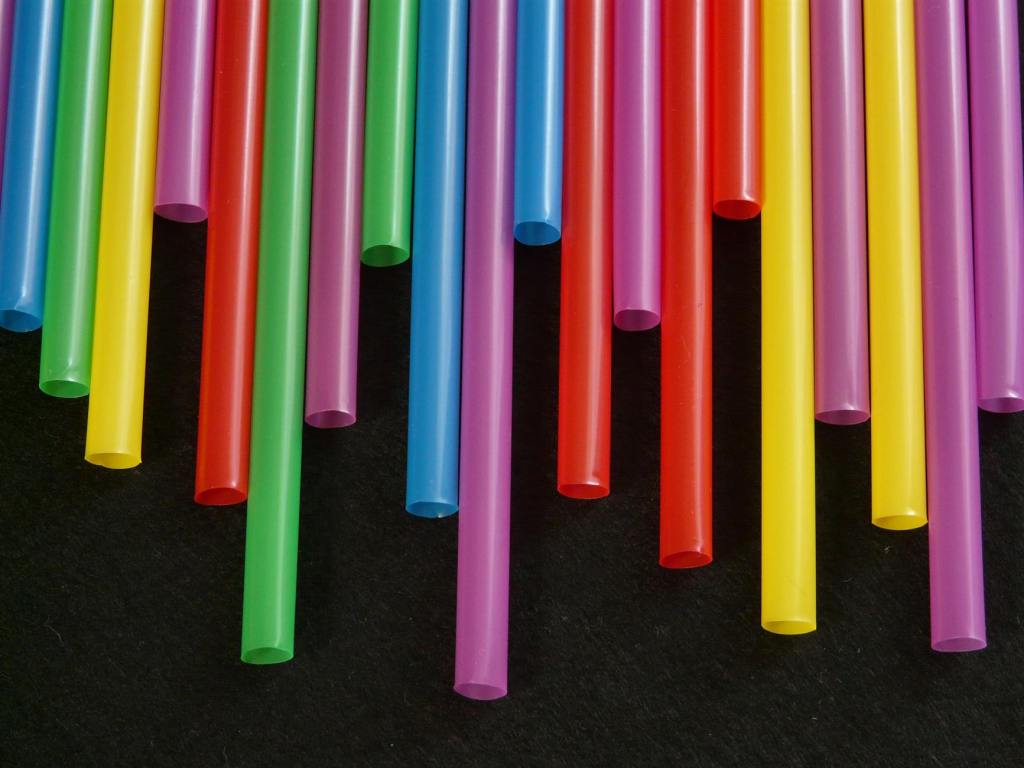
It’s hard to convey now what plastics meant to us Space-Age children of the 1960s. Bright, cheap, coloured, light, clean and multipurpose, they were the material of choice for a democratic age. They were what your new Fireball XL5 rocket was made of. The tape recorder for your Beatles songs. The beakers for your free school milk. The fittings in your Dad’s new Ford Anglia. With them we would create a new heroic age, and get to The Moon.

Sixty years on? Well, they’re just everywhere, aren’t they? Up on the top of Mount Everest. Deep at the bottom of the Marianas Trench. And everywhere, everywhere, in between. In the blossom in your garden. Blowing in the wind between the trees. In your water. In your food. In your bodies. And that last should afford pause for thought. Because the effects of all this plastic are not really understood. According to Anne Pinto-Rodrigues of Science News,[1] microplastics particles can be found in the gut biome; in the reproductive system; in breast milk; and in blood. What’s worse, some of the additives, such as BPA can act as endocrine disruptors (see LSS 26 3 24). There is even a chance that they may have a harmful effect on the immune system.

There’s lots more. Instead of summarising all the literature, which astute LSS readers will do for themselves, we’ll just point to one case study. It comes from Sue Hughes of Medscape, and though its primary focus is on cardio vascular disease, we think it’s a pretty good representative of what is to come, as more is found out in the next few years. And one other thought: how on earth do we clean this lot up?

with thanks to Gary Herbert

[1]https://www.sciencenews.org/article/microplastics-human-bodies-health-risks

[2]https://www.medscape.com/viewarticle/plastic-particles-carotid-plaques-linked-cv-events-2024a10004ge

#plastic #BPA #microplastics #health #pollution #contamination

Roman Polanski’s Chinatown: Still Fresh at Fifty

One of the attractions of the Detective genre is the way good writers use it to cast a sly glance at the deep problems of their society. Without all the dreary agitprop served up by leftist directors and their kitchen sinks. It was the achievement of the film noir genre to condense this trope into stylishly attractive packages, that have stood the test of time.

Roman Polanski’s Chinatown(1974) was made after the classic age of the gumshoe(Look! It’s in colour!) But it sports the classic trilby-wearing Private Eye negotiating his way through a 1930s world of glamorous cars, fast women and cocktail lounges.[1] Jake Gittes is a classic Jack Nicholson character-brash, wisecracking, cheerfully unaware of his own faults. Yet he has his integrity to his Craft, which redeems. Cheerfully able to manipulate his subordinates and everyday clients, he stumbles when he runs up against bigger players like Evelyn Mulwray (Faye Dunaway) and a sociopathic dwarf (played by Polanski himself) with a penchant for knife crime. Biggest and Baddest of all is multimillionaire Noah Cross, played by John Huston who comes out from behind the camera to give the performance of a lifetime. Noah is the monster to end all monsters; not only is he madly greedy and a megalomaniac, but it turns out in the final twist that he has actually…….no, we won’t spoil it for younger generation. We had no idea then that such things could occur, and still wonder why they do today.

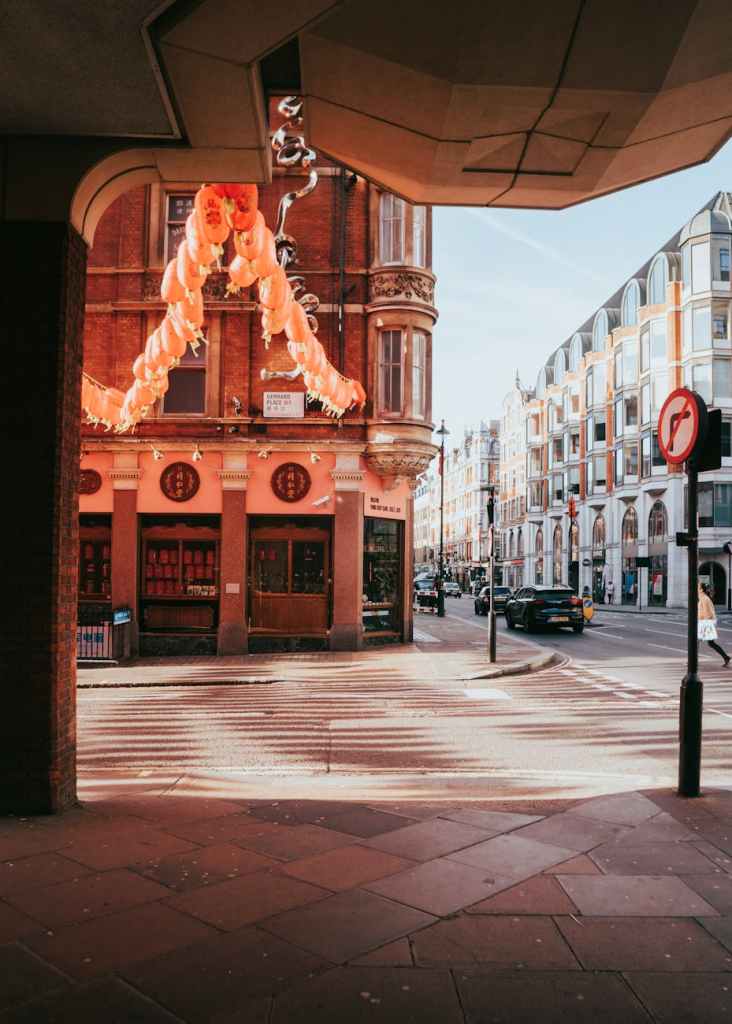
Above all Chinatown is set against the Los Angeles Water Wars of the 1930s. When a fast growing metropolis was suddenly running short of water, and certain characters thereby saw the opportunity to turn a fast buck. It is a question not without relevance today, particularly for those of us who live in England. How the sudden lurches in power, and the compromises they enforce so ruthlessly are displayed in the last scen, set in the eponymous Chinatown. Where Gittes is finally forced to weigh that last redeeming scrap of professional integrity against survival. But we won’t spoil that bit either.

Note for film buffs and musicologists-we thought the main theme displays a passing resemblance to Holst’s Planets, Jupiter Suite; does anyone have the knowledge to tell us if we’re right or wrong?

[1]https://en.wikipedia.org/wiki/Chinatown_(1974_film)

#detective #film noir #los angeles #chinatown #roman polanski #jack nicholson #faye dunaway #privatisation #public ownership