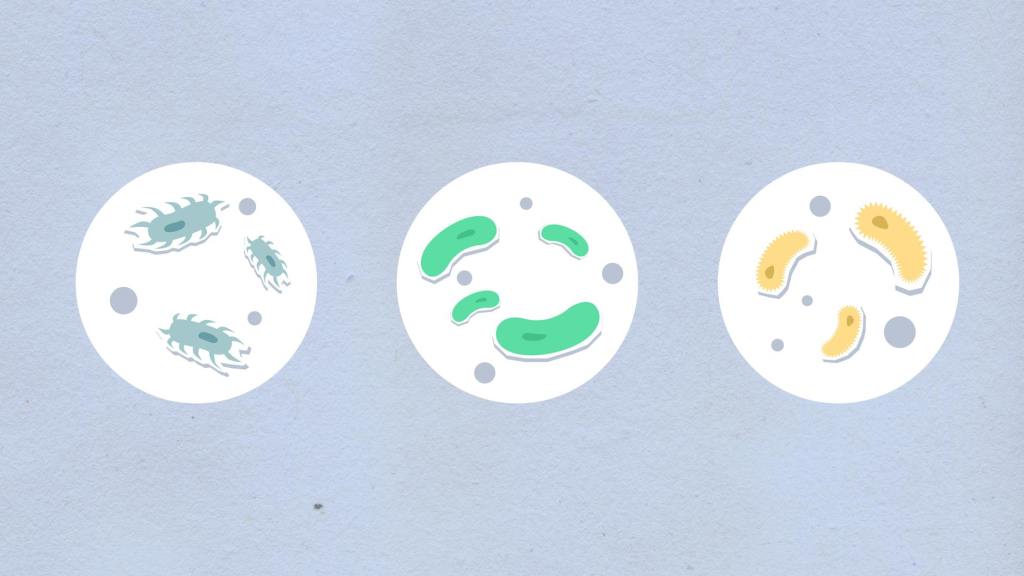


Are Ultra-Processed foods bad for your immune system? The Conversation thinks they might be

Go on any diet course these days (we’ve been on many) and the chances are that your course leader will inveigh against the dangers of processed foods[1] You know, those ones that saved us all so much time in the 1980s and 1990s, when it was essential to answer your e-mails and plan a talk over a delicious microwaved chicken korma. Well, processed foods comprise a lot more than just quick ready meals.And, l like a lot of labour-saving devices, they’re not all bad if used in moderation. Trouble comes when we all go too far. And our old friends The Conversation have an intriguing take on that. [2] Look at this extract frpm their article by Sam White and Phillipe Wilson

[there is] growing evidence that ultra-processed foods may affect how our immune system works. This may explain why some studies have linked ultra-processed foods with inflammatory bowel disease and potentially autoimmune diseases.

We on this blog have been tracking stories which link the digestive tract and immune system for some years. So it’s nice to see some real scientists really opening up this field. But there is a deeper lesson for us here, and it’s from economics, not science. Because economists of the classical school, or at least those who swallow their undergraduate textbooks, whole, always asseverate the a pure free market is the quickest way to achieve the optimum benefit. Well, processed foods are certainly free market. They have developed at breakneck speed, and certainly give the people what they want. The question is: how much do they need it? And at what cost does it come?

[1]https://www.nhs.uk/live-well/eat-well/how-to-eat-a-balanced-diet/what-are-processed-foods/

[2]https://theconversation.com/ultra-processed-foods-heres-how-they-may-affect-the-way-the-immune-system-functions-231884?utm_medium=email&utm_campaign=Latest

diet #food #microbiome# gut #immune system

ZeroAvia keeps on rising

Commercial aviation is one of the greatest facilitators of human progress . It moves people and goods across oceans, mountains and jungles, breaking down barriers and holding the distant promise of a single united world free of war. But it’s no good at all if it pollutes the atmosphere and melts the last remaining strongholds of ice, drowning most of the world’s cities and farmlands in the process.

ZeroAvia seem to have the dilemma neatly in hand. We’ve already covered their new power plants and commercial plans before here (LSS Passim) Set against the general gloom, they’re a story of hope unfolding. So today we bring you a selected pieces of their latest news (there are many). And the reason we chose it is because it shows that, while their hopes are soaring in the clouds, their practices are firmly grounded in the solid world of developing partnerships, agreements and working in general with the vast ecosystem of unglamorous, hardworking people who actually get things done.

Working in partnership with Airbus, they’ve started a thoughtful programme in collaboration with Canada’s three largest airports. . To carefully consider the feasibility and impact of hydrogen and net zero aviation in the medium turn. None of the showy” we-can -do- it- all -now” promises of populist politicians. To quote the company:

this is the first time that a feasibility study of this magnitude has taken place in Canada to pioneer hydrogen for aviation, with the three airports. It reflects the partners’ shared ambition to use their respective expertise to support the decarbonisation of the aviation industry (ICAO, ATAG and IATA) and to achieve net zero carbon emissions by 2050.

Before you ask, we have no commercial or equity relationship with ZeroAvia whatsoever. Nor Airbus. And none at all with Canadian airports (we’d struggle to locate these ones on a map) But we would like to keep flying. We would like to bring you stories of hope. So we’ll continue to cover ZeroAvia in the fervent belief that someone, somewhere, is really really doing something.

#ZeroAvia #Airbus #Canada #netzero #decarbonisation#aviation #hydrogen

Noctilucent Clouds, the high beauty of the summer sunset

Go out on a clear summer evening, just after the sun has set completely. Face west and look up. High above the dark line of the trees and buildings, to where the rays still light up the twilight sky. Can you see faint clouds spread out as a kind of ethereal glow? If so, they are noctilucent clouds. You are looking into the mesosphere, that vast region between 15 and 70 km above the earth. Hardly anyone goes there except a few intrepid balloonists, jet pilots and astronauts on their way through. It’s incredibly cold, and emptier than the poles, the mountains of Central Asia and the depths of the Pacific. Noctilucent clouds are just about the only visible thing up there, and so, as its high summer ,we thought we’d collect a few pieces to let you enjoy them.

Stuart Clark has a nice general piece for the Guardian [1] and for background we have linked to the inimitable Wikipedia[2] Which comes with a warning. The clouds seem never to have been observed before about 1885, which may suggest some link or other to growing pollution.[3]

People pay big money to visit the vast and the remote, and endure terrible problems with the food and the plumbing as they do so. But here we offer you the chance to stand in awe to glimpse something bigger, vaster and even more remote. And it’s all for free.

Once again, we advise you to wait until well after sunset and not to look directly at the solar disc in any circumstances whatsoever

[1]https://www.theguardian.com/science/article/2024/jun/17/starwatch-noctilucent-clouds-are-a-great-summer-spectacle

[2]https://en.wikipedia.org/wiki/Noctilucent_cloud

[3]https://www.theguardian.com/science/2022/jun/06/is-human-pollution-causing-clouds-to-form-near-the-edge-of-space

#noctilucent cloud #mesosphere #atmosphere #pollution #night sky

New test leads to real progress on antibiotic prescriptions

One of the scourges of modern medicine is the over-prescription of antibiotics. The more they are used, the more chances are made for target organisms to develop resistance. ( as well as other bacteria that live alongside them) Hence the current crisis. Everyone agrees we should be saving our last antibiotics for when they are really, really needed, not just throwing them at every random infection presented in the Doctor’s surgery on a rainy Monday morning.

A typical example is infections of the urinary tract, as James Gallagher explains for the BBC. [1] It’s never easy to know whether one of these is bacterial or viral. And currently it can take three days to find out. Yet the risk of an untreated bacterial infection is so high, the consequences so grave, that Doctors have to prescribe antibiotics, just in case. Of course, if it turns out to be viral. the antibiotics are useless, and the risk of adding more resistant bacteria to the ecosystem has just been ratcheted up again.. If only there was a way of cutting diagnostic time!

Well some Swedish researchers seem to have done just that. Their new test seems to have cut the time to answer the question “is this an antibiotic-treatable infection?” down to 45 minutes. James waxes lyrical, with the aid of some excellent graphics. Even more encouraging, the system is now being marketed by a pioneering firm called Sysmex Astrego [2] which suggests a strongly robust, repeatable test which could be rolled out in the millions. Billions, even? There’s lots of good news here, and we hope that all involved enjoy their Longitude Prize. If anyone deserves a little celebration, it is surely they.

[1]https://www.bbc.co.uk/news/articles/crggj9led0no

[2]https://www.sysmex-astrego.se/

#antibiotic resistance #medicine #bacteria fungi virus #superbug

No-Sky Post Traumatic Stress Disorder. We interview A. Doctor

Following media speculation about No Sky Post Traumatic Stress Disorder, a new syndrome sweeping the nation, LSS is proud to present this exclusive interview with Ann Doctor

LSS Is there really such a syndrome as No Sky Post Traumatic Stress Disorder  (NSPTSD)?

AD Yes,  NSPTSD is a  new syndrome , but it’s very real nonetheless.

LSS What causes it? And what are the symptoms?

AD It happens when an otherwise healthy child is deprived of Sky TV in their formative years. It causes many tragic symptoms. A desire to stand out in the rain for long periods. A phobia about meeting important world leaders causing the sufferer to rush back to England to do an  interview in ITV.  To ignore obvious cues, such as the word “TITANIC” in the background, or hoping to rev things up by hanging around deserted motor car racing tracks in Northamptonshire. And otherwise make all kinds of gaffes, mistakes, blunders and unforced errors.

LSS is there any cure?

AD Generally we advise sufferers to collect as much money as they can and depart to a warm place, such as California, as soon as possible. And never, ever come back.

© Ann Doctor 2024

Energy and Cancer: Three stories that give us hope in dark times

“The sleep of reason brings forth monsters” Goya’s famous painting never seemed so relevant as it does today, as humans divide themselves into mutually hating tribes in Europe, the Middle East and even the USA. “he that is quick to Anger exalteth folly” [1]. We here take the opposite view, Real progress is only achieved by slow, careful thought. And as evidence of that, we’d like to cite three examples, small in their own way of what can be done to fix real problems. When we pause to actually think, that is.

Seeing the cancer One of the most tragic moments in life is to here a cancer patient tell you “it’s come back” after an operation. This is not to blame the surgeons; it’s just that up to now they haven’t always been able to see all the cells. Now, according to Colin Fernandez of the Mail, a new technique will light up the tumorous cells, making them much easier to spot and excise altogether. By the way, some of this work was funded by Cancer Research UK,[2] a marvellous organisation whom we have often covered in these pages.

https://www.dailymail.co.uk/health/article-13511467/dye-prostate-cancer-tumours-glow-surgeons.html

Spotting the Cancer We have often hymned the praises of AI as well. Particularly in medical and biological research. One of its principal advantages is that it can carry out the routine stuff much faster than we can, without tiring. Kate Pickles of the Mail covers how it’s being applied to look at cancer scans to rapidly improve diagnostics. In the long term we could see AI applied to any number of laboratory techniques from Forensic science to Ecology, opening the way to boundless new knowledge and techniques

https://www.dailymail.co.uk/health/article-13518481/AI-better-doctors-spotting-prostate-cancer.html

Concrete Batteries? After they lost the battle on the reality of global warming, Big Oil and its lackeys have waxed lyrical on how difficult the transition to clean energy might be. “yes you can make clean energy, but how are you going to store it?” they would sneer. Well, lots of ways, it has turned out. But one we never dreamed of was the very concrete that makes up our roads, bridges and homes themselves. Unbelievable as it may seem researchers at MIT are looking at new types of concrete which will store and release energy exactly as we need it. What price oil and gas now? This excellent piece is from Victor Tangerman of the Byte:

Thanks to P Seymour

https://futurism.com/the-byte/new-concrete-stores-electricity-homes-batteries

Tiny examples, perhaps. But the mark the dividing line between the Thoughtful and the Emotional. We’ll go with the former.

[1] Proverbs 14 29

[2]https://www.cancerresearchuk.org/get-involved/donate?gclid=69712e6308111b89fbbd480a7616017d&gclsrc=3p.ds&msclkid=69712e6308111b89fbbd4

#cancer #health #medicine #AI #global warming #climate change #renewables #concrete

AI and antibiotics-another good news story

We have always hoped that AI would do for antibiotics what it has already done for protein design. (LSS 1 12 20; 26 3 23) Now there is a real possibility that these hopes may come true. Eric Berger of the Guardian covers a truly remarkable set of research by Professor de la Fuente and his team at the University pf Pennsylvania. [1] They have used an algorithm to mine vast sets of data to sieve out any compounds with potential anti microbial properties. As any reader will know, it would have taken years, if not decades, if they had just used teams of scientists in labs. Click on to Eric’s article, its very easy on the eye. But we’ll leave you with these thoughts:

Is this a game changer? Potentially, yes. It could allow the construction of a vast library of potential antibiotic compounds. The real problem of the last forty years has been, not just the steady failure of existing antibiotics, but the lack of a stream of potential replacements as resistance builds up. But we see a deeper lesson, good for all science. There is nothing so cooperative, so international, as a library or a database. Its contents cut across divisions of nationality, race, class, time even. If we are to survive the antibiotics crisis, and many other looming threats, we will need this approach more. Something to think about when some journalist or politician turns a group of people into “others”. Maybe we can learn something from them, instead.

[1]https://www.theguardian.com/society/article/2024/jun/05/ai-antibiotic-resistance

#antibiotics #AI #microbiology #research #database

How to help viruses live longer and kill more of us

Illness is like gambling. It’s all about statistics. The longer you stand near a virus/bacteria/fungus, or whatever, the higher are your chances of contracting it. So what if the air we breathe becomes ever more virus-friendly, helping them to live longer and infect more people? No, we hadn’t thought of that either. But read this CO2 boosts airborne Viruses from Nature Briefings:

Carbon dioxide is often used as a proxy for healthy air — such as when CO2 monitors are deployed to determine COVID risk. Now it seems that high levels of CO2 actually help viruses to survive in the air. Using an innovative instrument to study airborne pathogens in unparalleled detail, researchers determined that CO2 appears to help keep the particles we exhale at a pH-level that is more hospitable to viruses. “By increasing the CO2 in the air, we’re getting rid of a natural means by which viruses become inactivated,” said environmental chemist Allen Haddrell, who led the new work. “It’s fascinating, but it’s also horrifying.”STAT | 10 min read

The link from Stat, by the admirable Megan Molteni is so good that we’ve provided a double link [1]

Are all crises interlinked? We’ve run other blogs here suggesting, for example ,the link between habitat destruction and the release of new infectious diseases. How the floods brought on by global warming have acted as huge artificial vectors for old diseases like malaria. Or even that a steady rising background level of CO2 could have disastrous consequences for health (LSS passim) This is just a further indication that this gloomy thought may be right. But any parent or grandparent reading this would do well to find out more.

[1]https://www.statnews.com/2024/06/04/co2-ventilation-research-virus-airborne-life-haddrell-celebs/?utm_source=Live+Audience&utm_campaign=2a53b9910b-nature-briefing-d

#global warming #climate change #disease #public health #virus #bacteria

Good news on antibiotics coming thick and fast this spring

More good news on antibiotics research for you today, gentle readers. And this time it’s the subtlety of the extra thinking that has captured our attention. Up to now antibiotics-and many other therapies- have been more of a bludgeon than a rapier. Yes they do a lot of good, smashing away dangerous bacteria from your system. But they can do a lot of bad, by killing all those beneficial bacteria in your biome, which help you digest your food, as well as performing many other Good Works. But what if we could design an antibiotic which only does the good stuff, while keeping harmful side effects to a minimum? According to Nature Briefings, Smart Antibiotic spares the Microbiome, lolamicin may do just that:

An antibiotic called lolamicin targets disease-causing Gram-negative bacteria without disturbing healthy gut bacteria. Broad-spectrum antibiotics against these pathogens wreak havoc on the gut microbiome and can allow potentially deadly Clostridioides difficile to take over. Mice infected with antibiotic-resistant Gram-negative bacteria survived after being given lolamicin, whereas almost 90% of those that didn’t receive the drug died within three days. Lolamicin did not seem to disrupt the gut microbiome and spared mice from C. difficile infections.Nature | 4 min read
Reference: Nature paper

For more stories like these, update your preferences to sign up to our free weekly Nature Briefing: Microbiology.

(We took their link a little further today, so you can see that they offer a special service for those who want to follow this whole trope more closely)

As you know we at LSS tend to be a tad wary of huge new, all-field-encompassing, breakthroughs. What we like is when someone tweaks existing learning in a small but significant way. This seems to be one such, and good luck to the researchers concerned.

#antibiotics #microbiology #microbial resistance #research #microbiology

Nature Briefings upsets the apple cart. Big Time

What if everything you learned forty and fifty years ago was wrong? Where would you be then. Something a bit like that happened to us this week when we read this piece from Nature Briefings, Bizarre bacteria scramble workflow of life

Bacteria have stunned biologists by reversing the usual flow of information. Typically genes written in DNA serve as the template for making RNA molecules, which are then translated into proteins. Some viruses are known to have an enzyme that reverses this flow by scribing RNA into DNA. Now scientists have found bacteria with a similar enzyme that can even make completely new genes — by reading RNA as a template. These genes create protective proteins when a bacterium is infected by a virus. “It should change the way we look at the genome,” says biochemist and study co-author Samuel Sternberg.Nature | 4 min read
Reference: bioRxiv preprint (not peer reviewed)
For more coverage of the most abundant living entities on our planet — microorganisms — and the role they play in health, the environment and food systems, update your preferences to sign up to our free weekly
 Nature Briefing: Microbiology

When we were young, there was a central doctrine in biology. Information was stored in genes, deep in the cell nucleus. These were made of DNA. This information was turned into RNA, then used to make proteins. The DNA code was unchangeable, inviolate which made the operations of natural selection all the easier to facilitate. If a large cat suddenly developed DNA to give it stripes, then it could hide better in the jungle, and pass on more copies of the DNA. Hence tigers evolved. Job done. To think the DNA could be modified by some environmental feedback was not only Lamarckian heresy, there was no obvious mechanism by which it could come about.

Now we are Not saying that the above discoveries overthrow the central tenet. Not yet. But remember how the Michelson Morley experiment in the 1880s posed a deep, unanswerable question at the heart of physics which was not fully resolved until Einstein came along a generation or so later. And we are certainly not going to make impulsive conclusions . But our story today, combined with all the recent advances in Epigenetics, do suggest however that the old model is now awaiting a major rethink.

[1]michelson morley experiment##biology #cell biology #dna #rna #darwin #lamarck #bacteria #protein #gene