Six insoluble mysteries which may end us all

Occasionally we come across websites with lurid titles like “10 UNSOLVED MYSTERIES TO GIVE YOU THE HEEBIE JEEBIES!” And it’s all to do with odd bits of old stone or dodgy claims about flying crockery. Which made us think of a few everyday mysteries about Homo sapiens which are enough to give anyone the aforesaid Heebies, with a few jeebies thrown in for good measure. Because if we do not develop the cognitive capacity to solve them, we could well be heading for the biological equivalent of the junkyard,

(1) Where is the line between the individual and society? Countries that go too far towards prizing the State end up economically stagnant, as the society is captured by a small self-serving elite who grab all the resources. (Think USSR or Venezuela) On the other hand societies with no idea of the common good, where untaxed individuals run around doing what they like, not only end up without worthwhile armies or roads. They also get captured by an elite, this time billionaires, with almost identical outcome to the deluded Commies. No one has resolved this tension in any stable way.

(2) Emotion utterly dominates reason. All the technological and scientific advances that make life worth living (you really wanna give up soap, huh?) are formed in the reasoning part of the brain. Yet most people are driven by deep tides of emotion welling up from the subconscious. These rarely lead to anything profitable, and are the principal causes of most of the obsessions, addictions and generational hatreds which form such an immense drag on progress. Why is logic so weak and blind passion so strong?

(3) The drive to divide into hostile groups We often allude to this one; think football supporters and the Robbers Cave experiment. The American writer James Baldwin saw identity as a serious trap, denying us our own better nature. It may take all the AI in the world to solve this one

(4) The constant need for persecution of others, particularly the weak or disabled. Anyone still deluded about “the moral superiority of the oppressed” could learn from what happens to disabled neighbours in cheap housing estates, and how the noble proletarians make their lives utter hell. Why does everyone want justice, but only for themselves?

(5) The local and the trivial Why do so many people spend so much time learning about the lives of celebrities in tacky media outlets, when they would profit much more from reading magazines like The Economist or Science?

(6) An utter inability to change minds Most people are really rather deft and clever about what is around them; the hierarchies around their neighbours, families, jobs, and so on. But most of what they learned about bigger things like science or society was laid down decades ago. And the habits of mind formed in youth seem impossible to change, even when the survival need to do so becomes clear. This may ultimately be the most dangerous mystery of them all.

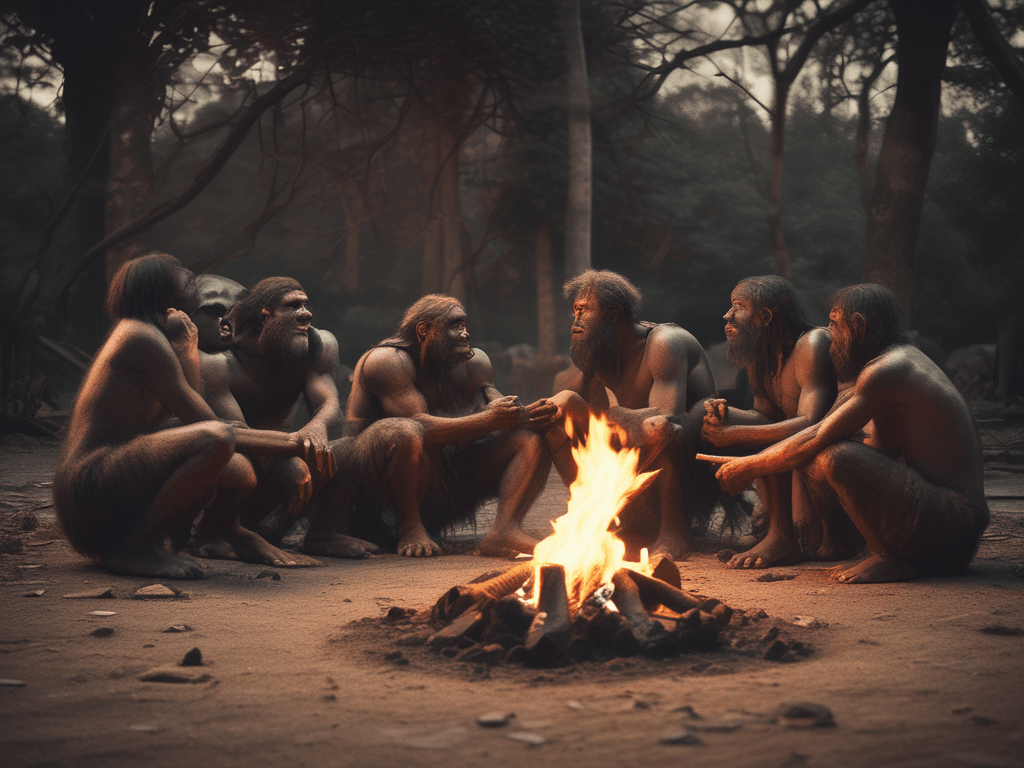
No species, however successful it seems at its peak, can long survive the competition from a better-adapted one. Our predecessor Homo erectus had evolved into top predator, and colonised three continents. Before it was utterly outclassed by the more intelligent Homo sapiens in its various subspecies. A newer, more intelligent form of human, perhaps incorporating elements from artificial intelligence and genetic engineering should be able to solve the above cognitive problems with ease. If that happens, there will be little enough space for the predecessor, and no motive to preserve us either.

#climate change #learning #cognition #human evolution #unsolved mysteries
Element 120? We stand in awe

One of the earliest memories of the school science lab was to see the Periodic Table for the first time. You know, that forbidding-looking chart of squares and funny, recondite little symbols like Mn and Cs, all arranged in a curious array of lines and columns. A long way from the everyday world of glam rock, flared trousers and playground rivalries about football teams and Ben Sherman shirts.

Those who looked slightly beyond the immediate would know that change was coming. NASA kept landing on the moon. And some very clever people were trying hard to push this same periodic table beyond its natural limit of 92 and make artificial elements with far more protons than could be found in nature. Fast forward fifty five years or so, and we suddenly realise how far they have got. Read this from Nature Briefings: Heaviest Element Yet within reach

Researchers have demonstrated a new way to make superheavy elements, opening the door to creating the heaviest element ever and adding another row to the periodic table. Scientists used a beam of titanium to make a known superheavy element, livermorium — element 116. If they’re able to make elements 119 and 120, as planned after an equipment upgrade, they will be the first documented from the eighth ‘period’. In this row, scientists expect to find atoms with so-far unseen electron configurations.Nature | 7 min read
Reference: arXiv preprint

It really is worth clicking on the link, gentle readers. If only to see a group of people performing at the best levels which our species can. Co-operating. Multinational. Thinking differently. Counter-intuitive-hell, what is a”titanium beam” anyway? That’s how progress comes. Just thinking again, in the old tired ways, the channels laid down as a child, will get us nowhere. Except, perhaps, backwards. The periodic table really can go beyond 92. Petrol really is bad for your health. Old allegiances will threaten your survival, if you’re not careful. Time to think as these scientists have done,

#nuclear physics #periodic table #research #chemistry

6 Problems which require global response,and only a global response

“You can’t stop me smoking! It’s an assault on my liberty!” It was a common cry in the early days of trying to save the world from tobacco pollution. Somehow the smokers never considered that that the toxic fumes they spread might inflict upon the liberties of others. Smoking is the world in miniature. For the same self-centred mindset may be found in those who cannot think beyond the boundaries of their own religious or ethnic group. So here are 6 problems which affect us all, and each of which will only be solved by deliberate acts of collective action, however cognitively difficult that may prove for some people.

1 Pollution As my country pumps out toxic metals, sh*t, plastics or whatever, it will get into the water, air and land of surrounding countries, poisoning their unfortunate inhabitants. If you don’t want to breathe someone else’s smoke, ways will be have to be found of asking people to stop. And to keep them stopped. Agreements, anyone?

2 Global Warming A subset of pollution really, except that we are only talking about carbon dioxide and methane. But as the water levels rise and the ocean currents collapse, you will have the comfort of blaming someone else. And they can blame you. Will you feel better?

3 Migration As we have said before, the real cause of this is imbalances in living standards between different parts of the planet. Successful transfers of wealth to the areas where migrants come from will slowly but surely eliminate the problem. How many Germans migrate to Iraq, for example?

4 Knowledge and fakery Since the invention of the Interweb and the subsidiary technologies that feast upon it, the world has been plagued by a deluge of fakes. Fake news stories, fake scientific papers, fake images and the utterly uninformed opinions thereby generated. Only a single world reference library with the veracity of its contents contents carefully agreed by all will allow a single reliable point of reference. This won’t be perfect, but will allow a fresh starting point, and mimics the way that single standards of things like currencies and weights and measures slowly ameliorated the human condition

5 The next pandemic Everyone agrees it’s coming, the question is where and when does it start. IT will probably be a virus. But could our hoary old favourite, an antibiotic-resistant superbug, be the killer?

6 Inequality As long as the super-rich can move their money and their yachts from jurisdiction to jurisdiction, the rest of us will never see a fair share of the wealth which we have created. Hence the shortages of things like hospital beds, school places, decent roads, etc.A single world taxation and financial authority would not only eliminate this problem, it would rapidly provide the resources to deal with those discussed above.

National sovereignty, tribal identity or whatever are extremely powerful forces in human affairs. And we ignore them at our peril, as we have oft-times warned on these pages. But they are also licences to pollute. Are we clever enough to reconcile the the conflict?

#pollution #global warming #climate change #antibiotics #pandemic #poverty

Tourism Tribes Trump Enlightenment

“We don’t like all these tourists!” A quick glance at the newsfeeds show mass protests against tourism and all its works breaking out across Spain, from the palmy island of Mallorca to stylish Barcelona, all the way out to the breezy Canary Islands. And it’s not just in Spain either. Venice was one of the first to start restricting access to the new breed of huge cruise liners that plough the sunnier waters of the world. And even in UK hotspots like Cornwall, some locals break out their tractors in high season and drive them slowly around country lanes with the deliberate aim of making life difficult for hated holiday visitors, whom they term “grockles” in the local dialect (we have been personally informed of this).

What on earth is going on? Students of Hispanic history and culture were long taught that the arrival of mass tourism not only brought floods of money, it also began to eat into the stifling repression of Franco‘s Spain, long before the arrival of democracy. Downsides like the ugly high rise sprawls of hotels and bars were glossed over. Also that whole areas could be taken over by hostile tribes of tattooed thugs, high on a sleazy culture of cheap beer, cocaine and promiscuous sexual encounters. And that’s just the women. We dare not name certain resorts where we have seen this this occurring on a daily basis . But we can understand why these protests are so strong in Mallorca.

Progressives need to confront a highly uncomfortable truth. Ramming people of very different cultures, languages even, together into tight spaces will ignite the oil wells of fear, mistrust and suspicion which lie latent in us all. And this will be so whatever the economic benefits the new arrivals bring. Ever since the Enlightenment, progressives of all types, from Adam Smith style ultra-marketeers to far-left Marx fans have asseverated that the spread of economic and intellectual advances will be irresistible. And that we thereby held the winning hand. Perhaps. But the natural instincts and impulses of most people seem to be very different. A truth which we have acknowledged before on these pages, in our posts on People like David Rofeldt, Amy Chua and Eric Kaufman. (LSS passim)Unless we think how to confront this tribal instinct, it will be used to Trump our project. And this time there will be no coming back.

[1]https://www.independent.co.uk/travel/news-and-advice/mallorca-menorca-spain-tourists-protests-b2551689.html

[2]https://www.msn.com/en-nz/travel/news/thousands-protest-in-spain-s-mallorca-against-mass-tourism/ar-BB1qny4g?ocid=BingNewsSerp

[3]https://www.bbc.com/mundo/articles/cw884y73j4do

#tourism #mallorca #barcelona #protest #free market

Molecular Paleontology sheds light on our universal common ancestor

Once upon a time all we had to go on was bones. Comparing them appeared to show a tree of life stretching back to a common ancestor, at least of all animals. Disciplines like embryology helped of course. However, apart from a few woolly traces of bacteria like things in old rocks like the Gunflint Cherts, most early organisms were too small and too fragile to fossilise well. It was a nice idea but the proofs were all a bit shaky.

Enter Molecular Biology. Using the comparative analyses of proteins and nucleic acids, and the rates of change and mutation over time, we have had amazing insights into how all different living organisms are related. Plants, bacteria, fungi, archaea and animals may now be all cross related, which of course means going back in time. Read this article Meet the Parents from Nature Briefings

The shared forebearer of all life — known as the last universal common ancestor (LUCA) — lived around 4.2 billion years ago, ate carbon dioxide and hydrogen, and produced acetate that might have fed other life. Researchers inferred information about our great-great-grandblob’s genetics and biology by tracing duplicated, lost and mutated genes back up the family tree. LUCA probably possessed an early immune system, too — hinting that it lived in an established ecosystem full of microbes and pathogens.Science | 6 min read
Reference: Nature Ecology & Evolution paper

We would not dare to improve on Nature Briefings, our go-to website for science news. We would however draw your attention to two talking points, as t’were, which have accorded us some pause for considerable thought.

The molecular regression analysis suggests that these things lived about 4.2 billion years ago. Which is incredibly early, as best estimates for the age of the planet come in at around 4.5 billion years[1] That seems a vey short time for so much evolution. What was happening?

The second point is a bit more philosophical. Like one of those fiendish brain teasers about barbers and shaving that Bertrand Russell used to set his brightest students. The authors suspect the LUCA lived in an ecosystem of microbes and pathogens. So was it not ancestor to them too? If not, what was?

[1]https://en.wikipedia.org/wiki/Age_of_Earth

[2]https://en.wikipedia.org/wiki/Barber_paradox

#LUCA #molecular biology #dna #rna #protein #precambian #origin of life #origin of earth

John Brown, Trump and all that: Our Reply to the replies

A few days ago we published a post likening the recent assassination attempt on Donald J Trump to the events at Harpers Ferry in 1859. It was a naive, Sunday post which we fondly imagined would be mainly aimed at the History Fans among. You know-sort of elegiac, reflective, that sort of thing. Instead it has brought down a torrent of comments and replies upon our unsuspecting heads. Not all of them objective nor favourable. So, briefly here are our responses in the hope they may afford light where formerly there has only been heat.

1 Yes, we are English, goddammit! But that surely doesn’t vitiate our right to observe the doings of another country, particularly one with which our own land has such close links, culturally, diplomatically, sartorially and in many other ways.

2 With regard to that last point, any more abuse from that guy in Ohio and we will boycott Brooks Brothers. What will that do to your economy-mate?

3 Donald Trump stated that he will be a Dictator on day 1 of a new administration. No candidate has ever claimed that intention before [1] A majority of Americans may want this. Which is their business. But isn’t it the sort of statement which raises tensions to say the least? To, er, like they were round about 1859-ish?

4 Come on, Americans, when have you ever openly hated each other as much as you do now?

5 We didn’t say another Civil war would happen. We hope it won’t. But if Americans carry on playing with fire……

6 China is laughing at you

We hope now to o back to Science and economics. Somebody somewhere has to find a way of saving something from the Civilisational-sized wreck. That is where we shall start.

[1]https://www.politifact.com/article/2023/dec/07/donald-trump-was-asked-if-he-will-be-a-dictator-if/

#donald j trump #united states of america #election 2024 #democrat #republican

Trump Assassination Attempt-Is this another John Brown moment?

The American Civil War which began in 1861 did not come out of nowhere. Tensions between the two sides had been growing for almost four decades. Yet the war was not inevitable. History buffs will recall the efforts of moderates on both sides to pull the extremists back. Things like the Nullification Crisis, the Wilmott Proviso, the Missouri Compromise, now either despised or forgotten, delayed the bloodshed or tried valiantly to buy time to think again. What tipped the balance and allowed the hotheads to say “we were right all along” was John Brown and his terrorists’ raid on the Harpers Ferry Federal Arsenal 0n 16 October 1859. Read this from Hugh Brogan’s Pelican History of the United States [1]

“…the impression made on the South was too deep. Here it was at last, the nightmare come true. The abolitionist appeal to the slaves to rebel, now naked and apparent, in spite of the endless disclaimers of Northern Politicians, of Southern Moderates. The fire-eaters instantly took command.

From John Brown onward, the march to war began.

That there were moderates on both sides in contemporary America, including the Republican Party, we had no doubt, right up until today. But now expect the MAGA extremists to unleash a firestorm of social media. Blaming Biden; blaming the Democrats, blaming the Deep State, the Secret Service, CNN, the New York Times…..anyone. That there were reasonable people, who believe that Statecraft is to address several issues at once, will be forgotten. As in 1860, the lines between those who honestly believe that Race and its attendant hierarches are the most important matters in human affairs, and those who honestly do not, are firmly drawn. If we are wrong, you may laugh at us.

But if we are right, the future is dark indeed. Expect a closely contested Presidential Election. with repeated outbreaks of lethal violence. And that neither side honestly accepts the result. The Constitution of the United States is thereby vitiated. There will then be a short descent into a bloody and protracted Civil War. The United States will cease to exist as a meaningful power. Any political entities which emerge in its former territories will be dark and authoritarian, whether of Right or Left. China and its allies and satellites will become the dominant force in world affairs. They will quickly buy the strongmen and media allies to snuff out the last vestiges of freedom in the small nations of Europe , Canada and the others. And Thomas Matthew Crooks was the man who finally tipped the whole thing into motion. May his soul be cursed in Hell forever.

[1] Hugh Brogan The Pelican History of the United States of America Penguin 1985 pp 317 et seq

[2]https://www.bbc.co.uk/news/live/cljy6yz1j6gt?post=asset%3A7a474ec3-efd2-4dac-9721-2e38d573c1f9

thomas matthew crooks #john brown #harpers ferry #butler, pa #US Civil War ~donald Trump #MAGA

No, it isn’t the economy, stupid

“It’s the economy, stupid.” That was the phrase attributed to Democratic strategist James Carville, who helped mastermind Bill Clinton‘s unlikely win over Republican incumbent George HW Bush in 1992. Whatever the candidates’ other achievements might be, people would, in the end vote with their wallets. As a belief it’s far, far deeper than 1992. The central case of all the heirs of the enlightenment, both of Right and Left was that humans are essentially rational animals, who would consider their immediate economic interests above all else.

Just how wrong that might be is demonstrated in this eye-opening piece from Deepak Bhargava, Sharzad Sams, and Harry Hanbury from Democracy, which we earnestly entreat you to read. Far from us to steal the authors’ thunder. But by careful reasoning they tease out an entirely new factor which influences the political choice which people make. For want of a better word, they call it “unhappiness“. We’ll let them explain what they think that is. But here’s their killer quote

The causes of rising unhappiness are complex, but they surely have roots in the failures of a neoliberal economic regime that has fostered insecurity, isolation, anxiety, and fear……loneliness and social isolation are major drivers of unhappiness. We are experiencing a crisis of what French sociologist Émile Durkheim called “anomie,” or normlessness, arising from the dizzying pace of social, economic, political, and technological change in our times and the weakening of institutions that foster social cohesion.

Who is more likely to vote for populist parties than angry frightened men, on their way down in the world, who above all need someone to blame. Authoritarians, who l provide quick and easy answers, and all times offer a diabolical other to hate can always tell a better story than the careful, complicated reforms of the democrats. If Biden were judged on his economic record. he would have been romping the polls since 2022. But he is not; and the rest of us must learn to live with the consequences of his defeat, for however much life we have left. Unless we find ways to tell our story, and soon, that may not be very long.

We found the link to the Democracy piece in a Guardian article from the admirable Rafael Behr [2], in which he discourses on the relevance of the trope in a UK context

[1]https://democracyjournal.org/arguments/the-death-of-deliverism/

[2]https://www.theguardian.com/commentisfree/article/2024/jul/10/keir-starmer-plan-populist-tide-britain-allies-nato

#biden #trump #unhappiness #prosperity #democracy #populism

Whither the Labour Government? And why LSS may not be such a donkey after all

On the morning after the UK election results, senior members of the board arrived at work, only to find that someone had tied a large live donkey to the boardroom door. We feel the incident was connected to our insistence that Labour would only receive a majority somewhere around 20-30 Parliamentary seats, as opposed to the 170 they in fact obtained. And that therefore someone among the lower ranks of staff was trying to imply, that we, the Members of the Editorial Board of Learning, Science and Society were, collectively, a donkey.

But are we? Yes, Labour picked up many more seats than we expected. But if you look at their share of the vote, it was only 34%, just 10% above their Tory rivals. What’s worse, the turn out overall was 59.9%, which is appalling in the world’s oldest democracy. All in all, although we wish the new Government the very best, that isn’t much of a mandate. Not very different from only having a 28 seat margin perhaps? Maybe we are not so much Donkeys as Wise Owls after all. If you want to see how all this might pan out for Sir Keir Starmer and co, Larry Elliott of the Guardian has sketched a couple of possible roadmaps of the future her. [1[

Now as for the Donkey. Ok a joke’s a joke. But can someone please come and take it away? It smells, and the noise it makes during board meetings is intolerable. As for other matters, there aren’t enough rose beds in southern England to spread that lot on. There will be no enquiries into how it got sneaked in past security cameras and up the lift, no names called, PROVIDED SOMEONE COMES SOON AND TAKES THE BLOODY THING AWAY! OK?

[1]https://www.theguardian.com/business/article/2024/jul/07/uk-economy-two-possible-endings

ukelection 2024 #sir keir starmer #rachel reeves #economics

Bacteriophages: four cheers for Melvyn Bragg

A few years ago we started drawing your attention to the potential of bacteriophages as a potential second technique to overcome antibiotic-resistant microorganisms. Not to replace antibiotics, you understand. But to give clinicians another reliable component on their pharmacopeia, confusing the target organism with an attack from a different direction (LSS 21 9 20 et seq ) We seemed to have been riding a wave, as this discipline has excited growing interest.

Entirely unconnected, in another part of the forest so to speak, we have twice praised the work of awesome polymath Melvyn Bragg. (LSS 9 6 22, 21 9 23) His BBC series In Our Time is the go to portal for the greatest human achievements of all time-in the Arts, Sciences, and Letters) and should be compulsory listening for all those who consider themselves to have even a fleeting acquaintance with learning.

Imagine therefore our surprise when the great Melvyn has brought our two preoccupations together! Yes, that’s right, gentle reader, In Our Time today, July 4th 2024, has a whole programme with no less than three (count ’em, three!) Top Experts . All set for you to bask in the light of their learning. Which to make matters easier, you can obtain by clicking on the link below[1] or going later to BBC Sounds, which will post an update podcast with free extra minutes after about 11.00 BST. What’s not to like?

[1] https://www.bbc.co.uk/programmes/m0020pf0

#bacteriophages #antibiotic resistance #medicine #health #pandemic # microbiology